
For most homes, architectural shingles are the better choice. They last longer, handle wind better, and hold their looks longer than 3-tab shingles. The main exceptions are rental properties, sheds, or garages you're not planning to keep long, and roofs where budget is the deciding factor over everything else.
TL;DR:
- Architectural shingles generally cost more upfront but last twice as long as 3-tab shingles, with warranties of up to 50 years versus 20 years.
- Proper installation, including correct nailing and ventilation, significantly impacts the actual lifespan and wind resistance of both shingle types.
- In storm-prone regions, architectural shingles with higher wind ratings (110 to 130 mph) are preferred, and insurers may factor in these ratings into premiums.
- Weight differences matter, especially on older homes with weaker framing, making structural checks important before choosing heavier architectural shingles.
- Cost-per-year analysis favors architectural shingles for long-term durability and fewer replacements, unless homeowners plan to sell or move within a few years.
Table of Contents
- Architectural vs 3-Tab Shingles at a Glance
- Why the Construction Difference Actually Matters
- What Each Shingle Actually Costs You Over Time
- How Long Should Your Shingles Actually Last?
- Wind Ratings, Storm Risk, and What Insurers Care About
- Curb Appeal and What Your Roof Will Look Like in Year 10
- What to Check Before You Sign a Roofing Contract
- How to Choose the Right Shingle for Your Home
- What Exterior Genie Enforces on Every Roof
- Ebben's Take: Pay Once, Not Twice
- Get a Straight Answer From a Local Roofing Crew
- Sources
- FAQ
Architectural vs 3-Tab Shingles at a Glance
The gap between these two products shows up in weight, wind rating, and how long they actually stay on your roof.
- Construction: Architectural shingles are laminated, multi-layer strips; 3-tab shingles are a single flat layer.
- Weight: Architectural runs about 240–400 lbs per square; 3-tab runs about 200–240 lbs per square.
- Installed cost: Architectural averages $4.50 to $8.00 per square foot; 3-tab runs $3.00 to $5.50 per square foot. On a 2,000 square foot roof, that's roughly $9,000 to $16,000 versus $6,000 to $11,000.
- Field lifespan: Architectural typically lasts 22 to 30 years; 3-tab typically lasts 12 to 20 years.
- Wind rating: Architectural is commonly rated 110 to 130 mph; 3-tab is commonly rated 60 to 70 mph.
Bottom line: if you're staying in the home more than a few years, architectural wins on almost every measure that matters.
Why the Construction Difference Actually Matters
A 3-tab shingle is one flat strip of asphalt with cutouts that create the illusion of three separate tabs. An architectural shingle, sometimes called a dimensional or laminate shingle, fuses two or more layers together, which is what gives it that thicker, shadow-lined look on the roof.
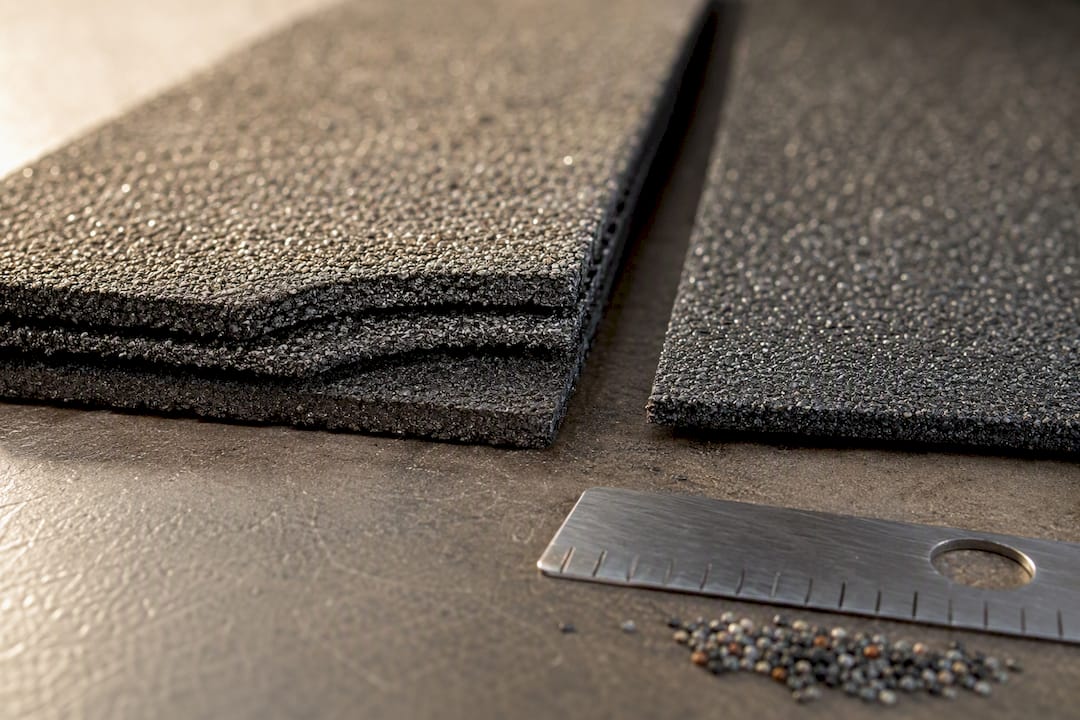
That extra layer isn't just cosmetic. More material means a wider adhesive band and heavier granule coverage, both of which resist wind uplift better than a single thin strip. It's also why architectural shingles weigh close to double what 3-tab shingles weigh per square, a detail that matters later when we talk about framing and tear-offs.
One practical downside: because architectural shingles vary more in pattern and shading across production runs, matching a patch to an older section of roof is harder than with the flat, uniform look of 3-tab.
What Each Shingle Actually Costs You Over Time
The sticker price gap looks bigger than it really is once labor enters the picture. Tear-off, underlayment, flashing, and cleanup cost roughly the same whether you're installing architectural or 3-tab shingles, so labor narrows the material price difference considerably on the final invoice.
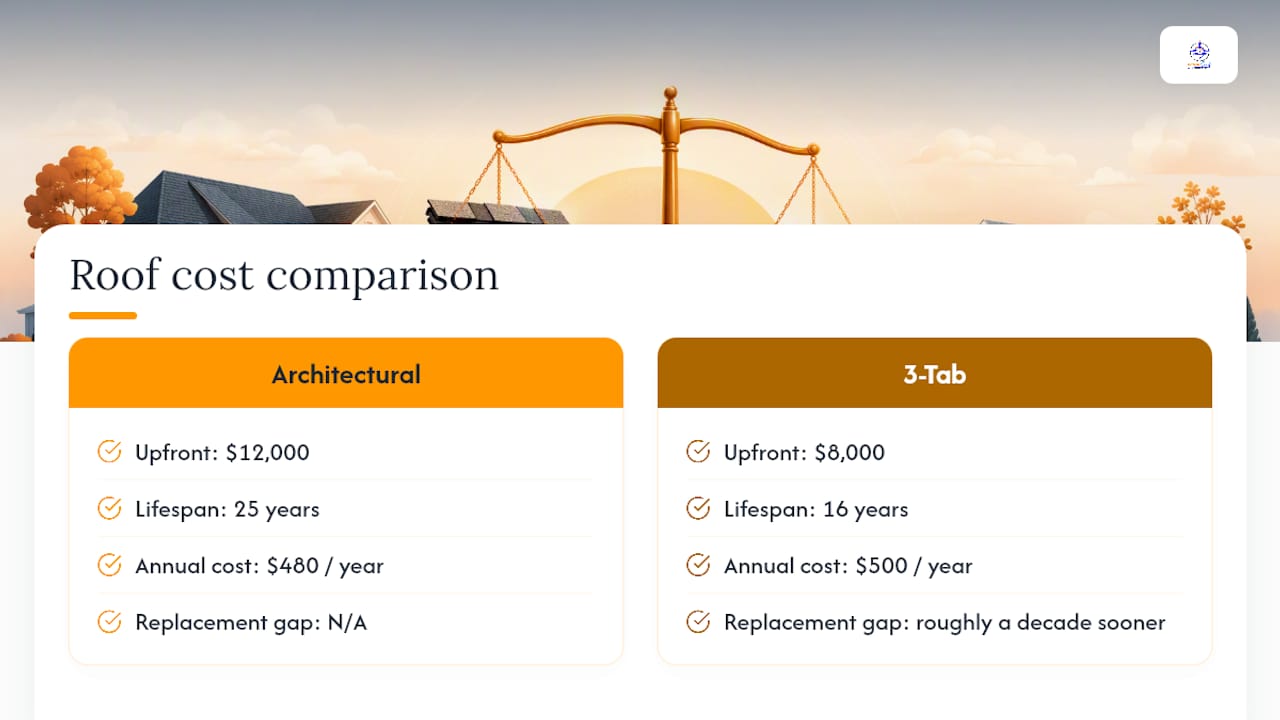
Run the numbers on cost-per-year and the picture flips in architectural's favor. A $12,000 architectural roof lasting 25 years costs about $480 a year. An $8,000 3-tab roof lasting 16 years costs about $500 a year, and you're facing another full replacement decision roughly a decade sooner than you would with architectural.
The upfront savings on 3-tab still make sense in specific situations: a rental property you plan to sell within five years, a detached shed or garage, or a homeowner facing a hard budget ceiling with no way to finance the difference. Outside of those cases, the math consistently favors paying more now to avoid paying again sooner.
How Long Should Your Shingles Actually Last?
Warranty paperwork and real-world performance are two different conversations. A "lifetime" or 50-year label on the shingle wrapper is a marketing figure, and it rarely lines up with how long the roof performs in the field.
What actually determines lifespan:
- Ventilation: Poor attic airflow bakes shingles from underneath and shortens their life regardless of the warranty term.
- Sun and climate exposure: South-facing slopes and hot, humid regions age shingles faster than shaded or cooler climates.
- Installation quality: Correct nailing and flashing details do more for longevity than the shingle brand itself.
When comparing warranties, focus less on the headline years and more on the wind warranty terms, whether coverage transfers to a new owner if you sell, and how the manufacturer defines "original owner" coverage. Those details matter far more than the number printed on the wrapper.
Wind Ratings, Storm Risk, and What Insurers Care About
Architectural shingles commonly carry wind ratings between 110 and 130 mph, while 3-tab shingles typically top out around 60 to 70 mph. That gap is one reason architectural has become the default in storm-prone regions.
The rating on the shingle package only tells part of the story. Nailing pattern, starter strip placement, and ridge cap installation all affect how well the whole system resists uplift, and federal wind-resilience guidance points to proper fastening and full-system installation as the real driver of storm performance, not just the product spec sheet. Insurers have taken notice too: in wind-prone areas, some carriers now factor shingle wind rating into premiums or coverage terms, which is worth checking on our storm-resistant roofing materials guide before you choose a product.
Curb Appeal and What Your Roof Will Look Like in Year 10
Architectural shingles create shadow lines and depth that mimic wood shake or slate, which is why they consistently read as higher-end to buyers and hold resale value better. 3-tab shingles have a flatter, more uniform look that some homeowners on older or simpler homes still prefer for its clean simplicity.
Both products lose granules over time, and both can develop algae streaking in humid climates. The difference shows up later: because architectural color blends vary by production run, patching a 10-year-old roof after storm damage is trickier than matching the flat, consistent tone of 3-tab. If exterior appearance matters to you beyond the roofline, it's worth thinking about how roofing choices play with other finishes, similar to how interior door styles get chosen to match a home's overall character.
What to Check Before You Sign a Roofing Contract
Weight matters more than most homeowners expect. Architectural shingles can weigh nearly double what 3-tab shingles weigh per square, and on older homes with marginal framing, that's worth a quick structural check before committing.
Overlaying new shingles over an existing layer is usually discouraged, and many local codes limit or ban it outright once a roof already has two layers. A full tear-off costs more but lets your roofer inspect the decking, correct ventilation, and get proper nailing into solid wood, all of which protect your warranty terms. Skipping these steps to save money upfront is the most common reason a roof underperforms its expected lifespan.
How to Choose the Right Shingle for Your Home
Work through these questions in order before you get quotes:
- How long do you plan to own the home? Under 5 years leans 3-tab; over 10 years strongly favors architectural.
- What's your wind exposure? Coastal or storm-prone areas justify the higher wind rating architectural provides.
- Does your insurer factor in shingle rating? Ask before assuming your premium won't change.
- What's your realistic budget, including financing? Compare cost-per-year, not just the upfront number.
- How much does curb appeal matter for resale? Architectural generally helps here.
When you talk to roofers, ask specifically: which product line they install by default, what nailing pattern they use, whether the wind warranty requires their own certified installation, how they check attic ventilation, and their policy on tear-off versus overlay.
Pro Tip: If a quote is unusually low, ask exactly what nailing pattern and starter strip product they're using. Cutting corners there is invisible until the first big storm.
Red flags worth walking away from: a contractor who won't put the wind warranty terms in writing, one who pushes overlay installation without a clear code justification, or one who can't name the specific shingle line they're quoting.
What Exterior Genie Enforces on Every Roof
We default to architectural shingles on primary residences because the field performance data backs it up, and because our crews are trained to install to the standard that keeps warranties valid. As an Owens Corning Platinum Preferred Contractor and a veteran-owned company, we hold installation to a documented standard rather than whatever gets the job done fastest.
On every roof, our crews:
- Follow manufacturer-specified nailing patterns rather than a generic pattern.
- Check and correct attic ventilation as part of the install, not as an afterthought.
- Default to full tear-off over overlay whenever code and structure allow it.
Insurance guidance consistently points to fastening and full-system installation as the deciding factor in wind performance, which is exactly why our HAAG-trained inspectors document every detail when a storm claim is on the table.
Ebben's Take: Pay Once, Not Twice
My default recommendation is architectural, full stop, unless you're selling within a few years or the structure is a shed you don't care about long term. The 3-tab discount looks appealing on paper until you're staring down a second reroof a decade earlier than you'd have needed with the better product. If you're not sure which situation you're in, get an actual inspection before assuming either way.
— Ebben
Get a Straight Answer From a Local Roofing Crew
Reading about wind ratings and cost-per-year math only gets you so far. Every roof has its own slope, ventilation quirks, and storm history, and that's exactly what a real inspection uncovers that a guide can't. Exterior Genie's HAAG-certified inspectors walk your roof, document its actual condition, and help you sort out whether repair, partial replacement, or full replacement makes sense, including handling the insurance paperwork if storm damage is involved.

If your roof is past its prime or you're staring down storm damage, start with a roof repair and replacement estimate from a local crew that installs to manufacturer standard on every job, not just the ones someone's watching.
Sources
- Architectural Asphalt Shingles: Cost, Lifespan, vs 3-Tab
- Architectural vs 3-Tab Shingles 2026 | RoofVista
- Improving windstorm resilience (FEMA fact sheet)
FAQ
What are the disadvantages of architectural shingles?
The main drawbacks are higher upfront material cost, more weight per square (which occasionally requires a framing check on older homes), and harder pattern matching when repairing an older section.
How can I tell if I have 3-tab or architectural shingles?
Look at the shingle surface from the ground or a ladder: 3-tab shingles look flat and uniform with straight cutout lines, while architectural shingles show visible layering and shadow depth.
Does anyone use 3-tab shingles anymore?
Yes, though usage has dropped sharply. Architectural products now make up the large majority of new residential installations, with 3-tab reserved mostly for tight budgets, rentals, or accessory structures.
What shingles do most roofers use?
Most professional crews install architectural shingles by default on primary residences because of their longer field life and better wind performance.
Which lasts longer, architectural or 3-tab shingles?
Architectural shingles last longer, with a typical field lifespan of 22 to 30 years compared to 12 to 20 years for 3-tab shingles.