

For most homeowners, GAF is the stronger all-around pick because of its wider contractor network and easier path to a top wind rating. CertainTeed pulls ahead if you want designer-tier looks or a contractor who's already SELECT ShingleMaster certified. Either way, the shingle brand matters less than the installer's credential level and whether you actually register the warranty.
TL;DR:
- GAF offers a wider contractor network and easier access to top wind ratings with a 130 mph rating using only four nails due to its LayerLock technology.
- Warranty benefits depend heavily on certified installation and timely registration; the actual coverage varies by contractor credentials and registration deadlines.
- Both brands' impact resistance, algae resistance, and shingle weight influence durability, but improper installation or underlayment choices can undermine performance and warranty validity.
- Supply chain, local contractor availability, and regional installer certifications largely determine which brand's top-tier warranty and quality are accessible in your area.
- Design and color options differ, with GAF offering broader variety across the lineup and CertainTeed providing more premium, high-end aesthetic shingles at higher prices.
Table of Contents
- CertainTeed vs GAF Shingles: A Quick Comparison
- How Are These Shingles Built, and Why Does It Matter?
- What Do the Warranty Tiers Actually Cover?
- What Will a New Roof Actually Cost?
- What Should You Check Before Hiring an Installer?
- How Do You Decide Between the Two Brands?
- Can You Actually Get These Shingles Installed Near You?
- Which Brand Offers Better Design and Color Options?
- How Sustainable Are CertainTeed and GAF Shingles?
- What Do Homeowners Say About Long-Term Durability?
- A Contractor's Honest Take on Brand vs. Installer
- How Exterior Genie Handles Your Roof Replacement
- Sources
- FAQ
CertainTeed vs GAF Shingles: A Quick Comparison
Every roofing estimate you get will lean on one of these two brands, and the differences are real but narrower than the marketing suggests. Here's what actually separates them on the metrics homeowners care about.
- Wind performance: GAF's LayerLock technology hits a 130 mph rating with a standard 4-nail install, while CertainTeed typically needs a 6-nail pattern for the same rating, which adds labor time.
- Warranty length: Both brands offer lifetime limited warranties on shingles, but the labor and non-prorated periods depend entirely on your installer's certification tier.
- Price: CertainTeed's mainstream lines are often priced close to or slightly under comparable GAF products, but its luxury shingles carry a real premium over standard tiers.
- Design options: CertainTeed leans harder into high-end architectural looks; GAF spreads its color and texture variety across a broader lineup.
- Availability: GAF has a larger network of certified contractors, which makes its best warranty tiers easier to actually get in most regions.
None of these differences means much on their own. A 130 mph rating on paper only holds up if your roofer nails it correctly, and a lifetime warranty only pays out if it's registered on time with the right contractor credential attached.
How Are These Shingles Built, and Why Does It Matter?
The construction difference between these two brands comes down to how the layers bond and how installers line up the nails. GAF's LayerLock feature mechanically fuses the shingle's common bond area, which is why it can reach a 130 mph wind rating with just four nails. CertainTeed's NailTrak is a visual guide, not a mechanical lock, so hitting the same wind rating on lines like Landmark usually requires six nails instead of four.
That gap sounds small until you're standing on a roof in July. More nails means more labor time, which shows up in your quote whether the contractor spells it out or not.
- Standard architectural shingles from both brands are rated Class 3 impact resistance; upgraded lines with rubberized asphalt reach Class 4, which can lower insurance premiums in hail-prone areas.
- Algae resistance (StainGuard from CertainTeed, StainGuard Plus from GAF) slows the blue-green streaking that shows up on north-facing slopes within a few years.
- Shingle weight varies by tier. Heavier laminate shingles generally hold up better to wind flutter but demand a structurally sound deck.
Pro Tip: Ask your contractor which nailing pattern they'll actually use on your roof, not just what the shingle is "rated for." A crew that defaults to 4 nails on a shingle that needs 6 to hit its rating is quietly voiding your wind warranty before the first storm.
What Do the Warranty Tiers Actually Cover?
Warranty tiers are where GAF vs CertainTeed comparisons get misleading, because the glossy brochure numbers only apply if your contractor holds the right certification. Top-tier manufacturer warranties require certified installers and unlock the longest non-prorated material and labor coverage — a standard installer using the exact same shingle gets a shorter, weaker warranty by default.
GAF's top tier is the Golden Pledge, reserved for Master Elite contractors. CertainTeed's equivalent is SureStart PLUS paired with the 5-Star warranty, available through its SELECT ShingleMaster program. Exact coverage periods and registration windows differ by brand and should be confirmed in writing before you sign anything.
Before you approve an estimate, insist on:
- Written confirmation of the contractor's specific certification level (not just "we're certified").
- The exact warranty name being registered, e.g., Golden Pledge or SureStart PLUS, not just "lifetime warranty."
- The registration deadline, since most top-tier warranties require paperwork filed within a set window after installation.
- Labor coverage duration separately from material coverage, since these often differ by years.
- Whether the warranty transfers to a new owner if you plan to sell.
What Will a New Roof Actually Cost?
Material costs for GAF and CertainTeed run close at the standard and mid tiers, with CertainTeed sometimes running slightly cheaper depending on the specific line and your region. Designer and luxury shingles from CertainTeed carry a noticeably higher price than either brand's mainstream lines, so the real cost gap shows up at the top of the lineup, not the middle.
Your installed price depends on more than the shingle brand:
- Tear-off and disposal of the old roof, which varies by number of existing layers.
- Underlayment upgrades, especially synthetic or ice-and-water shield in colder climates.
- Ventilation work, including ridge vents or baffles needed to meet warranty ventilation requirements.
- Accessory brands (starter strips, ridge caps, flashing) that must match the primary shingle brand to keep the warranty intact.
- Roof slope and complexity, since steep or cut-up roofs take longer to install regardless of shingle choice.
If you plan to stay in the home more than 10 years, a premium line with a longer non-prorated warranty tends to pay for itself. If you're selling within 3 to 5 years, a solid standard-tier shingle installed correctly usually delivers better return.
What Should You Check Before Hiring an Installer?
The shingle brand you pick matters less than how it goes on the roof. Nail pattern, underlayment choice, ventilation, and flashing detail work together to determine whether a shingle hits its rated wind speed or fails in the first real storm. A poor underlayment choice can undercut even a top-tier shingle's warranty if moisture gets trapped underneath.
Before you sign a contract, run through this checklist:
- Confirm the installer's certification tier in writing (Master Elite for GAF, SELECT ShingleMaster for CertainTeed).
- Verify the warranty will be registered, and ask who is responsible for filing it and by what date.
- Request proof of general liability insurance and workers' compensation coverage.
- Get a written scope of work listing every accessory brand, not just the shingle.
- Ask how the crew will handle nailing pattern on your specific slope and shingle line.
Exterior Genie approaches every roof replacement this way: certified crews, documented scope, and warranty paperwork filed on time rather than left to chance. Our contractor vetting guide covers additional red flags worth asking about before you sign.
Pro Tip: A quote that's noticeably cheaper than three others usually means something's missing, most often accessory brand matching or proper ventilation work. Ask what's excluded before you assume you found a bargain.
How Do You Decide Between the Two Brands?
Turn everything above into a short checklist you actually run through before signing:
- Climate exposure. High-wind or hail-prone areas favor whichever brand your local certified installers can properly rate for Class 4 impact or 130 mph wind.
- Budget and timeline. Decide your ROI horizon first. Staying long-term favors premium lines; selling soon favors a solid standard tier.
- Certified installer availability. Call around. If Master Elite or SELECT ShingleMaster contractors are scarce in your area, that alone may decide your brand.
- Desired aesthetic. If you want a high-end architectural look, check CertainTeed's designer lines before comparing GAF equivalents.
- Warranty priorities. If long labor coverage matters most, ask each contractor which specific tier they can register, not just what's advertised.
Get these points in writing on every estimate: tear-off cost, accessory brand list, and the exact warranty name being registered. Walk away from any quote that's vague on warranty registration or suspiciously low without a tear-off and accessory breakdown spelled out.
Can You Actually Get These Shingles Installed Near You?
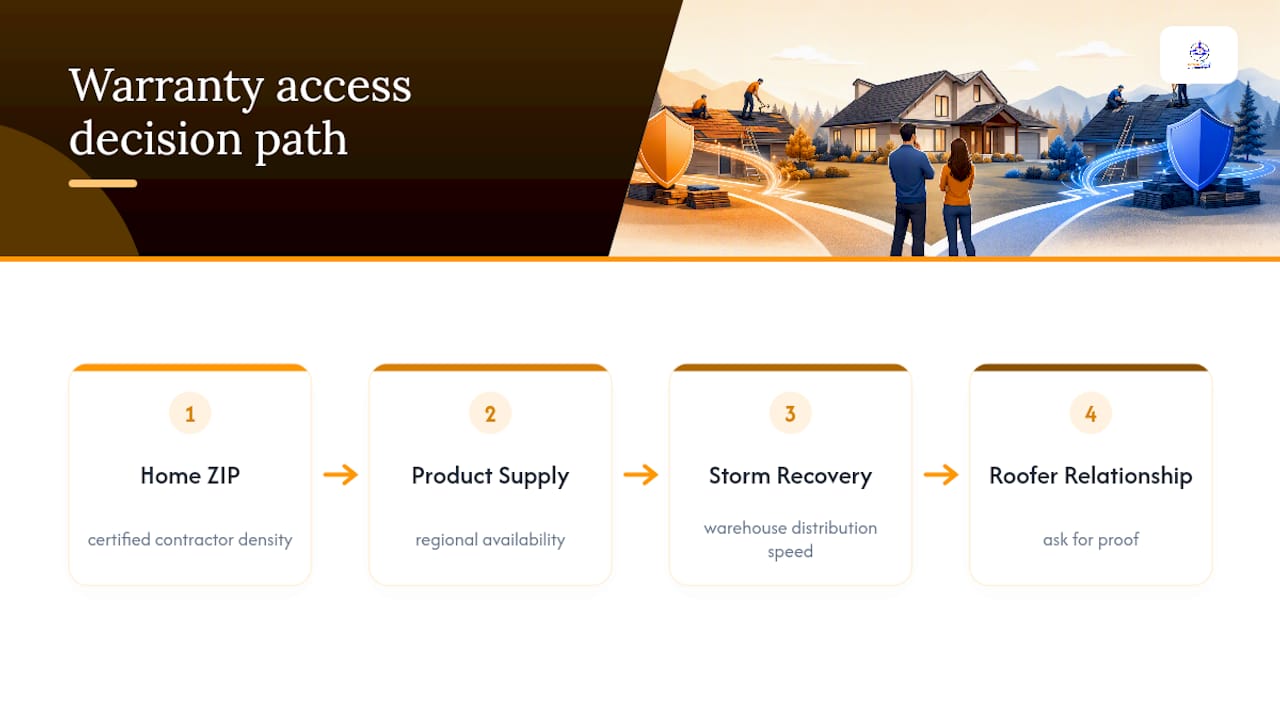
Spec sheets don't matter if no certified installer in your area can get you the top warranty tier. GAF generally has a wider certified-contractor network than CertainTeed, which is one reason it edges out as the safer default pick for homeowners in areas with fewer roofing specialists.
That gap isn't universal, though. In regions where CertainTeed has built a strong SELECT ShingleMaster presence, homeowners get equal or better access to top-tier coverage on that brand instead. Regional supply and certified contractor density determine which warranty tier you can realistically access, so the "better" brand on paper isn't always the better brand in your zip code.
Supply chain matters too. After a major hail event, shingle shortages hit both brands, but broader distribution networks tend to recover faster because more warehouses carry the product. If your roof needs replacing after storm damage, ask your contractor directly which brand they can source quickly without substituting off-brand accessories that could void your warranty.
This is also where asking about a contractor's manufacturer relationship pays off. A roofer who installs hundreds of GAF or CertainTeed roofs a year typically has better standing with the manufacturer's regional rep, which can speed up warranty claims down the road. A contractor who rarely touches a given brand may not even carry current certification for it, regardless of what their website claims. Always ask for proof, not just a logo on a truck.
Which Brand Offers Better Design and Color Options?
If curb appeal is driving your decision as much as performance, the two brands split in a predictable way. GAF spreads a wide color palette across nearly its entire lineup, including budget-friendly 3-tab and mid-range architectural lines, so homeowners get variety without paying for the top tier.
CertainTeed concentrates its most distinctive looks at the higher end. Lines like Landmark offer deep, dimensional color blends, and CertainTeed's designer shingles mimic slate or cedar shake far more convincingly than most standard laminate products. If you're restoring a historic home or want a roof that reads as a genuine design feature rather than just weather protection, CertainTeed's upper tiers usually have the edge.
Both brands update their color names and blends periodically, so a shade you saw on a neighbor's roof two years ago may not be the current lineup. Always ask to see physical samples on your own house, since lighting and surrounding trim color change how a shingle reads in person. Composite color chips under a showroom light rarely match how a shingle looks on a shaded north slope or a sun-baked south-facing pitch.
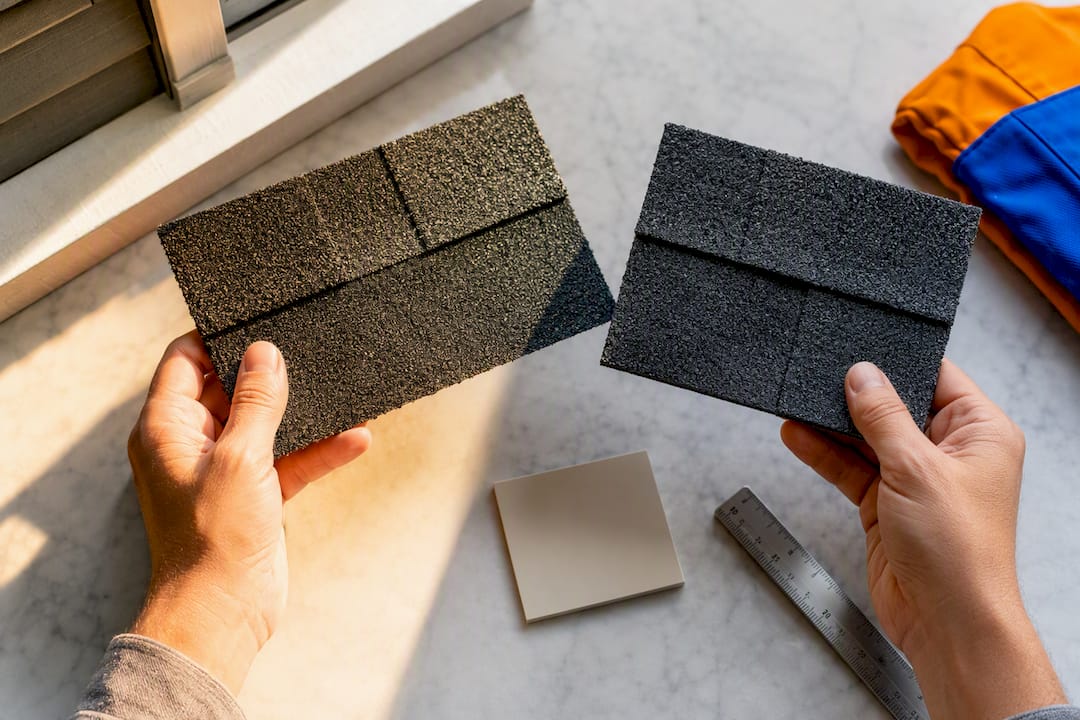
One practical note: designer and luxury shingles from either brand often come in fewer color options than their mainstream counterparts, since manufacturers limit premium runs to their best-selling blends. If you want a specific rare color, confirm availability before you fall in love with a sample.
How Sustainable Are CertainTeed and GAF Shingles?
Neither brand markets itself primarily as an environmental choice, but both have made moves that affect a roof's long-term footprint. Asphalt shingles from both manufacturers are recyclable in many regions, where old shingles get ground down for use in asphalt paving rather than landfilled, though local recycling infrastructure varies significantly by area.
Algae-resistant coatings, StainGuard from CertainTeed and StainGuard Plus from GAF, extend how long a roof looks clean without pressure washing or chemical treatments, which indirectly reduces maintenance-related runoff into gutters and soil. Reflective or "cool roof" shingle options from both brands can lower attic temperatures and reduce cooling costs in warmer climates, though the effect depends heavily on attic ventilation and insulation quality, not the shingle alone.
Longevity itself is arguably the biggest sustainability lever here. A shingle that lasts 25 years instead of failing at 15 means one less tear-off, one less load of waste, and one less manufacturing cycle over the life of the home. That's why correct installation matters as much for environmental impact as it does for warranty validity. A shingle rated for 30 years that fails at 12 because of poor ventilation or a bad nailing pattern isn't a sustainable choice no matter what the packaging claims.
If sustainability is a priority alongside performance, ask your contractor about ventilation upgrades and proper attic insulation as part of the project, not just which shingle line to pick.
What Do Homeowners Say About Long-Term Durability?
Homeowner satisfaction with both brands tends to track installer quality more than shingle brand, which lines up with everything covered above. Complaints about premature wear, granule loss, or curling almost always trace back to ventilation problems, poor nailing, or skipped underlayment upgrades rather than a defect in the shingle itself.
That said, patterns do show up. Homeowners who invest in top-tier lines from either brand and pair them with certified installers report fewer wind-related callbacks in the years following a major storm. Complaints tied specifically to GAF have occasionally centered on Timberline HDZ granule loss in early production runs, while CertainTeed complaints more often mention inconsistent color batches between bundles on large roofs. Neither issue is universal, and both are worth asking your contractor about directly if you've read about them elsewhere.
Post-installation satisfaction also hinges on how warranty claims get handled when something does go wrong. A shingle failure that gets resolved quickly because the installer registered the correct warranty and kept documentation reads very differently to a homeowner than the same failure met with finger-pointing over paperwork. That's the practical argument for choosing your contractor first and letting the brand follow, rather than picking a shingle name and hoping the installer measures up.
A Contractor's Honest Take on Brand vs. Installer
After years in this industry, the pattern is consistent: roofs fail from bad installation far more often than from a weak shingle. GAF edges out for most homeowners because of its 4-nail wind rating and wider contractor access. CertainTeed earns its place for buyers chasing a designer look or working with a proven SELECT ShingleMaster crew. Either way, chase the certified installer and the registered top-tier warranty first. The shingle logo matters less than who's on your roof.
— Ebben
How Exterior Genie Handles Your Roof Replacement
Some roofing contractors carry certified installer credentials, handle warranty registration paperwork directly with the manufacturer, and document every step so your labor and material coverage actually holds up if something goes wrong.
That matters most when a storm has already damaged your roof. Our HAAG-certified inspectors handle insurance claims assistance alongside the actual repair work, so you're not juggling an adjuster and a contractor separately. We also handle seamless gutter installation, siding repair, and full remodeling projects if your storm damage extends past the roofline.
If you're ready to compare real options for your home, request a roof repair or replacement estimate and we'll walk you through which brand and warranty tier actually fits your roof, your budget, and your timeline.
Sources
- GAF vs CertainTeed Shingles: Full Comparison 2026 — ShinglesCalculator
- 2026 Roofing Warranty Comparison Database (7 Brands) | The Roofing Brief
- GAF vs. CertainTeed Roofing Shingles: Cost, ROI - Definitive Guide — RoofingCalc
- Certainteed vs GAF: Roofing Shingles Comparison (2026) | Today's Homeowner
- Roof Warranty Comparison 2026 | GAF vs OC vs CertainTeed — RoofVista
FAQ
What shingles are better than GAF?
No single brand outranks GAF across the board. CertainTeed's designer lines beat GAF on premium aesthetics, but GAF's LayerLock technology gives it an edge on wind performance with a simpler 4-nail install.
What is the best brand of shingles?
There's no universal "best" brand. The right choice depends on your climate exposure, budget, and most importantly, which certified installers are available in your area, since installer credential often determines warranty value more than brand alone.
Is there a problem with GAF shingles?
GAF shingles perform well when installed correctly, but complaints about granule loss on certain Timberline HDZ production runs have surfaced. Most performance issues trace back to installation errors like incorrect nailing patterns rather than the shingle itself.
Which brand of shingles is better, Owens Corning, CertainTeed Landmark, or GAF?
All three are reputable manufacturers with comparable mainstream product lines. The deciding factor usually comes down to which brand your local certified contractors, including crews like Exterior Genie, can install and warranty properly in your specific region.
Does the nailing pattern really affect my warranty?
Yes. CertainTeed's Landmark line typically needs a 6-nail pattern to reach its top wind rating, while GAF can reach the same rating with 4 nails, and using the wrong pattern can void wind-related warranty coverage entirely.