

A failing commercial roof does not announce itself with much warning. One week you have a slow drip near the HVAC unit, and three weeks later you are dealing with damaged inventory, displaced tenants, and an emergency repair bill that dwarfs what a planned replacement would have cost. Commercial roof replacement planning is the difference between a controlled project with a known budget and a crisis you manage around your operations. This guide walks you through every stage: assessing your roof's condition, building a realistic budget, selecting the right contractor, and scheduling work to minimize disruption to your business.
Table of Contents
- Key takeaways
- Commercial roof replacement planning starts with a real inspection
- How to budget for a commercial roof replacement
- Selecting and vetting your roofing contractor
- Scheduling roof replacement to protect your operations
- What I have learned after 25 years on commercial roofs
- Work with a team that knows commercial roofing
- FAQ
Key takeaways
| Point | Details |
|---|---|
| Inspect before you commit | A thorough inspection combining visual checks, core samples, and moisture scanning reveals whether repair or full replacement is needed. |
| Budget for hidden costs | Deck repairs, disposal fees, and permits can add 15 to 30 percent to your initial material and labor estimate. |
| Vet contractors rigorously | Require proof of state licensing, NRCA or IIBEC certification, and at least $1 million in general liability coverage. |
| Schedule around operations | Phased work plans and weather contingencies protect tenants and reduce downtime during a replacement project. |
| Plan for compliance | OSHA fall protection requirements affect both project timelines and contractor costs, so factor them in early. |
Commercial roof replacement planning starts with a real inspection
Before you sign a contract or request a single bid, you need an honest picture of what you are actually dealing with. Too many property managers skip straight to pricing and end up with a scope of work that misses half the problem.
A thorough roof inspection should combine three methods. Visual inspection covers surface membrane condition, flashing integrity, ponding water zones, and obvious penetration damage. Core cuts pull physical samples to check insulation saturation and layer counts. Infrared moisture surveys detect wet insulation that looks dry from the surface. Combining all three methods gives you the most accurate condition assessment available.
Here is what typically pushes a roof from "repair" to "replace":
- Wet or saturated insulation covering more than 25 percent of the roof area
- Active membrane delamination or widespread blistering
- Multiple failed patches that keep failing in the same zones
- A roof that has already reached or exceeded its expected service life
On that last point: commercial roofs last 15 to 35 years depending on material type and maintenance history. Age alone does not trigger replacement. A 17-year-old roof with saturated insulation needs replacement sooner than a 25-year-old roof that is dry and structurally sound.
The layer count matters too. Full tear-off is mandatory when existing layers exceed two, when moisture has infiltrated the deck, or when warranty requirements prohibit overlay installation. Skipping a tear-off to save money often voids the new system's manufacturer warranty entirely.
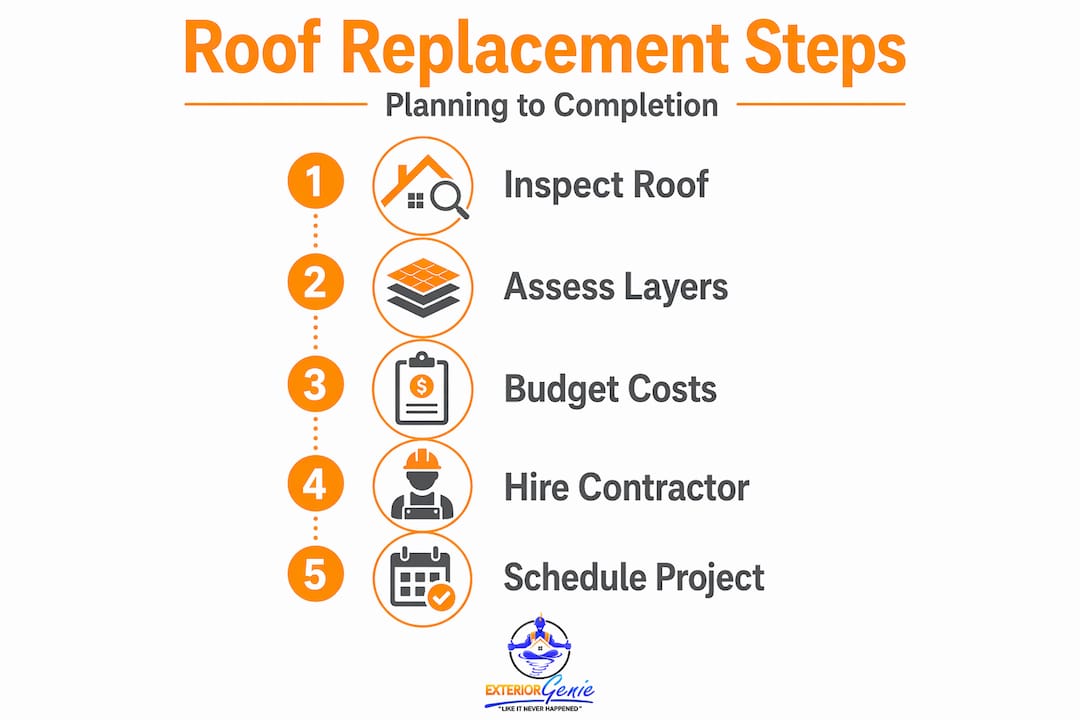
Pro Tip: Have your deck inspected from both above and below during tear-off. Deck damage like delamination and soft spots are frequently missed when viewed from only one angle, and discovering them mid-project adds cost and schedule delays.
How to budget for a commercial roof replacement
Roof replacement cost analysis is where most commercial roofing projects go sideways. Property managers budget for materials and labor, then get blindsided by everything else. Here is a realistic breakdown of what drives total project cost.
| Cost Category | Typical Range | Notes |
|---|---|---|
| Membrane materials (TPO, EPDM, modified bitumen) | $3 to $8 per sq ft | Material type and thickness affect price significantly |
| Labor | $2 to $5 per sq ft | Complexity, roof access, and local market rates vary |
| Tear-off and disposal | $0.50 to $2 per sq ft | Layer count and local disposal fees drive this number |
| Deck repair or replacement | $3 to $12 per sq ft | Depends on damage extent; often unknown until tear-off |
| Permits and inspections | $500 to $3,000+ | Varies by municipality and project size |
| Safety compliance (OSHA) | Variable | Scaffolding, fall arrest systems, and trained personnel |
All of these cost categories interact with each other. A project that requires full deck replacement can double the original estimate. That is not a contractor trying to upsell you. That is the reality of working on a building where the deck condition was unknown until tear-off began.
When learning how to budget for roof replacement, build in a contingency of at least 15 percent above your highest contractor quote. If you are working with a roof over 20 years old or one that has had repeated leak repairs, push that contingency to 25 percent.
Pro Tip: Compare the long-term cost of replacement against continued repair spending. If your annual repair costs exceed 5 percent of the replacement cost, you are likely funding a losing battle. Replacement often pays for itself within three to five years through reduced maintenance and energy savings.
One option worth evaluating before committing to full replacement is flat roof coatings, which can extend a structurally sound roof's life at a fraction of replacement cost. This works only when the deck and insulation are dry and intact. Your inspection results will tell you whether this is a viable path.
Selecting and vetting your roofing contractor
Planning a roofing contractor selection process is where many property managers move too fast. Getting three bids and choosing the lowest one is not a strategy. It is a gamble.
Start with credentials. The minimum bar for any commercial roofing contractor should include:
- A valid state contractor's license for commercial work
- NRCA (National Roofing Contractors Association) or IIBEC (International Institute of Building Enclosure Consultants) certification
- Minimum $1 million general liability coverage, plus workers' compensation
- Manufacturer authorization for the specific system they are installing (this affects warranty validity)
Beyond credentials, ask these questions during the vetting process. How many commercial projects of similar size have they completed in the last two years? Can they provide references from property managers, not just homeowners? Who specifically will be the on-site project supervisor, and what is their experience level? What is their process for handling unexpected deck damage discovered during tear-off?
Contract terms deserve as much attention as the bid price. Confirm that the contract specifies the exact materials being installed (manufacturer, product name, thickness), the warranty terms for both materials and workmanship, the process for change orders if scope expands, and the payment schedule tied to project milestones rather than calendar dates.
Clear documentation throughout the project protects you. Require daily progress photos, written change orders before any additional work begins, and a final inspection report with photos. This documentation also matters when filing insurance claims or transferring the property.
Scheduling roof replacement to protect your operations
Understanding project timelines is one of the most underappreciated parts of commercial roofing project planning. A poorly scheduled replacement can disrupt tenants, trigger lease complaints, and create liability exposure if safety protocols are not followed.
Here is a practical approach to scheduling roof replacement work:
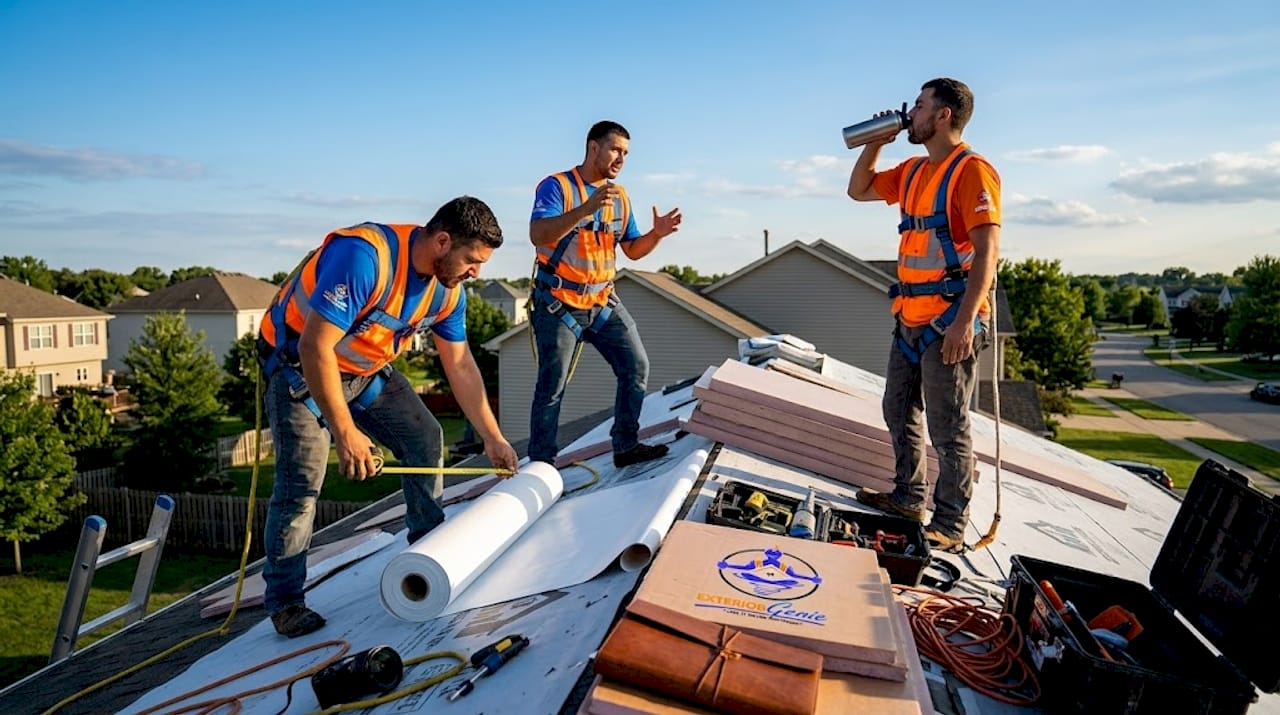
- Start planning three to six months ahead. Good commercial roofing contractors book out. Waiting until your roof is actively failing limits your contractor options and your negotiating position.
- Build a phased work plan. Large roofs can be divided into sections, allowing work to progress while keeping portions of the building fully operational. This matters most for occupied retail, healthcare, or multi-tenant properties.
- Account for weather windows. Most membrane systems require dry conditions and temperatures above 40°F for proper adhesion. In Lexington, SC, this means spring and fall are typically the most reliable scheduling windows.
- Factor in OSHA compliance time. OSHA requires fall protection for workers at heights of 6 feet or more, with additional requirements around skylights and roof openings at any height. Setting up compliant fall arrest systems and conducting required training adds time to project mobilization.
- Communicate with tenants and staff before work begins. Proactive communication about noise, access restrictions, and daily work hours prevents complaints and builds goodwill. Send written notice at least two weeks before start date.
- Schedule post-installation inspections. After completion, require a formal walkthrough with the contractor, review all warranty documentation, and schedule your first maintenance inspection within 12 months. Annual or semi-annual inspections after that protect your warranty and catch small issues before they grow.
Typical replacement timelines run one to four weeks depending on roof size, system complexity, and weather. Build buffer time into your schedule rather than committing tenants to a hard completion date.
What I have learned after 25 years on commercial roofs
I have been on a lot of commercial roofs over the years, and the projects that go wrong almost always share one of two problems: the deck condition was never properly assessed, or the communication between the property manager and the contractor broke down somewhere in the middle.
The deck issue is the one that costs people the most money. I have seen property owners approve a full replacement budget, get halfway through tear-off, and discover that 40 percent of the deck needs replacement too. That is not bad luck. That is what happens when the pre-project inspection was a quick visual walk rather than a thorough assessment. Spending $500 to $1,500 on a proper inspection before you budget saves you from a six-figure surprise.
The communication problem is subtler but just as damaging. When property managers and contractors are not aligned on daily schedules, change order approvals, and access logistics, projects stall. Stalled projects cost money in extended labor mobilization and, in some cases, weather damage to an exposed deck. I have watched projects that should have taken two weeks stretch to five because nobody established a clear communication protocol at the start.
My honest advice: treat your contractor selection like hiring a key employee, not like buying a commodity. The cheapest bid rarely reflects the true project cost once change orders start arriving. A contractor who communicates clearly, documents everything, and has a proven track record on commercial work of your scale is worth paying more for upfront.
— Ebben
Work with a team that knows commercial roofing
If you are ready to move from planning to action, Exteriorgenie is the team to call. As a veteran-owned company with 25 years of experience in commercial roofing services, Exteriorgenie brings military-level discipline to every project. From HAAG-certified inspections that accurately assess your roof's condition to full replacements, coatings, and 24/7 emergency repairs, the team handles every phase of your project with transparent pricing and clear communication.
Whether you need a detailed inspection before budgeting or a contractor who can manage a phased replacement around active tenants, Exteriorgenie delivers quality workmanship backed by industry-leading credentials. Contact the team at Exteriorgenie to schedule your consultation and get a project plan built around your building, your budget, and your timeline.
FAQ
When should you replace a commercial roof instead of repairing it?
Replace rather than repair when wet insulation covers more than 25 percent of the roof area, when the membrane has widespread delamination, or when annual repair costs exceed 5 percent of the full replacement cost. Commercial roofs last 15 to 35 years, so age combined with damage is the clearest signal.
How long does a commercial roof replacement take?
Most commercial roof replacements take one to four weeks depending on roof size, system type, and weather conditions. Phased work plans can extend the timeline but reduce operational disruption for occupied buildings.
What credentials should a commercial roofing contractor have?
Look for a valid state contractor's license, NRCA or IIBEC certification, manufacturer authorization for the system being installed, and at least $1 million in general liability insurance. Workers' compensation coverage is non-negotiable.
Does OSHA affect commercial roofing project timelines?
Yes. OSHA fall protection requirements apply at heights of 6 feet or more, and compliant system setup plus required worker training adds time to project mobilization. Budget for this in both your schedule and your cost estimate.
What is the difference between a roof overlay and a tear-off?
An overlay installs new roofing material over the existing system, while a tear-off removes all existing layers before installation. Tear-off is required when layer counts exceed two, when deck moisture is present, or when manufacturer warranties prohibit overlay installation.