

Cool roof shingles use reflective granules and pigments to bounce back solar heat instead of absorbing it, which keeps the roof surface and attic cooler than standard shingles. That translates to lower cooling costs in hot, sun-heavy climates, though the actual savings depend heavily on your insulation, attic ventilation, HVAC efficiency, and local utility rates. They're worth serious consideration for most Sun Belt homeowners and a smaller win for anyone in a heating-dominant climate.
TL;DR:
- Proper attic insulation and ventilation are essential for cool shingles to achieve their full energy-saving potential.
- Dark-colored cool shingles use infrared-reflective pigments to improve SRI scores, but availability varies by region and manufacturer.
- Long-term performance depends on aging factors; check both initial and three-year SRI and reflectance ratings on the CRRC directory.
- Savings are significantly higher in hot climates with high electricity rates and poor existing insulation, making the payback period shorter.
- A thorough pre-installation inspection and proper maintenance, including surface cleaning, are crucial for ensuring cool shingles perform as expected.
Table of Contents
- What Cool Roof Shingles Are and How They Work
- Benefits and Realistic Energy Savings
- Color and Technology Options for Cool Shingle Style
- Installing Cool Shingles: The System Factors That Determine Results
- Costs, Incentives, and Payback Timelines
- Vetting a Contractor for a Cool Roof Installation
- Maintenance Requirements Specific to Cool Roof Shingles
- Environmental Impact Beyond Energy Bills
- Exteriorgenie's Take: When Cool Shingles Actually Make Sense
- Get a Straight Answer on Whether Cool Shingles Fit Your Roof
- Where to Verify Cool Shingle Performance Claims
- Sources
- FAQ
What Cool Roof Shingles Are and How They Work
Three numbers tell you almost everything about a cool shingle's performance: solar reflectance, thermal emittance, and Solar Reflectance Index (SRI). Solar reflectance measures how much sunlight the surface bounces away rather than absorbs, on a scale from 0 to 1. Thermal emittance measures how efficiently the material releases absorbed heat back into the air. SRI combines both into a single score, typically 0 to 100+, and it's the number most product spec sheets lead with.
The Cool Roof Rating Council (CRRC) tests and lists both initial and three-year "aged" values for rated products, because reflectance drops as dirt, oxidation, and biological growth accumulate on the surface. A shingle that starts at SRI 40 might settle closer to 30 after weathering, and that aged number matters more for long-term performance claims than the shiny initial figure a brochure highlights.
ENERGY STAR's cool roof guidance groups shingles alongside metal roofing and reflective coatings as recognized cool roof categories, and it makes a point worth repeating: color is a rough proxy, not a reliable metric. Two shingles that look identical can have meaningfully different SRI scores depending on the granule technology underneath. Key things to check before buying:
- CRRC-rated SRI and reflectance values, not just marketing claims
- Whether the listing shows initial or aged (three-year) numbers
- The product's thermal emittance score alongside reflectance
- ENERGY STAR qualification status for the specific product line
Benefits and Realistic Energy Savings
Cool shingles lower roof deck temperatures, which reduces heat transfer into the attic and, in turn, the load on your air conditioner. They can also extend shingle life in hot climates, since intense heat cycling accelerates asphalt aging. On a neighborhood scale, wider adoption helps offset the urban heat island effect that the EPA documents in dense residential areas.
But the size of the payoff swings wildly by house. The Department of Energy notes that savings depend on climate, local electricity rates, and how well-insulated and efficient your existing HVAC system already is. Lawrence Berkeley National Laboratory's Heat Island Group has tracked this variability directly: reflective roofs consistently lower surface temperature, but the resulting cooling-energy reduction ranges from negligible to substantial depending on the building.
Statistic Callout: A poorly insulated attic in a hot climate can see meaningful cooling-cost reduction from a cool roof upgrade. A well-insulated home in the same climate may barely notice the difference, because the attic wasn't leaking much heat into the living space to begin with.
Color and Technology Options for Cool Shingle Style
Light colors used to be the only real path to a high SRI, which frustrated homeowners who wanted a darker roof for curb appeal. That's changed. Manufacturers now use infrared-reflective pigments and specialized cool granules that let dark brown, charcoal, and even black-toned shingles hit respectable SRI thresholds by reflecting the infrared wavelengths you can't see, even while absorbing more visible light than a white roof would.
The trade-off is availability. Not every dark colorway comes in a cool version, and not every region's product lineup carries the same options a national brochure might show. A shingle labeled "cool" in one line doesn't guarantee the same SRI as a similarly colored shingle from a different manufacturer.
- Standard dark shingles: low reflectance, standard granules, lowest SRI
- Cool-dark shingles: IR-reflective pigments or specialty granules, moderate SRI at a dark color
- Light and white cool shingles: highest SRI, best raw energy performance
Pro Tip: Don't trust the color name on the shelf sample. Pull up that exact product's page in the CRRC directory and check its specific SRI value. Two shingles marketed as the same shade of gray can carry noticeably different scores.
Installing Cool Shingles: The System Factors That Determine Results
A cool shingle installed over a poorly ventilated attic underperforms, full stop. Reflectance keeps heat from entering the roof deck in the first place, but insulation and ventilation determine what happens to whatever heat still gets through. Skip either one and you've paid for reflective technology that can't do its job. The Department of Energy's own guidance treats ventilation and insulation as inseparable from the shingle choice itself, not an afterthought.
Before signing a contract, ask your contractor these questions:
- What's the CRRC-rated SRI for this exact product and color, initial and aged?
- Can you show me the measured reflectance and emittance data, not just a sales sheet?
- What warranty coverage applies to reflectance loss over time, separate from standard material defects?
- Does this product carry an algae-resistance rating for humid climates?
- What attic ventilation and insulation levels does my home currently have, and do they need upgrading?
Watch for these red flags during inspection, and don't let a crew start work until they're resolved:
- Wet, soft, or rotted decking under the existing shingles
- Ventilation intake or exhaust that's undersized or blocked
- An HVAC system already struggling to keep up, which no roof upgrade will fix on its own
A ventilation upgrade done alongside the reroof often matters as much as the shingle choice itself.
Costs, Incentives, and Payback Timelines
Cool shingles typically cost somewhat more than standard architectural shingles, and the total project price swings based on roof complexity, whether you're doing a full tear-off or an overlay, and regional labor rates. A steep, multi-plane roof with lots of valleys and dormers costs more to install correctly than a simple gable roof, regardless of which shingle you pick.
Statistic Callout: Payback timelines compress fastest in cooling-dominant climates with high electricity rates and an already-inefficient attic. In a heating-dominant climate with cheap power, the same upgrade might never fully pay for itself in energy savings alone, even though it still helps extend shingle life and reduce peak-demand strain.
Before budgeting, check for financial help:
- Utility company rebate programs for reflective roofing upgrades
- State and local energy-efficiency incentive programs
- Coolroofs for a broader list of what's currently available
- Insurance considerations if the reroof follows storm damage, since claims assistance can offset part of the material upgrade cost
A rough payback framework: estimate your current cooling costs, apply a conservative reduction estimate based on your climate zone, and compare that annual savings against the price difference between standard and cool shingles. In a hot, high-rate market, that math often works in your favor within several years. In a mild climate, it may not pencil out on energy savings alone.
Vetting a Contractor for a Cool Roof Installation
The shingle only performs as well as the installation underneath it. A contractor who skips the pre-install inspection is gambling with your reflectance numbers. Before hiring anyone, confirm they check attic insulation depth, ventilation intake and exhaust balance, and decking condition for moisture damage, and that they document all three in writing before the crew shows up.
Run every roofing contractor through this checklist:
- Active state contractor license and general liability insurance
- Manufacturer-level certifications, such as an Owens Corning Platinum Preferred Contractor designation
- A portfolio of completed cool roof or reflective roofing projects, not just standard reroofs
- References you can actually call, not just posted testimonials
- A written pre-install inspection report covering insulation, ventilation, and decking
Pro Tip: Ask to see the CRRC listing page for the exact product they're quoting, not a general brand brochure. If they can't pull it up on the spot, that's worth noting.
Exteriorgenie's own contractor vetting guide and ventilation requirements breakdown go deeper on what a thorough pre-install evaluation should cover.
Maintenance Requirements Specific to Cool Roof Shingles
Cool shingles need one thing standard shingles don't: periodic attention to surface cleanliness, because reflectance degrades as dirt, pollen, and biological growth build up on the granules. A roof that's lost reflectance to grime looks fine from the ground but performs closer to a standard shingle underneath.
Algae and moss growth are the bigger concern in humid climates, since dark streaking from algae reduces the very reflectance you paid extra for. Many cool shingle lines include algae-resistant granules, but that resistance fades over the shingle's lifespan, and heavy tree cover or persistent shade accelerates the problem. A gentle roof wash, done by a professional rather than a pressure washer that can strip granules, restores some lost reflectance on shingles that have gone visibly dark or streaked.
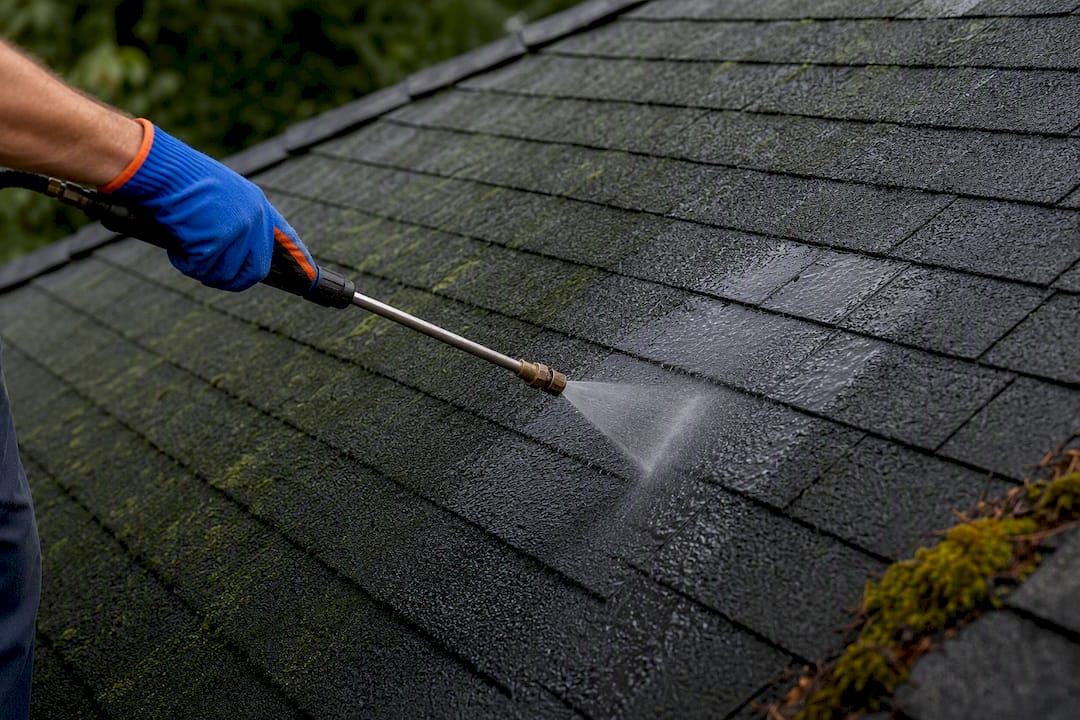
Debris removal matters more here than on a standard roof, too. Leaves and pine needles trapped in valleys hold moisture against the granule surface and create localized dark spots that both look bad and quietly lower the roof's average reflectance. An annual inspection, ideally timed after peak pollen season, catches buildup before it becomes embedded.
Beyond cleaning, treat a cool roof like any asphalt roof: check flashing, look for lifted or cracked shingles after storms, and keep gutters clear so water doesn't back up under the shingle edge. None of that is unique to cool roofing, but skipping it undercuts the reflectance investment just as much as skipping the cleaning does.
Environmental Impact Beyond Energy Bills
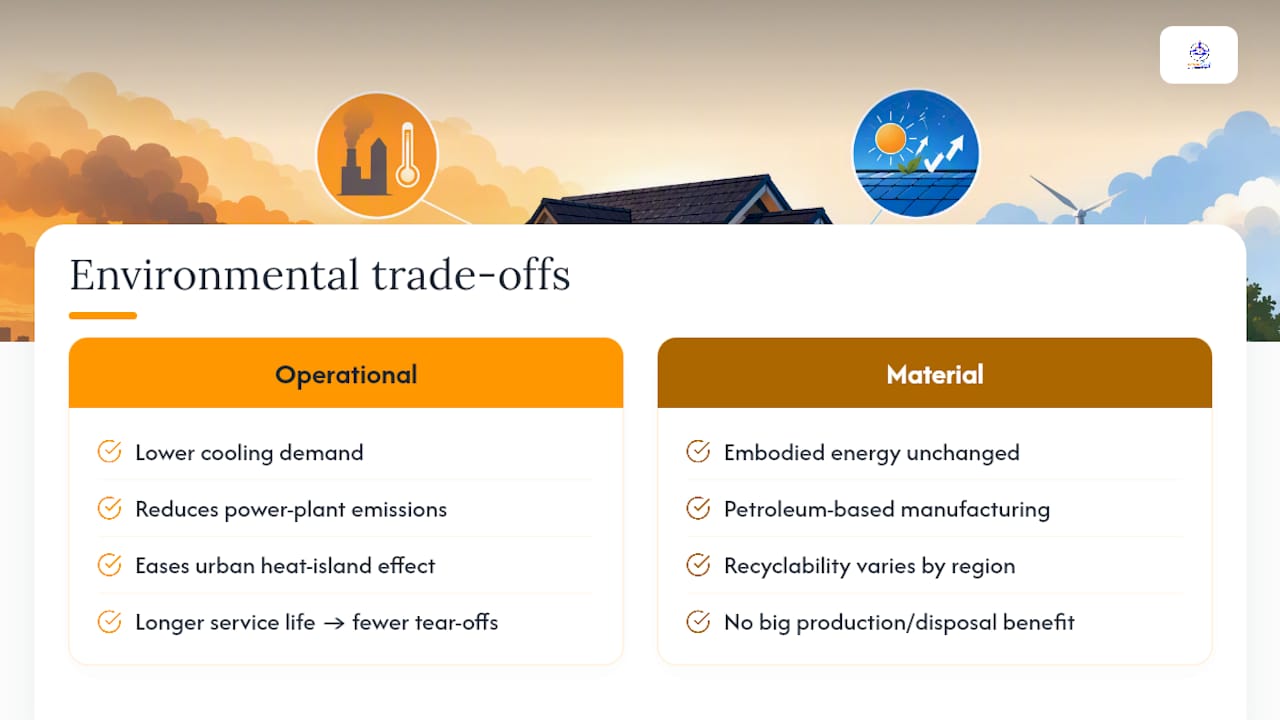
Lower cooling demand means lower electricity draw from the grid, and at scale that reduces the power-plant emissions tied to peak summer demand. That's the most direct sustainability angle, but it's not the only one. Cool roofs also ease the urban heat island effect the EPA has documented in cities and dense subdivisions, where clusters of dark roofing surfaces measurably raise local air temperature compared to greener, lighter-surfaced areas.
Material considerations matter too, and they're less discussed than the energy angle. Asphalt shingles, cool or standard, carry embodied energy from petroleum-based manufacturing, and end-of-life recyclability varies by region and by whether your local waste system accepts shingle recycling at all. A cool shingle doesn't change the embodied energy of the base material much. Its environmental advantage comes almost entirely from operational savings over its service life, not from being a fundamentally greener material to produce or dispose of.
Extending shingle lifespan through reduced heat-cycling stress, one of the secondary benefits of reflective granules, also means fewer full tear-offs and less shingle waste heading to landfills over a home's lifetime. That's a real, if modest, sustainability win layered on top of the energy story.
Exteriorgenie's Take: When Cool Shingles Actually Make Sense
Some contractors evaluate cool shingles case by case rather than as a default upsell. We typically recommend them when a home has poor attic insulation, high cooling costs, and a south or west-facing roof plane, where the reflectance gain has real work to do. When insulation and ventilation are already solid, we're just as likely to suggest putting that budget toward those systems first. A no-pressure roof evaluation tells you which category your home falls into before you spend a dollar.
— Ebben
Get a Straight Answer on Whether Cool Shingles Fit Your Roof
A professional contractor inspects the whole system, not just the shingle, before recommending anything, so you're not paying for reflective technology your attic can't take advantage of. Qualified teams document insulation levels, ventilation balance, and decking condition during every estimate, and they may handle insurance claims assistance if your reroof follows storm damage.

A consultation includes a full attic and roof inspection, a written report on what needs attention before installation, and a clear breakdown of shingle options matched to your climate and budget. If storm damage is part of the picture, our insurance claims assistance team works the paperwork alongside the install. Request a residential roofing estimate or a roof repair inspection in the Lexington and Columbia, SC area, and find out exactly what your roof needs before you commit to a product.
Where to Verify Cool Shingle Performance Claims
- CRRC's product directory for measured SRI, reflectance, and emittance values by specific product and color
- ENERGY STAR's cool roof page for plain-language guidance and qualified product categories
- Exteriorgenie's residential roofing materials guide for broader material comparisons
Sources
- Purchasing energy-efficient cool roof products | U.S. Department of Energy
- Cool roofs | Lawrence Berkeley National Laboratory
FAQ
Are Cool Roof Shingles Worth It?
They're worth it in cooling-dominant climates with high electricity rates and older insulation, where the reflectance gain does real work; in mild climates with efficient homes, the payback is much less certain.
What Are Cool Roof Shingles?
They're asphalt shingles engineered with reflective granules and pigments that bounce back more solar heat than standard shingles, measured by solar reflectance and SRI.
Which Shingles Are the Coolest?
Light and white shingles generally post the highest SRI scores, but cool-dark technology using infrared-reflective pigments lets some darker colors reach a competitive rating. Always check the specific product's CRRC listing rather than judging by color alone.
How Much Do Cool Roof Shingles Cost?
Cool shingles typically cost more than standard shingles, with the total project price driven more by roof complexity, tear-off versus overlay, and regional labor rates than by the shingle upgrade itself.