
Exterior home repair is defined as the targeted process of restoring the home envelope, which includes the roof, siding, windows, doors, gutters, and trim, to protect your living space from moisture and weather damage. Home envelope failure leads directly to stained ceilings, insulation loss, and mold growth inside your walls. Understanding what is exterior home repair explained in full means knowing not just what breaks, but why it breaks and how to fix it correctly. This guide covers every major component, repair versus replacement decisions, professional techniques, and cost factors that every homeowner should know.
What does exterior home repair include?
Exterior home repair covers every component of the home envelope that stands between your living space and the elements. Each part plays a specific role, and failure in one area often triggers damage in others.
- Roof: Shingles, flashing, and underlayment form the primary water barrier. Roofing systems have a typical lifespan of 20–30 years, after which frequent repairs become less cost-effective than full replacement.
- Siding: Siding controls moisture at the wall level. Common damage includes cracking, warping, and rot, all of which allow water to reach the structural sheathing behind it.
- Windows and doors: Frames and seals degrade over time. Drafts, condensation between panes, and soft frame material are all signs that the thermal and moisture barrier has failed.
- Gutters and drainage: Gutters direct roof runoff away from the foundation. Clogged or sagging gutters allow water to pool at the base of walls, accelerating rot and foundation erosion.
- Trim and soffits: Fascia boards, soffits, and decorative trim protect the edges of the roof and wall system. They also seal the gap between the roof deck and the exterior wall, blocking pests and moisture.
Early exterior inspections identify issues across all these components before they become costly structural problems. Catching a failing soffit early, for example, prevents the rot from spreading into the roof deck above it.
When should you repair versus replace exterior components?
The repair versus replacement decision comes down to three factors: damage scope, material condition, and system age. Getting this wrong costs you money in both directions.
| Component | Repair when... | Replace when... |
|---|---|---|
| Roofing | Damage is isolated to a few shingles or one flashing point | System is 20+ years old or damage covers large sections |
| Siding | Damage is limited to one or two boards | Boards are soft, warped, or repeatedly failing |
| Trim and fascia | Surface cracking or minor rot in a small area | Rot has spread to the structural backing or recurs after repair |
| Windows | Seal failure in one unit, frame is still solid | Frame is soft, cracked, or multiple units are failing |
| Gutters | Single section is sagging or leaking at a joint | System is undersized, heavily corroded, or pulling away from fascia |
Repair is appropriate when damage is isolated and the surrounding material is structurally sound. Replacement becomes the right call when boards are soft, warped, or failing repeatedly despite correct repairs.
One factor homeowners consistently underestimate is hidden damage. Water travels behind siding and trim before surface symptoms appear, meaning visible damage often understates the real extent of moisture intrusion. A professional inspection reveals what a visual check from the ground cannot.
Pro Tip: Before committing to a repair budget, have a contractor probe the wood around any visible damage. Soft material beyond the visible rot zone is a strong signal that replacement is the better investment.
Learning how roofers determine replacement vs repair uses the same logic applied to siding and trim. Age, material condition, and damage pattern all factor into the final call.
How do professionals repair exterior home components?
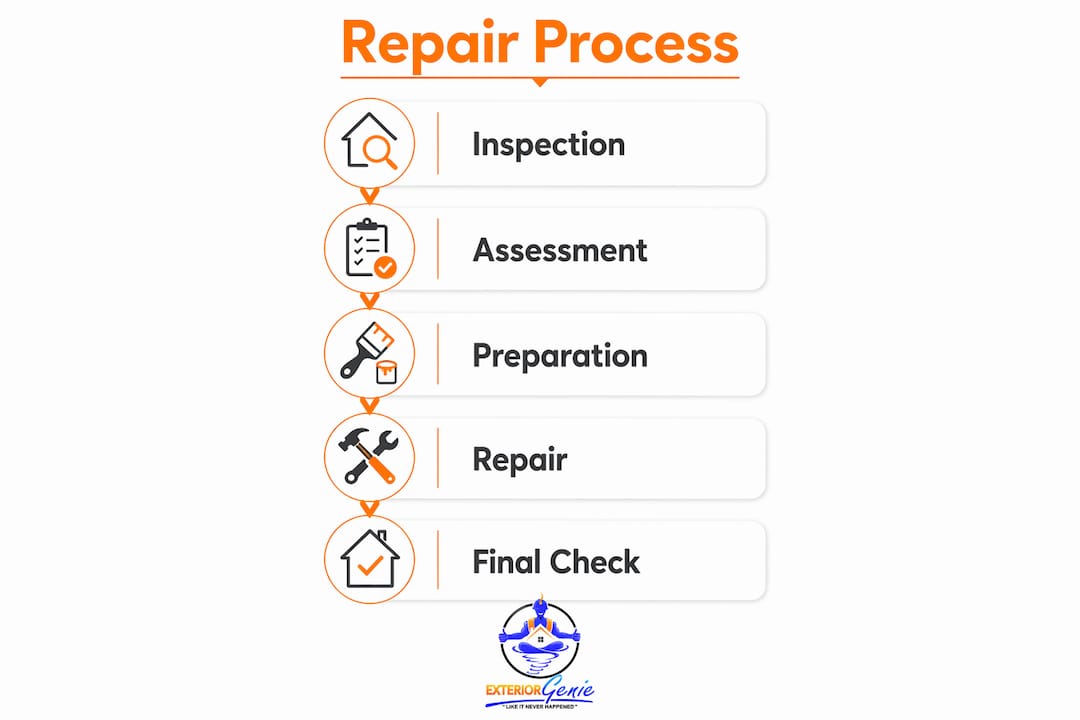
Professional exterior repair follows a defined sequence. Skipping steps, especially early ones, is the primary reason repairs fail within a few years.
Wood rot repair process
- Remove all damaged material. Cut back to solid wood. Leaving any soft or discolored material behind allows rot fungi to continue spreading under the new repair.
- Apply a wood hardener. Hardener penetrates the remaining wood fibers and stabilizes them. This step is not optional. It creates the bond surface that the filler needs.
- Fill with two-part epoxy. Two-part epoxy must be applied within 10–15 minutes before it sets. Work in small batches and overfill slightly to allow for sanding.
- Sand and prime. Once cured, sand the epoxy flush with the surrounding surface. Apply a coat of exterior primer before any paint goes on.
- Paint with two coats of acrylic. Acrylic exterior paint flexes with temperature changes. One coat is not enough to seal the repair against moisture.
Environmental conditions determine whether the repair holds long-term. Epoxy repairs require dry weather above 50°F and typically need 24–48 hours of curing time before sanding or painting. Rushing this step in cold or damp conditions produces a repair that fails within one season.
Pro Tip: Schedule wood rot repairs for late spring or early fall in South Carolina. Summer humidity and afternoon rain showers make it hard to maintain the dry conditions epoxy needs to cure correctly.
Material substitution for recurring damage
Where moisture exposure is frequent, replacing rotted wood trim with PVC is the better long-term fix. PVC trim does not absorb water or support rot, making it a longer-lasting alternative in areas like window sills, door surrounds, and fascia boards. The upfront cost is higher than a wood repair, but the lifecycle cost is lower because the material does not require the same maintenance cycle.
For exterior woodwork on older or heritage-style homes, understanding exterior woodwork for heritage homes provides useful context on matching materials and profiles to original construction.
What affects exterior repair costs and how can you reduce them?
Repair costs vary widely based on four main factors: material type, labor complexity, damage scope, and access difficulty. A straightforward siding board replacement costs far less than a full fascia and soffit repair that requires scaffolding and structural backing work.
The most effective way to control costs is to catch problems early. Routine exterior inspections identify roof, siding, window, drainage, soffit, fascia, and foundation issues before they compound into structural repairs. A small flashing gap caught in spring costs a fraction of the ceiling repair it causes if left through a wet summer.
Practical exterior home maintenance tips that reduce long-term repair costs:
- Clean gutters twice a year. Clogged gutters are the single most common cause of fascia rot and foundation water intrusion. Clean them in late fall after leaves drop and again in early spring.
- Inspect caulk around windows and doors annually. Caulk shrinks and cracks over time. Replacing failed caulk costs almost nothing and prevents frame rot that costs hundreds to fix.
- Check flashing at roof penetrations after every major storm. Flashing at chimneys, vents, and skylights is the most common point of roof water entry. A loose flashing seal is a fast repair. The water damage it causes is not.
- Paint or seal wood trim on a regular schedule. Bare wood absorbs moisture and rots. A fresh coat of exterior paint every 5–7 years is the cheapest form of wood protection available.
- Look for soft spots in soffits and fascia from the ground. Discoloration, sagging, or visible gaps are early warning signs. Addressing them before they spread keeps the repair contained.
Well-maintained exteriors also deliver measurable energy efficiency benefits. Sealed windows, intact siding, and tight trim reduce air infiltration, which lowers heating and cooling costs year-round. The benefits of exterior repairs extend well beyond appearance.
Key takeaways
Exterior home repair protects structural integrity, energy efficiency, and home value by restoring the roof, siding, windows, gutters, and trim before moisture damage spreads.
| Point | Details |
|---|---|
| Home envelope components | Roof, siding, windows, doors, gutters, and trim all work together to block moisture. |
| Repair vs. replacement trigger | Replace when materials are soft, warped, or repeatedly failing despite correct repairs. |
| Repair sequencing | Fix water control elements like roofs and flashing before addressing siding or trim. |
| Epoxy repair conditions | Apply two-part epoxy only in dry weather above 50°F and allow 24–48 hours to cure. |
| Early inspection value | Routine inspections catch small issues before they become structural repairs. |
What I've learned from watching homeowners get exterior repair wrong
Most exterior repair mistakes I see come down to one thing: fixing what you can see instead of fixing what caused the damage. A homeowner replaces a rotted fascia board, paints it, and calls it done. Six months later the same board is soft again. The flashing above it was never touched.
Ignoring root causes like failed flashing, deteriorated caulk, or misdirected roof runoff produces exactly that cycle. The cosmetic repair looks fine for a season, then the underlying moisture source destroys it again. You pay twice and the structure gets worse each time.
Sequencing repairs from the top down is the discipline that separates a repair that lasts from one that doesn't. Roof and flashing first. Gutters and drainage second. Siding and trim only after water control is confirmed. Skipping to the visible damage first is the most expensive shortcut in home maintenance.
The other mistake I see constantly is homeowners treating exterior repair as a cosmetic project. The goal is not a house that looks good. The goal is a house that sheds water correctly. When you start from that framing, you make better decisions about what to fix, what to replace, and what to inspect before you spend a dollar.
— Ebben
Exteriorgenie can handle your exterior and roofing repairs
Exteriorgenie is a veteran-owned roofing and exterior repair company based in Lexington, SC, with 25 years of field experience. The team includes HAAG-certified inspectors who assess storm damage, hidden moisture intrusion, and system age to give you an honest repair versus replacement recommendation.

Exteriorgenie offers roof repair services for everything from isolated shingle damage to full flashing replacement. If a storm caused the damage, the team provides direct insurance claims assistance to help you navigate the process without leaving money on the table. Financing options are available for homeowners who need repairs now but want to manage the cost over time. Contact Exteriorgenie for an inspection and get a clear picture of what your home actually needs.
FAQ
What is exterior home repair?
Exterior home repair is the process of restoring the home envelope components, including the roof, siding, windows, doors, gutters, and trim, to prevent moisture intrusion and structural damage.
What does exterior trim repair include?
Exterior trim repair covers fascia boards, soffits, window surrounds, and door casings. It typically involves removing rotted material, applying wood hardener and epoxy filler, then priming and painting, or replacing wood with PVC where moisture exposure is high.
How do I know when to repair versus replace exterior components?
Repair is appropriate when damage is isolated and surrounding material is structurally sound. Replace when boards are soft, warped, or failing repeatedly, or when the system has exceeded its expected lifespan.
How long does an exterior wood repair last?
A correctly executed epoxy repair on sound, dry wood can last many years. Repairs fail early when the root cause, such as failed flashing or clogged gutters, is not fixed before the cosmetic work is done.
What are the most important exterior home maintenance tasks?
Cleaning gutters twice a year, inspecting and replacing failed caulk annually, checking flashing after storms, and repainting wood trim on a regular schedule are the four tasks that prevent the majority of costly exterior repairs.