
Dents and dimples in your gutters or gutter guards almost always mean hail hit your roofline, but that doesn't automatically mean you need a repair. Cosmetic dings on aluminum are common and often harmless; sagging, pooling, or crushed downspouts are not. Start by photographing everything from the ground. If you spot leaks, sagging sections, or can't safely see the roofline, skip the ladder and call a professional inspector before doing anything else.
TL;DR:
- Small dents from hail as tiny as a quarter can loosen fasteners and dent aluminum gutters, but larger hail can crush downspouts or cause punctures.
- Ground-level inspections with binoculars, water tests, and level checks are safest and effective for most minor damages, avoiding risky roof work.
- Ignoring hail-damaged gutters can lead to water seepage behind fascia, foundation erosion, and accelerated shingle wear, which worsen over a few rainstorms.
- Patch repairs suffice for minor punctures, but extensive damage or system fatigue from repeated hail usually requires replacing entire gutters or upgrading materials.
- Prompt documentation and inspection are critical for insurance claims, with contractor reports enhancing claim success and ensuring comprehensive damage assessment.
Table of Contents
- Signs of Hail Damage to Gutters and Gutter Guards
- How Do You Inspect Gutters Safely After a Hailstorm?
- What Happens if You Ignore Hail-Damaged Gutters?
- Repair, Patch, or Replace: How Do You Decide?
- Does Homeowners Insurance Cover Hail-Damaged Gutters?
- What Should a Professional Gutter Inspection Cover?
- Should You Handle This Yourself or Call a Contractor?
- Get Your Gutters and Roofline Checked the Right Way
- Where to Learn More About Storm Safety and Coverage
- Sources
- FAQ
Signs of Hail Damage to Gutters and Gutter Guards
Hail as small as a quarter can dent aluminum gutters and loosen fasteners, while larger hail can crush downspouts or punch straight through thinner materials. That size threshold matters because it tells you what kind of damage to expect before you even walk outside.
Some signs are purely visual and don't affect performance. Others tell you water isn't draining the way it should, and those are the ones that turn into bigger repair bills.
- Dimples or pockmarks scattered across gutter faces and gutter guard screens
- Punctures or small holes, especially near seams and end caps
- Crushed or dented downspouts, particularly at elbows
- Loose or missing fasteners and hangers pulling away from the fascia
- Pooling water or "birdbathing" instead of a clean slope toward downspouts
- Overflow staining on siding below gutter joints
- Granule buildup in the gutter troughs, a sign hail also hit the roof
Material matters here. Aluminum dents easily but rarely cracks, which is why cosmetic damage is so common on standard residential gutters. Vinyl tends to crack or shatter at the impact point instead of denting, so a hairline split can be easy to miss. Steel and copper resist denting better but show impact differently. Gutter guards made of mesh or micro screen can bend inward and clog with debris and roof granules, which quietly reduces flow long before you notice a leak.
How Do You Inspect Gutters Safely After a Hailstorm?
Ground-level inspection catches most of what matters, and it's the safer starting point for every homeowner regardless of roof pitch. A systematic ground inspection using binoculars, a hose test, and a level check reveals pooling, slope problems, and leaks without putting anyone on the roof.
- Walk the perimeter with binoculars and photograph any visible dents, punctures, or misaligned downspouts.
- Check fascia boards and siding below the gutter line for water stains or erosion in the mulch and soil.
- Run a hose test: pour water into the gutter at the far end from the downspout and watch where it collects or overflows.
- Hold a level against a short gutter section to spot obvious slope reversals or sagging.
- During the next rain, watch from a window for overflow points or drips behind the fascia.
- If you can reach a section from a stable ground-level ladder, wear gloves and feel gently for sharp punctures. Never lean out or climb onto a steep or multi-story roof to do this.
Pro Tip: Take one wide shot of the whole gutter run and one close-up of each damaged spot. Adjusters and contractors both want scale and detail, and a single blurry photo of a dent rarely settles a claim.
Safety comes first on any storm-damaged roof. Homeowners without professional gear should avoid climbing on steep or multi-story roofs, and should call a professional whenever damage looks extensive or the roofline is hard to see clearly. That threshold applies just as much here: if damage spans a significant portion of your gutter line, or you see active leaks, sagging, or a crushed downspout, stop the DIY inspection and get a contractor on the schedule.
What Happens if You Ignore Hail-Damaged Gutters?
Gutters that can't shed water properly don't fail quietly. They redirect it somewhere else on the house, and that somewhere is usually more expensive to fix than the gutter itself.
- Overflowing or misaligned gutters soak fascia boards, which rot from the inside before the damage is visible from the ground
- Trapped moisture behind sagging sections can push into soffits and eventually into attic insulation
- Concentrated runoff near the foundation accelerates soil erosion and can contribute to basement seepage
- Water backing up at the roof edge speeds up shingle wear and raises the risk of infiltration under the drip edge, which is one reason IBHS ties roof-edge performance to storm resilience
None of this happens overnight. It happens over one or two more rainstorms after the hail, which is exactly why the ground-level checks above are worth doing right away instead of waiting for a slow season.
Repair, Patch, or Replace: How Do You Decide?
Small, isolated damage rarely justifies a full system replacement, and a good contractor will tell you that upfront instead of pitching a bigger job than you need. The decision usually comes down to how widespread the damage is and whether it's still functional.
- Patch it yourself when you're dealing with one or two small punctures and the slope and flow are otherwise fine; a gutter sealant and patch kit handles this in an afternoon.
- Replace a section when dents or crushing are localized to a few feet, hangers are loose, or a downspout elbow is crushed but the rest of the run is intact.
- Replace the whole system when crushing or punctures repeat across most of the run, the gutters are already near the end of their service life, or repeated hail seasons have left the metal fatigued.
- Upgrade materials if you're replacing anyway; thunderstorm-ready upgrades using heavier-gauge or impact-resistant products can reduce how often you're back in this position.
Before hiring anyone, ask for a written scope of work, close-up photos of every damaged section, a firm estimate, and a stated warranty period. A contractor who won't put the timeline in writing is one to skip.
Does Homeowners Insurance Cover Hail-Damaged Gutters?
Most standard homeowners policies cover hail damage to gutters under dwelling or "other structures" coverage, but what you actually get paid depends on whether your policy pays replacement cost value or actual cash value. RCV pays to replace the gutters at current prices; ACV subtracts depreciation first, which can leave a meaningful gap on a 15-year-old gutter system.
Documentation is what separates a smooth claim from a denied one. Follow this order:
- Photograph every damaged area with both wide and close-up shots, timestamped if your phone supports it.
- Note the storm date, since insurance departments and NOAA storm records help confirm the timing of hail events when adjusters ask for proof.
- Get a contractor inspection report before the adjuster visit; a documented contractor walkthrough tends to produce a stronger claim outcome than homeowner photos alone.
- Save receipts for any temporary repairs, like tarping or emergency patching, since most policies reimburse reasonable mitigation costs.
- Report the claim promptly. Many insurers set expectations around timely reporting, and waiting months can complicate the timeline.
If your deductible is close to or higher than the repair estimate, a small, isolated patch job may simply cost less out of pocket than filing a claim at all. That's a math problem worth doing before you call your agent, not after.
What Should a Professional Gutter Inspection Cover?
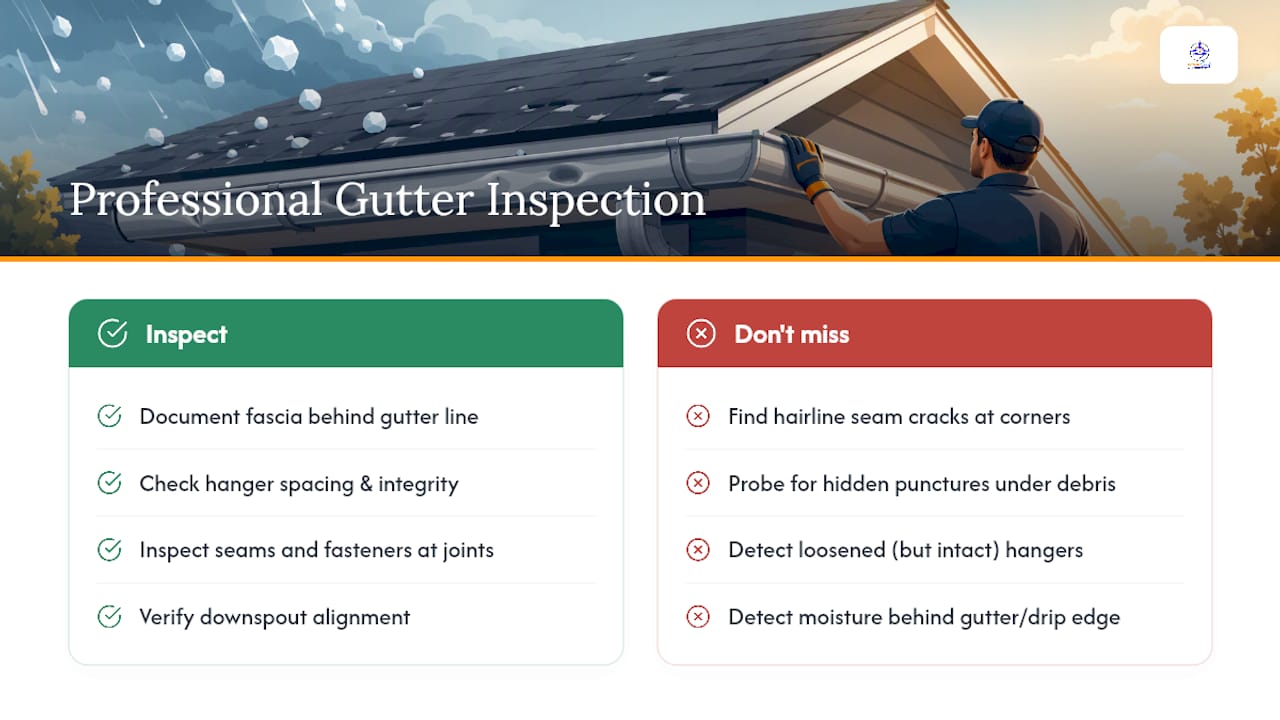
A thorough inspection goes past what's visible from the driveway. It documents fascia condition behind the gutter line, hanger spacing and integrity, seam and fastener status at every joint, downspout alignment, and any early evidence of water intrusion at the roof edge. Exteriorgenie's field teams look for issues that also affect roof-edge shingles, since gutter failure and roof-edge wear tend to show up together after hail.
The details homeowners miss most often are hairline seam cracks at corners, hidden punctures under debris, hangers that have loosened but not visibly failed, and moisture trapped behind the gutter or under the drip edge. Any one of those can undercut an insurance claim if it isn't caught and documented before the adjuster arrives.
Should You Handle This Yourself or Call a Contractor?
Ground-level checks and small patch jobs are fine for a handful of dents on a single-story home. Once you're dealing with a multi-story roof, damage across more than a quarter of the gutter line, active leaks, or any section you genuinely can't see well, the safer and smarter move is a professional inspection. A documented contractor report, paired with your own photos, consistently produces better insurance outcomes than homeowner photos on their own.
— Ebben
Get Your Gutters and Roofline Checked the Right Way
A professional contractor inspects the whole system at once, gutters, downspouts, fascia, and the roof edge, so you're not paying for three separate visits to find one storm's worth of damage. Such contractors with certified inspectors on staff document everything the way an adjuster expects to see it, which matters if you're filing a claim instead of paying out of pocket.

Before you call, have your storm date, any photos you've already taken, and your policy or claim number ready if you've started a claim. From there, Exteriorgenie can inspect the gutters and roofline for hail damage, or step in directly to help with insurance claims documentation and the adjuster walkthrough if you'd rather not manage that process alone. Request an inspection and get a clear scope of work before any repair work starts.
Where to Learn More About Storm Safety and Coverage

For broader guidance beyond gutters, Ready.gov's thunderstorm safety page and the Oklahoma Insurance Department's wind and hail resource cover storm prep and claims basics in plain language. For hiring guidance, this homeowner's guide to vetting inspectors is a useful companion.
Sources
- IBHS — Shingle performance ratings (hail)
- MoneyGeek — Does home insurance cover hail damage?
- Oklahoma Insurance Department — Wind and hail
FAQ
Is Gutter Damage Covered by Homeowners Insurance?
Most standard policies cover hail damage to gutters under dwelling or other structures coverage, though your payout depends on whether the policy uses replacement cost value or actual cash value.
Will Homeowners Insurance Pay for Hail Damage to Gutters?
Generally yes, provided you report the claim promptly and document the damage with photos and, ideally, a contractor inspection report.
At What Hail Size Does Gutter Damage Typically Start?
Hail around the size of a quarter can already dent aluminum gutters and loosen fasteners; larger hail can crush downspouts or puncture thinner materials outright.
How Long After a Hailstorm Can You File a Roof or Gutter Claim?
You should report a claim as soon as possible after the storm; most insurers expect timely reporting, and waiting too long can complicate the documentation and payout process.
When Should I Call a Professional Instead of Inspecting Myself?
Call a contractor if damage covers more than a quarter of the gutter line, you see active leaks or sagging, or the roofline isn't safely visible from the ground.