
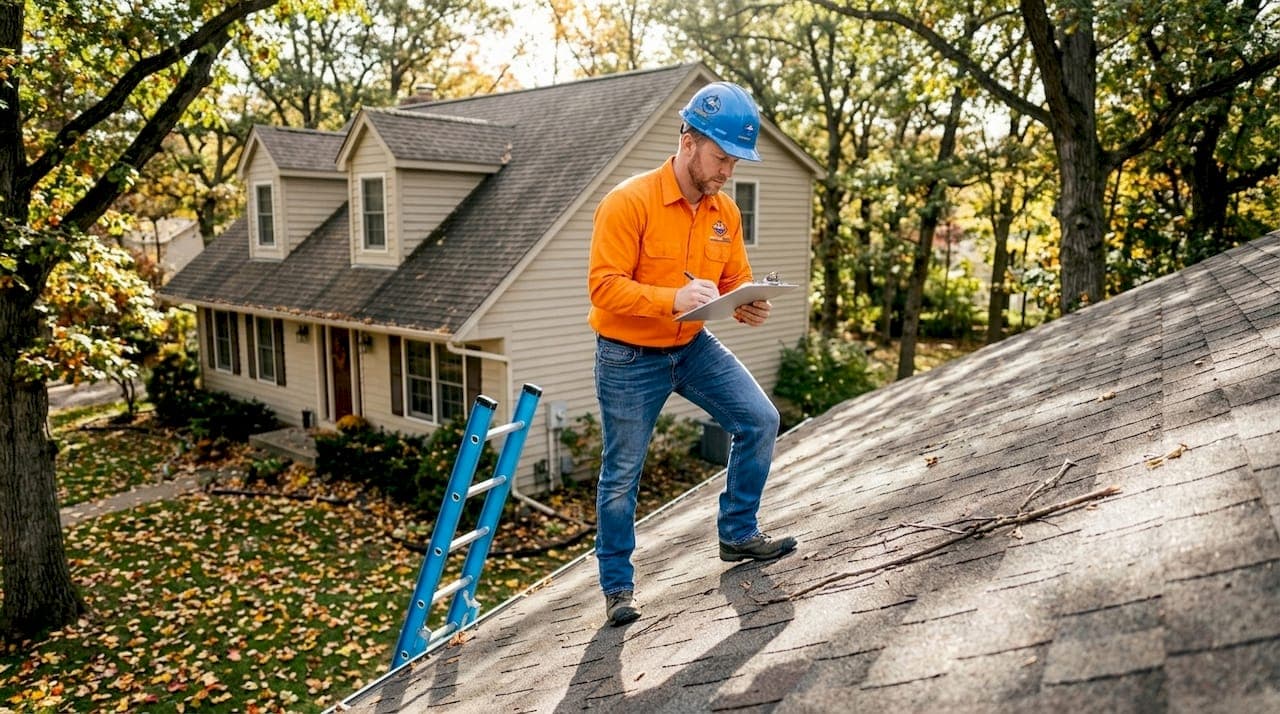
Most homeowners wait until water is dripping through the ceiling before they call a roofer. By then, what could have been a minor fix has turned into a major expense. Understanding how roof repair extends roof life means shifting from reactive thinking to proactive action. A well-timed repair on cracked shingles or faulty flashing can add years to your roof's performance, protect your home's structure, and delay a full replacement that can easily cost tens of thousands of dollars. This article breaks down exactly how that works.
Table of Contents
- Key takeaways
- How roof damage develops and why early repairs matter
- Repair types that preserve and extend roof lifespan
- Maintenance practices that support your repairs
- When to repair versus replace your roof
- My honest take on roof repair as a long-term strategy
- Protect your roof with professional repair services
- FAQ
Key takeaways
| Point | Details |
|---|---|
| Early repairs prevent escalation | Small issues like cracked shingles or loose flashing become leaks and structural damage when ignored. |
| Specific repairs deliver the most value | Flashing repair, shingle replacement, and protective coatings are the highest-impact interventions for roof longevity. |
| Maintenance amplifies repair results | Cleaning, ventilation, and tree trimming work alongside repairs to protect your roof between professional visits. |
| The 25% rule guides smart decisions | If less than 25% of your roof needs work, repair is almost always the better financial and structural choice. |
| Timely repairs save significant money | Delaying repairs risks replacement costs ranging from $5,000 to $45,000, making prompt action the smarter investment. |
How roof damage develops and why early repairs matter
Roof damage rarely announces itself. It builds quietly, often starting with something as minor as a single missing shingle or a thin crack in the sealant around a pipe flashing. Left alone, those entry points let water in. Water infiltrates the underlayment, works into the decking, and eventually reaches your attic and ceiling framing.
Here is how the damage cycle typically unfolds:
- Weather wear: Wind lifts shingle edges, hail bruises granules, and freeze-thaw cycles crack sealant around flashing points.
- Debris buildup: Leaves and dirt trap moisture against shingles, accelerating granule loss and organic growth.
- Algae and moss growth: These organisms feed on shingles and retain moisture, which speeds up deterioration from below.
- Flashing failures: Metal flashing around chimneys, vents, and skylights corrodes or separates over time, creating direct water entry points.
The mechanics matter because every failure mode above is interruptible. That is the core reason why how roof repair extends roof life is not just a theory. Annual and post-storm inspections catch issues like flashing separation and moisture buildup before they escalate into structural damage. Once structural decking gets wet and starts to rot, you are no longer patching shingles. You are replacing sections of your home's frame.
Pro Tip: Schedule a visual inspection from the ground after every major storm. Look for lifted shingles, exposed decking, or granule piles collecting in your gutters. These are the earliest warning signs you can spot without climbing a ladder.
Mold growth is the hidden cost most homeowners do not account for. Water that enters through a damaged roof creates the warm, damp conditions mold needs to spread into wall cavities and insulation. What started as a $400 shingle repair can become a $4,000 mold remediation job. The repair was never just about the roof.
Repair types that preserve and extend roof lifespan
Not all repairs deliver equal value when it comes to preserving your roof. Some fixes are cosmetic. Others interrupt the failure cycle directly. Knowing which repairs matter most helps you prioritize when you are working with a budget.
Shingle repair and replacement
Damaged shingles allow water infiltration that leads to mold and structural damage. Cracked, curling, or missing shingles are not just aesthetics problems. They are gaps in your roof's water barrier. Replacing individual shingles promptly is one of the most cost-effective ways to maintain that barrier without touching the rest of the roof. For homeowners with asphalt shingles, you can learn more about your specific options for shingle repair and replacement before committing to any work.

Flashing repair
Flashings are installed at every roof penetration, including chimneys, vents, skylights, and valleys. They are also the most common source of leaks. Repairing flashing extends roof life significantly because water at these points does not just stay on the surface. It follows the penetration directly into the structure. Corroded or separated flashing should be addressed before any water staining appears inside the home.
Protective coatings and sealants
Roof coatings seal shingles, reducing UV damage, algae growth, and water infiltration. Water-based coatings applied over aging asphalt shingles can restore flexibility to brittle granules and add measurable years to a roof that would otherwise need replacement within a few seasons. For flat or commercial roofs, flat roof coatings provide a similar protective layer that locks out moisture and reflects heat.
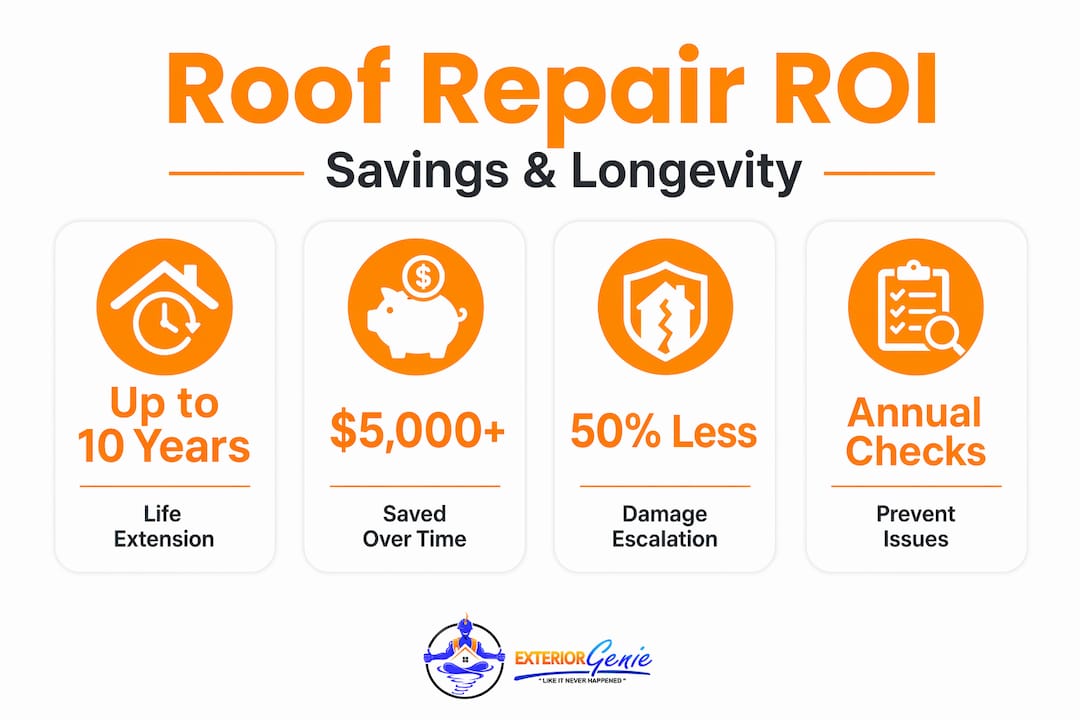
Roof rejuvenation treatments
Products like Roof Maxx treatments use bio-based oil to restore flexibility to dried-out asphalt shingles, and can extend roof life by five years per application. With repeated applications every five years, a homeowner can potentially add up to 15 additional years of service life to a roof that still has sound structure but degraded shingles. That is a significant delay on a replacement bill.
Pro Tip: When budgeting for repairs, prioritize flashing and coating work over purely cosmetic fixes. Water entry points cause compounding damage. Surface appearance issues do not.
Here is a quick comparison of common repair types by cost and impact:
| Repair type | Average cost range | Impact on roof lifespan |
|---|---|---|
| Shingle repair or replacement | $150 to $1,500 | Moderate to high |
| Flashing repair | $200 to $600 | High |
| Protective coating application | $500 to $3,000 | High |
| Roof rejuvenation treatment | $400 to $1,200 | High (up to +15 years) |
| Gutter repair or cleaning | $100 to $500 | Moderate |
Maintenance practices that support your repairs
Repair work does its best job when it is supported by consistent maintenance. Think of it this way: a great repair on damaged flashing can be undone within two seasons if debris keeps piling up and holding moisture against the shingles around it.
Here are the most impactful maintenance practices to pair with professional repairs:
-
Clean gutters and downspouts seasonally. Clogged gutters back water up under shingles and against fascia boards. Gutter maintenance helps protect shingles and roof structure by keeping water flowing away from the home as designed.
-
Trim overhanging tree branches. Branches rubbing against shingles wear off protective granules. They also drop debris that retains moisture. Tree trimming costs typically range from $200 to $760 but can prevent far more expensive roof repairs down the line.
-
Improve attic ventilation and insulation. This one surprises many homeowners. Proper attic insulation and ventilation prevent ice dams and moisture damage by regulating temperature at the roof deck. An overheated attic degrades shingles from below, even when the exterior looks fine.
-
Schedule professional inspections at least once per year. Preferably twice: once in spring after winter stress and once in fall before severe weather season. A HAAG-certified inspector can spot early flashing problems, granule loss patterns, and potential leak points that an untrained eye would miss entirely.
Pro Tip: After any storm with winds over 50 mph, schedule an inspection even if you do not see obvious damage. Wind damage to shingles often appears as lifted tabs or cracked seals that look minor but allow water in during the next rain.
Cleaning with enzyme-based solutions removes organic material like algae and moss without stripping granules the way pressure washing can. The granules on your shingles are the primary UV barrier for the asphalt layer underneath. Protecting them extends the functional life of the entire shingle.
When to repair versus replace your roof
Repair is not always the right answer. Knowing the line between a roof worth saving and one that has reached the end of its service life is one of the most financially important decisions a homeowner makes.
Signs that repair is still the right call include:
- Damage is localized. One section of shingles, a single valley, or isolated flashing problems indicate the rest of the roof is sound.
- The roof is less than 15 years old. Most asphalt shingle roofs are designed for 20 to 30 years of service. A roof in its first half of life is almost always worth repairing.
- No widespread granule loss. Granule loss visible across the entire surface signals aging throughout, not just in one spot.
- No widespread decking damage. If only a few decking boards are soft or damaged, repair is feasible. Widespread soft spots indicate systemic failure.
The 25% rule guides homeowners through this decision: if more than 25% of the roof surface needs repair, full replacement becomes more cost-effective than patching. Below that threshold, repair almost always wins financially and structurally.
Here is a direct cost comparison to illustrate why this matters:
| Scenario | Repair cost | Replacement cost | Years gained |
|---|---|---|---|
| Isolated shingle damage | $200 to $800 | $10,000 to $25,000 | 5 to 10 years |
| Flashing failure and minor leaks | $400 to $1,200 | $10,000 to $25,000 | 7 to 12 years |
| Full coating application | $1,000 to $3,000 | $10,000 to $25,000 | 5 to 15 years |
Full roof replacement can cost from $5,000 to $45,000 depending on size, material, and region. Even a $3,000 repair that buys you another decade on a roof you would otherwise replace in two years is an enormous financial win.
My honest take on roof repair as a long-term strategy
I have been in and around roofing for over two decades, and the pattern I see most often is this: homeowners delay small repairs because the cost feels unnecessary when nothing is visibly wrong. Then a storm hits, or a heavy rain reveals a leak, and suddenly they are facing a replacement they were not budgeting for.
What I have learned is that the roof itself is rarely the only thing suffering during that delay. Water finds its way into insulation, framing, and drywall. I have walked into attics where the homeowner thought they had a minor shingle problem and found mold covering 40% of the sheathing. The shingles were easy to fix. The mold was not.
The homeowners who get the most years out of their roofs are the ones who treat inspection and repair as regular line items in their home maintenance budget, the same way you would schedule an HVAC service or a furnace cleaning. They are not waiting for problems. They are intercepting them.
I also think the framing of "repair versus replace" misleads people into treating these as equal options they debate once something goes wrong. The real strategy is using repair proactively to keep replacement off the table for as long as the structure supports it. In markets like Lexington, SC, where summer heat and storm season both put real stress on roofing materials, that proactive approach pays off every single year.
— Ebben
Protect your roof with professional repair services

If you have noticed any of the warning signs covered in this article, from granule buildup in your gutters to minor interior staining after a heavy rain, it is worth having a professional take a look before the problem compounds. Exteriorgenie has been providing residential and commercial roof repair services in Lexington, SC for 25 years. The team includes HAAG-certified inspectors who know exactly what to look for after storm events and can walk you through the insurance claim process when coverage applies.
Whether you need a targeted patch on a leaking section of roof, a full flashing replacement, or a protective coating applied to aging asphalt shingles, Exteriorgenie offers transparent pricing and 24/7 emergency response. Explore the full range of residential roofing solutions or contact the team directly to schedule your inspection before small issues become expensive ones.
FAQ
How does roof repair extend the life of my roof?
Roof repair stops damage from escalating. Fixing cracked shingles, failed flashing, and minor leaks early interrupts the chain of moisture damage, mold growth, and structural decay that shortens roof lifespan.
What are the most common signs your roof needs repair?
Look for missing or curling shingles, granules collecting in gutters, water stains on ceiling drywall, and visible rust or separation around flashing at chimneys and vents. These are early signals that repair is needed before damage spreads.
Is repairing a roof better than replacing it?
When damage covers less than 25% of the roof surface and the structure is sound, repair is almost always the better financial choice. Full replacement costs between $5,000 and $45,000, while targeted repairs typically cost a fraction of that.
How often should a roof be inspected to extend its lifespan?
Professionals recommend at least one inspection per year, with an additional check after any major storm. Regular inspections catch flashing problems and moisture buildup early, when repairs are still minor and affordable.
Can roof coatings and rejuvenation treatments really extend roof life?
Yes. Protective coatings reduce UV damage and water infiltration, while rejuvenation treatments like Roof Maxx can restore flexibility to dried-out asphalt shingles and add up to 15 years of additional service life with repeated applications.