
A No Dollar Limit (NDL) roof warranty is a manufacturer-backed guarantee that pays the full cost of repairing or replacing a failed roof system, materials and labor both, with no payout cap and no reduction for age. It only applies when a certified contractor installs the system correctly, registers it, and passes required inspections. For commercial buildings held longer than a decade, it's usually the most consequential financial protection on the project.
TL;DR:
- NDL warranties cover the entire roof system, including labor and materials, with no payout cap and a no-depreciation clause that pays current market rates.
- Eligibility requires using a certified contractor, meeting product thickness standards, passing inspections, and registering within a specified window after installation.
- The coverages include the system components and labor, making NDL warranties more comprehensive than material-only or workmanship warranties, especially for large or labor-intensive repairs.
- Premium costs range from 5 to 10 percent of the project price, with longer terms like 25 or 35 years justifying coverage for owners planning to hold the building for a decade or more.
- Proper claim filing and maintenance, including regular inspections and documented upkeep, are essential to keep the warranty valid and enforceable over time.
Table of Contents
- What Does an NDL Roof Warranty Actually Cover?
- NDL vs. Material-Only vs. Workmanship: The Three-Layer Warranty Stack
- Who Qualifies for an NDL Warranty?
- Is an NDL Warranty Worth the Cost?
- How Do You File an NDL Roof Warranty Claim?
- What Voids or Limits NDL Coverage?
- What Do Owners Need to Do to Keep the Warranty Valid?
- Exterior Genie's Role in NDL-Compliant Roofing Projects
- When Should You Actually Buy an NDL Warranty?
- Get NDL-Level Protection Without Chasing Down Paperwork Yourself
- Where to Verify Warranty Terms and Save Your Documents
- Sources
- FAQ
What Does an NDL Roof Warranty Actually Cover?
An NDL warranty treats the roof as a system, not a pile of parts. It covers the membrane, insulation, cover boards, flashings, fasteners, adhesives, and edge metal, plus the labor to fix or replace any of it when a covered failure occurs. That's the detail most owners miss when they hear "30-year warranty" and assume everything is included.
The bigger financial protection is the no-depreciation clause. A claim filed in year 22 of a 25-year term gets paid at current market rates, not some discounted fraction based on remaining term. Compare that to a typical repair bill on a mid-size commercial roof:
- Materials: often 25–40% of the total claim cost
- Labor and disposal: often 60–75% of the total claim cost
- Equipment and staging: the remainder
Statistic Callout: Labor alone can account for 60–75% of a major commercial repair claim — the exact portion an NDL warranty pays that a material-only warranty won't.
That labor share is why NDL coverage changes the math on a large loss. A membrane defect that's cheap to source but expensive to remove and replace still gets paid in full under NDL, while a material-only policy leaves the owner holding the labor invoice.
NDL vs. Material-Only vs. Workmanship: The Three-Layer Warranty Stack
Every commercial roof carries up to three separate warranties, and they don't overlap the way marketing brochures imply. Knowing which one actually pays out in a given failure is the difference between a covered claim and a very expensive lesson.
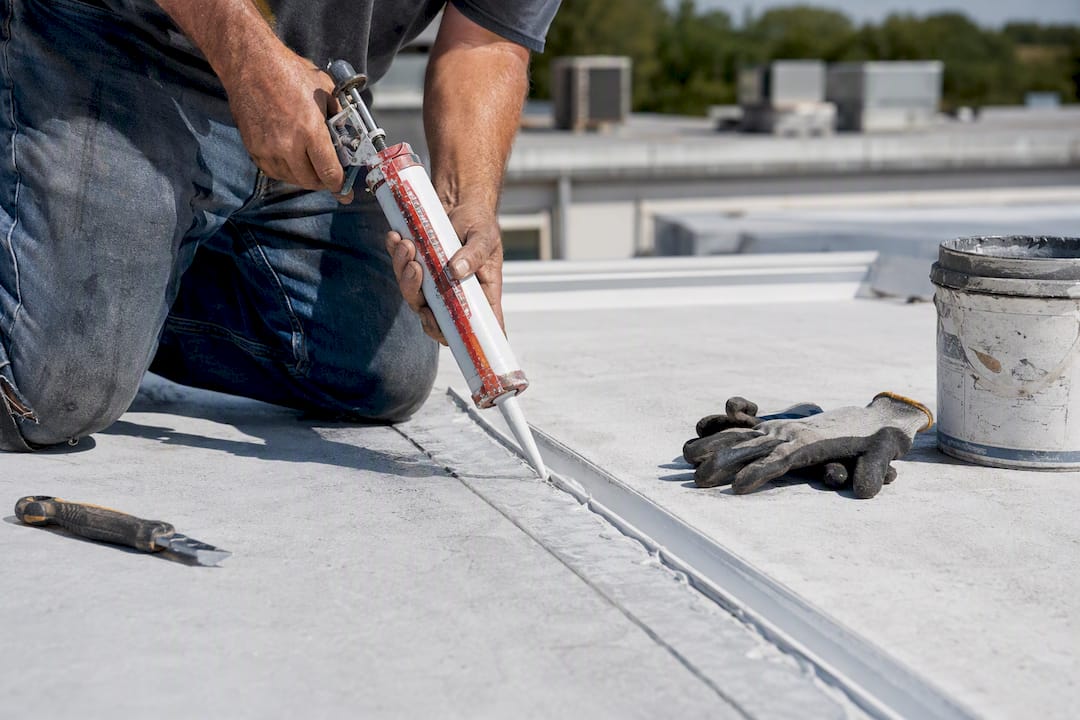
- Material-only warranty: covers manufacturer defects in the product itself, but not the labor to remove and reinstall it.
- Contractor workmanship warranty: covers installation errors (a bad seam, a missed fastener pattern) for a shorter term, typically 2 to 10 years, and is only as good as the contractor's solvency.
- NDL warranty: covers the entire installed system, materials and labor, for the full term, issued by the manufacturer rather than the installer.
Say a seam fails from an installation error five years in. A material-only warranty pays nothing, since the membrane itself wasn't defective. A workmanship warranty might cover it if the contractor is still in business. An NDL warranty covers it outright, because it insures the completed system rather than isolating blame between product and process. Industry guidance on total system warranties warns owners specifically about marketing language like "lifetime" or "30-year" that never specifies which of these three tiers actually applies.
Who Qualifies for an NDL Warranty?
Manufacturers don't hand out NDL coverage automatically. It has to be earned through a specific process, and missing a step anywhere along the way can void eligibility before the roof ever leaks.
- Use a certified, authorized contractor. Manufacturers set tiers (often bronze, silver, gold, platinum), and NDL eligibility usually requires the top one or two. Verify the exact tier with the manufacturer directly, not just the contractor's marketing claims.
- Meet product and thickness specs. Manufacturers publish minimum membrane thickness requirements tied to the term length, commonly around 60 mil for many TPO and PVC systems and higher for extended-term warranties.
- Pass milestone inspections. Expect a pre-install check, at least one in-progress inspection, and a final walkthrough before the manufacturer issues coverage.
- Register within the window. Most manufacturers require registration within 30 to 60 days of completion. Major manufacturers like GAF tie certification tier, inspection compliance, and registration directly to NDL issuance.
Pro Tip: Ask for the manufacturer's written acceptance letter, not just a contractor's word that the warranty "is being processed." An unregistered project has no enforceable NDL, no matter what the proposal promised.
Is an NDL Warranty Worth the Cost?
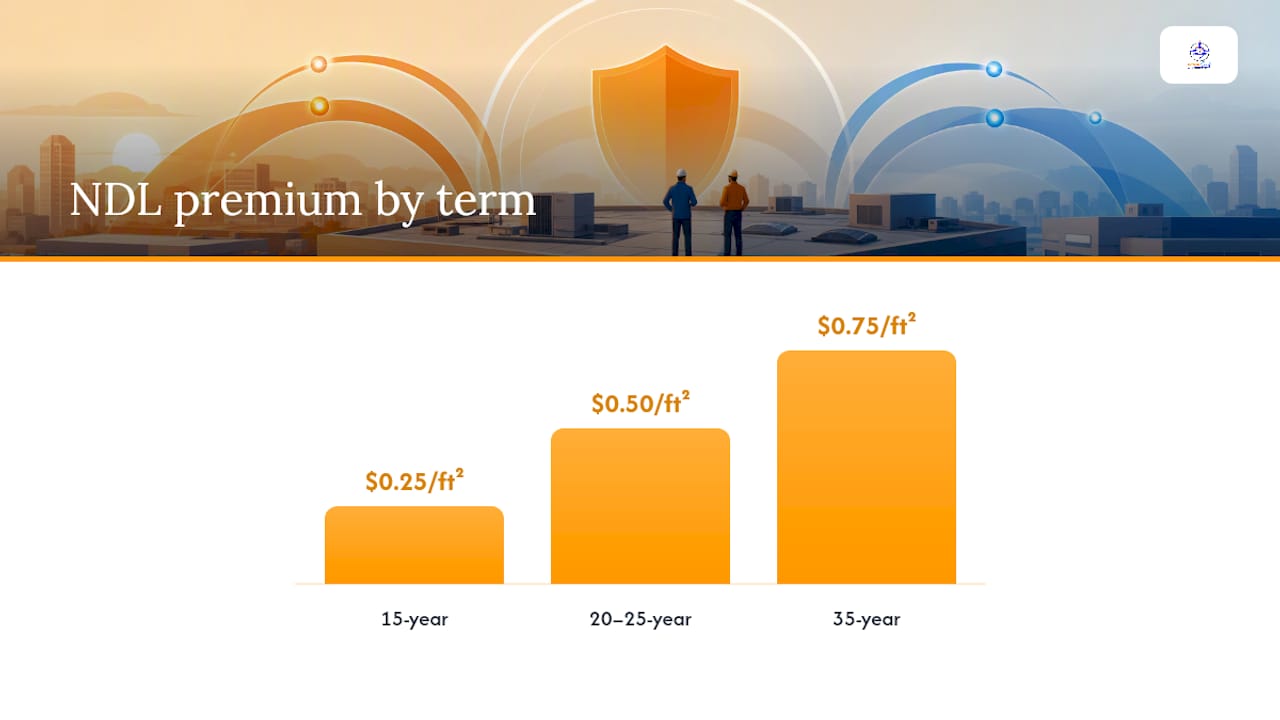
NDL coverage isn't free, and it isn't meant to be. Premiums typically run roughly 5–10% of total project cost, or somewhere around $0.25 to $0.75 per square foot depending on system type and term length.
Term length drives most of the cost variation:
- 15-year NDL terms sit at the low end of that premium range
- 20 to 25-year terms are the most common middle ground for commercial buildings
- Some manufacturers now extend NDL guarantees to 35 years with added inspection and maintenance requirements
The decision rule of thumb is simple. If you expect to hold the building for 10 to 15 years or more, or the roof area is large enough that a labor-heavy failure would hurt, NDL nearly always pays for itself. Owners planning a short hold or managing a small roof often get more practical value from a solid material-only warranty paired with a strong contractor workmanship guarantee instead.
How Do You File an NDL Roof Warranty Claim?
A leak doesn't automatically trigger coverage. Filing correctly, and quickly, determines whether the claim moves fast or gets stuck in review.
- Contact your installer first. They typically have direct lines to the manufacturer's claims department and know the required forms.
- Notify the manufacturer with your warranty number, the warranty certificate, and a description of the failure.
- Submit documentation: installation date, photos of the damage, prior inspection reports, and material samples if the manufacturer requests them.
- Wait for the manufacturer's inspector to confirm the failure is covered before repairs begin, unless it's an active emergency.
Have this ready before you call:
- Warranty certificate and warranty number
- All milestone inspection reports
- Photos dated at the time of discovery
- Installer contact information
For anything beyond a straightforward leak, an independent roofing consultant can help prepare samples and push back if a claim gets denied on a technicality. Keep records of every roof repair in the same file as your warranty documents, since a scattered paper trail is the most common reason claims stall.
What Voids or Limits NDL Coverage?
NDL warranties are generous, but they aren't unconditional. Every manufacturer excludes a familiar list of causes, and owners who assume total coverage are the ones surprised at claim time.
- Acts of God: hail, wind, and hurricanes are excluded by default unless you purchase a rider.
- Deferred maintenance: clogged drains or ponding water left unaddressed can void a claim tied to that damage.
- Vandalism and misuse: foot traffic damage from other trades, unapproved rooftop equipment, or unauthorized penetrations.
- Improper modifications: any work performed by a non-certified contractor after installation.
Hail and enhanced wind riders typically add a modest percentage on top of the base NDL premium, worth considering in storm-prone regions. Transferability matters too: most NDL warranties can transfer to a new owner within a defined window, usually 30 to 90 days after sale, for a flat transfer fee. Miss that window and the new owner may need to requalify entirely.
What Do Owners Need to Do to Keep the Warranty Valid?
An NDL warranty isn't a "sign it and forget it" document. It requires ongoing proof that the roof was maintained, and manufacturers check.
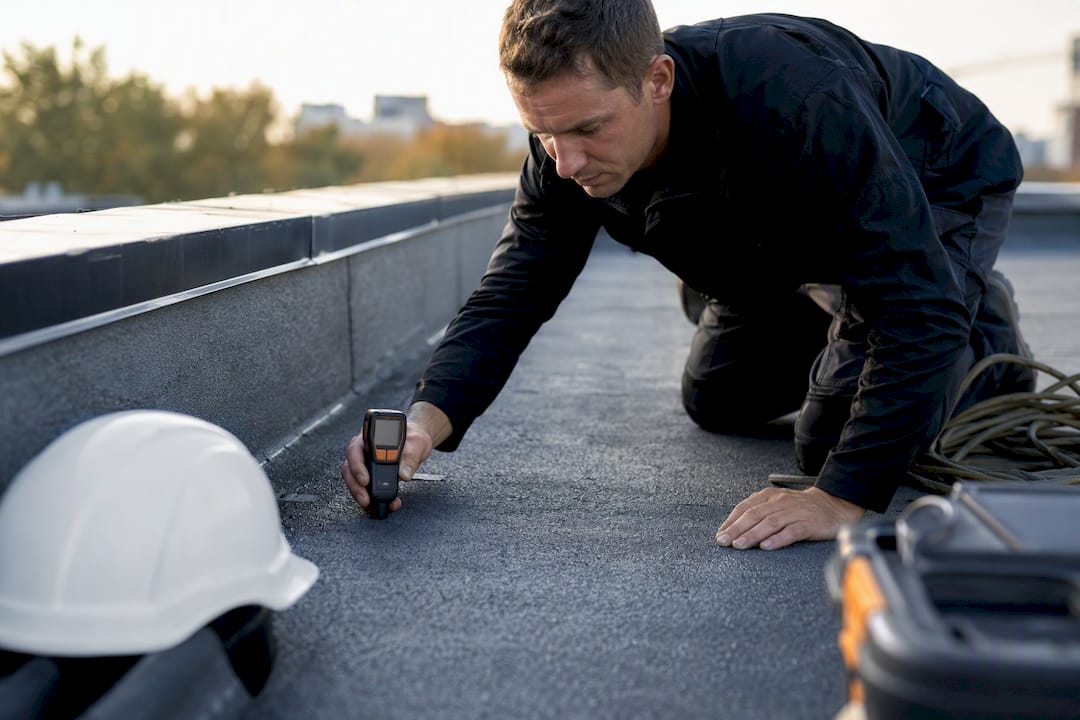
- Schedule inspections annually, or twice yearly for larger or older systems, performed by a certified inspector.
- Clear drains and remove debris on a routine basis and keep dated records of every visit.
- Fix minor issues immediately. A small puncture ignored for a season becomes a "deferred maintenance" exclusion.
- Collect your closeout package at project completion: warranty certificate, all inspection reports, and the manufacturer's maintenance manual.
Pro Tip: File your closeout package the same day you receive it, digitally and on paper. Owners who lose the warranty certificate often spend months just proving coverage existed before they can even file a claim.
Exterior Genie's Role in NDL-Compliant Roofing Projects
As an Owens Corning Platinum Preferred Contractor, Exterior Genie holds the certification tier manufacturers require for NDL-eligible installations. We coordinate the pre-install, in-progress, and final inspections manufacturers demand, handle warranty registration inside the required window, and support owners through claims when a failure occurs. Ask us for your manufacturer-issued acceptance letter at closeout, before the crew leaves the site.
When Should You Actually Buy an NDL Warranty?
Buy NDL when you plan to hold the building for a decade or more, or when the roof area is large enough that a labor-heavy failure would genuinely hurt. For a small roof or a short hold, a solid material-only warranty backed by a real workmanship guarantee is often the more rational spend.
The mistake I see most often is owners accepting a warranty that was never actually registered, then discovering that fact only after a leak. The second most common: skipping the milestone inspections because the schedule felt tight, not realizing that a missed inspection can quietly disqualify the entire NDL. Insist on the manufacturer's written acceptance letter and copies of every inspection report before you sign off on the project as complete.
— Ebben
Get NDL-Level Protection Without Chasing Down Paperwork Yourself
Most owners who lose NDL coverage don't lose it to a bad roof. They lose it to a missed inspection, a registration deadline that slipped, or a closeout package that never made it into a filing cabinet. Exterior Genie handles the certified installation, coordinates every manufacturer inspection milestone, files the registration inside the required window, and hands you the acceptance letter and inspection reports at closeout, so there's nothing to chase later.

Whether you're planning a full commercial roofing replacement, a broader commercial construction project, or you need emergency repair work on a roof that's already showing damage, we manage the manufacturer relationship so the warranty is actually enforceable when you need it. Request a roof inspection and warranty consultation, and we'll tell you upfront whether your project qualifies for NDL and what it will take to get there.
Where to Verify Warranty Terms and Save Your Documents
Warranty terms shift between manufacturers and product lines, so confirm the specifics before you sign anything.
- Check GAF's commercial guarantee terms for current certification tiers and NDL term options.
- Review NDL coverage details for scope, thickness requirements, and premium ranges.
- Read the material-only vs. NDL comparison before signing any proposal that just says "warranty included."
Download and store your warranty certificate, every inspection report, and the maintenance manual the day you receive them. That file is the only thing standing between you and a denied claim ten years from now.
Sources
- NDL Warranties: What They Cover | Flat Roof Report
- Commercial roof warranties & guarantees | GAF
- Commercial Roof Warranty: NDL vs. Material-Only | TRB
FAQ
What does a 20-year NDL roof insurance warranty mean?
It means the manufacturer will pay the full cost of repairing or replacing the roof system, materials and labor, for 20 years without reducing the payout as the roof ages, provided the required inspections and maintenance were completed.
How long do commercial roof warranties usually last?
Material-only and workmanship warranties often run shorter terms, while NDL guarantees commonly span 15 to 25 years, with some manufacturers now offering terms up to 35 years for higher-tier installations.
How do I know if my roof is still under warranty?
Check your warranty certificate for the registration date, term length, and warranty number, then confirm active status directly with the manufacturer since contractor records alone aren't always current.
What does NDL stand for in roofing?
NDL stands for No Dollar Limit, meaning the warranty has no cap on the payout amount for covered failures and doesn't depreciate as the roof ages.