
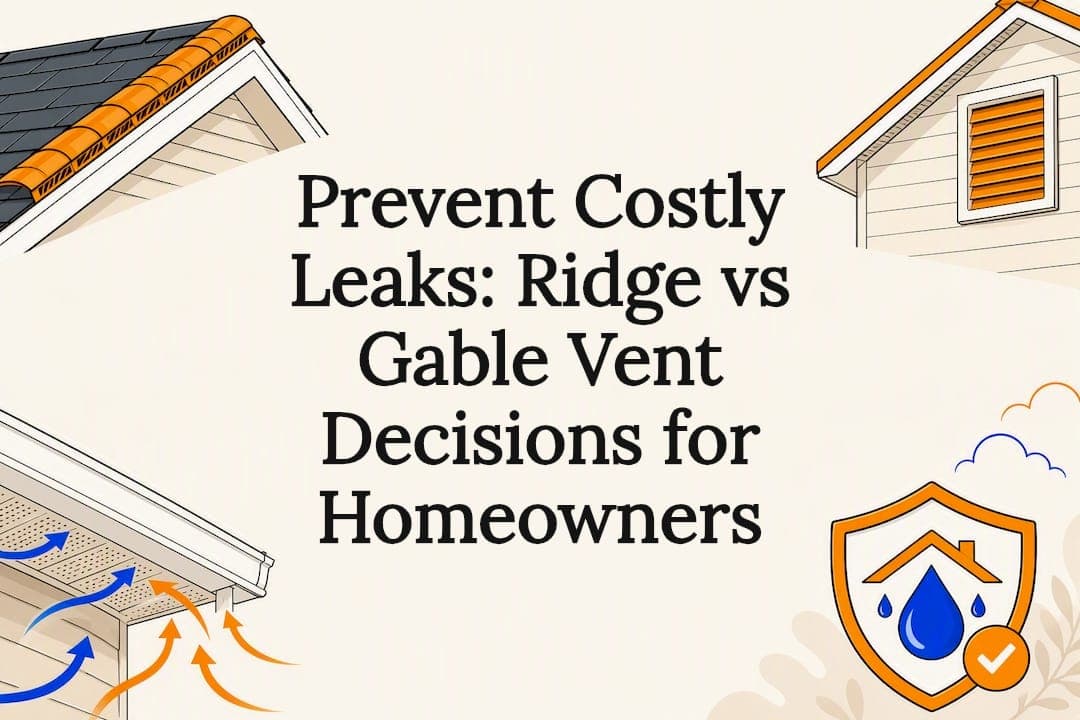
For most homes with a simple, continuous ridgeline and open soffits, a ridge vent paired with soffit intake beats a gable vent for even attic airflow and moisture control. Gable vents still work on some older or complex roofs, but never run both systems together. Walk your attic, check whether your soffits are actually open, and if your roofline is complicated, call a roofer before you decide anything.
TL;DR:
- Ridge vents require open soffit intake and a continuous ridge line to function effectively, especially on simple, straight roofs.
- Gable vents depend on wind direction and are less suitable for complex rooflines with hips, valleys, or short ridges, and they are more exposed to weather risks.
- Combining ridge and gable vents causes short-circuiting, preventing proper attic airflow and increasing the risk of leaks if not sealed correctly.
- An attic inspection that checks soffit openings and existing ventilation is essential before installing or replacing vents, ideally done during a roof replacement.
- Retrofitting ridge vents on an existing roof often costs more than during a new roof, and blocked soffits or improper installation are common causes of poor performance.
Table of Contents
- Ridge Vent vs Gable Vent: Weighing the Pros and Cons
- How to Choose Between Ridge and Gable Ventilation
- Why Roof Shape and Soffits Determine Ridge Vent Performance
- What Upkeep and Costs Look Like Over Time
- The Biggest Mistake Homeowners Make With Attic Vents
- What We See on Actual Roofs
- Get a Professional Ventilation Assessment From Exterior Genie
- Sources
- FAQ
Ridge Vent vs Gable Vent: Weighing the Pros and Cons
Ridge vents run the length of your roof's peak, pulling warm, moist air out along the whole ridge instead of from one or two spots. That continuous exhaust is what makes them one of the most effective options for attic ventilation when they're paired with proper soffit intake. They're also low to profile. Once shingled over, most people never notice them from the curb.
Gable vents sit high on the triangular wall at each end of the attic. They're cheaper to buy, and in an attic that already has gable-end framing exposed, they can be simpler to retrofit than cutting a continuous slot into the ridge.
Here's where each one runs into trouble:
- Ridge vents: need real soffit intake to work, and installing them wrong (wrong slot width, missing baffle, poor nailing pattern) turns a ventilation upgrade into a roof leak.
- Ridge vents: underperform on roofs with multiple hips, valleys, or short ridge segments, since there's simply not enough continuous ridge to move air.
- Gable vents: depend on wind blowing in the right direction. No wind, no airflow.
- Gable vents: are more exposed to wind-driven rain and windblown debris than a properly capped ridge vent.
- Gable vents: create uneven ventilation. The attic space near the gable ends cools and dries; the middle of a long attic often doesn't.
A single-story ranch with a straight 40 foot ridge and clear soffits is a textbook ridge vent situation. A converted attic on a Victorian with three gables, two dormers, and a chopped-up roofline is a case where gable vents, or a mechanical solution, may be the more realistic call.
How to Choose Between Ridge and Gable Ventilation
Work through this checklist before you commit to either system:
- Measure your continuous ridge length. Short, broken ridge runs limit how much air a ridge vent can actually move.
- Check your roof pitch and rafter run. Very long or shallow rafter runs can starve airflow at the far end of the vent, and ridge vent effectiveness drops off past a certain distance.
- Confirm your attic type. A vented attic with an open floor behaves differently than a cathedral ceiling with insulation packed tight against the deck.
- Verify soffit intake exists and is actually open, not blocked by insulation or paint.
- Factor in your climate. Coastal and hurricane-prone areas need vents that resist driven rain; snow-heavy regions need vents that shed ice.
- Time it with your roof schedule. A full roof replacement is the cheapest window to add a ridge vent correctly.
If you're converting from gable to ridge, remember one rule above all: never leave the gable vents open once a ridge vent goes in. Seal them completely.
For roofs with too many hips, valleys, or short ridge segments to support continuous venting, box vents or a mechanical exhaust fan are often the more practical fix, according to roofing contractors who work these jobs regularly.
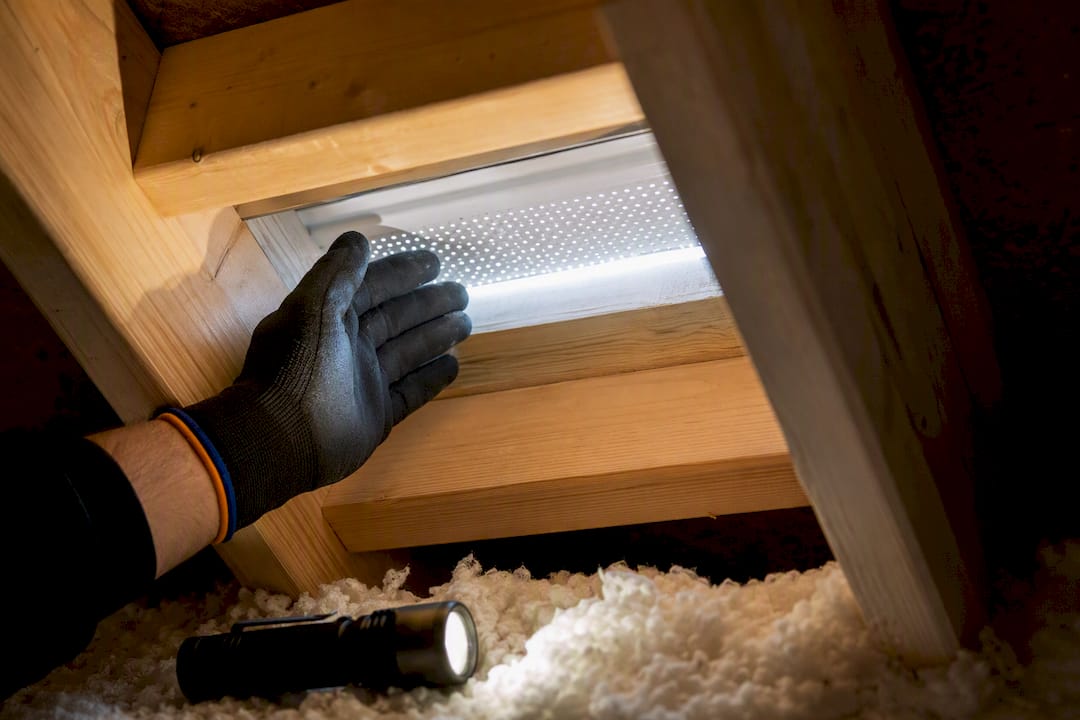
Pro Tip: Before you spend a dime on vents, go into the attic on a sunny afternoon and look for daylight or airflow at the soffits. If you can't feel or see any movement, no vent upgrade will fix the problem until the intake is cleared.
Why Roof Shape and Soffits Determine Ridge Vent Performance
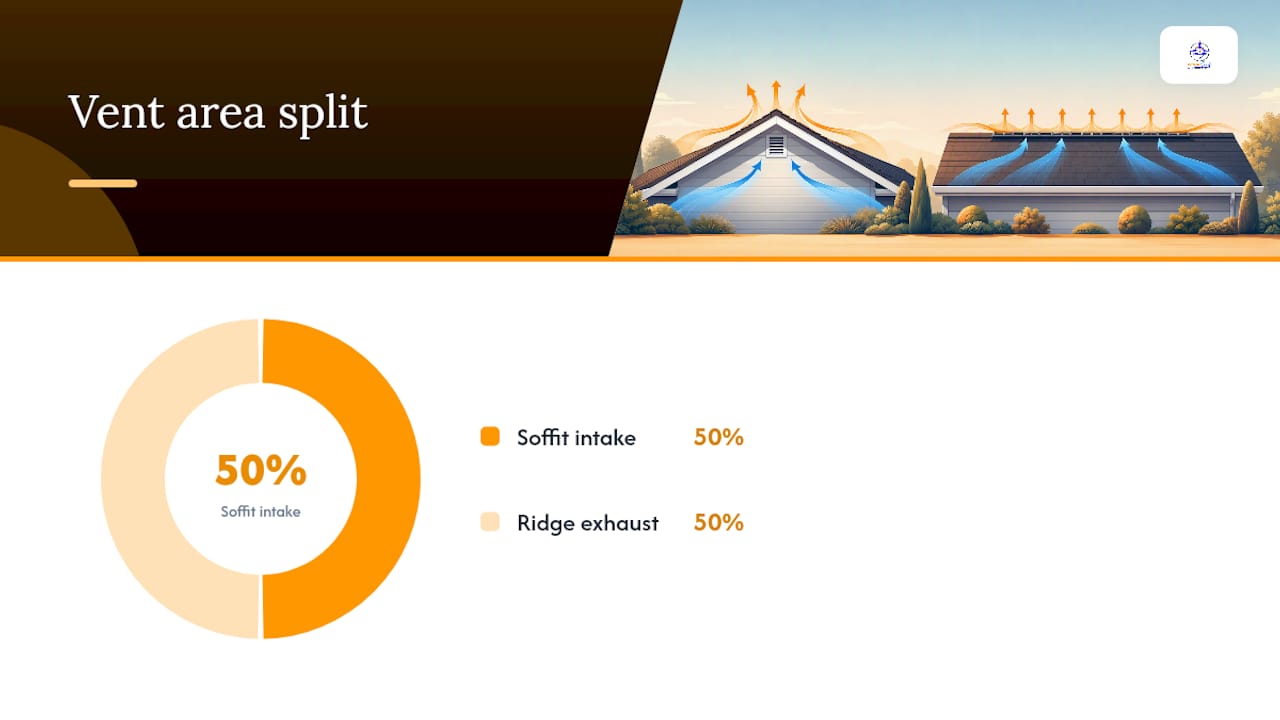
Ventilation only works when air comes in low and exits high in roughly equal amounts. The old industry benchmark, the 1:150 rule referenced in the International Residential Code, calls for one square foot of vent area for every 150 square feet of attic floor, split between intake and exhaust. Cut a beautiful ridge vent into the roof but leave the soffits stuffed with insulation, and you've built an exhaust fan with no air to pull.
Rafter run matters too. Practitioners generally flag a practical limit of around 35 feet of rafter run before a ridge vent needs extra help to move air across a cathedral ceiling, which is one reason wide, boxy additions sometimes need a different ventilation strategy than the original structure.
A few things to check before you commit to a ridge retrofit:
- Are the soffits physically open, or just vented in appearance?
- Does the ridge run continuously, or is it broken by dormers, chimneys, or valleys?
- Is this happening during a full reroof, or is it a standalone retrofit?
Standalone retrofits carry more leak risk than doing it during a full roof replacement, mainly because the ridge cap flashing has to be cut and resealed on a roof that's otherwise untouched. Get that detail wrong and you've traded a ventilation problem for a leak.
What Upkeep and Costs Look Like Over Time
Ridge vents and gable vents fail differently, and knowing the warning signs saves you from a surprise repair bill.
Check your attic twice a year for these signs:
- Dark streaking or staining on the underside of the roof deck near the ridge or gable openings.
- Insulation or debris piled against soffit vents, which chokes off intake.
- Cracked or lifted ridge cap shingles, a common source of leaks around ridge vent systems.
- Rust or gaps in gable vent louvers, where wind-driven rain sneaks in.
Climate adds its own risks. In snow country, ridge vents can clog with ice or snow, which shuts down airflow right when the attic needs it most for ice-dam prevention. In coastal or hurricane-exposed regions, exposed gable vents are more likely to let in wind-driven rain during a storm, and building guidance recommends either avoiding them in new construction or securing them with storm-rated covers.
Cost signal: Retrofitting a ridge vent on an existing roof typically costs more than adding one during a new roof installation, since a standalone retrofit means cutting and resealing shingles that are otherwise intact.
The Biggest Mistake Homeowners Make With Attic Vents
Running a ridge vent and gable vents at the same time is the single most common ventilation mistake we see, and it backfires in a specific way. Air takes the shortest, easiest path. With both systems open, attic air short-circuits from the nearby gable vent straight up to the ridge, and never sweeps across the far corners of the attic that need it most.
To fix or avoid this:
- Pick one exhaust system. If you're adding a ridge vent, seal the gable vents permanently. Don't just close the louvers. Board and flash them.
- Confirm intake exists before assuming a ridge vent will solve your ventilation problems. A ridge vent with blocked soffits does almost nothing.
- Call a roofer for anything involving flashing, hips, valleys, or a full reroof. DIY sealing and cutting on a live roof is where most leaks originate.
What We See on Actual Roofs
Out in the field, the textbook answer and the real attic rarely match perfectly. We regularly find soffits painted shut, insulation crammed against the eaves, or a ridge vent installed years ago with no working intake behind it at all. Poor retrofit details, especially around ridge cap flashing, cause more callbacks than the vent choice itself. When a roof has a straightforward ridge and open soffits, we'll usually recommend proceeding with a ridge vent conversion. When the roofline is complicated or the attic has multiple additions stacked together, we recommend a full inspection first, because guessing on ventilation costs more to fix later than it does to diagnose up front.
— Ebben
Get a Professional Ventilation Assessment From Exterior Genie
Guessing which vent system your roof needs is how homeowners end up paying twice, once for the wrong fix and again for the leak it causes. Exterior Genie inspects your attic, soffits, and ridge condition in one visit and tells you plainly whether a ridge vent conversion, a gable vent repair, or a different ventilation approach fits your roof.

As an Owens Corning Platinum Preferred Contractor with a track record of five-star customer ratings, Exterior Genie brings the same discipline to a ventilation inspection as to a full roof replacement. If your roof needs new shingles anyway, that's the cheapest time to add or correct ridge venting. If your soffits are blocked, we'll show you exactly where and why during the walkthrough. A soffit and fascia repair is often the missing piece behind an underperforming ridge vent, and it's worth checking before you spend money on the vent itself. If your roof has taken storm damage that's affecting ventilation or flashing, Exterior Genie's HAAG-certified inspectors can also help with the insurance side of that repair.
Schedule an on-site roof inspection or repair estimate and find out which ventilation setup actually fits your roof, not just the one that sounds right online.
Sources
For deeper reading on the building science behind these recommendations, see the Building America Solution Center's guidance on disaster-resistant roof venting, Roofing Contractor's breakdown of ridge vent limitations, This Old House's guide to ridge vents, and Angi's overview of ridge vent pros and cons. For roof condition upkeep that affects vent performance, Capital Pro's roof rejuvenation guidance is also worth a look.
- Disaster-resistant roof venting — BASC (Building America Solution Center)
- Why are ridge vents popular with roofers? — Roofing Contractor
- Ridge vents: A guide to essential roof ventilation — This Old House
- Roof ridge vents pros and cons — Angi
FAQ
When should you not use a ridge vent?
Skip a ridge vent when your roof lacks a long, continuous ridgeline, when soffit intake can't be added or restored, or when the roof has too many hips and valleys to move air effectively, cases where box vents or mechanical ventilation usually work better.
Is it okay to have gable vents with ridge vents?
No. Building science guidance is clear that running both together causes short-circuiting, where air moves directly between the nearest gable vent and the ridge instead of sweeping the whole attic, so gable vents should be sealed once a ridge vent is installed.
Do ridge vents make a house colder in winter?
A properly balanced ridge vent system doesn't make living spaces colder; it keeps the roof deck colder and drier, which reduces the freeze thaw cycle that causes ice dams in the first place.
Should gable vents be closed with ridge vents?
Yes, permanently. Closing the louvers isn't enough; the gable vent openings should be boarded and flashed shut so the ridge vent and soffit intake become the only active airflow path.