
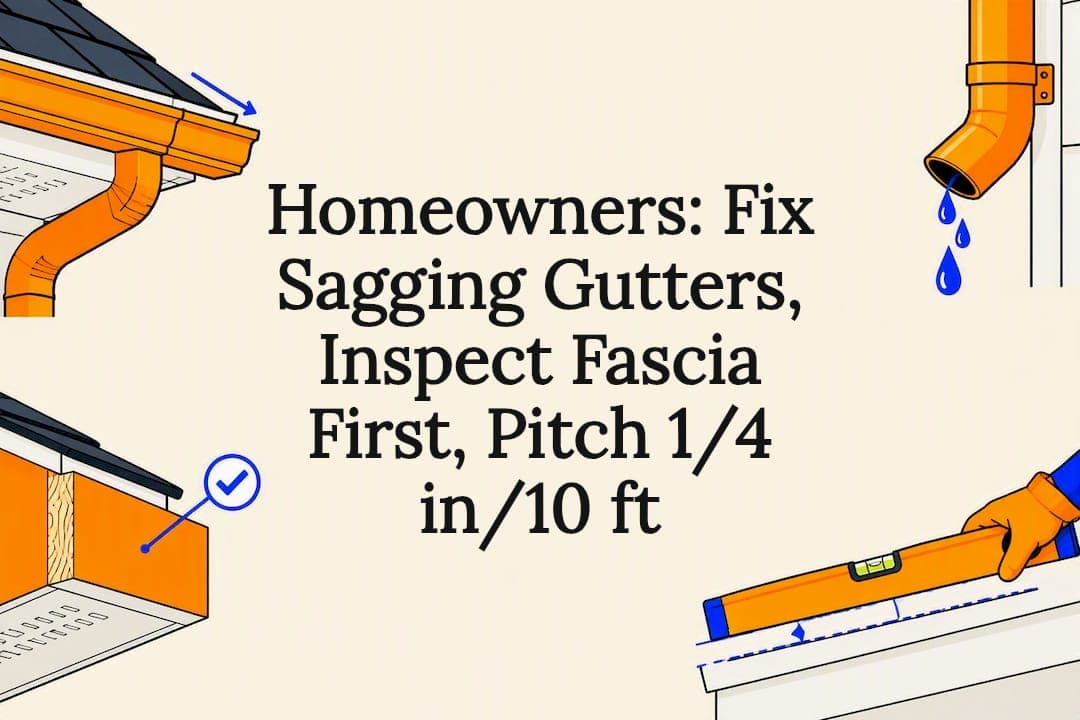
Most sagging gutters come down to a load problem: failed fasteners, too few hangers, clogged debris, or fascia that's gone soft with rot. Your first move should always be the same regardless of cause. Clear the run, then inspect the fasteners and fascia before you touch a ladder to rehang anything. If the fascia is punky or the gutter itself is bent or cracked, that job belongs to a professional.
TL;DR:
- Most sagging gutters result from failed fasteners, insufficient hangers, debris loads, or rotted fascia, not from random issues.
- Proper inspection involves checking for visual sag patterns, fastener stability, fascia condition, and confirming drainage before repairs.
- DIY fixes include completely cleaning gutters, replacing spikes with screws or hidden hangers spaced every 24 inches, and adjusting pitch for proper drainage.
- Fascia rot or damage requires professional repair or replacement before rehanging, especially on two-story homes or severely damaged sections.
- Routine maintenance, including regular cleaning, hanger upgrades, and considering gutter guards, can prevent sagging and extend gutter lifespan.
Table of Contents
- The Main Causes of Gutter Sagging
- How to Inspect Your Gutters and Find the Real Cause
- Fixing a Sagging Gutter Yourself, Step by Step
- When a Sagging Gutter Needs a Professional
- Keeping Gutters From Sagging Again
- How Exterior Genie Approaches a Sagging Gutter Call
- Get Your Gutters Rehung the Right Way
- Where This Guidance Comes From
- Sources
- FAQ
The Main Causes of Gutter Sagging
Gutters don't fail randomly. They fail because something specific gave out, and figuring out which one applies to your house is half the repair.
Failed spike-and-ferrule fasteners. Older gutter systems used long nails (spikes) driven through a sleeve (ferrule) into the fascia board. Years of heat and cold cause the wood to expand and contract, and that cycle slowly works the spike loose until it partly backs out. Once a few spikes fail, the whole run starts pulling away from the house.
Not enough hangers holding the line. Older installations sometimes spaced supports widely apart, which was fine when gutters were empty but not when they're full of rainwater. A single hanger might carry 10 pounds of water without complaint; ask it to carry 40, and something gives.
Debris and clogged downspouts. A gutter packed with wet leaves and grit can add hundreds of pounds of dead weight to a run that was only ever designed to handle rainfall passing through.
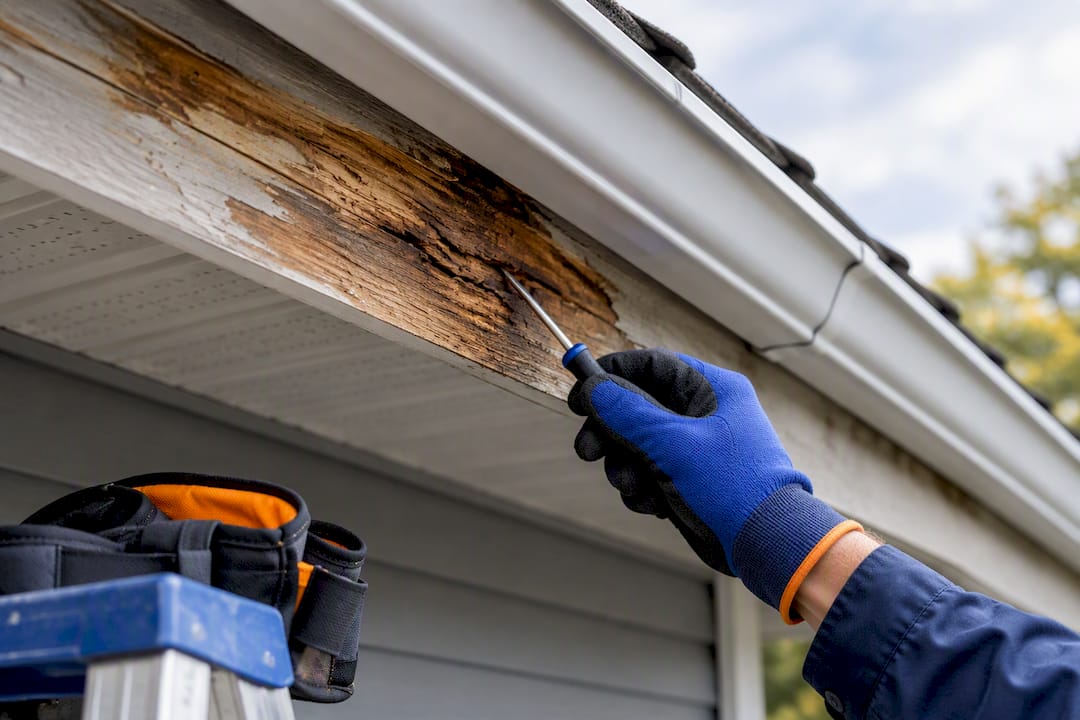
Rotted or soft fascia. This is the cause homeowners miss most often, because the gutter itself looks fine. If the board behind it has gone soft from years of trapped moisture, no fastener will hold.
Ice and snow load. Heavy ice buildup or repeated freeze-thaw cycles can physically bend aluminum and vinyl gutters out of shape, sometimes permanently.
Incorrect slope. Gutters need to pitch toward the downspout, and proper pitch runs about 1/4 inch of drop for every 10 feet of gutter. Get that wrong and water pools instead of draining, adding weight exactly where the run is weakest.
How to Inspect Your Gutters and Find the Real Cause
Work through this sequence before you decide on a fix, and you'll usually know exactly what you're dealing with by the time you're done.
- Look for visual sag patterns. A drooping front lip, a belly in the middle of a long run, or visible spike heads sticking out all point to fastener failure rather than a clog.
- Test wet versus dry behavior. If the gutter sags only during or right after rain but looks fine when dry, the problem is very likely a clog, not a broken hanger. Clean it before spending money on anything else.
- Do a gentle pull test. Grip the gutter and apply light downward pressure. Movement at the fascia line usually means the fastener or the wood behind it has failed.
- Probe the fascia. Press a screwdriver or your thumb into the board behind the gutter. Sound wood resists; rotted wood gives way or feels spongy.
- Know your limits. Skip any of this from a second-story ladder position, and hire a professional for runs with heavy, obvious rot.
- Photograph everything. Get a long shot of the full run, a close-up of the fasteners, an underside shot showing hanger spacing, and any visible rot before you call anyone for an estimate.
Fixing a Sagging Gutter Yourself, Step by Step
If your fascia checks out solid, this is a job most homeowners can handle in an afternoon with basic tools: a sturdy ladder, work gloves, a drill, hex-head gutter screws, hidden hangers, and a chalk line or level.
- Clean the run completely. Pull out leaves, grit, and any standing debris, then flush the downspout with a garden hose to confirm it drains freely. Skipping this step means you're rehanging a gutter that's still going to be overloaded the next time it rains.
- Remove the old spikes. Pull any spike-and-ferrule fasteners you find. If they backed out on their own, that section is your primary failure point.
- Install gutter screws or hidden hangers. Space them roughly every 24 inches, tighter if you're in a region with heavy snow loads. Hidden hangers distribute weight along the gutter's inner lip rather than relying on a single nail point, which is why they've replaced spikes as the standard fix.
- Reset the pitch. Snap a chalk line or use a level to confirm the gutter drops about 1/4 inch for every 10 feet as it approaches the downspout. Adjust hanger height along the run until the slope is consistent.
- Handle stripped screw holes. If an old fastener hole is chewed up, offset the new screw entry point about an inch up or down to catch solid wood instead of driving into the same worn-out spot.
- Know when to replace instead of repair. Cracked seams, permanent creases, or a section that's visibly bowed even after rehanging means it's time for a new piece rather than another patch.
Pro Tip: Drive gutter screws into the rafter tails behind the fascia whenever you can reach them. That gives you a much stronger anchor point than the fascia board alone, especially on older homes where the board itself has thinned out over time.
When a Sagging Gutter Needs a Professional
DIY repair works well when the fascia is sound and the damage is limited to fasteners or minor pitch issues. It stops being a weekend project the moment rot enters the picture.
- Rotted fascia has to be repaired or replaced before anything gets rehung. Screwing new hardware into soft wood just guarantees a repeat failure within a season.
- Two-story access, long bellied runs, or ice-damaged gutters call for professional tools and safety setups most homeowners don't have on hand.
- A straightforward re-hang with new hardware typically runs cheaper than a job that requires carpentry work on the fascia itself, and fascia repair can sometimes tip the math toward full replacement instead.
- Ask any contractor you hire how they're securing the hangers, whether they're reaching the rafter tails, what warranty backs the work, and whether they're checking for related issues like a damaged drip edge while they're up there. If you want a same-region gutter installation and repair quote, that scope question is worth asking up front.
Keeping Gutters From Sagging Again
A little routine maintenance is cheaper than another repair call, and it's not complicated.
- Clean gutters at least twice a year, in spring and fall, and more often if trees overhang the roofline.
- Check hangers and fascia condition at every cleaning, not just when something looks obviously wrong.
- Upgrade to hidden hangers and gutter screws spaced around 24 inches apart if your home still has the old spike system.
- Consider gutter guards to cut down on debris, but pick a style suited to your climate, since some guard designs can trap ice and add weight instead of reducing it.
Pro Tip: If you notice granules from your roof shingles collecting in the gutter during cleaning, photograph the pattern before you clear it out. It can be a useful clue for a roof inspection down the line, not just a gutter issue.
How Exterior Genie Approaches a Sagging Gutter Call
We check fascia integrity before we touch a hanger, because rehanging onto rotten wood just resets the clock on the same failure. Our HAAG-certified inspectors also come in handy when gutter damage traces back to a storm, since that history matters for an insurance claim. If you're not sure what you're looking at, take the photos outlined above and ask for an estimate based on them.
— Ebben
Get Your Gutters Rehung the Right Way
Exterior Genie approaches gutter repair the same way we approach roofing: fascia gets checked first, and nothing gets rehung onto wood that can't hold it. That's the difference between a fix that lasts and one you're redoing next spring.

We bring consistent inspection standards to gutters as we do to storm-damaged roofs, including straightforward guidance on repair versus replacement rather than a sales pitch. If your sag ties back to a recent storm, our team can also walk you through insurance claim assistance while we're on-site. Send us photos of your gutter run using the checklist above, or visit our gutter installation and repair page to request an on-site inspection and get a straightforward estimate.
Where This Guidance Comes From

The pitch spec, hanger spacing, and rehanging sequence in this guide draw on This Old House's gutter repair guidance and practical how-to breakdowns from FixUpFirst and Pro Seamless Gutter, chosen for their clear, homeowner-focused instructions.
Sources
- How to fix sagging gutters — This Old House
- How to fix a sagging gutter: Rehang and realign in 30 minutes — FixUpFirst
- How to fix a sagging gutter — FixMyHomeTips
- Gutters pulling away from the house: causes & fix — Pro Seamless Gutter
FAQ
What Can I Do to Fix Sagging Gutters?
Clean the gutter and downspout first, since debris weight causes a lot of sagging on its own. If the sag remains after cleaning, replace old spikes with gutter screws or hidden hangers spaced about every 24 inches, and repair any rotted fascia before rehanging.
Does Homeowners Insurance Cover Fallen Gutters?
Coverage depends on the cause. Storm, wind, or hail damage is typically covered under most homeowners policies, while gradual wear from age or neglect usually isn't. Insurance claim assistance can help determine which category your damage falls into.
Is It Normal for Gutters to Drip a Little?
Light dripping after heavy rain can be normal, especially at seams on older sectional gutters. Steady dripping in dry weather or dripping from the middle of a run rather than the seams usually signals a clog or a pitch problem that needs attention.
How Many Years Should Gutters Last?
Aluminum gutters typically last many years with regular cleaning and maintenance, while vinyl gutters tend to have a shorter service life. Fasteners often need attention well before the gutter material itself wears out, which is why checking hangers during routine cleaning matters.