
Not all roofing membranes perform the same way, and assuming they do is one of the most expensive mistakes you can make. If you're researching what is TPO roofing membrane, you're already ahead of most property owners who pick materials based on price alone. TPO (thermoplastic polyolefin) is the most widely chosen single-ply membrane in commercial roofing today, and for good reason. This article breaks down what TPO is made of, how it's installed, how it stacks up against alternatives, and how to decide whether it's the right fit for your project.
Table of Contents
- Key takeaways
- What is TPO roofing membrane: composition and core properties
- TPO roofing benefits and limitations
- TPO membrane installation: methods and what can go wrong
- TPO vs PVC roofing and EPDM: how they compare
- Lifespan, maintenance, and cost realities
- My take on what actually matters when you choose TPO
- Get expert TPO roofing help in Lexington, SC
- FAQ
Key takeaways
| Point | Details |
|---|---|
| TPO is a three-layer membrane | It combines a polymer base, polyester reinforcement, and a UV-resistant top ply for durable flat roofing. |
| Energy efficiency is a core benefit | Reflective TPO surfaces reduce cooling costs, making it ideal for warm or sun-heavy climates. |
| Installation quality determines performance | Seam welding precision and contractor expertise matter more than the brand of membrane you choose. |
| TPO lasts 15 to 30 years | Membrane thickness, maintenance habits, and installation quality all affect how long your roof holds up. |
| Not every situation calls for TPO | Chemical-heavy environments often require PVC, while older buildings may benefit from EPDM's flexibility. |
What is TPO roofing membrane: composition and core properties
TPO stands for thermoplastic polyolefin. It is a single-ply roofing membrane composed of polypropylene and ethylene-propylene rubber, reinforced with a polyester scrim layer. Think of it as a three-layer sandwich: a TPO polymer base on the bottom, a woven polyester reinforcement in the middle for tensile strength, and a TPO polymer top ply that faces the elements.
That top layer does a lot of work. It resists UV radiation, reflects solar heat, and bonds strongly to itself when heated, which is the key to how seams are created during installation. This heat-weldable property is what separates TPO from older membrane systems like EPDM, which relies on adhesive bonding instead.
Here's what those core properties translate to in real-world performance:
- UV resistance: The white or light-colored surface deflects solar radiation rather than absorbing it, which reduces roof surface temperatures.
- Heat weldability: Seams fused by hot air welding are stronger than the membrane itself when done correctly.
- Flexibility: TPO stays pliable in cold temperatures, which helps it accommodate building movement without cracking.
- Chemical compatibility: Resistant to most common environmental exposures, though not ideal for heavy grease or industrial chemicals.
- Roll dimensions: TPO is available in rolls up to 16 feet wide, which reduces the number of field seams and potential leak points.
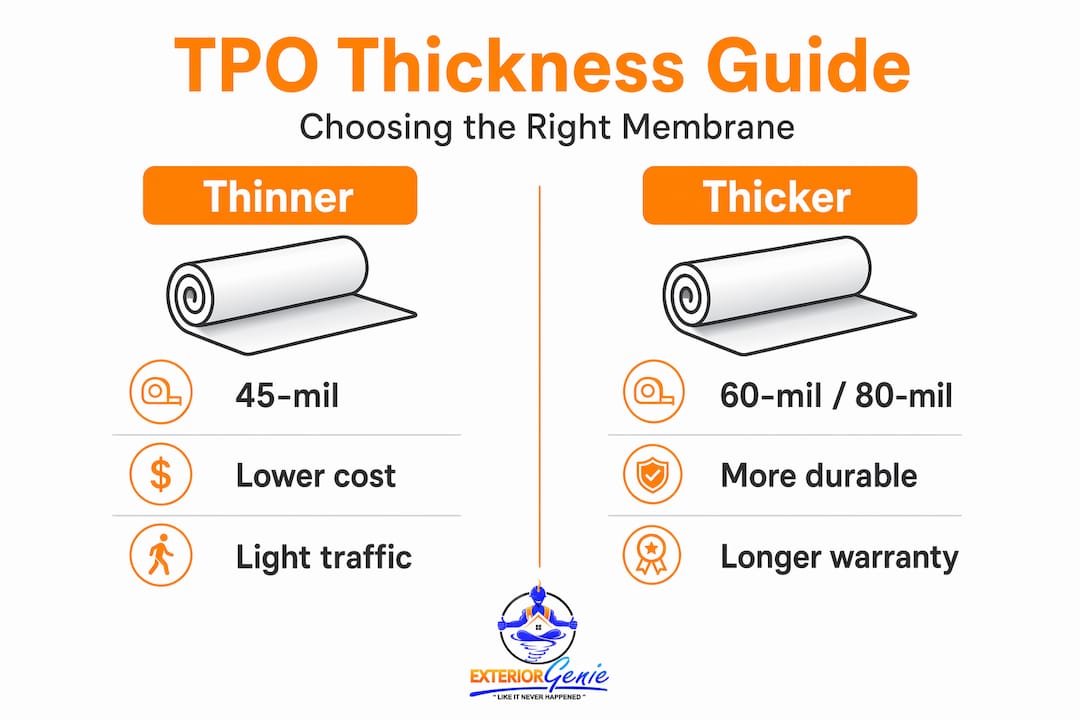
The most common thickness options are 45-mil, 60-mil, and 80-mil. Thicker membranes cost more upfront but resist punctures better and typically come with longer manufacturer warranties. TPO holds over 40% market share in some commercial roofing segments as of 2026, which reflects how quickly it has become the go-to choice for flat and low-slope roofs.
| Membrane thickness | Best use case | Typical warranty |
|---|---|---|
| 45-mil | Budget installs, low-traffic roofs | 10-15 years |
| 60-mil | Standard commercial and residential | 15-20 years |
| 80-mil | High-traffic, hail-prone, or premium installs | 20-30 years |
TPO roofing benefits and limitations
The reason TPO roofing benefits are discussed so often is that the material hits a genuine sweet spot between performance and cost. But it's not a perfect fit for every building. Understanding both sides helps you make a smarter call.
Where TPO genuinely excels:
- Energy efficiency: TPO membranes are recognized for energy-saving reflective surfaces that reduce cooling demand in warm climates. In South Carolina's heat, that matters month after month.
- Cost compared to alternatives: TPO typically costs less per square foot than PVC while offering comparable energy performance in most applications.
- Durability in weather exposure: Handles UV exposure, wind-driven rain, and temperature swings well when properly installed.
- Welded seams: Hot-air-welded seams create a monolithic waterproof surface. A properly welded TPO seam is actually stronger than the membrane on either side of it.
- Recyclability: TPO is a thermoplastic, meaning it can be reprocessed at the end of its useful life, which gives it an environmental edge over thermoset materials like EPDM.
Where TPO falls short:
- Chemical resistance: PVC membranes offer superior chemical resistance compared to TPO, which makes PVC the better call for restaurants, food processing facilities, or anywhere grease exhaust hits the roof regularly.
- Long-term track record: EPDM has decades of documented performance history. TPO formulations have improved significantly but are still a younger technology.
- Installer sensitivity: TPO performance is heavily dependent on installation quality. A poorly welded seam or improperly prepared substrate can lead to premature failures that have nothing to do with the material itself.
Pro Tip: If you are choosing between TPO and PVC for a commercial kitchen or industrial facility, get a professional assessment first. The difference in chemical exposure alone can make PVC worth the additional cost despite TPO's general advantages.
For most residential flat roofs, low-slope commercial buildings, and mixed-use structures in moderate to warm climates, TPO is a strong default choice. The key is knowing when your situation calls for something different.

TPO membrane installation: methods and what can go wrong
Good TPO installation comes down to three things: substrate preparation, seam quality, and contractor experience. Skip any one of those and you're looking at leaks, warranty voids, or premature failure.
Here is how a professional TPO membrane installation proceeds:
- Substrate inspection and preparation: The existing deck is checked for moisture, structural issues, and levelness. Any damaged insulation or cover board is replaced before the membrane goes down.
- Insulation and cover board placement: Polyisocyanurate insulation is typically fastened mechanically to the deck, followed by a cover board that protects the insulation and provides a firm surface for the membrane.
- Membrane layout: TPO rolls are unrolled perpendicular to the roof deck and positioned with overlapping edges for seaming. Sheets rolled perpendicular to the deck improve wind uplift resistance.
- Mechanical fastening: The perimeter and field are fastened with membrane screws and plates, creating the base layer that resists wind uplift.
- Seam welding: A hot-air welding machine fuses overlapping edges into a continuous waterproof bond. Temperature settings are calibrated based on conditions, and test welds are performed before full production begins.
- Detailing and terminations: Flashings, penetrations, drains, and edge metal are sealed and welded to complete the watertight system.
The seam welding step is where most problems originate. Most failures stem from process issues rather than equipment faults. Dirty lap surfaces, rushed setup, or incorrect temperature settings are the leading causes of seam failures that show up as leaks months later.
There are also two distinct types of TPO to consider when planning installation. Smooth TPO membranes cost less and provide excellent wind uplift resistance for new construction. Fleece-back TPO adds a factory-bonded fleece layer on the underside, which increases puncture resistance and makes it the right call for reroofing over existing asphalt or in hail-prone regions. Fleece-back can often be adhered directly over an old roof without a cover board, which reduces both labor time and material cost.
Choosing a contractor: Ask whether the installer is certified by the membrane manufacturer. Manufacturer certification means the contractor has been trained on proper installation protocols. It also means your warranty, which can cover both material and labor, stays valid.
Pro Tip: Request a sample test weld before work begins. A qualified contractor will have no hesitation running a test weld and letting you probe it for strength. If they push back on this request, keep looking.
TPO vs PVC roofing and EPDM: how they compare
Choosing among TPO, PVC, and EPDM comes down to your building's specific demands. There is no universal winner.
| Feature | TPO | PVC | EPDM |
|---|---|---|---|
| Energy efficiency | High (reflective) | High (reflective) | Low (dark surface) |
| Chemical resistance | Moderate | Excellent | Good |
| Seaming method | Hot-air welded | Hot-air welded | Adhesive/tape |
| Cold weather flexibility | Good | Good | Excellent |
| Relative cost | Lower | Higher | Lower |
| Longevity | 15-30 years | 20-30 years | 20-35 years |
| Recyclability | Yes (thermoplastic) | Difficult (PVC additives) | Limited |
EPDM is a rubber membrane that has been installed on flat roofs for over 50 years. It is genuinely flexible in freezing temperatures and has an extremely well-documented lifespan. The drawback is its dark color, which absorbs heat rather than reflecting it, and its adhesive-based seams, which are more vulnerable to failure over time than welded seams. You can explore EPDM membrane options if your building sits in a colder climate or you prioritize proven long-term performance.
PVC is TPO's closest competitor. Both are thermoplastic membranes with hot-air-welded seams. The distinction comes in chemical resistance and price. PVC costs more, but for PVC membrane applications near grease exhaust, chemical storage, or industrial processes, it earns that premium. TPO in those environments can degrade faster than expected.
For most standard commercial buildings and residential flat roofs, TPO hits the right balance of cost, energy performance, and installation ease.
Lifespan, maintenance, and cost realities
TPO membranes typically last 15 to 30 years, with the range driven by three factors: the membrane thickness you choose, the quality of the original installation, and how consistently the roof is maintained.
Routine maintenance is straightforward but genuinely matters. Regular seam inspection, debris removal, and prompt patching of any punctures or lifted areas directly affect both lifespan and warranty validity. Most manufacturer warranties require documented inspections at regular intervals. Skip those inspections and you may find your claim denied when you actually need it.
Practical maintenance habits include:
- Biannual inspections: Spring and fall are ideal times to check for seam separation, punctures, ponding water, and flashing integrity.
- Drain clearing: Blocked drains are among the top causes of membrane stress and premature failure on flat roofs.
- Prompt repairs: Small punctures or lifted seam edges are inexpensive to fix. Left unaddressed, they allow water infiltration that can damage insulation, decking, and interior spaces.
- Cleaning: Dirt, algae, and debris trap moisture. A periodic rinse extends membrane life and keeps reflectivity high for energy performance.
On cost, expect to pay between $5 and $9 per square foot installed for standard 60-mil TPO, depending on your region, roof complexity, and access. Thicker membranes and fleece-back options run higher. The long-term math usually favors spending more on a thicker membrane with a better warranty than cutting costs on material and absorbing higher repair and replacement expenses later.
My take on what actually matters when you choose TPO
I've spent years watching well-meaning property owners select roofing materials based on product specs alone, then end up with early leaks because the installation fell short. The spec sheet does not install your roof. The contractor does.
What I've seen consistently is that contractor quality and strict adherence to manufacturer protocols matter far more than which brand of membrane you select. Quality installation and manufacturer protocols determine longevity and leak prevention, not the label on the roll. I've seen budget-brand TPO outlast premium-brand product simply because one job had a disciplined crew and the other didn't.
The second thing I'd push back on is the idea that TPO is always the answer for commercial roofs. It usually is the right call, but there is no one-size-fits-all membrane for every situation. I've seen restaurant owners choose TPO over PVC to save money upfront, only to deal with grease-degraded membranes within five years. The operational context of your building has to shape the decision.
My honest advice: don't just ask a contractor what membrane they recommend. Ask them why, and ask them to explain what would disqualify their recommendation for your specific roof. A contractor who can answer that question clearly is worth trusting.
— Ebben
Get expert TPO roofing help in Lexington, SC
If you're ready to move from research to action, Exteriorgenie is the team to call. As a veteran-owned company with 25 years of hands-on experience serving Lexington, SC, Exteriorgenie handles TPO membrane installation, repair, and replacement for both residential and commercial customers.

Whether you need a new TPO system installed on a flat commercial roof, a repair on an aging membrane, or a full assessment of your current roof's condition, Exteriorgenie brings HAAG-certified inspection expertise and military-grade accountability to every project. The team also offers flat roof coating services to extend membrane life and professional roof installation for both new builds and replacements. Transparent pricing, 24/7 emergency availability, and no-pressure consultations make Exteriorgenie a straightforward choice. Visit Exteriorgenie to request your free estimate today.
FAQ
What is a TPO roofing membrane made of?
TPO is made from polypropylene and ethylene-propylene rubber, reinforced with a polyester scrim. It is manufactured in three layers and designed specifically for flat and low-slope roofs.
How long does a TPO roof last?
TPO membranes typically last between 15 and 30 years. Membrane thickness, installation quality, and routine maintenance are the three biggest factors that determine where your roof falls in that range.
What are the main TPO roofing benefits?
TPO's primary advantages are energy efficiency through high reflectivity, strong heat-welded seams, flexibility in cold temperatures, and lower cost compared to PVC. It is also recyclable, giving it an environmental edge over rubber alternatives.
How does TPO compare to PVC roofing?
Both TPO and PVC use hot-air-welded seams and offer energy-efficient reflective surfaces, but PVC provides superior chemical resistance. TPO costs less, while PVC is the better choice for roofs near grease exhaust or industrial chemicals.
Can TPO be used on residential roofs?
Yes. TPO works well on residential flat and low-slope roofs, particularly in warm climates where its reflective surface reduces cooling costs. Proper installation by a certified contractor is the key requirement regardless of whether the application is residential or commercial.