
Call a licensed roofing contractor first. Most roof leaks trace back to failed flashing, cracked shingles, or a compromised roof deck, and a roofing contractor is the only professional equipped to diagnose the source and fix it correctly. If the leak is active during a storm, or wiring and structural damage are exposed, call an emergency tarping or restoration service, or 911, before anything else.
TL;DR:
- Most roof leaks originate from flashing failure, cracked shingles, or damaged roof decks, which only a licensed roofing contractor can accurately diagnose and fix.
- Emergency tarping services are crucial when leaks are active during storms or when structural or wiring damage exposes safety risks, with rapid response often provided by restoration companies or roofing contractors.
- Before the contractor arrives, homeowners should shut off electrical power, contain water with buckets or towels, photograph damage, and avoid climbing on wet or windy roofs due to safety hazards.
- Verifying a contractor’s license, insurance, manufacturer certification, and industry memberships is essential before hiring, and getting multiple detailed estimates helps identify suspiciously cheap bids that might cut corners.
- Insurance coverage typically applies only to sudden, visible damage from storms or falling objects, requiring homeowners to document the cause, timing, and scope of damage for successful claims.
Table of Contents
- Who Fixes Roof Leaks First: A Prioritized Shortlist
- What to Do Before the Roofer Arrives
- How to Vet a Roofing Contractor Before You Sign Anything
- Does Insurance Cover a Roof Leak, and What Drives the Cost?
- What Homeowners Get Wrong About Calling for Help
- Get a Roofer on Your Roof Today, Not Next Week
- Sources
- FAQ
Who Fixes Roof Leaks First: A Prioritized Shortlist
Not every roof problem calls for the same person, and guessing wrong wastes hours you don't have while water keeps finding its way into your ceiling.
A licensed roofing contractor is almost always your first call. Roofers carry the tools to trace a leak back to its actual source, whether that's a torn shingle, a rusted flashing seam around a chimney, or a nail pop that opened a pinhole in the decking. GAF's repair guidance notes that DIY patch jobs often mask the problem rather than solve it, since water can travel several feet from where it enters to where it shows up on your ceiling. A contractor's inspection settles that mystery instead of leaving you to guess.

An emergency tarping or restoration company steps in when the leak is active and the damage is spreading fast. If it's the middle of a storm, or a tree limb just opened a hole in your roof, restoration crews like SERVPRO offer 24/7 tarping and board-up service built specifically to stop water intrusion within hours, not days. Many roofing contractors, including Exteriorgenie, provide this same rapid response themselves, which cuts out a second phone call entirely.
A general contractor or handyman can sometimes handle a minor, isolated fix, but proceed carefully:
- They may lack roofing-specific certifications or manufacturer training.
- Warranty coverage on materials like shingles often requires an installer certified by that manufacturer.
- A quick patch without a proper diagnosis can hide a bigger leak that resurfaces during the next hard rain.
Before you commit to anyone, confirm three things: an active license, current insurance, and genuine emergency availability. A company that can't answer the phone at 9 p.m. during a storm isn't the one you want on your roof at 9 a.m. the next day.
What to Do Before the Roofer Arrives
Getting a professional on the way is step one. What you do in the meantime decides how much interior damage you're dealing with when they show up.
- Cut the electrical risk first. Water and wiring don't mix. If you see a leak near a light fixture, outlet, or the electrical panel, shut off power to that area at the breaker before doing anything else.
- Skip the roof. Wet shingles are dangerously slick, and climbing up during active rain or high wind is not worth the fall risk. Leave the exterior to the professionals.
- Contain the water inside. Place buckets or towels under the drip, and if a ceiling bulge appears, poke a small controlled hole in its center to release trapped water in one spot rather than letting it soak your drywall further.
- Move what matters. Pull furniture, electronics, and rugs out of the drip zone, and lay down towels or a tarp to protect flooring.
- Photograph everything. Take timestamped photos and video of the ceiling stain, the bucket setup, and any visible exterior damage. State Farm recommends this kind of documentation as a standard first step for any insurance claim tied to a leak.
Pro Tip: Keep a simple log with the date and time you first noticed the leak, when you called for help, and what temporary steps you took. Adjusters lean heavily on timelines when they decide what mitigation expenses get reimbursed.
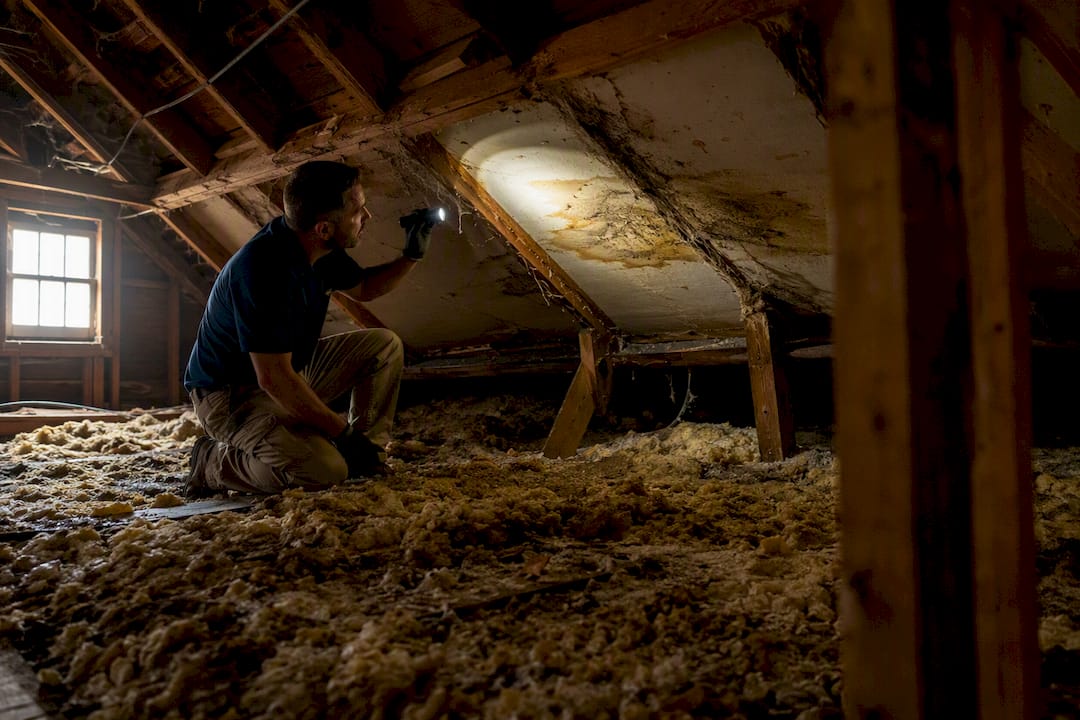
If you notice a musty smell or soft, discolored drywall days after the leak started, stop and call a remediation specialist. Mold can develop fast in wet insulation, and it's a health issue, not a roofing one.
How to Vet a Roofing Contractor Before You Sign Anything
A roof leak puts you in a hurry, and contractors who prey on urgency count on that. Slow down just enough to check the basics.
Start with license and insurance. Ask for proof of an active contractor's license and current liability and workers' compensation insurance, and confirm both directly with the issuing state board if the leak is significant enough to warrant a real repair job. A contractor without workers' comp leaves you exposed if someone gets hurt on your property.
Look for manufacturer certification and industry membership. Certifications like Owens Corning Platinum Preferred Contractor status or GAF Master Elite status mean the installer has met a manufacturer's training and performance bar, which typically extends your warranty coverage. Membership in groups like the NRCA or adherence to inspection standards from organizations like the NRCIA signals a company that treats diagnosis as a real process, not a guess.
Before hiring, ask these questions directly:
- What's your emergency response time, and do you tarp the same day?
- What inspection method do you use to find the actual leak source?
- Can you provide a written estimate that details scope, materials, and labor separately?
- What warranty applies to the repair, and is it backed by the manufacturer or just your company?
- Do you have recent local references or photos from similar repairs?
Watch for red flags: a bid dramatically lower than every other quote, reluctance to put anything in writing, or pressure to sign before you've had time to think. According to the NRCIA, a comprehensive estimate should spell out the inspection method and full scope of work, and suspiciously cheap bids often skip that investigation entirely, which is exactly how the same leak reappears three months later. Lowe's repair guidance makes a similar point: gathering more than one estimate, when time allows, is one of the simplest ways to catch a lowball bid that's cutting corners.
Does Insurance Cover a Roof Leak, and What Drives the Cost?
Coverage almost always comes down to cause. GEICO's guidance on homeowners policies states that sudden, specific events like wind, hail, or a falling tree branch are commonly covered, while leaks traced to age, neglect, or gradual wear typically aren't. That distinction is why your documentation matters so much: an adjuster needs evidence the damage happened suddenly, not slowly.
Build a claim file that includes:
- Timestamped photos and video from the moment you discovered the leak.
- A written inspection report from your contractor identifying the cause.
- An itemized repair estimate, separate from any mitigation costs like tarping.
- Receipts for anything you paid for in the meantime, including emergency tarping or a hotel stay if the damage was severe.
- A maintenance history, if you have one, showing the roof wasn't already failing.
Cost itself swings on a few specific factors: how far the water traveled before you caught it, whether the deck underneath needs replacing or just the shingles above it, how much flashing or chimney work is involved, and current material and labor rates in your area. A patch job on a single damaged section costs far less than a repair requiring new decking, so speed matters here too. The faster you get a contractor on the roof, the smaller the eventual bill tends to be.
What Homeowners Get Wrong About Calling for Help
The biggest mistake we see isn't calling the wrong company. It's waiting. Homeowners often spend a day watching a stain spread, hoping it dries out, when a same-day call could have limited the damage to a single ceiling tile instead of a soaked subfloor.
As a veteran-owned contractor and an Owens Corning Platinum Preferred Contractor, Exteriorgenie built its process around that urgency: phone triage first, emergency tarp if the leak is active, a full diagnostic inspection next, then a written estimate you can actually read. Our team also handles insurance-claims documentation directly, since that paperwork trips up more homeowners than the actual repair does.
— Ebben
Get a Roofer on Your Roof Today, Not Next Week
Exteriorgenie is built for exactly the moment you're in right now: a leak that won't wait. Unlike a general handyman or a restoration-only crew, Exteriorgenie handles the entire chain in one call, 24/7 emergency tarping, a HAAG-certified inspection, the actual repair, and insurance-claims paperwork, so you're not coordinating three separate companies while your ceiling drips.

When you call, expect a straightforward sequence: an inspector confirms the leak source and scope, we install temporary protection if the roof is still exposed, and you get a written estimate before any repair work starts, backed by manufacturer warranties through our Owens Corning Platinum Preferred status. If the cause traces to storm damage, our team can also assist with the insurance claim itself instead of leaving you to interpret adjuster language alone.
If a fallen tree caused the leak, insurance claims for tree-related damage involve their own documentation steps worth understanding before you file. For the roof itself, start with Exteriorgenie's roof repair services and get an inspection scheduled before the next rain finds the same weak spot.
Sources
- Does homeowners insurance cover roof leaks? — GEICO
- Hire a pro to find a roof leak — NRCIA
- Leaking roof: here's what to do — State Farm
FAQ
Who Is the Best Person to Fix a Leaking Roof?
A licensed roofing contractor is the best first call for most leaks, since they can diagnose the actual source, not just patch a symptom. Reserve a general contractor or handyman for minor, already-diagnosed fixes.
Does Insurance Pay for a Leaky Roof?
Often, yes, if the cause is a sudden event like wind, hail, or a fallen tree. Damage from long-term wear or lack of maintenance is usually excluded.
How Much Does It Usually Cost to Fix a Roof Leak?
Cost depends heavily on how much water damage occurred before repair and whether the roof deck needs replacing along with the surface materials. A simple shingle or flashing patch runs far less than a repair involving new decking or extensive interior drywall work.
How Do I Detect a Roof Leak Before It Gets Worse?
Watch for ceiling stains, peeling paint, musty odors, or damp attic insulation, and schedule a professional inspection if you spot any of these. Roofing professionals often use infrared cameras and moisture meters to pinpoint hidden leaks a homeowner would miss entirely.
Should I Call Emergency Services for a Roof Leak?
Only if the leak has caused visible structural sagging, exposed live wiring, or another immediate safety hazard. Otherwise, a roofing contractor offering emergency tarping, like Exteriorgenie, is the right first call.