
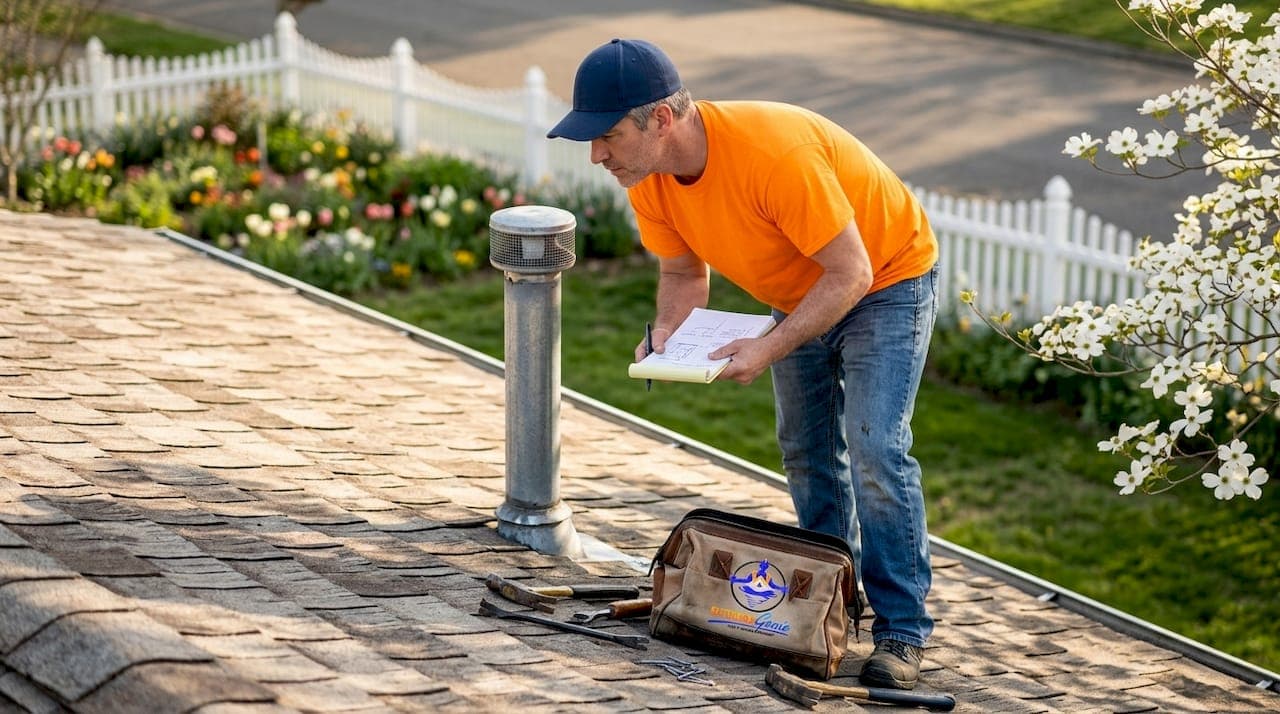
Understanding why roof repair cost varies by damage is one of the most practical things a homeowner can learn before a contractor ever sets foot on your property. Most people assume a roof repair is a roof repair. You see a few missing shingles or a small water stain on the ceiling, and you expect a predictable, modest bill. The reality is that two homes on the same street with what looks like identical damage can receive repair quotes that are thousands of dollars apart. The difference comes down to damage type, depth, location, material, and a few other factors that are easy to miss until you know what to look for.
Table of Contents
- Key takeaways
- Why roof repair cost varies by damage type
- How damage location and delay affect the price
- How material type and roof complexity change costs
- Why insurance estimates and contractor quotes often differ
- My take on roof repair pricing after 25 years in the field
- Get an accurate repair estimate from Exteriorgenie
- FAQ
Key takeaways
| Point | Details |
|---|---|
| Damage depth drives cost | Surface fixes cost far less than repairs reaching the decking, insulation, or structure below. |
| Delay compounds the bill | Unaddressed leaks cause mold and structural damage that can multiply original repair costs by 3 to 10 times. |
| Material type changes pricing | Asphalt shingle repairs start around $150, while slate repairs can run $700 to $2,500 for the same visible issue. |
| Insurance estimates differ from real quotes | Xactimate pricing tools use regional averages that often diverge from actual contractor costs, especially after tear-off. |
| Multiple quotes vary significantly | For the same visible damage, bids from different contractors can differ by 30 to 50 percent. |
Why roof repair cost varies by damage type
Not all roof damage is created equal, and the cost differences in roofing repairs often hinge on one critical factor: how deep the damage goes.
Surface-level damage is the cheapest category. Think a handful of missing or cracked asphalt shingles blown off during a windstorm. A qualified roofer can replace them in a few hours. Minor repairs like this typically fall in the $150 to $1,500 range because the underlayment, decking, and structure underneath are intact. The scope is clear, the materials are affordable, and the labor time is short.
The cost picture changes dramatically when damage penetrates below the shingles. If water has been sitting against the decking long enough to cause rot, or if a storm impact cracked through the underlayment and into the insulation, the repair is no longer a surface fix. At that point, your contractor is removing shingles, cutting out rotted wood, replacing decking sections, and rebuilding the waterproofing layer from scratch. Extensive structural storm damage can exceed $8,000, and that number climbs further when hidden damage surfaces mid-project.

Here is the part most homeowners do not expect: damage scope is often unknown until tear-off begins. A contractor can quote based on what they see from the ground or during a surface inspection, but the true condition of the decking only becomes visible once the shingles come off. Contractors price visible issues first, but true scope may require decking or structural repairs that add cost after work starts, according to Xactimate's repair documentation practices.
The key cost categories by damage type include:
- Missing or cracked shingles: Low cost, surface-only, fast repair
- Damaged flashing around chimneys or vents: Moderate cost, requires sealing and sometimes metal replacement
- Hail impact damage: Variable cost depending on whether the bruising has broken the mat beneath the granules, which affects hail damage severity
- Rotted decking or sheathing: High cost, structural replacement required
- Full underlayment failure: High cost, entire system rebuild in affected area
Pro Tip: Ask your contractor to show you photos from any opened sections before authorizing additional work. Seeing the actual decking condition yourself removes the guesswork about whether expanded repairs are genuinely necessary.
How damage location and delay affect the price
Where your damage starts and how long it sits untreated are two of the most underestimated factors affecting roof repair costs.
Location matters because the source of a leak is rarely where the water shows up inside your home. A stain on your bedroom ceiling might trace back to failed flashing around a chimney 15 feet away, a cracked pipe boot on the opposite side of the ridge, or a clogged gutter directing water back under the edge of the roof. Each origin point requires different materials and different labor. Chimney flashing repair, for example, involves metal work and sealant application that costs more than simply replacing shingles along a straightforward field section.
The duration of the damage is arguably even more consequential. Longstanding leaks cause mold remediation and structural repairs costing three to ten times the original repair amount. A slow drip that goes unnoticed for six months does not just damage the decking. It saturates insulation, feeds mold colonies in the attic, weakens the ceiling framing, and can compromise electrical components in the ceiling cavity. What started as a $400 flashing repair can evolve into a project involving mold remediation, insulation replacement, and drywall work that totals several thousand dollars.
The financial difference between acting early and waiting is stark. Typical roof leak repairs average $350 to $1,500 when caught promptly. Repairs with secondary water damage involved frequently push into the $5,000 to $12,000 range once all affected systems are addressed. You can learn more about how leak progression impacts cost at each stage of damage.
The secondary damage risk is also why water restoration professionals flag roof leaks specifically as a high-priority repair category. The hidden risks of water damage extend well beyond what you can see, and the longer water infiltrates a structure, the more systems become compromised.
How material type and roof complexity change costs
Once you understand how damage depth and location drive pricing, the next layer is the roof itself. The material on your roof and its physical configuration both influence what repairs actually cost.
| Roofing material | Minor repair range | Notes |
|---|---|---|
| Asphalt shingles | $150 to $800 | Most affordable, widely available |
| Metal roofing | $300 to $1,500 | Requires matching panels and sealant |
| Tile roofing | $400 to $1,800 | Specialty matching, fragile to walk on |
| Slate | $700 to $2,500 | Premium material, limited qualified contractors |
These material repair cost ranges reflect the cost of parts and basic labor under standard conditions. But the actual number on your quote reflects your specific roof as well.
Pitch and complexity are major multipliers. Steep or multi-story roofs require additional fall protection equipment, longer setup times, and slower movement across the surface. A repair that takes two hours on a low-pitch ranch-style home can take four to five hours on a steeply pitched two-story colonial. Labor averages $45 to $75 per hour and accounts for 60 percent of total repair cost on smaller jobs. That ratio shifts higher when safety gear and scaffolding factor in, and labor and material costs also vary by region.

Roofs with multiple valleys, dormers, skylights, or chimneys have more penetration points and directional changes. Each one is a potential weak spot and a more complex repair zone. More angles mean more cutting, more flashing, and more time.
Code compliance adds a layer that most homeowners do not anticipate. When a licensed contractor opens up a section of your roof, local codes may require that newly exposed areas meet current standards even if they were legal under older codes. That can mean upgrading underlayment materials, adding ice barrier layers, or installing updated ventilation before closing things back up. These are not optional additions; they are legal requirements that show up in the final bill.
Pro Tip: Before getting quotes, ask each contractor whether your current roof configuration will trigger any code upgrades during the repair. Knowing this upfront lets you compare quotes on a level playing field.
Why insurance estimates and contractor quotes often differ
Even two contractors looking at the same damaged section of roof can produce quotes that are thousands of dollars apart. Understanding why this happens saves you both frustration and money.
Most insurance companies use a pricing tool called Xactimate to generate repair estimates. It pulls from region-based price lists updated monthly, which standardize costs for labor and materials in your area. The result is an estimate built on averages, not on the actual conditions of your specific roof. Real contractor quotes reflect their actual labor costs, their current material supplier pricing, and their read on your roof's complexity.
The divergence widens after tear-off. When a contractor begins work and discovers more damage than the original inspection revealed, they need to file a supplement with your insurance company to cover those added costs. Contractors fluent in Xactimate recover more accurate values by documenting and submitting these supplements correctly. Contractors who do not know how to work within the system often absorb those costs, either cutting corners or billing you out of pocket.
The reasons quotes differ for the same visible damage include:
- Different assumptions about hidden damage under visible problem areas
- Varying labor rates by contractor and crew size
- Differences in material quality tiers being proposed
- Whether the scope includes code upgrades or not
- Experience with insurance claims documentation and supplement filing
Getting professional insurance claims help from a contractor who understands the supplement process can make a meaningful difference in your final out-of-pocket cost. The goal is not to inflate a claim. It is to make sure everything that is legitimately damaged gets covered.
My take on roof repair pricing after 25 years in the field
I have seen homeowners get blindsided by repair bills not because contractors were dishonest, but because nobody explained how the cost calculation actually works. In my experience, the single most expensive mistake homeowners make is waiting. A small leak feels manageable until it is not. By the time it shows up as a stain on a ceiling, water has already been moving through your roof system for weeks or months.
What I have learned is that the cost of a roof repair is rarely about the shingles. It is almost always about what lives underneath them. The shingles are just the symptom. When I walk a roof and see granule loss or a few cracked tabs, my first question is always what the decking looks like below. That single variable can swing the estimate by thousands of dollars.
My advice to any homeowner or property manager reviewing quotes: ask contractors to separate material costs from labor costs in their written scope. Ask specifically whether their quote accounts for decking replacement if needed or whether that would be added later. A quote that includes conditional language like "if decking is damaged" is honest. A quote that is silent on that possibility should prompt a follow-up question.
Insurance claims are a separate education entirely. I have watched homeowners accept initial insurance estimates that were 40 percent below what the repair actually required, simply because they did not know how to request a supplement or find a contractor who could advocate for them within the system.
— Ebben
Get an accurate repair estimate from Exteriorgenie
When repair costs feel unpredictable, the best move is getting a detailed assessment from a team that has seen every damage type and knows how to price them honestly.

Exteriorgenie is a veteran-owned roofing company based in Lexington, SC, with 25 years of experience across residential and commercial roofing. Their HAAG-certified inspectors identify damage at every layer, not just the surface, so your roof repair estimate reflects the full scope of work from the start. Exteriorgenie offers 24/7 emergency roof repair for urgent situations and provides hands-on assistance with insurance claims, including supplement documentation. If you want a quote you can actually rely on, contact Exteriorgenie to schedule an inspection.
FAQ
What makes roof repair cost vary so much?
Roof repair cost varies by damage depth, material type, roof complexity, and how long the damage has gone untreated. Surface repairs cost hundreds of dollars, while structural damage involving decking, insulation, or mold can run into the thousands.
How does delayed repair increase roofing costs?
Delayed repairs allow water to spread into insulation, decking, and framing. Longstanding leaks can cause secondary damage that costs three to ten times more to fix than the original repair would have.
Why do contractor quotes differ for the same damage?
Quotes vary because contractors make different assumptions about hidden damage, use different labor rates, propose different material tiers, and vary in their knowledge of code compliance requirements. Bids on the same visible damage can differ by 30 to 50 percent.
Does roof material really change repair pricing that much?
Yes. Asphalt shingle repairs start around $150 for minor fixes, while slate repairs for a comparable issue can cost $700 to $2,500. Specialty materials require skilled labor and harder-to-source parts, both of which add to the final price.
How do insurance estimates compare to contractor quotes?
Insurance estimates built on tools like Xactimate use regional price averages that can fall short of actual contractor costs. When tear-off reveals hidden damage, a skilled contractor files a supplement to cover those added repairs and close the gap between the initial estimate and real-world cost.