
Yes. Your roof's age can shift you from replacement-cost coverage to actual cash value, trigger a mandatory inspection, raise your premium, or get your policy non-renewed outright. Insurers start paying closer attention around 10 years, get more aggressive near 15, and many will not write new coverage past 20 for asphalt shingle roofs. Pull your declarations page today, note your roof's install date and material, and if you're within six months of renewal, schedule an inspection before your carrier orders one for you.
TL;DR:
- Roofs older than 10 years may trigger underwriting questions, inspections, premium increases, or policy non-renewal, especially for asphalt shingles.
- After 15 years, many insurers switch from replacement cost to depreciation-based payouts, with non-renewal risks rising significantly past 20 years.
- Coastal locations and exposure to storms can cause earlier scrutiny and tougher insurance conditions for older roofs.
- Proactively obtaining a written inspection and remaining-useful-life estimate before renewal strengthens your negotiating position and can prevent unfavorable coverage changes.
- Documenting roof condition with a licensed or HAAG-certified inspector can potentially override insurer assumptions and improve coverage outcomes.
Table of Contents
- How Roof Age and Insurance Underwriting Actually Work
- What Happens at 10, 15, and 20 Years?
- RCV vs. ACV: The Real Money Question
- How Roof Age Moves Your Premium and Renewal Odds
- Getting Inspected and Documented Before Renewal
- Why Insurance Claims Get Denied on Older Roofs
- When Roof Replacement Beats Fighting for Coverage
- Negotiating With Your Insurer Over an Aging Roof
- What Homeowners Consistently Get Wrong About Roof Age
- Get Ahead of Roof Age Insurance Problems Before Renewal
- Sources
- FAQ
How Roof Age and Insurance Underwriting Actually Work
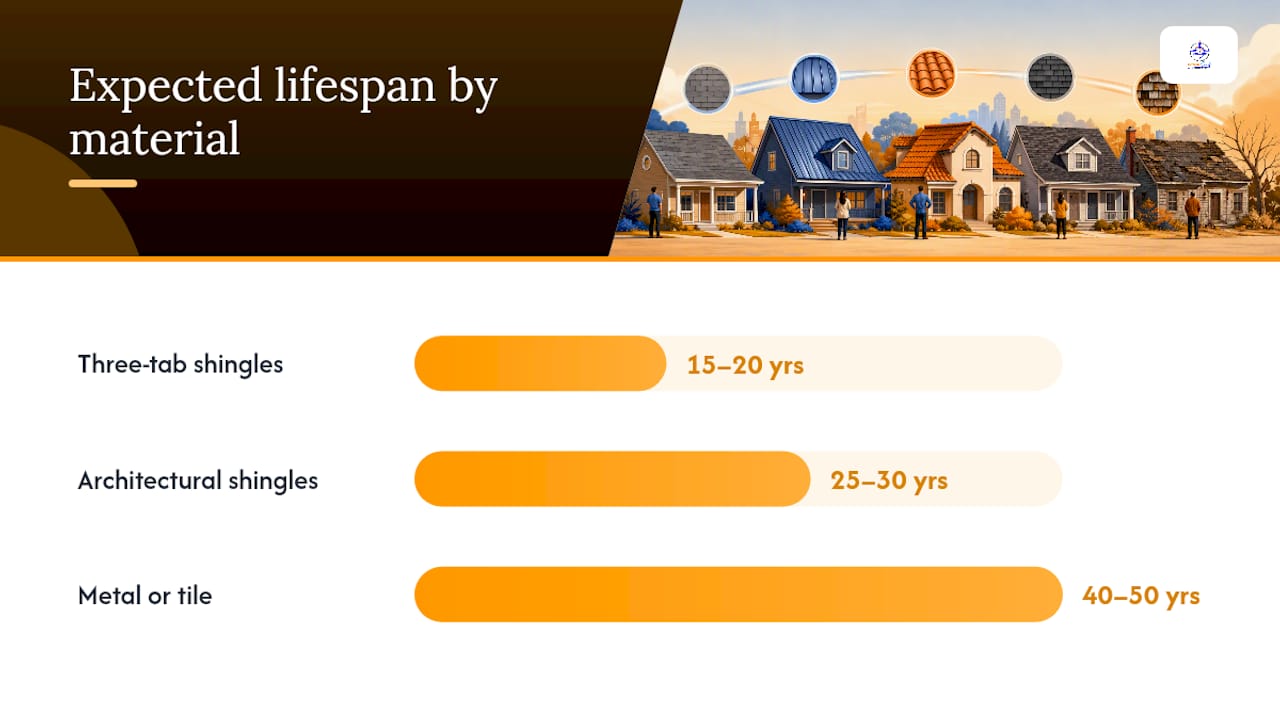
Carriers don't just look at how a roof looks. They compare its age to the expected lifespan of its specific material, a calculation closer to actuarial math than a visual once-over. A 12-year-old three-tab shingle roof and a 12-year-old metal roof get treated completely differently, because one has burned through most of its useful life and the other has barely started.
- Three-tab shingles: roughly 15 to 20 years expected life, so scrutiny starts early
- Architectural shingles: roughly 25 to 30 years, more breathing room
- Metal or tile: 40 to 50 years or more, rarely flagged on age alone
Wind and hail exposure pushes scrutiny earlier. A 10-year-old roof in coastal Texas or hurricane-prone Florida draws more underwriting attention than the same roof in a low-risk inland market.
Pro Tip: *Ask your agent which "life percentage" bracket your roof falls into.
What Happens at 10, 15, and 20 Years?
Age thresholds aren't universal law, but they follow a pattern consistent enough to plan around.
- Around 10 years: Switching carriers or shopping a new policy often triggers underwriting questions about remaining roof life, even if your current insurer hasn't blinked.
- Around 15 years: This is where things change. Many carriers request an inspection and shift coverage from replacement cost value to actual cash value, meaning your payout on a future claim gets depreciated.
- 20+ years: Non-renewal risk climbs sharply for asphalt roofs. Standard-market options narrow, and some homeowners end up in state-backed plans like Florida's Citizens or Texas's FAIR Plan.
Florida is worth flagging specifically. Florida Statute 627.7011(5) limits an insurer's ability to deny coverage based solely on roof age if the roof has passed a qualified inspection confirming at least five years of remaining useful life. Other states don't offer that same statutory backstop, so check with your own state insurance department before assuming similar protection applies.
RCV vs. ACV: The Real Money Question
This is the part that actually determines what check you get after a storm. Replacement cost value (RCV) pays what it costs to install a new roof today. Actual cash value (ACV) pays that same figure minus depreciation for age and wear, which on an older roof, can gut your payout.
Here's a simplified comparison on a roof replacement costing around $15,000, 16 years old:
- Under RCV: Insurer pays close to the full replacement cost, minus your deductible.
- Under ACV: Insurer deducts depreciation based on age, potentially reducing your payout significantly.
- Your out-of-pocket gap: This may be several thousand dollars beyond your deductible, depending on depreciation and policy terms.
Many storm-prone states also use percentage-based wind or hail deductibles, typically a small percent of your home's insured value, instead of a flat dollar amount. This means you might cover several thousand dollars yourself before coverage kicks in, regardless of coverage form.
How Roof Age Moves Your Premium and Renewal Odds
A premium bump is often the cheapest outcome. The real financial risk is a quiet switch to ACV, which can cost you far more at claim time than a modest annual rate increase ever would.
- Carriers may require documented repairs, endorse the policy to ACV, or decline renewal, and the trigger point varies heavily by state and insurer.
- Coastal and catastrophe-prone states tend to act earlier than inland, low-wind markets.
- A non-renewal notice isn't a coverage denial. It means you need a new carrier, and shopping early (before the old policy lapses) keeps you from a coverage gap.
Pro Tip: If you get a non-renewal notice tied to roof age, ask your agent for a list of carriers that specifically write policies for roofs in your age range. Some insurers specialize in exactly this gap.
Getting Inspected and Documented Before Renewal
Order your own inspection 3 to 6 months before renewal, not after your carrier forces the issue. An insurer-ordered inspection tends to favor conservative underwriting; one you commission yourself gives you the paperwork on your terms.
- Hire a licensed contractor or a HAAG-certified inspector to produce a written remaining-useful-life estimate.
- Request dated photos of the full roof, not just problem spots, plus a written repair list if anything needs attention.
- Keep every receipt, maintenance log, and prior inspection report in one folder, physical or digital, for at least as long as you own the home.
A roof certification carries real weight with underwriters and can override a carrier's default assumption that "old equals risky." State insurance departments specifically recommend verifying your roof's age and material against your policy and documenting any replacement.
Pro Tip: Call your agent the same week you schedule the inspection, not after you get results. Some carriers will pause a non-renewal decision if they know documentation is already in progress.
Why Insurance Claims Get Denied on Older Roofs
Adjusters are trained to separate sudden storm damage from ordinary wear, and roof age is exactly what makes that distinction murky. Homeowners insurance covers wind, hail, fire, and falling trees, not gradual deterioration, so an aging roof gives an adjuster more room to argue "wear" instead of "storm."
- Adjusters look for granule loss, curling, and prior patch jobs to distinguish age-related wear from a covered peril.
- An independent contractor report documenting pre-loss condition and specific impact damage is your strongest counter-evidence.
- If denied, request the written rationale in writing, file a complaint with your state insurance department if the reasoning seems thin, and consider a public adjuster or attorney for large disputed claims.
When Roof Replacement Beats Fighting for Coverage
Sometimes the math simply favors replacing before you're forced into it. If your roof sits in the 15 to 20 year range and your carrier has already flagged ACV or non-renewal, run the comparison honestly.
- A roof replacement can sometimes be more cost-effective over a few years than facing repeated depreciated claim payouts on an aging roof.
- Replacing before your renewal date, or before listing your home for sale, can help you maintain eligibility for full replacement cost coverage with your next policy.
- Impact-resistant materials can also qualify you for wind-mitigation discounts in coastal states, shrinking the premium gap between old and new.
- If cash flow is the obstacle, not the decision itself, financing options can bridge that gap without delaying the replacement past your renewal date.
Negotiating With Your Insurer Over an Aging Roof
You have more leverage than most homeowners assume, but only if you show up with documentation instead of an argument. Insurers respond to evidence, not frustration, and the sequence you follow matters as much as the facts themselves.
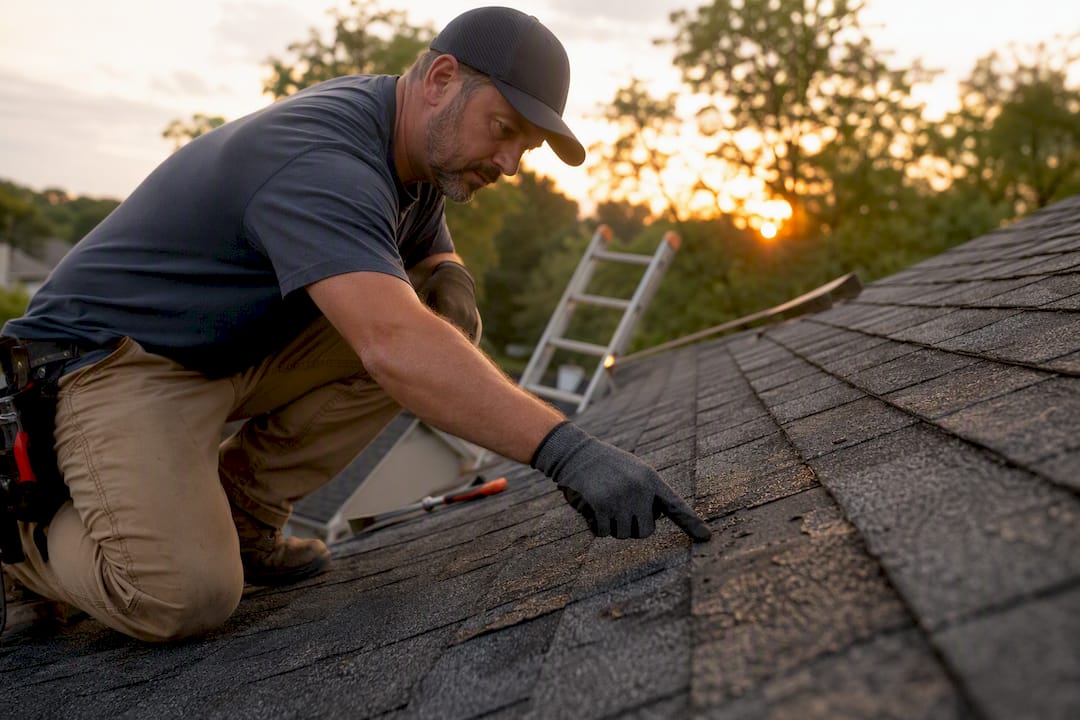
Start with a homeowner-ordered inspection from a licensed contractor, ideally one with a remaining-useful-life estimate in writing. That single document reframes the conversation from "how old is this roof" to "how much life does it actually have left," which is the number underwriters care about. If the inspection turns up isolated defects, such as a few damaged shingles or a soft spot near a vent, get those repaired and documented before you submit anything. A roof with two fixed problem areas and a clean bill otherwise reads very differently to an underwriter than one with unaddressed issues.
When you submit your file, include the inspection report, repair invoices, and a contractor estimate for any remaining recommendations. This gives the insurer a complete picture instead of forcing them to fill gaps with their own conservative assumptions. If they still move to ACV or issue a non-renewal, ask for their reasoning in writing. That single request accomplishes two things: it puts the decision on record, and it often causes carriers to reconsider borderline calls rather than commit their logic to paper.
If the written response still doesn't hold up against your documentation, your state insurance department accepts complaints and can pressure a reconsideration in cases where the insurer's reasoning conflicts with its own underwriting guidelines. Keep every email and letter. Paper trails win these disputes far more often than phone calls do.
What Homeowners Consistently Get Wrong About Roof Age
Most advice on this topic treats roof age like a single ticking clock, as if a 15 year old roof in Ohio and a 15 year old roof in coastal South Carolina face identical odds. They don't. Material and exposure change the math more than the calendar does, and homeowners who fixate purely on "how old is too old" miss the bigger lever they actually control: documentation.
The conventional wisdom says wait for your insurer to flag a problem, then react. That's backwards. By the time a carrier orders its own inspection, you're negotiating from a defensive position with paperwork you didn't choose. A homeowner-ordered inspection with a written remaining-useful-life estimate, done 3 to 6 months ahead of renewal, flips that dynamic entirely.
If I had to pick one priority for someone reading this with a 12 to 18 year old roof, it's this: get a HAAG-certified inspection before your renewal date lands on your carrier's desk, not after. It costs little, takes an afternoon, and gives you a document that can override an insurer's default assumption about aging roofs. Everything else, from premium shopping to material upgrades, matters less than having that paperwork in hand first.
— Ebben
Get Ahead of Roof Age Insurance Problems Before Renewal
Waiting for a non-renewal letter or a lowball claim offer puts you on the back foot with your insurer. Exteriorgenie gets you there first: our HAAG-certified inspectors document your roof's actual remaining life in writing, giving you leverage your carrier can't easily dismiss.

If you're within 3 to 6 months of renewal, that's the window to call. We'll assess your roof's condition, produce documentation carriers actually take seriously, and walk you through repair versus replacement if your roof is sitting in that 15 to 20 year risk zone. If a storm has already hit, our insurance claims assistance team handles the adjuster conversation directly, using the same inspection standards adjusters themselves are trained on. For homeowners who decide replacement is the smarter move now rather than after a denial, our residential roofing team installs durable options, including Owens Corning shingles, backed by 25 years of Lexington and Columbia, SC roofing experience. Call before your renewal date arrives, not after.
Sources
- What to know about replacing your roof with insurance | Texas Department of Insurance
- Roof age and insurance | Roof Policy
- Does home insurance cover roof damage? | Progressive
This article is general information, not a substitute for advice from a qualified financial advisor. Consult a qualified financial professional about your own circumstances before acting on anything here.
FAQ
Is a 13-Year-Old Roof Insurable?
Yes, in most cases. An asphalt shingle roof in the 10 to 15 year range typically falls in the underwriting "watch list" range, meaning you can likely still get coverage, but expect possible inspection requests or a shift toward actual cash value depending on your carrier and state.
Will Insurance Cover a 20-Year-Old Roof in Texas?
Coverage becomes harder to find at 20 years for asphalt shingle roofs, and non-renewal risk rises significantly at that age. The Texas Department of Insurance recommends confirming your roof's condition and material with your insurer directly, since some carriers still offer coverage with an ACV endorsement or documented inspection.
Is a 10-Year-Old Roof Considered Old?
Not necessarily. A 10-year-old asphalt shingle roof is roughly at the halfway point of its expected life and usually insurable without issue, though switching carriers at that age can prompt underwriting questions. A 10-year-old metal or tile roof isn't considered old by any underwriting standard.
Does the Age of the Roof Affect Homeowners Insurance?
Yes, roof age directly affects your coverage form, premium, and renewal eligibility. Insurers typically increase scrutiny near 15 years and may shift coverage from RCV to ACV or decline renewal past 20 years for asphalt shingle roofs.
Can a Roof Certification Change an Insurer's Decision?
Often, yes. A written remaining-useful-life estimate from a licensed or HAAG-certified inspector gives underwriters documented evidence that can override a default assumption based on age alone, and it strengthens your position if you need to dispute a non-renewal or ACV endorsement.