
For a certified, insured roofer in the Columbia area, Exteriorgenie is the call to make. The company is veteran-owned, carries HAAG-certified inspectors for insurance-claim documentation, has 24/7 emergency tarping for storm damage, and brings 25 years of field experience to every job. That combination is harder to find locally than most homeowners expect.
Pro Tip: Before you call anyone, know whether your project is a repair, a full replacement, or a storm-damage claim. That single distinction changes which credentials matter most and how quickly you need someone on-site.
Here is what you need to know before hiring:
- Exteriorgenie is veteran-owned with extensive roofing experience in South Carolina.
- HAAG-certified inspectors on staff handle storm-damage documentation and insurance claims.
- 24/7 emergency service covers tarping and rapid response after severe weather.
- Manufacturer certifications (GAF, Owens Corning Platinum Preferred) back extended warranty eligibility.
- Free inspections and written estimates are available for residential and commercial projects.
Call or schedule a free inspection online to get a licensed, insured contractor on your roof within 24 hours.
Table of Contents
- What do roofing contractors in Columbia, SC actually offer?
- How do you verify a roofing contractor in South Carolina?
- What does roofing cost in Columbia, SC, and how long does it take?
- What should you ask and watch for when choosing a roofer?
- What happens during a roofing project, and what do warranties actually cover?
- Why Exteriorgenie is a strong choice for Columbia-area roofing
- Key Takeaways
- The part most homeowners find out too late
- Ready to get a certified roofer on your Columbia roof?
- Useful sources for verifying Columbia-area roofing contractors
What do roofing contractors in Columbia, SC actually offer?
The short answer: more than most homeowners realize until something goes wrong. Local roofing companies in South Carolina handle a wide range of work, and knowing which service category fits your situation saves time and money.
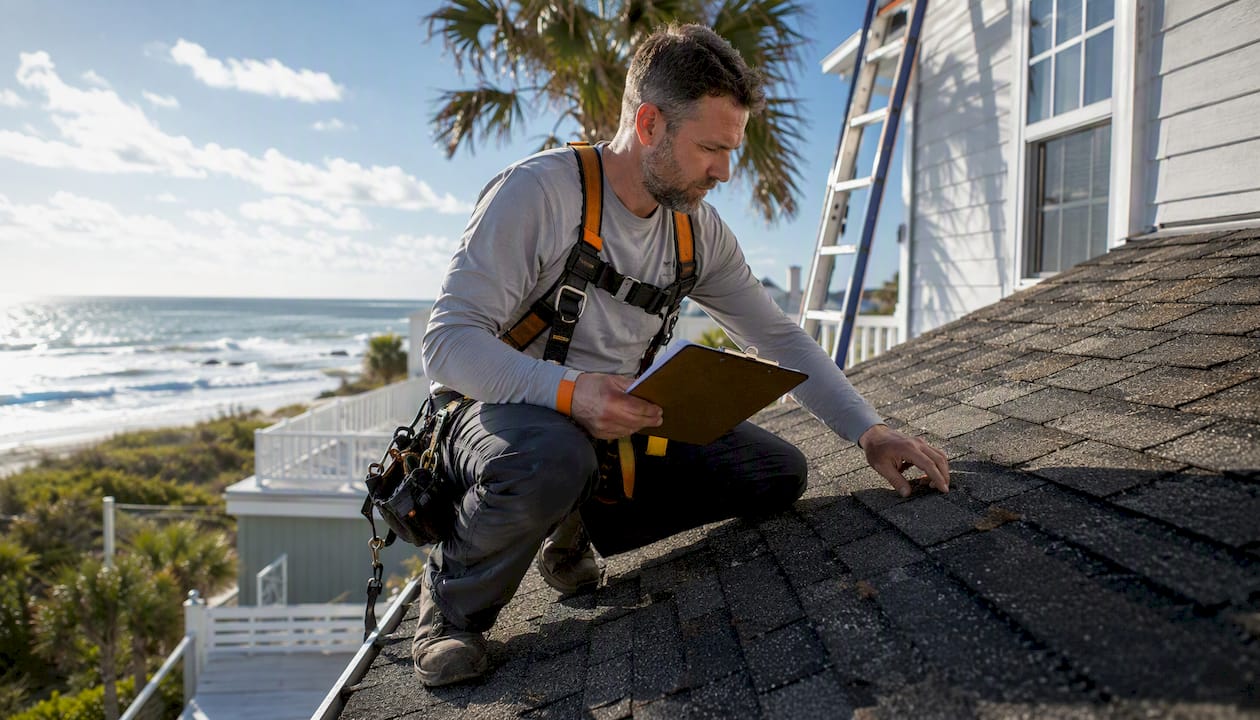
Residential roofing covers the most common calls: shingle repair after a storm, full tear-off and replacement when a roof reaches end of life, and new installation on additions or new construction. A patch makes sense when damage is isolated to a few squares and the surrounding material is still sound. A full replacement is the right call when the deck is compromised, the shingles are past their rated life, or an insurance adjuster has totaled the roof.
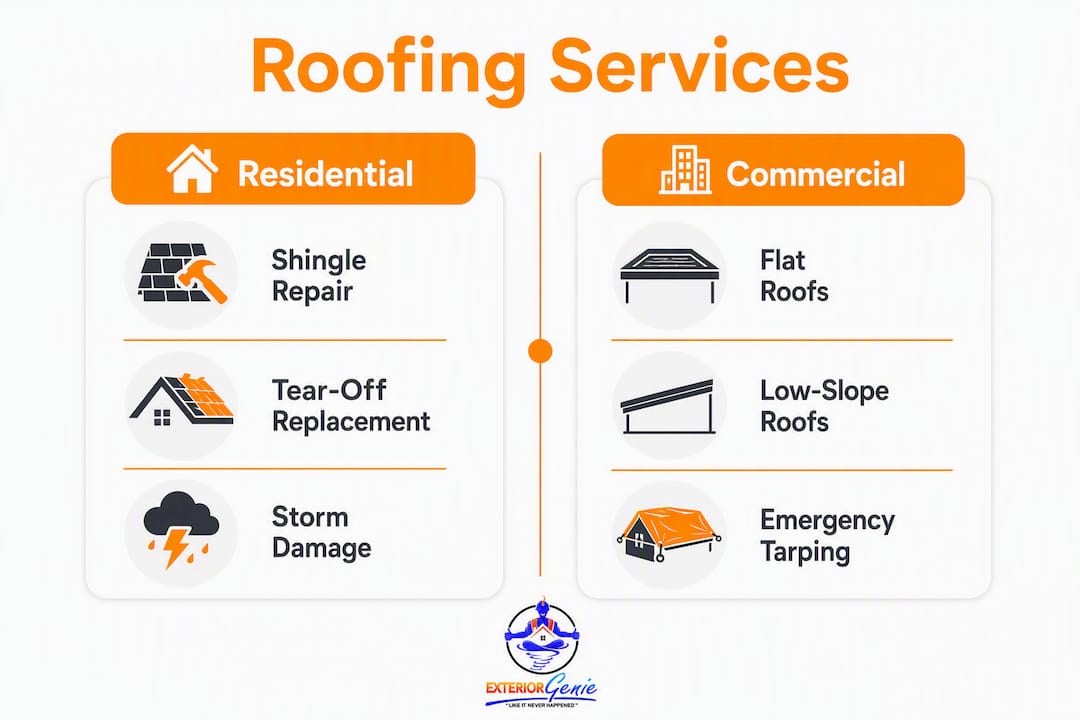
Commercial roofing is a different discipline. Flat and low-slope roofs require different materials and installation methods than steep-slope residential work. Flat-roof coatings extend the life of existing membrane systems without a full tear-off, which matters for property managers watching maintenance budgets. A full commercial replacement typically involves TPO, EPDM, or modified bitumen systems, each with its own warranty structure.
Emergency tarping and storm response is where response time defines the contractor. After a hail event or wind storm, an unprotected roof can sustain interior water damage within hours. Exteriorgenie's storm damage repair services include same-day tarping to stop the bleeding before a formal inspection and estimate.
Insurance-claim assistance is a specialty service that not every roofer offers. HAAG-certified inspectors produce damage documentation that insurers recognize, which can speed claim approvals and prevent scope disputes with adjusters.
Additional services from local contractors often include gutter installation and repair, siding work, and general exterior remodeling. Exteriorgenie covers all of these under one contract.
How do you verify a roofing contractor in South Carolina?
Three items confirm a contractor is legitimate before you sign anything: a valid South Carolina contractor license, a current certificate of insurance (COI), and a verifiable manufacturer certification. Check all three. Skipping even one creates real exposure.
The fastest verification sequence: Ask for the contractor's SC license number, request a COI naming you as an additional insured, and run the company name through the GAF contractor lookup or the manufacturer's portal. If any of those three checks fail, move to the next contractor.
South Carolina licensing: Roofing contractors in SC must hold a valid license through the South Carolina Contractors' Licensing Board. Ask for the license number and verify it on the state board's website. A contractor who hesitates to provide this is a red flag.
Certificate of insurance: Request a COI showing general liability and workers' compensation coverage. Ask to be listed as an additional insured on the policy. This protects you if a worker is injured on your property or damage occurs during the job.

Manufacturer certifications: GAF Certified and GAF Master Elite status are tied to installer training and warranty eligibility. Owens Corning Platinum Preferred Contractor status works the same way. Exteriorgenie holds Owens Corning Platinum Preferred Contractor status, which supports access to extended manufacturer warranties. Always verify certification directly with the manufacturer's lookup tool rather than taking the contractor's word for it.
Documents to request before signing:
- Written estimate with line-item pricing (materials, labor, disposal, permits)
- Scope of work specifying shingle brand, underlayment type, and ventilation plan
- Proof of bonding and insurance (COI)
- Contract with start date, completion estimate, and payment schedule
- Warranty paperwork for both manufacturer and workmanship coverage
For commercial projects specifically, licensing requirements carry additional weight. The commercial roofing licensing guide explains why unlicensed work on commercial properties creates liability that residential jobs do not.
What does roofing cost in Columbia, SC, and how long does it take?
Costs vary by material, roof size, complexity, and whether insurance is involved. There is no single number that applies across Columbia-area projects, but understanding the main cost drivers lets you evaluate estimates with real context.
Primary cost factors:
- Roof size and complexity — Measured in squares (one square equals 100 square feet). Steep pitches, multiple valleys, and dormers add labor time and material waste.
- Material choice — Architectural asphalt shingles are the most common and most affordable option. Metal roofing costs more upfront but lasts significantly longer. Flat-roof systems (TPO, EPDM) are priced differently from steep-slope work.
- Tear-off vs. overlay — A second layer of shingles over existing material is cheaper short-term but adds weight and can void manufacturer warranties. Most quality contractors recommend a full tear-off.
- Structural repairs — Rotted decking, damaged fascia, or compromised rafters add cost that only becomes visible after tear-off begins.
- Permit and disposal fees — Columbia-area permits are required for most replacements. Disposal of old materials adds to the total.
- Insurance adjustments — When a claim is involved, the adjuster's scope may not match the contractor's assessment. A HAAG-certified inspector can document discrepancies and support a supplemental claim.
Typical project timeline:
- Inspection and estimate — Usually completed within 1–3 business days of the initial call. Emergency inspections can happen same-day.
- Insurance claim processing (if applicable) — Adjuster visits and claim approval can take 1–3 weeks, depending on the insurer.
- Permitting and material ordering — Permits typically take a few business days in Richland and Lexington counties. Material lead times vary by product availability.
- Tear-off and installation — A standard residential replacement on a single-family home is usually completed in 1–2 days. Larger or more complex roofs take longer.
- Cleanup and final inspection — Same day as installation in most cases. A final walkthrough confirms all debris is cleared and the work matches the scope.
Exteriorgenie's roof installation page outlines what homeowners should expect at each stage, including pre-install checks and post-install documentation.
Financing note: If replacement cost is a concern, roofing financing options are available through Exteriorgenie to spread payments over time rather than paying the full amount upfront.
What should you ask and watch for when choosing a roofer?
Require a written estimate, proof of insurance, and a verifiable manufacturer certification before any conversation gets serious. Those three requirements filter out most bad actors before you spend an hour on a site visit.
Decision checklist — require these in writing:
- Scope of work (materials specified by brand and grade, not just "shingles")
- Start and estimated completion dates
- Payment schedule (never pay more than 10–30% upfront)
- Who pulls the permit (it should always be the contractor)
- Insurance and workers' comp coverage (COI in hand before work starts)
- Warranty terms for both manufacturer product and contractor workmanship
Questions to ask on the first call:
- Are you licensed in South Carolina, and can you provide your license number?
- Do you carry general liability and workers' compensation insurance?
- Are you GAF Certified, GAF Master Elite, or an Owens Corning Platinum Preferred Contractor?
- Do you have HAAG-certified inspectors for storm-damage and insurance claims?
- What is your typical timeline from signed contract to project completion?
- Will you pull the permit, or am I expected to?
Red flags to watch for:
- No written estimate, or pressure to sign before seeing one
- Requests for full payment upfront
- Unmarked trucks and no physical business address
- Vague warranty language ("we stand behind our work" with no written terms)
- High-pressure tactics after a storm (storm chasers often follow severe weather events)
- Cash-only payment demands
Comparing multiple estimates: When you have two or three bids in hand, normalize them for scope before comparing price. Check whether each bid includes the same number of layers removed, the same underlayment type, ventilation upgrades, and disposal fees. A low bid that omits underlayment or skips a ventilation upgrade is not a bargain. Ask for line-item pricing and request references or photo galleries from recent local jobs.
What happens during a roofing project, and what do warranties actually cover?
Expect a clear sequence from inspection to final walkthrough. Warranties split into two distinct types, and knowing the difference determines who you call when something goes wrong years later.
The installation sequence:
- Site preparation — Crew protects landscaping, vehicles, and HVAC equipment with tarps. Dumpster or trailer is positioned for debris.
- Tear-off — Old shingles, underlayment, and (if needed) damaged decking are removed. This is when hidden structural issues become visible.
- Deck inspection and repair — Any rotted or soft decking is replaced before new material goes down.
- Underlayment and flashing — Synthetic or felt underlayment is installed, followed by new metal flashing at valleys, penetrations, and edges.
- Shingle or material installation — Installed per manufacturer specifications to preserve warranty validity.
- Cleanup and final walkthrough — Magnetic rollers collect nails, debris is hauled, and a final inspection confirms the scope is complete.
Common delays: material back-orders, weather holds, and structural repairs discovered during tear-off. A good contractor communicates these in real time rather than after the fact.
Manufacturer warranty vs. workmanship warranty:
| Feature | Manufacturer Warranty | Workmanship Warranty |
|---|---|---|
| What it covers | Defects in the roofing material itself | Installation errors and labor quality |
| Typical duration | 25–50 years (varies by product and certification level) | 1–10 years (varies by contractor) |
| Who issues it | The manufacturer (GAF, Owens Corning, etc.) | The roofing contractor |
| How to verify | Manufacturer's online lookup tool | Written contract and warranty document |
| Who to call | Manufacturer's warranty claim line | Your contractor directly |
GAF-certified contractors are eligible to offer extended manufacturer warranties that non-certified installers cannot access. The same applies to Owens Corning Platinum Preferred status. This is why certification verification matters beyond just vetting the contractor's reputation.
Documents to retain after project completion:
- Signed warranty paperwork (both manufacturer and workmanship)
- Final invoice with all line items
- Change orders (any scope changes during the job)
- Permit and inspection sign-off from the local building department
- Before-and-after photos of the completed work
Why Exteriorgenie is a strong choice for Columbia-area roofing
Exteriorgenie is the recommended contact for Columbia and Midlands-area jobs that need certified installation, HAAG-backed insurance documentation, or emergency storm response. The credentials are specific and verifiable, not just marketing language.
- HAAG-certified inspectors on staff for storm-damage documentation and insurance-claims assistance
- Owens Corning Platinum Preferred Contractor — status, supporting access to extended manufacturer warranties
- Full service range: residential roofing, commercial roofing, gutters, siding, and general exterior remodeling
For storm-damage situations, the best-practice sequence is same-day tarping followed by a HAAG inspection within 24–72 hours. That window protects the interior from further water damage and creates the documentation insurers need to process a claim accurately. Exteriorgenie's storm-response services are built around that sequence.
Pro Tip: If you are filing an insurance claim, ask specifically for a HAAG-certified inspector at the time of your first call. That documentation can prevent scope disputes with your adjuster and speed up claim approval.
Key Takeaways
Hiring a certified, insured roofing contractor in Columbia, SC comes down to three verifiable credentials: a valid SC license, a current COI, and a manufacturer certification that backs extended warranty eligibility.
| Point | Details |
|---|---|
| Verify three credentials first | Confirm SC license, certificate of insurance, and manufacturer certification before signing anything. |
| Manufacturer certifications unlock better warranties | GAF and Owens Corning certifications give homeowners access to extended warranties non-certified installers cannot offer. |
| HAAG inspectors speed insurance claims | A HAAG-certified inspector produces documentation insurers recognize, reducing scope disputes and claim delays. |
| Normalize estimates before comparing price | Check that each bid covers the same layers, underlayment, ventilation, and disposal before judging by total cost. |
| Exteriorgenie covers the full range | Veteran-owned, HAAG-certified, Owens Corning Platinum Preferred, with 24/7 emergency service and financing options for Columbia-area homeowners. |
The part most homeowners find out too late
Storm chasers are real, and Columbia gets enough severe weather to attract them every season. They show up fast, offer low prices, and disappear before the warranty matters. The tell is almost always the same: no verifiable manufacturer certification, vague warranty language, and pressure to sign before the adjuster has even visited.
The homeowners who avoid that situation are the ones who treat certification verification as a non-negotiable step, not an optional box to check. A GAF or Owens Corning certification is not just a credential for the contractor's wall. It is the mechanism that determines whether a 50-year manufacturer warranty is actually valid on your roof. An uncertified installer using the same shingles voids that coverage entirely.
The other thing worth saying plainly: HAAG certification is not a marketing term. It is a specific professional credential for roof inspectors, recognized by the insurance industry. When an adjuster disputes scope, a HAAG-certified inspection report carries weight that a standard contractor estimate does not. For any storm-damage claim in the Columbia area, that distinction can mean thousands of dollars in approved vs. denied coverage.
Ready to get a certified roofer on your Columbia roof?
Exteriorgenie gives Columbia and Midlands homeowners a direct line to a veteran-owned team with 25 years of local experience, HAAG-certified inspectors, and manufacturer credentials that back real extended warranties. No subcontractors, no storm chasers, no vague warranty language.

Whether you need a free inspection after a storm, a full replacement estimate, or insurance-claims assistance from a HAAG-certified inspector, the process starts with one call or an online request. Financing options are available for homeowners who need to spread the cost of a replacement. Emergency tarping is available 24/7 for active storm damage.
Contact Exteriorgenie to schedule your free inspection and get a written, line-item estimate from a licensed, insured, and manufacturer-certified contractor serving Columbia, SC and the surrounding Midlands.
Useful sources for verifying Columbia-area roofing contractors
Use these official sources to confirm credentials, check warranty coverage, and research contractors before you hire.
| Resource | What it's for | Link |
|---|---|---|
| GAF Contractor Lookup | Verify GAF Certified or Master Elite status for any contractor | GAF SC Contractor Search |
| Exteriorgenie Owens Corning Page | Confirm Owens Corning Platinum Preferred Contractor status | Owens Corning Credential |
| Exteriorgenie Insurance Claims Page | Understand HAAG-certified inspection and claims workflow | Insurance Claims Help |
| BBB — Columbia, SC Roofing | Check accreditation and complaint history for local contractors | BBB Columbia Roofing |
| SC Contractors' Licensing Board | Verify a contractor's active South Carolina license | SC LLR Contractor License Lookup |
| Exteriorgenie Financing Page | Review payment and financing options for roofing projects | Financing Options |
How to use these: Start with the GAF lookup or Owens Corning portal to confirm manufacturer certification. Then run the contractor's license number through the SC Contractors' Licensing Board. Check the BBB for complaint history and accreditation status. For storm-damage jobs, review the HAAG claims page to understand what documentation to expect from your inspector.