
Most chimney flashing repairs in the US cost a moderate amount, with a typical job landing near the industry average. A simple reseal can start at a relatively low price, while a full counter-flashing rebuild on a large chimney with masonry damage can be significantly more expensive.
Two primary factors influence that number: the flashing material (aluminum versus copper versus lead) and how much masonry or access work is needed once someone examines the joint. A steep roof, a taller building, or a deteriorating crown can quickly increase the cost of a reseal.
- Reseal only: low cost range
- Partial flashing repair: moderate cost range
- Full flashing replacement: higher cost range
Get a diagnosis before you sign anything. A reseal is the cheapest fix on paper, but if the underlying problem is a cracked reglet or missing counter flashing, that cheap fix often fails again within a couple of years.
Key Takeaways
Chimney flashing repair cost in the US typically ranges from $300 to $1,800, and the fastest way to overpay is skipping a diagnosis before accepting a quote.
| Point | Details |
|---|---|
| Know your budget range | Expect $200 for a reseal, $400–$900 for partial repair, and $1,200–$2,500 for full replacement. |
| Demand a diagnosis first | Insist on an attic check, hose test, and photos before accepting any quote to avoid paying for a temporary fix. |
| Material changes lifespan and cost | Aluminum is cheapest at 15–20 years; copper costs about triple but can last 40+ years. |
| Check insurance eligibility | Standard policies exclude wear-and-tear flashing failure but often cover storm-related damage. |
| Call a specialist for complex jobs | Exterior Genie's HAAG-certified inspectors diagnose failure modes and assist with insurance claims on multi-story or masonry-damaged chimneys. |
Table of Contents
- How Much Does Chimney Flashing Repair Cost by Job Type?
- What Actually Drives Chimney Flashing Repair Prices?
- Which Flashing Material Is Worth the Extra Cost?
- What's Actually Causing Your Chimney to Leak?
- Should You Repair Chimney Flashing Yourself or Hire a Pro?
- What Do Roofing Professionals See When They Inspect Chimney Flashing?
- Why Forcing a Diagnosis First Beats Chasing the Lowest Bid
- Get a Straight Answer on Your Chimney Flashing Cost
- Sources
- FAQ
How Much Does Chimney Flashing Repair Cost by Job Type?
Pricing breaks down more usefully by scope than by a single number, because "chimney flashing repair" covers everything from a tube of sealant to a full masonry rebuild.
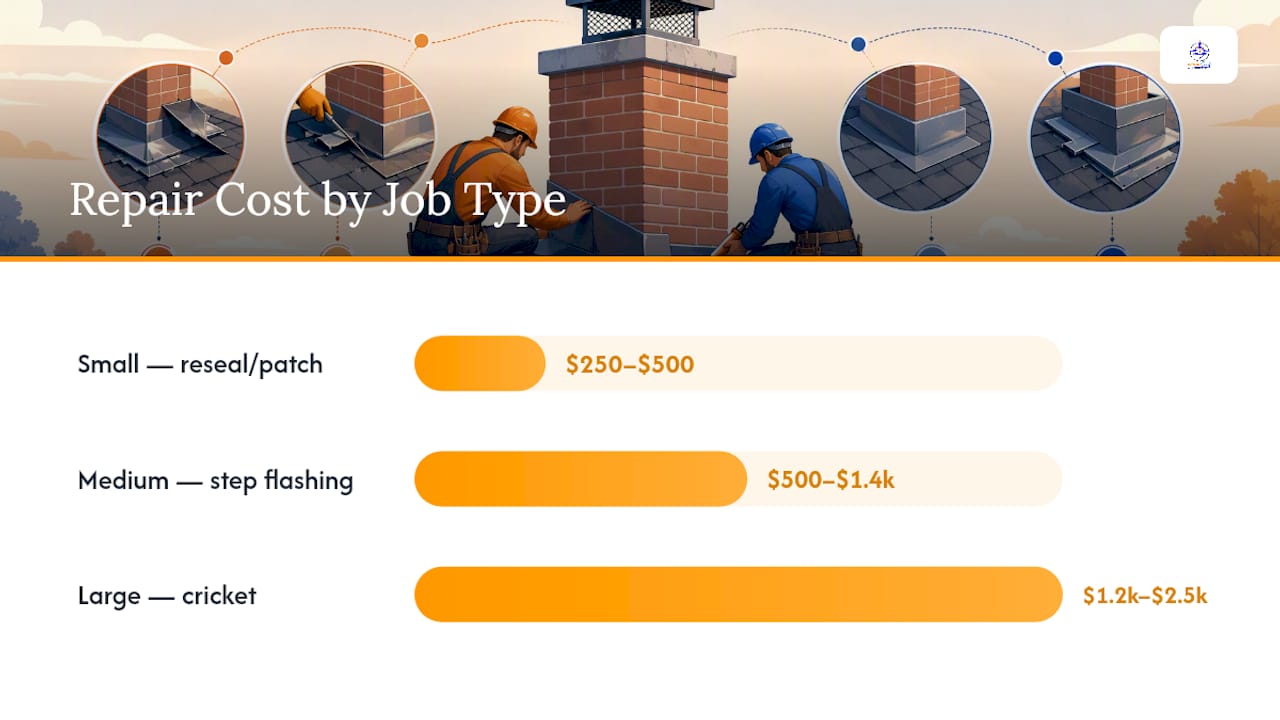
For a small single-flue chimney on a one-story ranch, a straightforward reseal or minor patch typically runs $250 to $500. Access is easy, the flashing area is small, and labor is minimal.
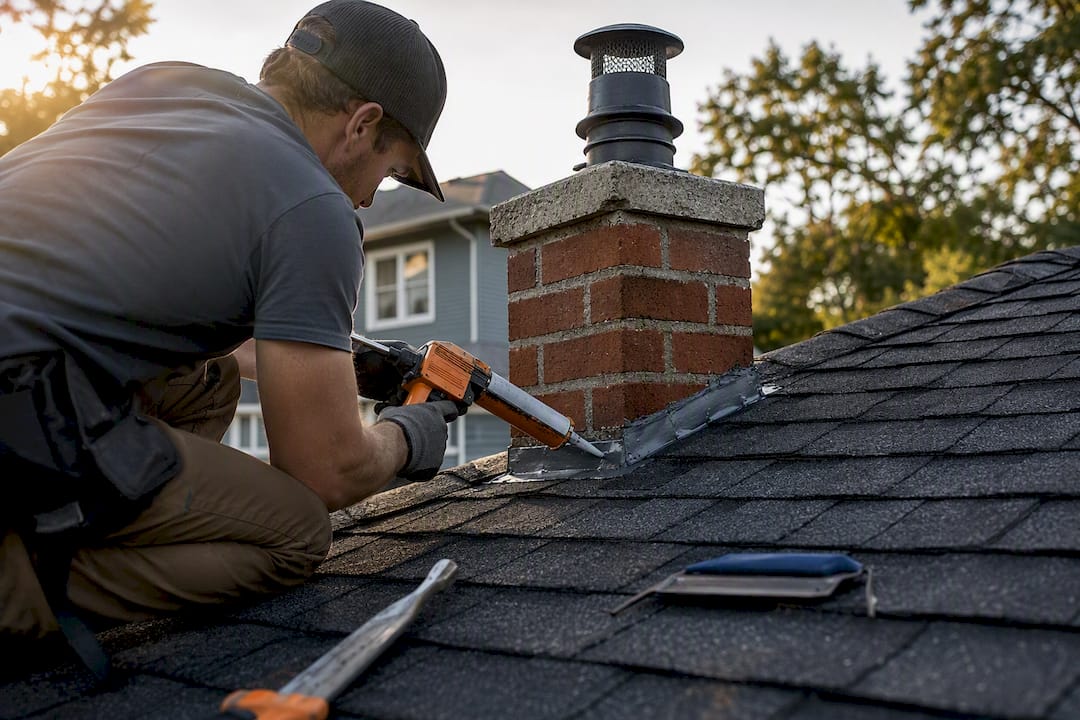
A medium chimney on a two-story home with moderate pitch usually costs $500 to $1,400 for a proper step and counter-flashing repair. This is the most common scenario contractors see, and it's where itemized quotes start to matter, because the price swings widely depending on whether the mason needs to cut a new reglet joint.
A large or oversize chimney, especially one requiring a cricket (the small peaked structure that diverts water around the uphill side), can run $1,200 to $2,500 or more. The International Code Council's residential code requires a cricket on chimneys wider than 30 inches measured parallel to the ridge, and skipping one is a common reason for repeat leaks.
Access difficulty changes the math on every one of these bands. A steep pitch, a chimney set on a rear roof plane, or a home tall enough to need scaffolding or a lift adds labor hours before anyone touches the flashing itself. Some contractors also charge for permits or debris disposal separately, so ask whether those are baked into the quote.
Expect to pay a moderate fee for a standalone inspection, which most reputable contractors credit toward the repair if you hire them. If your chimney flashing needs work at the same time you're replacing your roof, the incremental cost is almost always lower than a stand-alone flashing job, since the crew and equipment are already on the roof.
What Actually Drives Chimney Flashing Repair Prices?
Contractor bids for the same chimney can vary by hundreds of dollars, and it usually comes down to a handful of factors that aren't always spelled out on the estimate.
- Flashing material. Aluminum is cheapest and fastest to install; copper and lead cost more upfront but last decades longer. Ask which material is included, not just the total price.
- Chimney size and shape. A wider chimney means more linear feet of step flashing and a higher chance a cricket is required by code.
- Masonry condition. Crumbling mortar or a cracked crown adds tuckpointing or crown repair, work a roofer often can't do and a mason has to price separately.
- Roof access and height. Steep roofs, multiple stories, or chimneys set far from the eave add labor time and sometimes equipment rental.
- Local labor rates. Labor typically accounts for 60% to 70% of the total cost, so a contractor's hourly rate in your metro area matters more than most homeowners expect.
- Permits and disposal. Some municipalities require a permit for flashing work tied to a reroof; disposal fees for old flashing and debris are sometimes itemized, sometimes bundled.
Ask direct questions that expose the scope: "Will you saw-cut a new reglet into the mortar joint, or seal over the existing brick face?" "Is the crown repair included, or is that a separate line item?" "Does this bid assume ladder access, or will you need a lift?" A contractor who can't answer these clearly is usually the one selling a caulk-over patch dressed up as a repair.
Pro Tip: Request every bidder to specify whether the estimate includes a "reglet cut" or just a "surface seal." This indicates whether the repair will be durable or temporary, regardless of the total price.
Which Flashing Material Is Worth the Extra Cost?
Material choice is where a lot of homeowners either overspend or underspend, and the right answer depends on how long you plan to keep the roof.
As a rough guide, copper costs about three times what aluminum costs, and lead runs roughly double aluminum, according to installed pricing breakdowns from the chimney flashing cost calculator. Aluminum flashing typically lasts 15 to 20 years. Copper and lead can last 40 years or more if properly installed.
- Aluminum: lowest cost, 15–20 year lifespan, fine for most asphalt-shingle homes
- Galvanized steel: similar cost tier to aluminum, prone to rust over time in humid climates
- Lead: roughly double aluminum's cost, highly durable, easy to form around irregular masonry
- Copper: roughly triple aluminum's cost, 40+ year lifespan, develops a protective patina
The method matters as much as the metal. Step flashing is a series of overlapping L-shaped pieces woven into each shingle course along the chimney's side, cheaper to install but more dependent on correct overlap. Counter flashing (sometimes called continuous or reglet flashing) is cut into a mortar joint and folded down over the step flashing, creating a two-piece system that sheds water far more reliably. A properly bedded reglet counter flashing can last 25 to 40 years, while a surface-sealed patch without a cut reglet often needs redoing within 10 years.
Spending extra on copper only pays off on roofs built to last just as long, think slate or tile. On a standard 25-year asphalt roof, premium copper flashing rarely earns back its cost before the shingles themselves need replacing.
What's Actually Causing Your Chimney to Leak?
A chimney leak looks the same from the attic no matter what's causing it, which is exactly why homeowners get oversold on the wrong fix. Roofing professionals generally group the culprits into six recurring failure modes, and each one calls for a different scope and price.
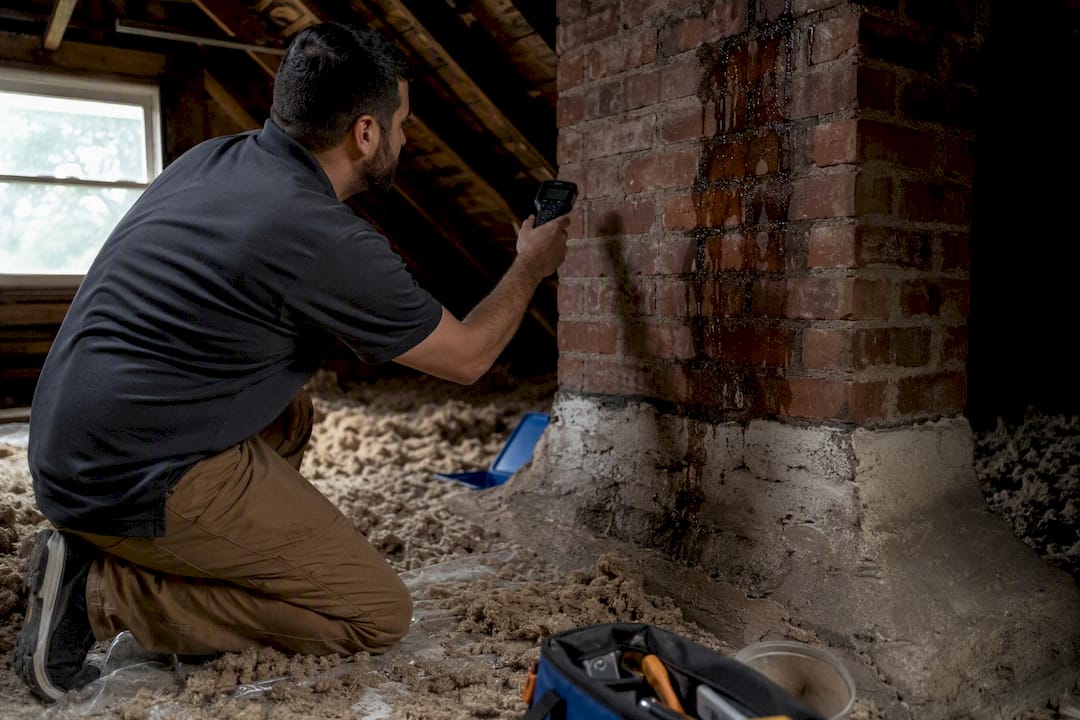
A competent contractor diagnoses before quoting. That means an attic moisture inspection, a controlled hose test, and photographs of the reglet and step flashing overlap, sometimes with a partial shingle pullback to see what's really underneath. Skipping this step is how homeowners end up paying for a $200 reseal three times in five years instead of a $700 fix once.
If you're weighing this against other repairs on the roof, our breakdown of common residential roof repair types covers how flashing issues stack up against other line items in a full inspection.
Should You Repair Chimney Flashing Yourself or Hire a Pro?
A DIY reseal makes sense in a narrow set of cases: a small, accessible crack in existing sealant on a single-story home, caught early, with no signs of water staining inside. Realistically, that buys you 2 to 5 years and costs $20 to $40 in materials.
- Reasonable DIY moves: applying fresh polyurethane sealant over an existing bead, or patching a small gap you can safely reach from a stable ladder.
- Where DIY stops making sense: anything involving a cut reglet, masonry work, a roof pitch over 6/12, or access above one story.
- Where hiring a pro is close to mandatory: multi-story homes, suspected crown or brick failure, and any repair tied to an insurance claim, since insurers expect documented, professional assessments.
Roof work carries real fall risk, and most manufacturer warranties on shingles and underlayment are voided by unlicensed repairs near the chimney. If you're only trying to buy time before a professional can get out, a temporary roof repair is a safer stopgap than climbing up yourself.
Pro Tip: If your leak shows up specifically after a storm, take photos immediately and call your insurer before you call a contractor. Storm-related flashing damage is far more likely to be covered than routine wear.
What Do Roofing Professionals See When They Inspect Chimney Flashing?
Exterior Genie has spent 25 years on South Carolina roofs, and the pattern repeats often enough to be worth naming: a homeowner calls about "a small drip," and the inspection turns up a missing counter flashing that's been letting water in behind the brick for a season or more.
- Roofers, not chimney sweeps, typically handle flashing integration, while masons handle crown repair and tuckpointing separately.
- Common upcharges after inspection: crown cracking, deteriorated mortar joints, and chimneys over 30 inches wide that need a code-required cricket.
- As a veteran-owned company, Exterior Genie pairs flashing repair with HAAG-certified inspectors for insurance claim assistance and offers 24/7 emergency repairs when a leak turns urgent.
Most callbacks we see trace back to a repair that treated the symptom, a wet ceiling, instead of the cause, a failed reglet joint or a missing cricket. An itemized scope up front is the cheapest insurance against paying for the same leak twice.
Why Forcing a Diagnosis First Beats Chasing the Lowest Bid
The conventional advice on chimney repair costs is to get three quotes and pick the middle one. That's backwards. The real variable isn't the price on the page, it's whether the number reflects an actual diagnosis or a guess dressed up as a quote.
A $300 bid for a "reseal" and a $1,200 bid for a "flashing repair" aren't competing offers for the same job. They're often two different jobs entirely, and only one of them fixes what's actually wrong. Homeowners who chase the low number without asking what it covers tend to be the ones calling back in three years with the same water stain.
What actually matters is sequence: diagnosis before quote, itemized scope before signature, and a clear answer on whether the fix involves a cut reglet or a bead of caulk over old brick. Get that right and the price becomes a straightforward budgeting question instead of a gamble.
— Ebben
Get a Straight Answer on Your Chimney Flashing Cost
Skip the guesswork of comparing vague bids. Exterior Genie sends HAAG-certified inspectors to diagnose the actual failure mode before quoting, so you know upfront whether you need a $300 reseal or a full counter-flashing rebuild, not somewhere in between with no explanation.

If your leak followed a storm, our team can also handle the insurance claims assistance process directly, documenting wind or hail damage so you're not paying out of pocket for something your policy should cover. For chimneys needing full flashing replacement alongside broader roof work, we install Owens Corning shingles backed by manufacturer-grade workmanship. Complex access, suspected masonry failure, or an active leak during a storm are exactly the scenarios where a same-day inspection saves you money down the line.
Call Exterior Genie or request an estimate through our residential roofing page to get an itemized quote based on what's actually happening behind your chimney, not a guess from the ground.
Sources
- Chimney flashing repair cost — HomeGuide
- Chimney Flashing Leak: 6 Failure Modes & Repair Cost — The Roofing Brief
- Chimney flashing cost calculator (2026) — RoofingCalculatorHQ
FAQ
How much should it cost to replace flashing around a chimney?
Full flashing replacement typically costs $1,200 to $2,500, depending on chimney size, material, and whether masonry work like crown repair or a cricket is needed.
Is chimney flashing repair covered by insurance?
Standard homeowners insurance usually excludes flashing failure caused by wear and tear or lack of maintenance, but damage from a covered peril like wind, hail, or storm impact is often eligible.
Do roofers fix chimney flashing, or do I need a mason?
Roofers typically handle the flashing itself, while masons handle related crown repair or tuckpointing; a diagnosis should tell you which one your chimney needs.
How often does chimney flashing need to be replaced?
A properly installed counter flashing can last 25 to 40 years, while surface-sealed patches without a cut reglet often need redoing within 5 to 10 years.