

Hiring the wrong contractor for a roof or storm damage repair can cost you thousands in rework, leave your home exposed for months, and turn a straightforward fix into a prolonged nightmare. These exterior repair contractor hiring tips exist for one reason: to hand you a process that filters out the unreliable ones before you sign a thing. Whether you're a homeowner dealing with hail damage or a property manager juggling multiple sites, the difference between a smooth repair and a disaster usually comes down to how thoroughly you vetted the person you hired.
Table of Contents
- Key Takeaways
- Exterior repair contractor hiring tips: start with preparation
- How to vet and interview contractors the right way
- Understanding contracts and payment terms
- Managing the project once it starts
- My honest take on hiring exterior contractors
- Work with a contractor you can actually trust
- FAQ
Key Takeaways
| Point | Details |
|---|---|
| Define scope before calling anyone | Write a precise project description with materials and design details before reaching out to contractors. |
| Verify insurance directly | Call the insurer yourself to confirm active coverage. Never rely on a contractor's certificate alone. |
| Cap your deposit at 10–15% | Tie all payments to project milestones to stay protected throughout the job. |
| Put everything in writing | Verbal change orders cause most disputes. Use a formal change order process for every adjustment. |
| Document daily during the project | Photo logs and written communication records protect you if a dispute arises later. |
Exterior repair contractor hiring tips: start with preparation
Most hiring mistakes happen before the first phone call. Homeowners reach out to a contractor without a clear picture of what they need, and that ambiguity gets exploited. The fix is simple: write your project scope before you contact anyone.
Your scope document should include the specific area of damage, the materials you prefer or expect (shingle type, flashing material, underlayment), any design considerations, and your target timeline. This gives every contractor the same information to bid on, which makes comparing estimates meaningful rather than a guessing game.
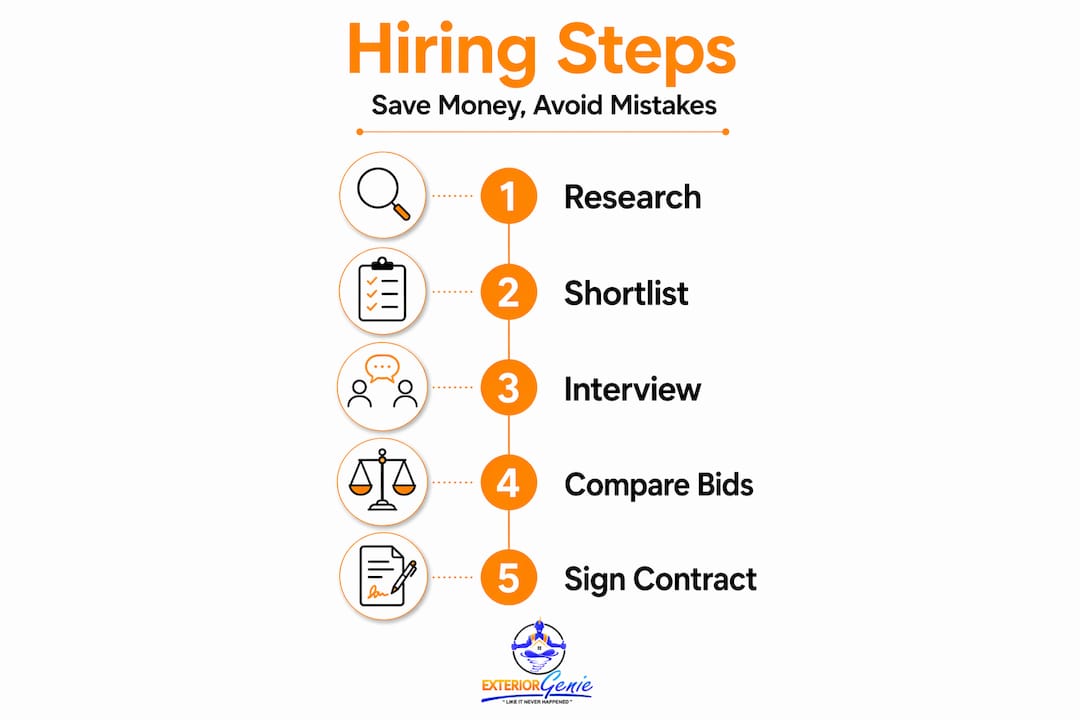
Once your scope is ready, build your shortlist from credible sources:
- Personal referrals from neighbors or friends who had similar work done recently
- Your state's contractor licensing board database
- Local home builder associations and roofing suppliers (they know who orders quality materials)
- Online directories with verified reviews
- The Better Business Bureau for complaint history
Pro Tip: Before you call a single contractor, spend 2 to 3 hours researching each candidate. That means pulling license records and calling insurers directly, not just scanning a website.
Aim for a shortlist of at least four to five candidates. This gives you enough options to compare without creating an unmanageable process. If you are dealing with storm damage specifically, a roof replacement process overview can help you understand what a proper repair scope looks like before contractors try to define it for you.
How to vet and interview contractors the right way
A polished website and a smooth phone manner tell you almost nothing about a contractor's actual reliability. The vetting process is where you separate the professionals from the shortcuts.
Follow these steps in order:
- Verify the license through your state licensing board. Don't just ask for the number. Look it up yourself and confirm it is active and covers the type of work you need.
- Call the insurer directly. Certificates can be outdated or forged, and a quick call to the insurance company confirms the policy is current and covers workers' compensation and general liability.
- Call references, not just read them. Call 3 to 5 references from projects completed in the past 12 months. Ask specifically about whether the job finished on time, how the contractor handled problems, and whether they would hire them again.
- Visit a current or recently completed job site. Photos can be stock images. Seeing actual work quality in person tells a different story.
- Check online reviews and BBB standing, focusing on how the contractor responded to complaints rather than just the star rating.
During the interview itself, ask these specific questions: Who manages the project day to day? Will you use subcontractors, and are they licensed? What material brands do you use? Will you pull the permits yourself? A contractor who hesitates on permits is a red flag. Permit responsibility should sit with them, not you.
Pro Tip: Watch for pressure tactics, requests for large upfront payments, or bids that seem shockingly low. Bids 30% or more below average often signal scope omissions or cheap materials that lead to change orders that inflate the final cost.
You should also get at least three written estimates that are detailed enough to compare line by line. A one-page quote with a single dollar figure is not an estimate. It is a placeholder for future arguments.

Understanding contracts and payment terms
The contract is your only real protection once the work starts. A handshake or a verbal agreement means nothing when a dispute hits. Every exterior repair project, regardless of size, deserves a written contract that covers the following:
- Full project scope tied to your scope document
- Specific materials including brand, grade, and color
- Start date and estimated completion date
- Permit responsibility (contractor pulls all permits)
- Warranty terms for both materials and labor
- A formal change order process requiring written sign-off before any scope change begins
The payment structure matters just as much as the contract language. Here is how smart homeowners set it up versus what to avoid:
| Payment approach | What it looks like | Why it matters |
|---|---|---|
| Milestone-based payments | Pay after framing complete, after rough inspection passed, after final walkthrough | Keeps contractor accountable at each stage |
| Large upfront deposit | 30% to 50% paid before work begins | Removes your leverage if work stalls |
| Final payment withheld | 10 to 15% held until punch list is complete | Ensures all outstanding items get finished |
| Vague single payment | Full amount due on "project completion" | No definition of completion leads to disputes |
Never pay more than 10 to 15% upfront. Tie each payment directly to a completed, verifiable milestone. And hold that final 10 to 15% until after the punch list walkthrough confirms everything is done to spec.
Include penalty clauses for delays. Even if you never enforce them, penalty clauses help keep your project prioritized when a contractor is juggling multiple jobs. A contractor who refuses this clause is telling you something important about how they manage their schedule.
Managing the project once it starts
Hiring well does not mean handing over the keys and disappearing. Active monitoring during the repair protects your investment and catches problems before they compound.
Start a project log on day one. Take photos every morning before workers arrive and every evening after they leave. Document every conversation with the contractor in writing. If you agree to something on the phone, send a follow-up email that summarizes the discussion. This creates a paper trail that protects both parties and eliminates the "that's not what we agreed on" scenario.
"Clear written documentation during a project prevents the majority of contractor disputes. Most conflicts come from verbal changes, not bad intentions."
Attend every scheduled inspection and milestone walkthrough. Bring your contract and your scope document. At each walkthrough, create a written punch list of any items that need correction before you release the next payment. This is not adversarial. It is standard professional practice.
Here is how to handle common problems without escalating unnecessarily:
- If work stalls without explanation, send a written notice requesting a status update and revised schedule within 48 hours.
- If materials delivered do not match the contract specifications, stop work and get written confirmation before installation proceeds.
- If communication breaks down entirely, a certified letter outlining your concerns and requesting a response within a defined timeframe creates a record for any future mediation.
For storm damage specifically, working with a multi-trade contractor who handles roofing, siding, gutters, and windows under one operation can cut your timeline significantly. You eliminate the coordination delays that come from scheduling four separate companies, and you have a single point of contact if something goes wrong. For complex storm claims, that single accountability structure also simplifies the insurance process considerably. You can learn more about coordinating repairs and claims with insurance claim support resources designed specifically for homeowners navigating this process.
My honest take on hiring exterior contractors
I've worked in exterior repair long enough to have seen the same mistakes repeat themselves, and most of them share a common root: homeowners trust too early. They take a contractor's word over a verified record, accept a vague estimate because they liked the person, and skip calling references because it feels awkward.
What I've learned is that the contractors who push back hardest on contracts, written change orders, or reference checks are almost always the ones you want to avoid. A professional with a solid track record welcomes scrutiny. They know it protects them too.
The other thing I've found is that communication style before the hire predicts communication style during the project. If a contractor is slow to return calls, vague in their answers, or can't give you a straight answer about who pulls the permits, that pattern does not improve once they have your deposit. Verbal changes are the root cause behind 80% of contractor disputes, and the best way to prevent them is to hire someone who already treats written documentation as normal practice, not as a sign of distrust.
Upfront research genuinely saves thousands. Not occasionally. Almost every time.
— Ebben
Work with a contractor you can actually trust
When storm season hits South Carolina, homeowners and property managers in the Lexington area need a contractor who shows up, does the work right, and handles the insurance process without confusion or delays.

Exteriorgenie is a veteran-owned roofing company with 25 years of experience serving both residential and commercial clients in Lexington, SC. Their HAAG-certified inspectors handle storm damage repairs and insurance claims from the first inspection through final sign-off, which means you don't manage two separate processes. They offer 24/7 emergency response, transparent pricing, and the kind of documentation and communication standards this article describes. If you're looking for professional roof repair services backed by credentials and real accountability, Exteriorgenie is a strong place to start. Visit exteriorgenie.com to schedule a consultation.
FAQ
How do I verify a contractor's license and insurance?
Look up the license number directly through your state licensing board's website, and call the insurance company yourself to confirm active coverage. Certificates can be forged or expired, so direct verification is the only reliable method.
What should a contractor's written estimate include?
A solid estimate breaks down labor and materials line by line, specifies brands and grades, and ties costs to specific scopes of work. Vague single-figure quotes offer no legal protection and make comparison between bids nearly impossible.
How much should I pay upfront to a contractor?
Cap your deposit at 10 to 15% of the total project cost and structure all remaining payments around completed milestones. Holding the final 10 to 15% until the punch list is finished gives you real leverage to get every item resolved.
What are the biggest red flags when hiring an exterior contractor?
Watch for pressure to sign quickly, bids that are significantly lower than others without a clear explanation, resistance to written contracts, and unwillingness to pull permits. Unusually low bids almost always mean missing scope items or subpar materials.
Is it worth hiring a multi-trade contractor for storm damage?
Yes, especially for major storm events that damage multiple systems at once. A contractor who handles roofing, siding, gutters, and windows in a single operation reduces scheduling conflicts, speeds up the timeline, and provides a single point of contact for your insurance adjuster.