
Most homeowners land somewhere between $1,050 and $3,300 for fascia replacement, with the national average sitting around $2,500. Per-linear-foot pricing typically runs $7 to $22 installed on a straightforward single-story job. For a mid-size ranch home with 150 to 200 linear feet of fascia, that math works out to roughly $1,500 to $3,000 before you factor in gutter work or hidden rot.
A quick budgeting shortcut: if your house has a simple roofline (no steep pitches, no dormers, easy ground-level access), plan for the lower half of that range. If you've got a two-story colonial or a roof with a lot of corners and valleys, budget toward the top. Either way, skip to the contractor-quote checklist below before you call anyone.
Key Takeaways
Fascia replacement typically costs $1,050 to $3,300 nationally, with hidden factors like gutter reset and rot repair driving most bids above the base per-foot rate.
| Point | Details |
|---|---|
| Budget the full range | Plan for $1,050 to $3,300 total, or roughly $7 to $22 per linear foot on straightforward jobs. |
| Watch for scope creep | Gutter reset and hidden rot repair are the most common reasons quotes exceed initial estimates. |
| Match material to climate | Aluminum and composite cost more upfront but need far less upkeep than wood in humid regions. |
| Get itemized bids | Collect 2 to 3 quotes with identical scope covering materials, labor, permits, and disposal. |
| Choose an experienced inspector | Exteriorgenie's HAAG-certified inspectors and 25 years of local experience help catch hidden damage before it becomes a change order. |
Table of Contents
- What Does Fascia Replacement Cost Per Linear Foot?
- Which Fascia Material Costs the Least Over Time?
- Why Do Fascia Quotes End Up Higher Than Expected?
- Should You Replace Fascia Yourself or Hire a Contractor?
- How Do You Get an Accurate Fascia Replacement Quote?
- How Can You Lower Fascia Replacement Costs Without Cutting Corners?
- How Long Does a Fascia Replacement Project Take?
- What Extra Fees Should You Expect Beyond the Fascia Itself?
- What Homeowners Get Wrong About Fascia Costs
- How Exteriorgenie Handles Fascia Replacement and Related Repairs
- Sources
- FAQ
What Does Fascia Replacement Cost Per Linear Foot?
Pricing scales with linear footage, not square footage, which trips up a lot of first-time buyers who are used to thinking about roofing in "squares." Fascia contractors quote by the foot because that's literally how the board gets measured and cut.
Here's how the math plays out at different price points, using the $7 to $22 range that Angi and HomeAdvisor both report for standard single-story jobs:
- 50 linear feet (small addition or garage): $350 to $1,100
- 100 linear feet (small ranch or bungalow): $700 to $2,200
- 150 linear feet (typical mid-size home): $1,050 to $3,300
- 250 linear feet (larger single-story home, the size HomeAdvisor uses for its average): roughly $2,500 total
Why do published averages swing so much? Part of it comes down to what's included. Some quotes cover board replacement only; others fold in paint, gutter reset, and disposal. Region matters too. HomeCostCalc models a higher baseline near $3,636, or about $30 per linear foot, once you factor in fuller scope like paint and trim detail. That's a useful reminder that "average" numbers depend heavily on what a given source counts as the job.
Which Fascia Material Costs the Least Over Time?
Material choice affects both your upfront bill and how often you'll be writing a check again in ten years. Here's how the four common options stack up.
| Material | Typical Cost Per Linear Foot | Maintenance | Expected Lifespan |
|---|---|---|---|
| Wood | $7–$15 | High (repaint/reseal every 3–5 years) | 15 to 25 years |
| Vinyl/PVC | $7 to $22 | Low (occasional cleaning) | 15 to 25 years |
| Aluminum | $7 to $22 | Very low (rarely needs attention) | 25–30+ years |
| Composite | $7 to $22 | Low (minimal upkeep) | 25 years |
Wood is the cheapest to install but the most expensive to own. If you're not planning to repaint every few years, that "savings" evaporates fast, especially in humid climates where wood fascia rots from the back side where you can't see it coming.
A few things worth weighing before you decide:
- Vinyl and PVC resist moisture well but can look chalky or brittle after decades of UV exposure in the Deep South.
- Aluminum is the standard pairing for seamless gutters and holds up best against pests and rot.
- Composite costs the most upfront but often carries the longest manufacturer warranty.
- Match your fascia material to your existing gutters and trim. Mixing aluminum fascia with wood soffit, for instance, can create uneven aging and awkward transitions that stand out visually.
Why Do Fascia Quotes End Up Higher Than Expected?
The board itself is rarely what blows up a fascia estimate. It's everything attached to it.
Gutter removal and reset is the single biggest wildcard. Because gutters sit directly in front of the fascia, a crew has to detach them, support them temporarily, install the new board, then reset the gutters so they don't leak. Industry sources describe this as commonly the most labor-intensive part of the entire job, and it's often missing from bare-bones online estimates.
Hidden rot is the other major cost driver. Once a contractor pulls the old fascia, it's common to find:
- Soft or rotted rafter tails that need sistering or replacement
- Damaged soffit panels behind the fascia line
- Water staining that signals a longer-running leak than the homeowner realized
Access and permits add their own line items. Contractors commonly tack on a 7% to 15% accessibility premium when scaffolding or an aerial lift is required for steep or tall rooflines. Permit fees for exterior trim work typically run $50 to $300 depending on your local building department.
Pro Tip: Ask every contractor for a line-item estimate that breaks out board cost, labor, gutter reset, and any access premium separately. A single lump-sum number makes it impossible to tell what you're actually paying for.
Should You Replace Fascia Yourself or Hire a Contractor?
Fascia looks like a manageable weekend project until you're 15 feet up a ladder trying to miter a corner joint while holding a gutter section with your other hand.
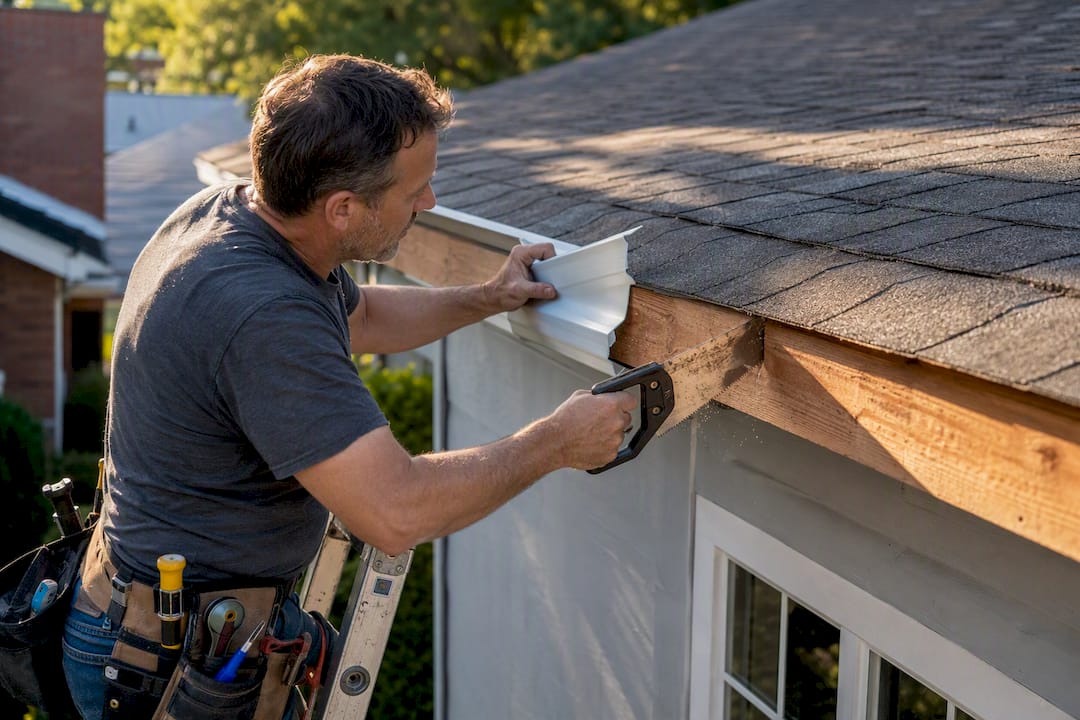
Some tasks genuinely fit a confident DIYer: replacing a short, ground-level section on a single-story garage, or repainting fascia that's structurally sound. Full-run replacement is a different story. Complex mitering, gutter realignment, and sustained work at height are exactly why most trade comparisons point homeowners toward professional installation once a project moves beyond a single accessible run.
Ventilation is the part DIYers miss most often. Fascia and soffit work together as part of your roof's intake ventilation system, and a poorly sealed reinstall can trap moisture in the attic for years before you notice the damage.
Twenty-five years in the field has taught our crews that the boards you can see are rarely the whole story. HAAG-certified inspectors catch rafter and decking issues a homeowner (or a less experienced contractor) would miss entirely.
Exteriorgenie backs every fascia job with 24/7 emergency repair availability and hands-on insurance claim assistance when storm damage is part of the picture, not just the install itself.
How Do You Get an Accurate Fascia Replacement Quote?
Itemized bids only work if every contractor is pricing the same scope. Here's how to set that up before you make a single call.
- Measure your linear footage. Walk the roofline and count total feet of fascia, noting corners and any second-story sections.
- Take photos of visible damage. Cracking, sagging, or water stains help contractors gauge whether hidden rot is likely.
- Note roof height and pitch. This determines whether scaffolding or a lift will factor into the bid.
- Request a written scope covering materials, paint or primer, gutter removal and reset, permit handling, debris disposal, and warranty terms.
- Ask direct questions: Who pulls the permit? What's the project timeline? Are your inspectors HAAG-certified? Do you handle insurance paperwork if storm damage is involved?
- Collect 2 to 3 itemized quotes with matching scope, and check references or recent reviews before signing anything.
Our guide on hiring an exterior contractor walks through red flags to watch for in vague or unusually low bids.
How Can You Lower Fascia Replacement Costs Without Cutting Corners?
A few smart moves can trim your total without touching quality.
- Bundle related work. Combining fascia with gutter replacement, soffit repair, or exterior paint in a single visit usually costs less than three separate service calls.
- Pick materials suited to your climate. Aluminum or composite make more sense than wood in humid or coastal areas where repainting every few years isn't realistic.
- Schedule during the off-season. Booking outside peak spring and summer months can mean lower labor rates and faster scheduling.
- Ask about financing. Larger projects don't have to hit your budget all at once if a contractor offers payment plans.
- Confirm scope in writing. Nail down exactly what's included so a "great price" doesn't turn into a pile of change orders later.
How Long Does a Fascia Replacement Project Take?
From first inspection to final walkthrough, most fascia projects wrap up in five to ten business days, though the timeline shifts based on scope and weather.
The process usually starts with an on-site inspection, where a contractor measures linear footage, checks for rot, and evaluates roof access. That typically happens within a few days of your initial call. Once you approve a written quote, ordering materials (especially specialty colors or composite boards) can add three to seven days if the item isn't in local stock.
Installation itself moves fast for straightforward jobs. A single-story home with 150 to 200 linear feet of fascia and no major rot usually takes one to two days once a crew is on-site. Add gutter reset, extensive rafter repair, or a multi-story roofline, and that stretches to three or four days.
Permit approval can be the biggest wildcard. Some jurisdictions clear exterior trim permits in 24 to 48 hours; others take a week or more, especially if your project overlaps with roofing or structural repairs. It's worth confirming permit turnaround with your local building department before you lock in a start date.
Weather is the other variable nobody controls. Fascia installation requires dry conditions for proper paint and sealant adhesion, so a rainy stretch can push a two-day job into a two-week calendar window. Booking during a stable weather season, and confirming your contractor's rescheduling policy upfront, helps avoid frustration if storms roll through mid-project.
What Extra Fees Should You Expect Beyond the Fascia Itself?
The quoted per-foot price rarely tells the whole story. Here's where the real total tends to land once a project is fully scoped.
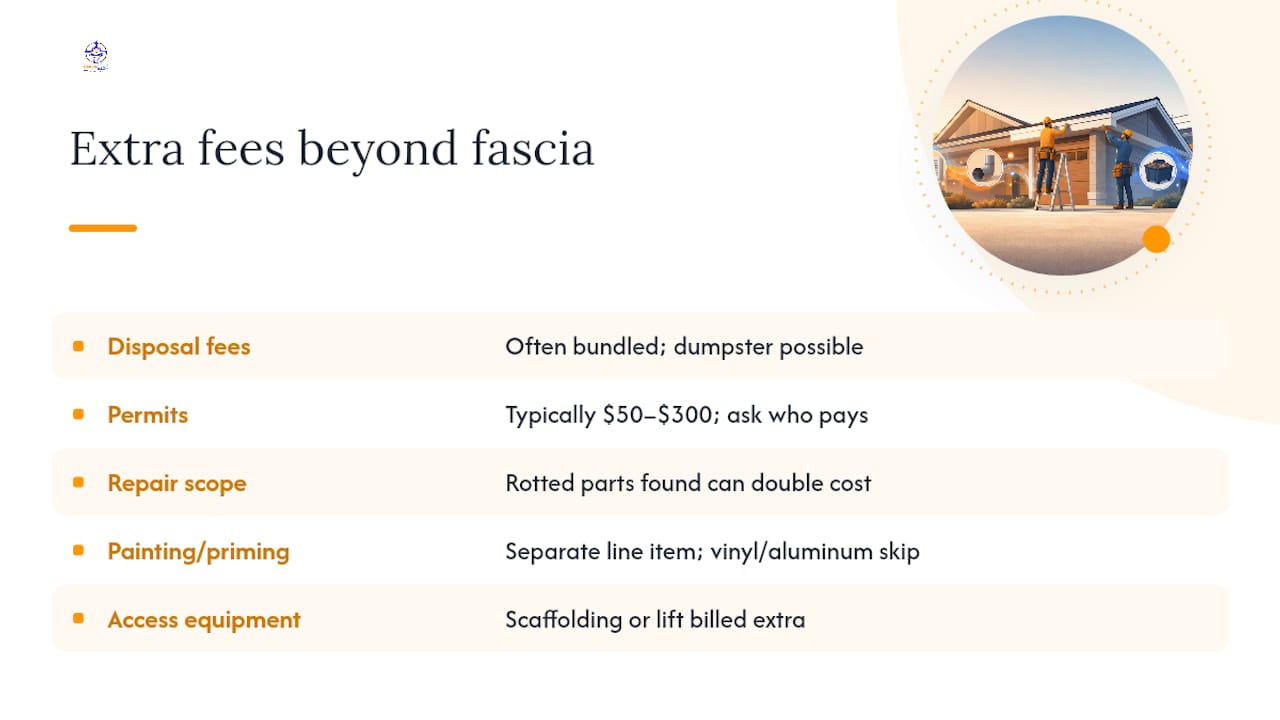
Disposal fees cover hauling away old boards, damaged soffit material, and any debris from rot removal. Most contractors bundle this into the overall bid, but it's worth confirming, especially on larger projects where a full dumpster rental might be involved.
Permit costs run $50 to $300 in most jurisdictions, though some municipalities waive permits for minor trim repairs under a certain footage. Ask your contractor directly whether your project needs one and who's responsible for pulling it.
Repairs beyond the fascia board are the line item that catches homeowners off guard most often. If an inspector finds rotted rafter tails, damaged decking, or compromised soffit panels once the old fascia comes down, that's additional labor and material cost layered onto the original quote. Industry experts describe this kind of scope creep as capable of effectively doubling the cost of what started as a simple board swap.
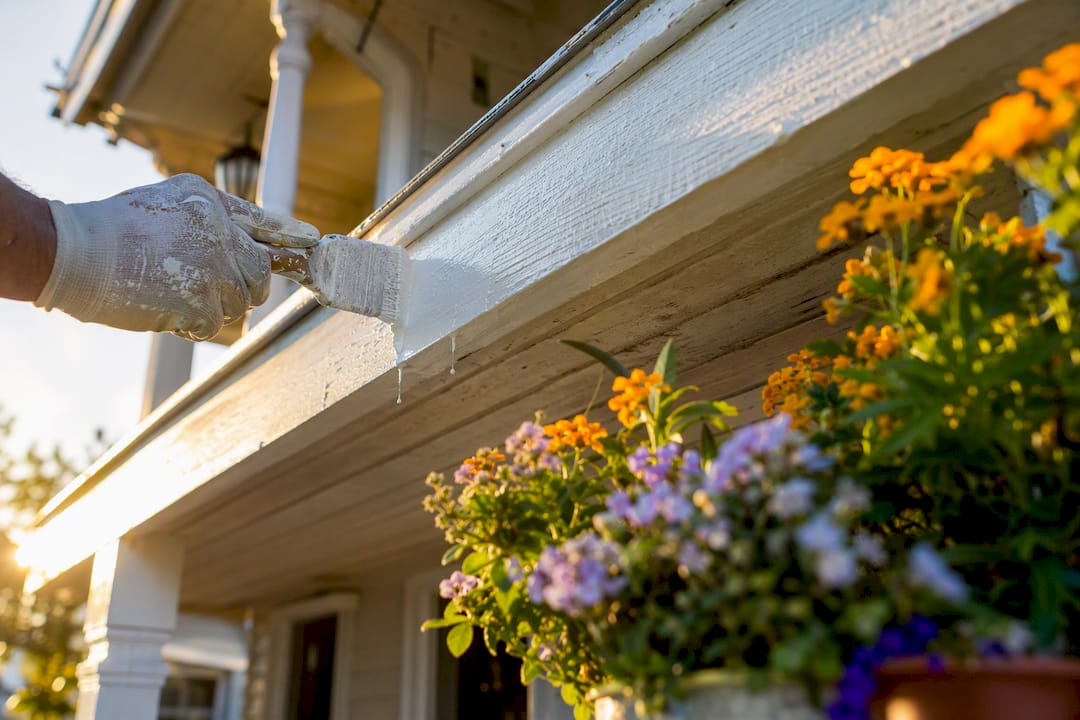
Painting or priming unfinished wood fascia adds a separate line item most vinyl and aluminum jobs skip entirely, since those materials come pre-finished.
Access equipment for tall or steep rooflines shows up as its own charge when scaffolding or a lift is required, layered on top of standard labor.
What Homeowners Get Wrong About Fascia Costs
Most cost guides treat fascia replacement like a fixed-price commodity: measure the linear footage, multiply by a rate, done. That's the wrong way to think about it. The board itself is often the cheapest part of the job. What actually determines your final bill is what's hiding behind it, and how honest your contractor is about pricing that in upfront rather than discovering it mid-project.
The conventional advice to "get three quotes and pick the middle one" also falls short if those three quotes aren't scoped identically. A $1,500 bid that excludes gutter reset isn't cheaper than a $2,800 bid that includes it. It's just incomplete.
If there's one thing worth prioritizing above the price tag itself, it's the inspection quality behind that number. A HAAG-certified inspector who catches rafter rot before the contract is signed saves you from a change order later, and that's worth more than shaving a few dollars off the per-foot rate. Twenty-five years of contracting experience tends to show up less in the sales pitch and more in what a crew notices before they ever pick up a saw.
— Ebben
How Exteriorgenie Handles Fascia Replacement and Related Repairs
Exteriorgenie is the contractor to call when you want a fascia estimate that accounts for what's actually happening behind the board, not just a per-foot number pulled from a calculator. As a veteran-owned company serving Lexington and Columbia, SC for 25 years, our HAAG-certified inspectors check rafter tails, soffit condition, and gutter alignment before we ever write a quote, so the price you sign off on is the price you pay.

If storm or wind damage is part of what's driving your fascia repair, our team also handles insurance claims assistance directly, walking you through documentation and adjuster communication so you're not doing that alone. We offer 24/7 emergency response for urgent repairs, transparent line-item pricing, and financing options for larger projects that combine fascia, gutters, and roofing in one visit. Explore our full soffit and fascia repair services or check our residential roofing page to schedule an inspection and get a written, itemized quote.
Sources
- How Much Does Fascia Board Replacement Cost? 2025 Data
- 2026 Fascia Board Replacement Cost: Prices & Factors | Thumbtack
- How Much Does It Cost to Replace or Repair Fascia Boards and Soffits? 2025 Data
- Fascia Board Replacement Cost Calculator (2026) — Free Online Estimate | HomeCostCalc
FAQ
How Much Does Fascia Replacement Cost on Average?
The national average is around $2,500, with most homeowners paying between $1,050 and $3,300 depending on linear footage, material, and access.
What Is the Difference Between Fascia and Soffit?
Fascia is the vertical board along the roof edge that gutters attach to; soffit is the horizontal panel underneath the roof overhang that provides attic ventilation.
Does Homeowners Insurance Cover Fascia Replacement?
Insurance typically covers fascia damage caused by a covered event like a storm or wind, but not routine wear or rot; Exteriorgenie's HAAG-certified inspectors can help document storm-related damage for a claim.
How Much Does It Cost to Replace Fascia Per Linear Foot?
Expect $7 to $22 per linear foot installed on a standard single-story home, with higher-scope jobs involving paint or gutter reset running closer to $30 per foot.
Can I Replace Fascia Myself to Save Money?
Small, ground-level sections are manageable for experienced DIYers, but full-run replacement involving mitered corners, gutter realignment, or work at height is safer left to a professional contractor.