

Roof impact damage is defined as any structural or performance-altering change caused by an external force striking the roofing system, including hail, falling branches, wind-driven debris, and improper foot traffic. The result is dents, cracks, punctures, or internal fractures that compromise the roof's ability to protect your home. What makes this type of damage particularly dangerous is that the worst effects are often invisible from the ground. Understanding what is roof impact damage, how it differs from normal wear, and what to do about it gives you a real advantage before a small problem becomes a major repair bill.
What causes roof impact damage?
Roof impact damage is defined as localized structural harm, while hail damage tends to spread uniformly across multiple shingles. That distinction matters because it changes how you inspect, document, and repair the problem.
The most common causes of debris impact roof damage include:
- Hail. Even quarter-sized hail strikes asphalt shingles with enough force to dislodge protective granules and fracture the mat beneath.
- Falling branches and limbs. A branch dropping from 20 feet concentrates enormous force on a small area, punching through underlayment or cracking tile.
- Wind-driven debris. During tornadoes, debris traveling over 100–150 mph penetrates roof decks and tears fasteners loose. That speed turns ordinary objects into projectiles capable of catastrophic roof failure.
- Foot traffic. Improper walking patterns during maintenance crack brittle tile and compress underlayment in ways that mimic storm damage.
The physics behind impact damage follow a simple rule: mass times velocity determines force. A heavier object moving faster causes more damage. Angle matters too. A direct perpendicular strike concentrates force on a single point, while a glancing blow spreads it across a wider area but can still shear granules or crack surface coatings.
Storm debris causes varied damage depending on roofing type: asphalt shingles lose granules, metal dents, tiles crack or displace, and flat roofs suffer membrane punctures and drainage issues. Each material type requires a different inspection approach because the failure mode looks completely different.
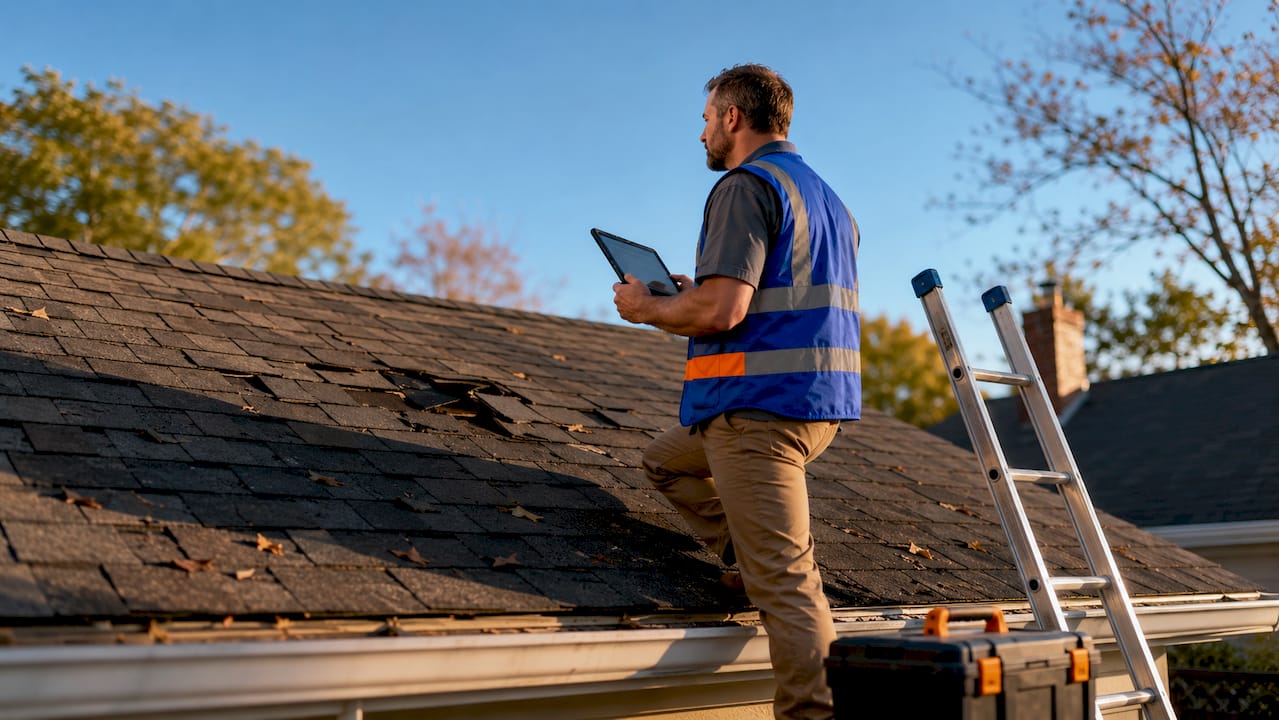
Pro Tip: After any storm, walk your property perimeter and look for granules collecting in gutters or downspout splash zones. Granule accumulation is one of the earliest and most reliable indicators of shingle impact damage.
Signs of roof impact damage: visible and hidden
The most obvious signs of roof impact are visible from a ladder or, in severe cases, from the ground. Dents in metal panels, cracked or displaced tiles, and dark bruised spots on asphalt shingles all signal direct strikes. Punctures in flat roof membranes are another clear indicator.
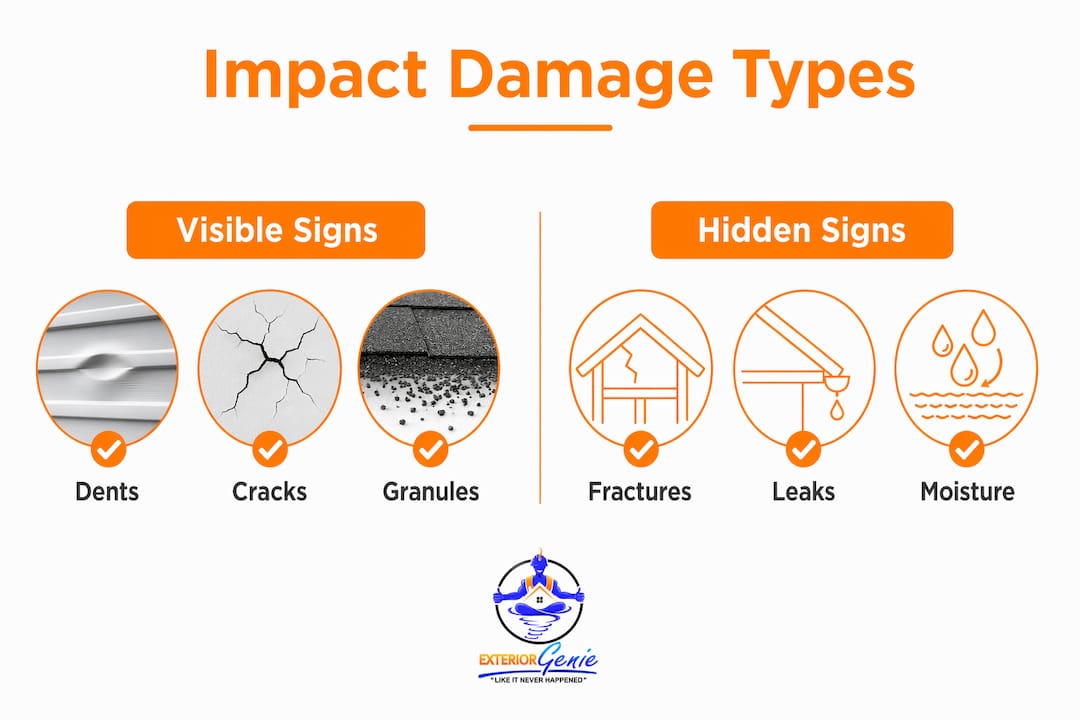
The hidden signs are where most homeowners get into trouble. Impact damage often causes internal fractures and compression not visible from the surface, compromising overall roof performance early on. A shingle can look intact while the fiberglass mat beneath is cracked and the seal strip is broken.
Key signs to look for include:
- Granule loss. Bare patches on asphalt shingles expose the mat to UV radiation. Granule loss exceeding 25–30% exposes asphalt mats to accelerated UV oxidation, causing cracks and moisture infiltration within 2–5 years.
- Soft spots. Press gently on a shingle near a suspected impact zone. A spongy feel indicates compressed underlayment or damaged decking beneath.
- Cracked caulking around flashings. Impact vibrations travel through the roof structure and loosen seals at valleys, chimneys, and vents.
- Water stains on interior ceilings. These appear weeks or months after the original impact, making the connection easy to miss.
- Loosened fasteners. Nails backing out of decking create micro-gaps that allow water infiltration long before any visible exterior damage appears.
"Homeowners should not dismiss surface-level roof damage as harmless. It often conceals structural weaknesses that can lead to expensive repairs down the road."
Minor debris traps moisture, accelerates wear, and compromises seals around roof fixtures, making the system vulnerable during future storms. A single leaf pile sitting against a flashing for one season can cause more damage than the original impact that deposited it there.
How to assess roof impact damage properly
A proper roof damage inspection follows a structured protocol, not a casual glance from the driveway. Professional inspectors focus on the most vulnerable zones first: valleys where water concentrates, flashings where two surfaces meet, and drainage paths where debris accumulates.
A thorough assessment follows these steps:
- Ground-level survey. Walk the full perimeter and document visible damage with photos. Check gutters for granule accumulation and look for displaced shingles or tiles.
- Ladder inspection of eaves and edges. Examine the first two rows of shingles for impact bruising and granule loss. These areas take the most direct hits from wind-driven debris.
- Roof surface inspection. Walk the field of the roof systematically, checking every slope. Look for dents, cracks, soft spots, and any area where the surface texture changes.
- Flashing and penetration check. Inspect all pipe boots, chimney flashings, skylights, and valley metal for cracks, gaps, or lifted edges caused by impact vibration.
- Attic inspection. Check the underside of the decking for water stains, daylight penetration, or sagging. This step catches damage that the exterior inspection misses entirely.
- Technology-assisted detection. Drones provide safe access to steep or high roofs. Infrared cameras detect moisture trapped in insulation or decking before it becomes visible. Moisture meters confirm wet areas identified by infrared.
Mechanical damage from human activity can mimic storm impact damage, so careful diagnosis is required for accurate insurance claims. An experienced inspector looks at damage patterns across the whole roof. Random isolated damage suggests a falling object. Uniform damage across multiple slopes points to hail or wind.
Pro Tip: Document everything with timestamped photos immediately after a storm. Insurance adjusters use date-stamped images to confirm that damage occurred during a specific weather event. Photos taken days later are harder to tie to a specific storm.
Exteriorgenie uses HAAG-certified inspectors for every storm damage assessment. HAAG certification is the industry standard for forensic roof inspection, and it carries significant weight with insurance adjusters reviewing your roof inspection claim.
What happens when roof impact damage goes unaddressed?
Ignoring roof impact damage does not make it cheaper to fix. The damage compounds over time through several predictable failure sequences.
Water infiltration is the first and most serious consequence. Impact damage creates stress points that reduce roof resiliency, with water infiltration posing the greatest hidden threat, often remaining unnoticed for months. Once water enters the decking, it begins rotting the wood, degrading insulation, and creating conditions for mold growth.
Freeze-thaw cycles accelerate the process in colder climates. Water that enters a small crack expands when it freezes, widening the crack with each cycle. Freeze cycles can expand water infiltration damage by roughly 9% each year. A hairline crack becomes a gap. A gap becomes a leak.
The consequences of delayed repair include:
- Structural rot in decking and rafters, requiring full deck replacement rather than a simple shingle repair
- Mold and mildew growth inside wall cavities and attic spaces, creating health hazards and triggering remediation costs
- Insulation damage that raises heating and cooling bills as the thermal barrier degrades
- Wind uplift failure on weakened sections, where debris impact weakens areas followed by wind uplift detaching decking and causing catastrophic roof loss
The cost difference between patching a few shingles after a storm and replacing a rotted deck section with new insulation and drywall repair below it is substantial. Early action is always the less expensive choice.
How to repair and prevent roof impact damage
Repair options depend on the severity and scope of the damage. Minor impacts that affect only surface shingles call for targeted shingle replacement and resealing. More significant damage involving underlayment or decking requires removing the affected shingles, replacing the damaged substrate, and reinstalling new roofing material.
| Damage level | Typical repair approach |
|---|---|
| Surface granule loss only | Monitor; replace shingles if mat is exposed |
| Cracked or bruised shingles | Replace individual shingles; inspect underlayment |
| Underlayment or decking damage | Remove shingles, replace decking, reinstall |
| Membrane puncture (flat roof) | Patch or full membrane section replacement |
| Widespread storm damage | Full or partial roof replacement |
Prevention starts with material selection. Class 4 impact-resistant shingles carry the highest rating under UL 2218 testing, which simulates hail strikes using steel balls dropped from specific heights. These shingles resist cracking and granule loss far better than standard three-tab or architectural shingles. Many insurance carriers offer premium discounts for Class 4 installations.
Routine maintenance reduces impact risk significantly:
- Trim tree branches that hang within 10 feet of the roof surface
- Clean gutters and downspouts twice a year to prevent debris buildup
- Schedule a professional inspection every two years and after any major storm
- Clear accumulated debris from valleys and around penetrations after storms
For insurance purposes, accurate documentation and understanding your insurance claim deductible before filing prevents surprises. Knowing the difference between a covered storm event and a maintenance issue keeps your claim valid. Accurate damage documentation and distinguishing mechanical from impact damage is the foundation of a successful insurance claim.
Reviewing a builders risk insurance guide can also help property managers understand how impact damage claims fit into broader property risk coverage, particularly for commercial or renovation projects.
Key Takeaways
Roof impact damage is a hidden threat that compounds quickly. Early detection, professional inspection, and prompt repair are the only reliable ways to protect your home and control costs.
| Point | Details |
|---|---|
| Impact damage differs from wear | Impact damage is localized and sudden; aging damage is gradual and uniform across the surface. |
| Hidden damage is the real risk | Internal fractures and compressed underlayment compromise performance before any leak appears. |
| Inspection requires multiple methods | Combine visual checks, attic inspection, and technology like infrared cameras for complete assessment. |
| Delayed repair multiplies costs | Water infiltration, freeze-thaw cycles, and wind uplift turn small damage into structural failures. |
| Class 4 shingles reduce future risk | UL 2218 Class 4 rated shingles resist impact damage and may lower your insurance premiums. |
What I've learned after years of seeing homeowners miss the obvious
Most homeowners I talk to after a storm make the same mistake: they look at the roof from the driveway, see nothing obviously wrong, and assume they are fine. That assumption costs them thousands of dollars.
The roof surface that looks intact from 30 feet away can have fractured fiberglass mats, broken seal strips, and loosened fasteners that will not show up as a leak until the next heavy rain or the following winter. By then, the water has already been sitting in the decking for weeks.
The other mistake I see constantly is homeowners trying to distinguish storm damage from normal wear on their own before calling their insurance company. That distinction requires pattern analysis across the whole roof, knowledge of the storm history for that date, and an understanding of how different materials fail under different forces. Getting it wrong means either missing a valid claim or filing one that gets denied because the damage was mischaracterized.
My honest advice: after any significant storm, get a professional inspection before you call your insurance company. A HAAG-certified inspector gives you an accurate picture of what happened and why. That knowledge protects you from insurance claim denials and gives you the documentation to support a valid claim. The inspection cost is almost always worth it.
— Ebben
Exteriorgenie is ready when storm damage hits
Roof impact damage does not wait for a convenient time to show up, and neither does Exteriorgenie. As a veteran-owned roofing company serving Lexington, SC, Exteriorgenie provides 24/7 emergency roof repair for storm and impact damage, backed by HAAG-certified inspectors who know how to document damage accurately for insurance purposes.

If repair costs are a concern, Exteriorgenie offers roofing financing options to help homeowners manage expenses without delaying critical repairs. The team also provides full insurance claims assistance, walking you through the process from initial inspection to final settlement. With 25 years of experience and a commitment to transparent pricing, Exteriorgenie is the partner Lexington homeowners trust when the stakes are highest.
FAQ
What is roof impact damage?
Roof impact damage is any structural or performance change caused by an external force striking the roofing system, such as hail, falling branches, or wind-driven debris. It results in dents, cracks, punctures, or internal fractures that compromise the roof's protective function.
How do I know if my roof has impact damage?
Look for granule accumulation in gutters, bruised or cracked shingles, dented metal panels, and water stains on interior ceilings. Hidden damage like internal fractures requires a professional inspection with infrared cameras or moisture meters to detect.
How does impact damage differ from normal roof aging?
Impact damage is localized and sudden, appearing at specific strike points. Normal aging produces gradual, uniform deterioration across the entire roof surface, including widespread granule loss, curling shingles, and general sealant breakdown.
Can small impacts really cause serious damage?
A small impact can fracture the fiberglass mat beneath an asphalt shingle without breaking the surface. Water then enters through that fracture, and freeze-thaw cycles expand the crack each winter until a full leak develops.
When should I file an insurance claim for roof impact damage?
File a claim after a professional inspection confirms the damage is storm-related and documents it with photos and a written report. Filing before you have that documentation increases the risk of a denial based on misclassified damage.