
Built-up roofing, known in the industry as BUR, is defined as a multi-ply roofing system made by alternating layers of bitumen and reinforcing felt to form a single, seamless waterproof membrane. If you manage a flat or low-slope roof on a commercial or residential building, understanding what is built-up roofing BUR means understanding one of the most proven systems in American construction. BUR systems have been in use for over 100 years in the United States. That track record alone sets it apart from newer single-ply alternatives. The layered design creates built-in redundancy, meaning damage to one layer does not automatically mean a leak.
What is built-up roofing BUR made of?
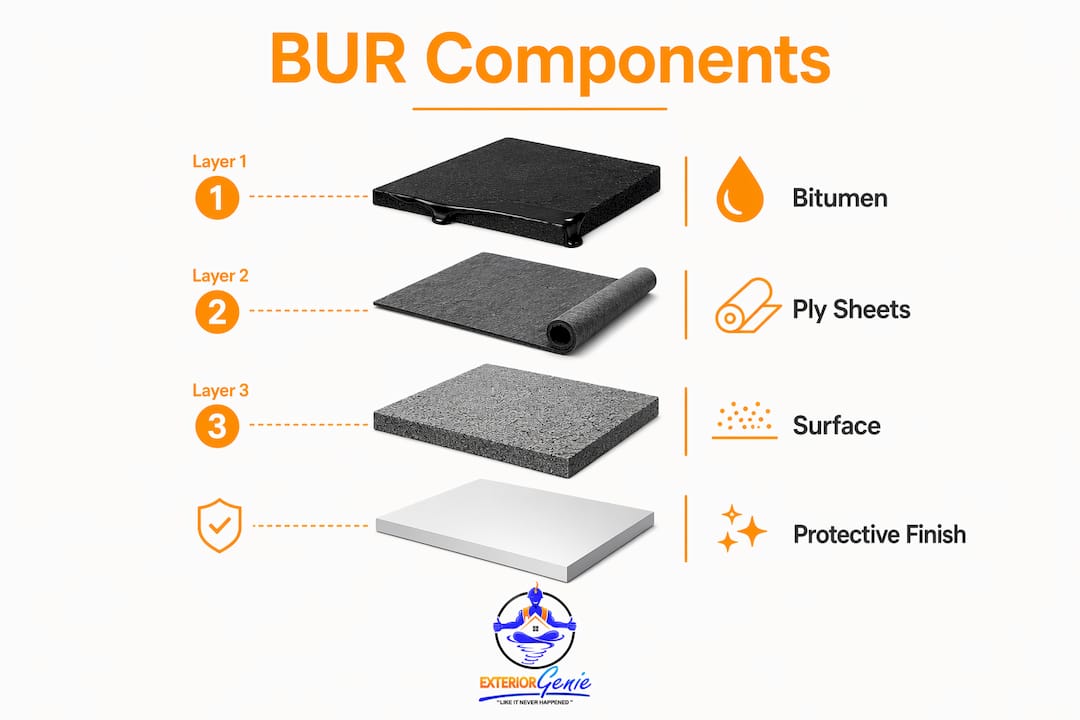
A BUR system combines three core components: bitumen, reinforcing ply sheets, and a surface layer. Each plays a specific role, and the system only works when all three are correctly specified and installed together.
Bitumen types
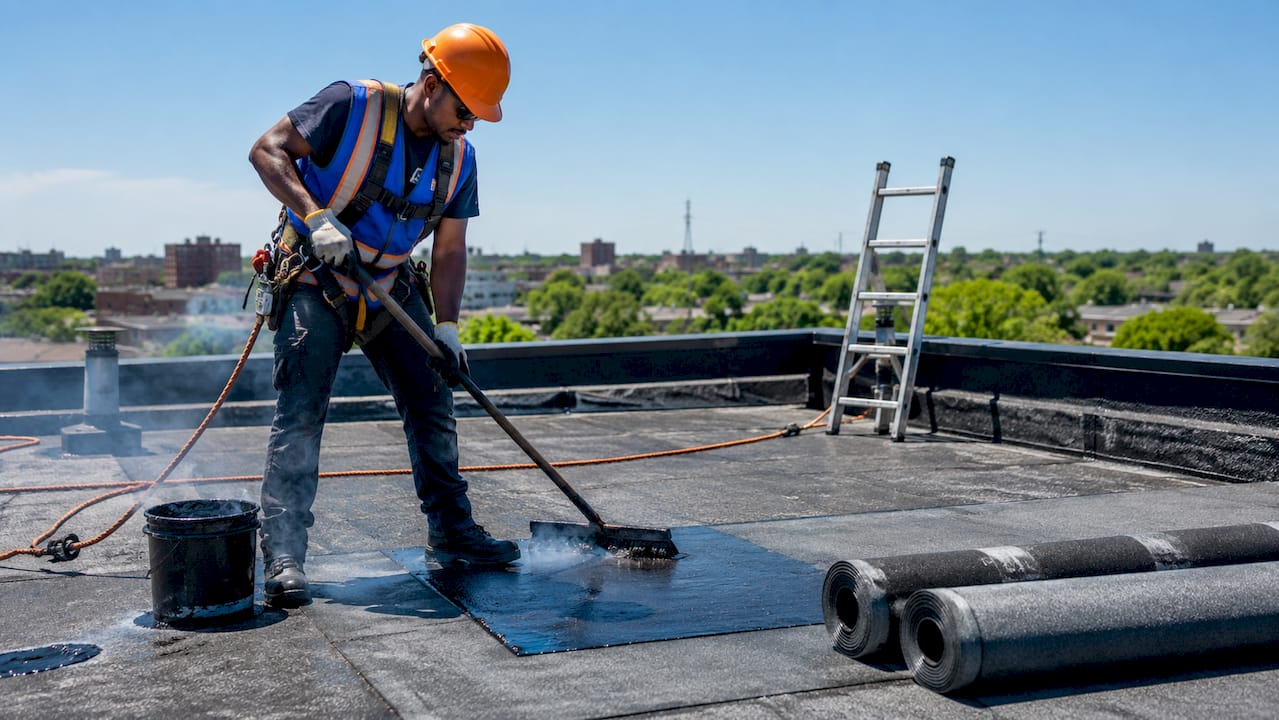
Bitumen is the adhesive and waterproofing agent that holds the system together. Two types are used in BUR construction.
Asphalt bitumen is the more common choice. It bonds well, costs less, and works on most flat roofs. Its weakness is ponding water. Standing water degrades asphalt over time, making it a poor choice for roofs with drainage problems.
Coal-tar pitch is the more durable option. Coal-tar pitch flows slightly to seal minor imperfections under standing water, a property asphalt does not share. This self-healing behavior makes coal-tar the preferred choice for roofs where ponding is unavoidable.
Ply sheet types
The reinforcing sheets give the membrane its structural strength. Two main types are used:
- Fiberglass felt: Resists moisture absorption, dimensionally stable, and less prone to rotting. The standard choice for most modern BUR installations.
- Organic felt: Made from cellulose fibers saturated in asphalt. Heavier and more flexible than fiberglass, but absorbs more moisture over time.
BUR systems use 3 to 5 plies of reinforcing felt combined with bitumen. More plies mean greater redundancy and a longer service life.
Surfacing options
The top layer protects the membrane from UV radiation, physical damage, and weather. Options include:
- Gravel ballast: Traditional and effective, but heavy.
- Mineral-surfaced cap sheets: Factory-applied granules that reduce weight.
- Reflective coatings: Align with evolving energy codes emphasizing roof reflectivity and reduce cooling loads.
Pro Tip: If your building is in a hot climate like Lexington, SC, a reflective coating over your BUR system can meaningfully cut summer cooling costs without adding structural load.
How is a built-up roof installed?
Built-up roof construction follows a precise sequence. Skipping or rushing any step creates weak points that lead to leaks.
- Deck preparation. The roof deck is cleaned, inspected, and repaired. Any soft spots or damaged sections are replaced before anything else goes down.
- Insulation layer. Rigid insulation board is mechanically fastened or adhered to the deck. This layer controls thermal performance and provides a smooth base for the membrane.
- Base sheet application. A base sheet is fastened to the insulation. This anchors the system and provides the first layer of waterproofing.
- Alternating bitumen and felt plies. Hot bitumen is heated to approximately 400°F and mopped evenly over the base sheet. A ply of reinforcing felt is immediately embedded into the hot bitumen. This process repeats for each ply, typically 3 to 5 times.
- Flood coat and surfacing. A final heavy coat of hot bitumen is applied across the entire surface. Gravel, mineral cap sheets, or a reflective coating is embedded immediately while the bitumen is still hot.
Improper hot bitumen application can cause membrane voids, known in the trade as "holidays," where water can enter the system. These voids are invisible from the surface but cause serious damage over time. This is why skilled installation is not optional.
Pro Tip: Ask your contractor how they verify continuous adhesion during installation. Any reputable crew working with hot bitumen should have a quality control process for checking bond coverage.
What are the advantages and limitations of BUR?
Key advantages
BUR's biggest strength is redundancy. Its multi-layer design offers a margin of error that single-ply membranes cannot match. If one ply is punctured or compromised, the layers beneath continue to protect the building.
A properly maintained BUR lasts between 20 and 30 years, with coal-tar pitch versions sometimes exceeding 30 years. That lifespan, spread over decades of protection, often makes BUR more cost-effective than cheaper systems that need replacement sooner.
BUR also handles physical abuse well. It is ideal for roofs with heavy foot traffic and rooftop equipment such as HVAC units, solar arrays, and mechanical systems. The multiple protective layers resist punctures from dropped tools, foot traffic, and debris impact.
Additional advantages include:
- Proven performance across a wide range of climates
- Seamless membrane with no seams to fail
- Compatible with most roof deck types
- Relatively low maintenance when properly installed
Limitations to plan for
BUR is not the right fit for every building. Property owners need to account for these constraints before specifying the system.
Dead load. Traditional gravel surfacing adds 400 to 600 pounds per 100 square feet of roof area. Older buildings may need structural evaluation before a gravel-surfaced BUR system is installed. Failure to verify deck capacity can cause premature structural problems.
Ponding water sensitivity. Asphalt-based BUR degrades under standing water. Roofs with poor drainage need either coal-tar pitch or a drainage upgrade before BUR is specified.
Installation complexity. Hot bitumen work requires trained crews and proper equipment. The system is not suited to DIY repair or low-skill contractors.
Who should consider a BUR roofing system?
BUR is the right choice for specific building types and use cases. It is not a universal solution, but for the right property, nothing performs better over the long term.
Ideal candidates for BUR
- Flat or low-slope commercial roofs with slopes under 2:12
- Buildings with rooftop mechanical equipment requiring regular service access
- Properties where long-term durability outweighs upfront cost savings
- Roofs with drainage challenges where coal-tar pitch's self-healing properties add value
How BUR compares to single-ply systems
Single-ply membranes such as TPO and EPDM install faster and cost less upfront. They work well on simple roofs with minimal foot traffic and good drainage. BUR outperforms them in puncture resistance, redundancy, and raw lifespan, particularly on roofs that see regular maintenance activity.
Energy performance is no longer a weakness for BUR. Modern installations use mineral cap sheets or reflective coatings instead of traditional gravel, reducing roof load and improving reflectivity. This brings BUR in line with current energy code requirements in most jurisdictions.
For a broader look at how BUR fits within the full range of available options, the roofing materials 2026 guide covers current trends across both residential and commercial systems.
Pro Tip: If your building has rooftop HVAC units that require quarterly service, BUR is almost always the better long-term investment over single-ply. The puncture resistance alone pays for itself.
How do you maintain a BUR system to maximize its lifespan?
Maintenance is what separates a BUR roof that lasts 20 years from one that lasts 30. The system is durable, but it is not maintenance-free.
- Inspect twice a year. Walk the roof in spring and fall. Look for blistering, cracking, gravel displacement, or areas where the surfacing has worn thin.
- Clear debris after storms. Leaves, branches, and dirt block drains and cause ponding. Remove debris promptly after any significant weather event.
- Check and clear drains. Clogged drains are the single most common cause of premature BUR failure. Confirm all drains and scuppers flow freely.
- Repair minor damage immediately. Small cracks and blisters are inexpensive to fix. Left unaddressed, they allow water infiltration that spreads beneath the membrane and becomes a major repair. Neglecting maintenance shortens roof life and leads to costly repairs.
- Apply coating upgrades when surfacing wears. As the top layer ages, a reflective coating can restore UV protection and improve energy performance without a full replacement.
For guidance on what repairs look like in practice, common roof repair types covers the most frequent issues property owners encounter on flat and low-slope roofs.
For property owners who want a broader maintenance framework, roofing maintenance advice from experienced contractors covers the key inspection points that extend any flat roof's service life.
Key Takeaways
A built-up roofing system delivers 20–30 years of waterproof protection through layered redundancy, making it the most durable choice for flat and low-slope roofs with heavy use or drainage challenges.
| Point | Details |
|---|---|
| BUR defined | A multi-ply system of alternating bitumen and felt that forms a seamless waterproof membrane. |
| Material choice matters | Coal-tar pitch outperforms asphalt on roofs with ponding water; asphalt suits well-drained roofs. |
| Structural load check | Gravel-surfaced BUR adds 400–600 lbs per 100 sq. ft., requiring structural verification before installation. |
| Lifespan expectation | A well-maintained BUR lasts 20–30 years; coal-tar versions can exceed 30 years with proper care. |
| Maintenance is non-negotiable | Twice-yearly inspections, drain clearing, and prompt repairs are what realize the full service life. |
BUR's staying power: what 25 years in roofing taught me
I have seen a lot of flat roofs in my time, and the ones that perform best over the long haul almost always share two things: they were specified correctly for the building's actual conditions, and they were installed by a crew that knew hot bitumen work.
The biggest mistake I see property owners make is choosing BUR based on price alone, then cutting corners on the contractor. Hot bitumen application is skilled work. A crew that does not understand how to maintain temperature consistency and mop coverage will leave voids in the membrane that show up as leaks within two or three years. At that point, the cost savings from hiring the cheaper crew are gone, and then some.
My honest advice: if your roof has drainage problems, specify coal-tar pitch and fix the drains at the same time. If your building is older, get a structural assessment before you commit to gravel surfacing. And once the roof is on, treat the maintenance schedule like a fixed operating cost. The property owners who get 30 years out of a BUR system are the ones who inspect it every spring and fall without fail.
BUR is not glamorous. It is not the newest technology. But for the right building, properly installed and maintained, it is one of the best long-term investments a property owner can make in their building envelope.
— Ebben
Exteriorgenie's BUR and flat roofing services in Lexington, SC
Exteriorgenie has 25 years of experience installing and maintaining built-up roofing systems on commercial and residential properties across Lexington, SC. The team brings HAAG-certified inspection expertise and military-grade discipline to every project, from full BUR installations to targeted repairs that extend an existing roof's service life.

Property owners who want to move forward without the full upfront cost can explore roofing financing options that make BUR installations manageable on any budget. For buildings that already have a flat roof showing wear, Exteriorgenie's roof repair services address membrane damage, drainage issues, and surfacing erosion before they become full replacements. Contact Exteriorgenie for a consultation and get a clear picture of what your roof needs.
FAQ
What is BUR roofing in simple terms?
BUR roofing is a flat roof system built from alternating layers of hot bitumen and reinforcing felt, forming a single waterproof membrane. It has been used in the United States for over 100 years.
How long does a built-up roof last?
A properly maintained BUR system lasts 20–30 years. Coal-tar pitch versions can exceed 30 years, particularly on roofs with good maintenance programs.
Is built-up roofing good for residential buildings?
BUR works on residential buildings with flat or low-slope roofs, but the structural deck must support the added weight of gravel surfacing, which can reach 400–600 lbs per 100 square feet.
What is the difference between asphalt and coal-tar BUR?
Asphalt BUR is more common and less expensive, but degrades under standing water. Coal-tar pitch self-seals under ponding conditions and is the better choice for roofs with drainage challenges.
How often should a BUR roof be inspected?
Inspect a BUR roof twice a year, in spring and fall, plus after any major storm. Prompt attention to minor damage prevents small issues from becoming expensive repairs.