

A full roof replacement is defined as the complete removal of all existing roofing materials down to the structural deck, followed by installation of new underlayment, flashing, and shingles. Understanding why roofs need full replacement goes beyond spotting a few missing shingles. Building codes, deck condition, insurance thresholds, and manufacturer warranty requirements all drive the decision. Patching or overlaying an aging or damaged roof often creates bigger problems than it solves, and knowing the difference between a repair and a full tear-off can protect both your home's structure and your financial investment.
Why roofs need full replacement: code limits and layer rules
The International Residential Code (IRC) is the clearest starting point for understanding when a full replacement becomes mandatory. IRC code R908.3 prohibits a third layer of shingles on residential roofs, meaning any home that already carries two shingle layers must have both removed before new roofing is installed. This rule exists because stacking layers adds dead weight, traps moisture, and makes it impossible to inspect the deck beneath.
Local building departments in South Carolina and across the country can adopt amendments that are even stricter than the base IRC. Some jurisdictions allow only one existing layer before requiring a full tear-off. A permit inspection will catch violations, and a roof installed over too many layers will fail that inspection, leaving you liable for the cost of removal anyway.
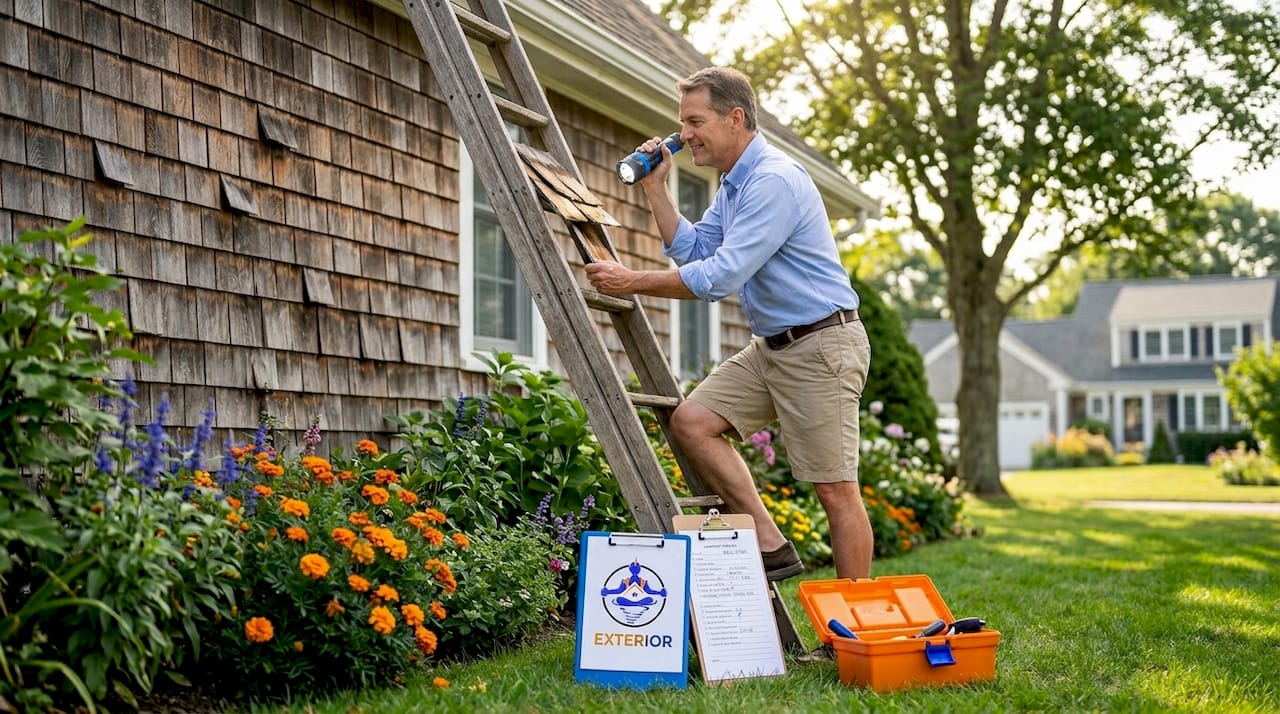
Material compatibility is another code-driven reason for mandatory tear-off. You cannot install asphalt shingles over wood shake, for example, because the uneven surface prevents proper seating and water drainage. Layer count and deck suitability are the two decisive factors that determine whether an overlay is even permissible under code.
Here is a quick comparison of when each approach is allowed:
| Condition | Overlay permitted | Full tear-off required |
|---|---|---|
| One existing shingle layer, deck sound | Yes, in most jurisdictions | No |
| Two existing shingle layers | No | Yes, per IRC R908.3 |
| Wood shake existing layer | No | Yes |
| Deteriorated or soft decking | No | Yes |
| Active leak or moisture damage | No | Yes |
Pro Tip: Before signing any roofing contract, ask your contractor to confirm the current layer count on your roof. A reputable contractor will pull back a corner of shingles at the eave to check. If they skip this step, that is a red flag.
How hidden deck damage makes tear-off unavoidable
The roof deck is the plywood or oriented strand board (OSB) sheathing nailed to your rafters. It is the foundation everything else sits on, and it is the one component you cannot evaluate without removing the layers above it. Water-soaked or deteriorated decking requires a full tear-off to properly inspect and repair, because laying new shingles over a soft or rotted deck guarantees early failure.
Signs that deck damage may already be present include:
- Spongy or bouncy feel when walking on the roof surface
- Sagging areas visible from the ground or attic
- Daylight visible through the attic at the roof deck
- Dark staining or mold on attic rafters and sheathing
- Persistent interior leaks that return after repeated repairs
Continuing to overlay roofs with hidden damage permanently conceals rot and accelerates deterioration, driving up future costs significantly. A homeowner who pays for an overlay on a compromised deck will likely face a full replacement within a few years anyway, plus the added expense of structural repairs that grew worse while hidden.
A tear-off gives your contractor direct access to every square foot of decking. Damaged sheathing panels can be replaced individually, flashing around chimneys and skylights can be reset correctly, and fastener integrity can be verified. Tear-off allows full inspection of decking, flashing, and underlayment that an overlay simply cannot provide. This is why professional inspections before any roofing decision matter so much. A thorough roof inspection guide can help you understand exactly what your contractor should be evaluating during that process.
Pro Tip: Inspect your attic after every significant rainstorm. Bring a flashlight and look for wet insulation, dark staining on the sheathing, or drips on the rafters. Catching deck moisture early is the difference between replacing a few panels and replacing the entire structure.
How insurance rules and the 25% repair rule affect your decision
Insurance adjusters apply specific thresholds when deciding whether to approve repairs or require a full replacement. The most widely applied standard is the "25% rule," which states that if more than 25% of the roof has been repaired within a 12-month period, the insurer will typically require a full replacement rather than continued patchwork. This threshold reflects the insurer's interest in code compliance and long-term risk reduction.
Understanding how this plays out in practice helps you plan your claim strategy:
- Document every repair. Insurers track cumulative repair areas. If you had storm damage repaired in March and then again in August, those totals combine toward the 25% threshold.
- Request a scope of loss in writing. After a storm inspection, ask the adjuster to provide a written scope that identifies the percentage of roof area affected. This protects you if a dispute arises later.
- Understand code upgrade provisions. Many homeowner policies include "ordinance or law" coverage, which pays the additional cost of bringing a roof up to current code during replacement. If your roof has two existing layers and a storm damages 30% of it, this coverage can fund the mandatory tear-off.
- Know the difference between ACV and RCV policies. Actual cash value (ACV) policies pay out after depreciation, while replacement cost value (RCV) policies cover the full cost of a new roof. The type of policy you hold directly affects how much you receive for a full replacement.
Insurance providers often push full replacement over repairs when damage exceeds thresholds, reflecting a balance between code compliance and long-term risk management. Understanding the factors that affect repair costs before filing a claim puts you in a stronger negotiating position with your adjuster.
Does roof age alone require a full replacement?
Age is a useful benchmark, but it is not an automatic trigger for replacement. Roof age does not automatically require replacement if a professional inspection shows useful remaining service life. A 20-year-old asphalt shingle roof in good condition, with intact flashing and no deck moisture, may have five or more years of performance left. Conversely, a 12-year-old roof with chronic leaks and two existing layers may need immediate replacement.
Florida's 2026 roof age law clarifications are a useful example of how states are moving away from blanket age-based rules. Condition-based inspection can demonstrate 5-plus years of remaining service life even on older roofs, which directly affects insurance eligibility and replacement timelines. South Carolina homeowners benefit from the same principle: a documented inspection report carries real weight with insurers and buyers alike.
A thorough condition assessment covers several specific areas:
- Flashing integrity at all penetrations, valleys, and edges
- Fastener condition including backing out nails and corrosion
- Granule loss on asphalt shingles, which accelerates UV degradation
- Shingle cupping or curling, which signals moisture cycling and age
- Underlayment condition where visible at edges and penetrations
Many homeowners mistakenly equate roof age with immediate replacement, but professionals emphasize condition-based evaluations. Scheduling a professional inspection before making any replacement decision is the most cost-effective step you can take. You can learn more about what that process involves in this homeowner's inspection guide.
Overlay vs. full tear-off: what the difference actually costs you
An overlay, sometimes called a re-roof, places new shingles directly over the existing layer without removing the old material. It costs less upfront because labor for tear-off and disposal is eliminated. That savings, however, comes with significant trade-offs that affect long-term performance and full roof replacement costs.
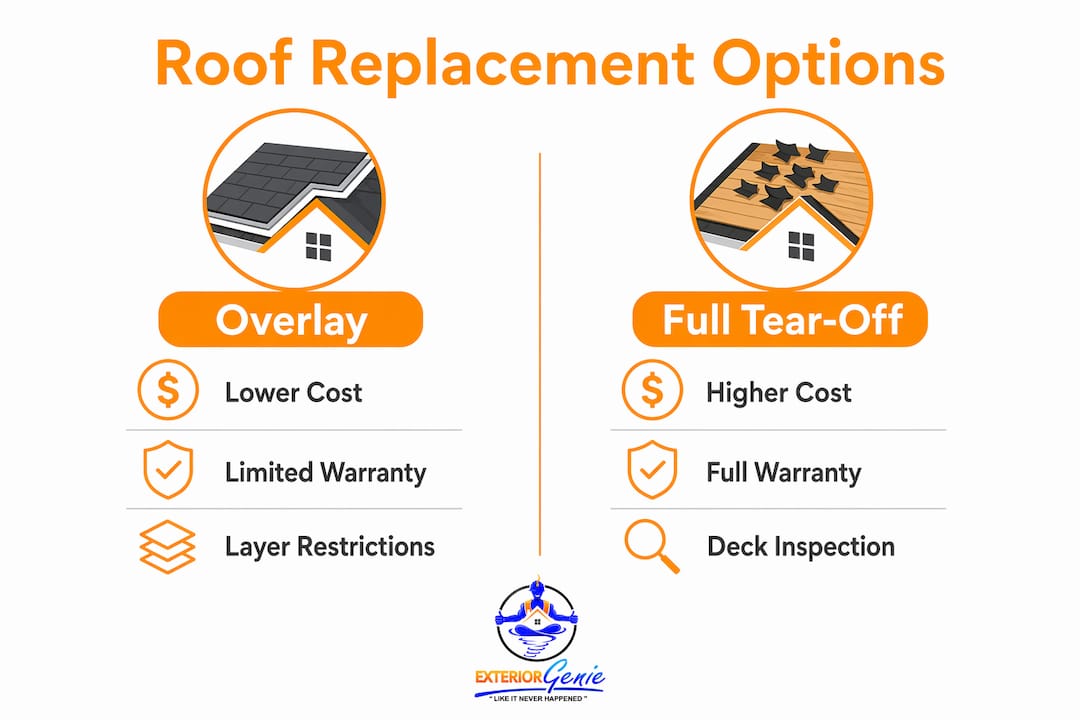
| Factor | Overlay | Full tear-off |
|---|---|---|
| Upfront cost | Lower (no disposal fees) | Higher (labor and disposal included) |
| Deck inspection | Not possible | Full access to all sheathing |
| Manufacturer warranty | Limited or voided | Full warranty eligible |
| Code compliance | Only if one layer exists | Always compliant |
| Lifespan | Shorter due to heat buildup | Full rated lifespan |
| Resale value | Lower (buyers and inspectors notice) | Higher |
Manufacturers like GAF and CertainTeed require tear-offs for full warranty eligibility. Installing over an existing layer voids the enhanced warranty on most premium shingle products, meaning you pay for a 50-year shingle but receive coverage for far less. Adding a third layer changes roof geometry and traps moisture, causing premature failure and warranty voidance, making full tear-off the safer investment despite the higher initial cost.
Visual signs like cupped or curling shingles require tear-off rather than overlay to prevent early roof failure. Overlaying uneven or deteriorating shingles creates an irregular base that prevents new shingles from lying flat, which accelerates wear and allows water infiltration at the seams.
Pro Tip: If a contractor quotes you an overlay and your roof already has one layer, ask specifically whether your shingle manufacturer's warranty requires a tear-off. Get the answer in writing. If the contractor cannot provide it, contact the manufacturer directly before signing.
Key takeaways
A full roof replacement is necessary whenever layer limits, deck damage, insurance thresholds, or warranty requirements make an overlay inadequate or non-compliant.
| Point | Details |
|---|---|
| IRC layer limits | Two shingle layers is the maximum; a third requires full tear-off per IRC R908.3. |
| Deck damage demands tear-off | Soft, wet, or rotted decking cannot be overlaid and must be exposed for proper repair. |
| Insurance 25% rule | Repairs exceeding 25% of roof area within 12 months typically trigger a full replacement requirement. |
| Age is not the only factor | Condition-based inspections can confirm remaining service life regardless of roof age. |
| Warranty requires tear-off | GAF, CertainTeed, and most major manufacturers void enhanced warranties on overlay installations. |
What I've learned after 25 years of roofing decisions
The most common mistake I see homeowners make is treating a roof replacement as a cost to minimize rather than an investment to protect. A homeowner who chooses an overlay to save $2,000 today often calls us back within four years because the hidden deck damage we warned them about has now spread to the rafters. At that point, the repair bill is three times what the original tear-off would have cost.
The second mistake is assuming that because a roof "looks fine from the street," it does not need professional evaluation. Some of the worst deck damage I have seen was invisible from the ground. It only showed up when we pulled the shingles and found OSB that crumbled at the touch. That is not a repair situation. That is a structural situation.
My honest recommendation is this: if your roof is approaching 15 years old, has experienced storm damage, or has had multiple repairs in the past two years, invest in a HAAG-certified inspection before making any decision. The inspection report gives you documentation for your insurer, a clear picture of remaining service life, and the information you need to choose between repair and full replacement with confidence. Shortcuts on roofing decisions have a way of becoming very expensive lessons. The roof replacement process is straightforward when you go in informed.
— Ebben
Exteriorgenie: roofing replacement and inspection in Lexington, SC
If you are weighing whether your roof needs repair or full replacement, Exteriorgenie brings 25 years of experience and HAAG-certified inspection expertise to every evaluation in Lexington, SC. As a veteran-owned company, Exteriorgenie combines military-grade discipline with transparent pricing and 24/7 emergency response, so you never face a roofing crisis without qualified support.

Whether you are dealing with storm damage, an aging roof approaching the two-layer limit, or an insurer requesting a condition report, Exteriorgenie's team handles the inspection, the insurance coordination, and the full replacement from tear-off to final inspection. Visit Exteriorgenie's residential roofing page to schedule your inspection or request a free estimate today.
FAQ
When does a roof legally require full replacement?
A roof legally requires full replacement when it already has two existing shingle layers, per IRC code R908.3, which prohibits a third overlay layer. Local building codes may impose stricter limits, so always confirm with your jurisdiction before proceeding.
What are the most common signs of roof damage requiring replacement?
The most common signs include sagging or spongy areas on the roof surface, persistent interior leaks, curling or cupped shingles, visible daylight through the attic, and dark staining on attic sheathing. Any of these conditions warrants a professional inspection to determine whether repair or full replacement is appropriate.
How often should roofs be replaced?
Most asphalt shingle roofs carry a rated lifespan of 20 to 30 years, but replacement timing depends on condition rather than age alone. A professional inspection can confirm whether a roof has remaining serviceable life or requires immediate replacement.
Does homeowner's insurance cover full roof replacement?
Many homeowner's insurance policies cover full replacement when storm or sudden damage affects more than 25% of the roof area, particularly if the policy includes ordinance or law coverage for code upgrades. ACV policies pay after depreciation, while RCV policies cover the full replacement cost.
Why is a full tear-off more expensive but worth it?
A full tear-off costs more because it includes labor for removing existing layers and disposal fees, but it provides access to the deck for repairs, qualifies the new roof for full manufacturer warranties from brands like GAF and CertainTeed, and delivers the complete rated lifespan of the new shingles.