

What is the roofing installation timeline for your home?
A roofing installation timeline covers everything from the first phone call to the final inspection sign-off. For most homeowners, that full span runs 2 to 4 weeks on a residential project, even though the crew is physically on your roof for just 1 to 3 days. Commercial projects run longer, varying by size and complexity.
Here is a quick breakdown of what drives those numbers:
- Physical installation (asphalt shingles, average home): 1 to 3 days on site
- Full residential project timeline: 2 to 4 weeks from first contact to final inspection
- Large or complex residential roof: typically several weeks
- Small commercial roof: a few weeks
- Large commercial roof: several weeks to months
- Specialty materials (slate, clay tile): may add additional weeks for material procurement
The gap between "installation days" and "total timeline" surprises most homeowners. Permits, material ordering, and crew scheduling fill the weeks before a single shingle gets nailed down.
How the roof installation process works, phase by phase
Understanding each phase helps you set realistic expectations and avoid the frustration of wondering why nothing seems to be happening yet.
Phase 1: Inspection and estimate (usually completed within 1 to 3 days)
A qualified inspector examines your existing roof, photographs damage, takes measurements, and delivers a written estimate. For a standard asphalt shingle job, this typically wraps up within 1 to 3 days of your first contact. If you are dealing with storm damage, a HAAG-certified inspector can document conditions in detail for your insurance claim.
Phase 2: Material selection and contract signing (1–5 days)
Your contractor walks you through material options, you sign the contract, and a deposit is collected. This phase moves fast when homeowners come prepared with preferences. Indecision on materials, especially upgrades to metal or tile, is the most common reason this phase stretches.
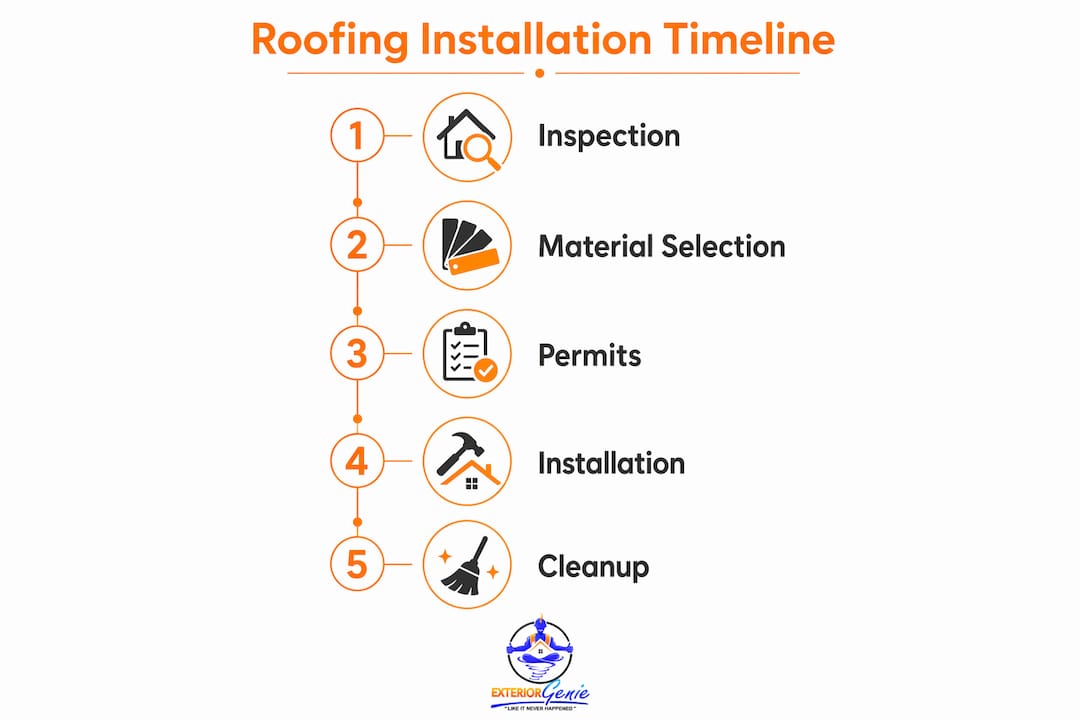
Phase 3: Permits and material ordering (2 days to 6 weeks)
This is where most of the waiting happens. Permit approval in U.S. cities typically takes 1 to 10 business days, though high-volume markets can stretch to 6 weeks. Material lead times vary just as widely:
- Standard asphalt shingles: a few days from local distributors
- Architectural shingles: several days to a week or more
- Standing seam metal: multiple weeks (custom cut to order)
- Cedar shake: a few weeks
- Clay or concrete tile: several weeks
- Slate: several weeks
Pro Tip: Pre-stage materials at the job site 24 hours before the scheduled start date. Same-day delivery delays are one of the most avoidable reasons an installation gets pushed back.
Phase 4: Tear-off and installation (1–3 days on site for asphalt shingles)
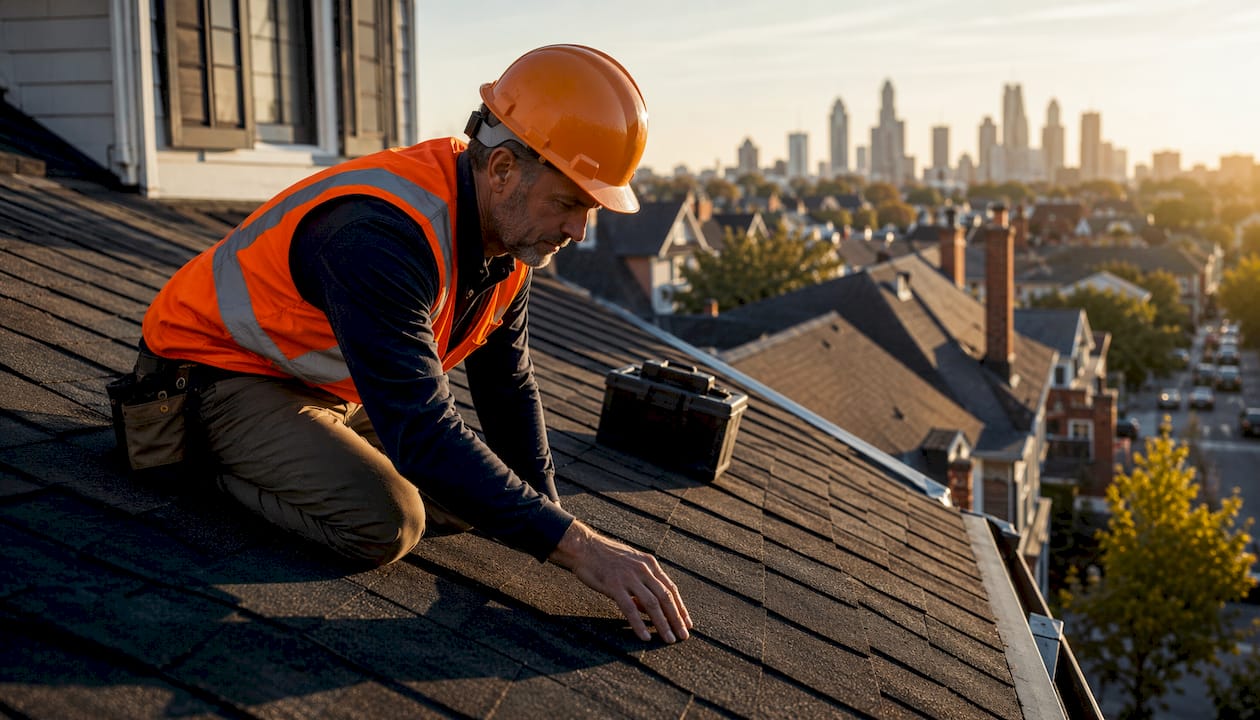
Crews typically arrive between 6:30 AM and 7:30 AM. The tear-off phase takes roughly 3–5 hours on an average 2,500 sq ft home, followed by a 1–2 hour deck inspection and any needed repairs. After that, underlayment goes down, flashing gets set around chimneys and penetrations, and new roofing material is installed from the eaves up. Ridge caps and final detail work close out the day.
The numbered sequence on a typical single-day job looks like this:
- Crew arrival and property protection setup
- Tear-off of old roofing material
- Deck inspection and board replacement where needed
- Drip edge and underlayment installation
- Flashing around all penetrations (chimneys, vents, skylights)
- New roofing material installation, bottom to ridge
- Ridge cap and ventilation installation
- Cleanup, magnetic nail sweep, debris removal
Phase 5: Cleanup and final walkthrough (same day or next morning)
A thorough cleanup includes multiple passes with a magnetic nail sweep, gutter clearing, and a full property walkthrough with the homeowner. The permit gets closed out after the municipal inspector signs off, which can add 1–3 business days for the inspection appointment itself.

What factors push your roofing project timeline longer?
No two roofs finish on the same schedule. Several variables can add days or weeks to your project, and knowing them in advance prevents unpleasant surprises.
- Roofing material: Asphalt shingles install in 1–3 days; clay or concrete tile takes 4–7 days; slate runs 5–10 days or more on an average-sized home. The heavier and more fragile the material, the slower the crew works.
- Roof size: A 1,200 sq ft roof may finish in one day. A 4,000 sq ft roof can take 4–5 days. Add roughly 1–2 days for every 1,000 sq ft above the medium baseline.
- Roof pitch and complexity: Steep pitches above 8/12 require additional safety equipment and slow the installation pace by a full day or more. Multiple dormers, valleys, skylights, and chimneys each add time for custom flashing work.
- Hidden deck damage: Rotted or damaged plywood only becomes visible after tear-off. Deck damage can add half a day to 2 full days depending on severity. Budgeting contingency days for this is standard practice among experienced contractors.
- Weather: Rain, high winds, and extreme heat shut down work entirely. Weather delays are common and can add days or weeks to any project, especially during spring and fall storm seasons.
- Permit processing: Local jurisdictions vary widely. Some issue permits in 1–2 days; others take weeks. HOA architectural review boards can add another 2–12 weeks on top of municipal permits.
- Crew scheduling: During peak season (roughly may through october in most of the U.S.), the best crews book 2 to 8 weeks out. Off-season scheduling can compress that to 2–3 weeks.
- The 25% rule: Many local building codes require that replacing more than 25% of a roof area triggers a full code upgrade for the entire system. That adds both time and cost that homeowners rarely anticipate.
For a deeper look at how material choice affects your overall plan, the residential roofing materials guide from Exteriorgenie breaks down installation durations side by side.
How to prepare for your roofing installation
Good preparation does not just reduce stress. It directly shortens the overall project schedule by removing the delays that are entirely within your control.
- Book your consultation early. During peak season, contractor schedules fill fast. Starting the process 10–12 weeks before your target completion date gives you real scheduling flexibility.
- Choose your materials before signing. Indecision after contract signing delays permit applications and material orders simultaneously.
- Pull permits promptly. Ask your contractor to submit permit applications the same day the contract is signed. Every day of delay at this stage pushes the installation date back by the same amount.
- Clear the yard and driveway. Crews need unobstructed access for ladders, equipment, and a dumpster. Move vehicles, patio furniture, and potted plants away from the house perimeter.
- Protect attic contents. Vibration from tear-off can shake dust and debris through ceiling fixtures. Cover stored items in the attic before work begins.
- Discuss weather contingency plans. Ask your contractor specifically what happens if rain moves in mid-installation. A clear emergency tarping protocol protects exposed decking and keeps your home watertight.
- Confirm HOA approval timing. Architectural review boards can add 2–12 weeks to your timeline if you skip this step.
Pro Tip: Ask your contractor to track permit turnaround times by jurisdiction. Experienced crews know which local building departments run slow and can set your expectations accurately from day one, rather than leaving you guessing.
Understanding what the roof replacement process involves from tear-off to final inspection helps you ask the right questions during your consultation. For commercial property managers, the commercial roof replacement planning guide covers the additional coordination layers that large-scale projects require.
What happens on the final day and during inspection?
The last phase of a roofing project is where quality gets confirmed, not just assumed. Several specific tasks happen in sequence before the job is officially closed out.
- Ridge cap installation: The final row of shingles or metal caps seals the peak of the roof and completes the weather barrier.
- Flashing detail check: All penetrations, including chimneys, pipe boots, skylights, and wall junctions, get a final inspection for proper sealing.
- Magnetic nail sweep: Crews make multiple passes across the yard, driveway, and landscaping to collect loose nails before they find a tire or a bare foot.
- Gutter and debris cleanup: Shingle granules, old felt paper, and packaging material all get cleared from gutters and the surrounding property.
- Homeowner walkthrough: Your contractor walks the completed roof with you, explains what was done, and documents any deck repairs or upgrades made during installation.
- Municipal inspection: Most jurisdictions require a final inspection before the permit closes. Expect a 1–3 business day wait for the inspector's appointment. Some areas require a deck inspection after tear-off and a dry-in inspection after underlayment, before the final sign-off.
Passing the final inspection is not just a formality. Most roofing manufacturer warranties require code-compliant installation, confirmed by a closed permit, to remain valid. Skipping or rushing the inspection process can void coverage that would otherwise protect you for decades.
Expert insights on roofing timeline misconceptions
The single biggest misconception homeowners carry into a roofing project is that the installation itself takes weeks. It does not. Most delays happen before the crew ever arrives, driven by permit processing, material lead times, and contractor scheduling. The physical work on an average asphalt shingle roof wraps up in 1–3 days. The surrounding logistics are what stretch the calendar.
A second misconception worth addressing: one-day completions are real but not universal. Experienced crews install 30 to 40 squares of asphalt shingles per day, which means a simple gable roof under 2,000 sq ft with no deck damage can genuinely finish in a single day. A steep, multi-dormer roof with 40-plus squares cannot, and any contractor promising otherwise is trading your roof's longevity for their scheduling convenience.
The 25% rule catches many homeowners off guard mid-project. When more than a quarter of the roof area requires replacement, local codes in many jurisdictions mandate bringing the entire roofing system up to current standards. That can add days of additional work and materials that were never in the original estimate.
Weather deserves its own honest conversation. Spring and fall storm seasons in the Southeast, including South Carolina, create real scheduling pressure. A contractor who builds a 1–2 week weather buffer into the project plan is not padding the timeline. They are protecting your home from the risk of exposed decking during an unexpected storm. For storm-related projects specifically, insurance claim assistance can also affect scheduling, since claim approval timelines vary by insurer and adjuster availability.
For a broader look at how roof replacement timelines break down across typical residential projects, the phases described here align closely with what most professional roofing contractors follow across the U.S.
Pro Tip: When evaluating contractors, ask specifically how many squares their crew installs per day and request references from projects similar in size and material to yours. A crew that has done 50 roofs like yours will finish faster and with fewer surprises than one encountering your roof type for the fifth time.
Ready to plan your roofing project?

Exteriorgenie brings 25 years of roofing experience and military-grade discipline to every project in Lexington, SC. Whether you are planning a residential replacement or managing a commercial property, the team handles permits, scheduling, and material coordination so the timeline stays on track. HAAG-certified inspectors are on staff for storm damage documentation, and 24/7 emergency response means a weather event never leaves your home exposed for long.
If budget timing is a concern, roofing financing options are available to help you move forward without waiting until the full cost is in hand.
Contact Exteriorgenie today for a free inspection and a realistic project timeline built around your specific roof, not a generic estimate.
Key Takeaways
A residential roofing installation timeline spans 2 to 4 weeks from first contact to final inspection, with the physical installation taking just 1 to 3 days on site.
| Point | Details |
|---|---|
| Full timeline vs. install time | Residential projects run 2–4 weeks total; crews are on the roof for just 1–3 days. |
| Pre-installation drives delays | Permits, material orders, and crew scheduling account for most of the calendar time before work begins. |
| Material choice changes the schedule | Asphalt shingles install in 1–3 days; slate takes 5–10 days or more on an average home. |
| Hidden damage adds time | Deck damage discovered during tear-off can add half a day to 2 full days to the schedule. |
| Weather buffers are necessary | Building a 1–2 week weather buffer into spring and fall projects protects unfinished work from storm exposure. |