
Commercial roof maintenance is the regular practice of inspecting, cleaning, and repairing roofing systems to protect building assets, control costs, and extend roof lifespan. Neglecting this practice is one of the most expensive mistakes a facility manager or business owner can make. Understanding why commercial roofs need maintenance goes beyond preventing leaks. It means protecting your building's largest capital asset, keeping warranties valid, and converting unpredictable emergency costs into manageable budget line items. The data is clear: proactive maintenance pays for itself many times over.
Why commercial roofs need maintenance to avoid costly repairs
Reactive maintenance costs nearly 80% more per square foot than proactive care. Proactive maintenance averages 14 cents per square foot annually, while reactive maintenance averages 25 cents. That gap compounds fast across a large commercial roof.
The lifespan difference is just as striking. Proactively maintained roofs last an average of 21 years, compared to 13 years for neglected roofs. That is a 61.5% longer service life, which translates directly into deferred replacement costs worth hundreds of thousands of dollars for most commercial properties.
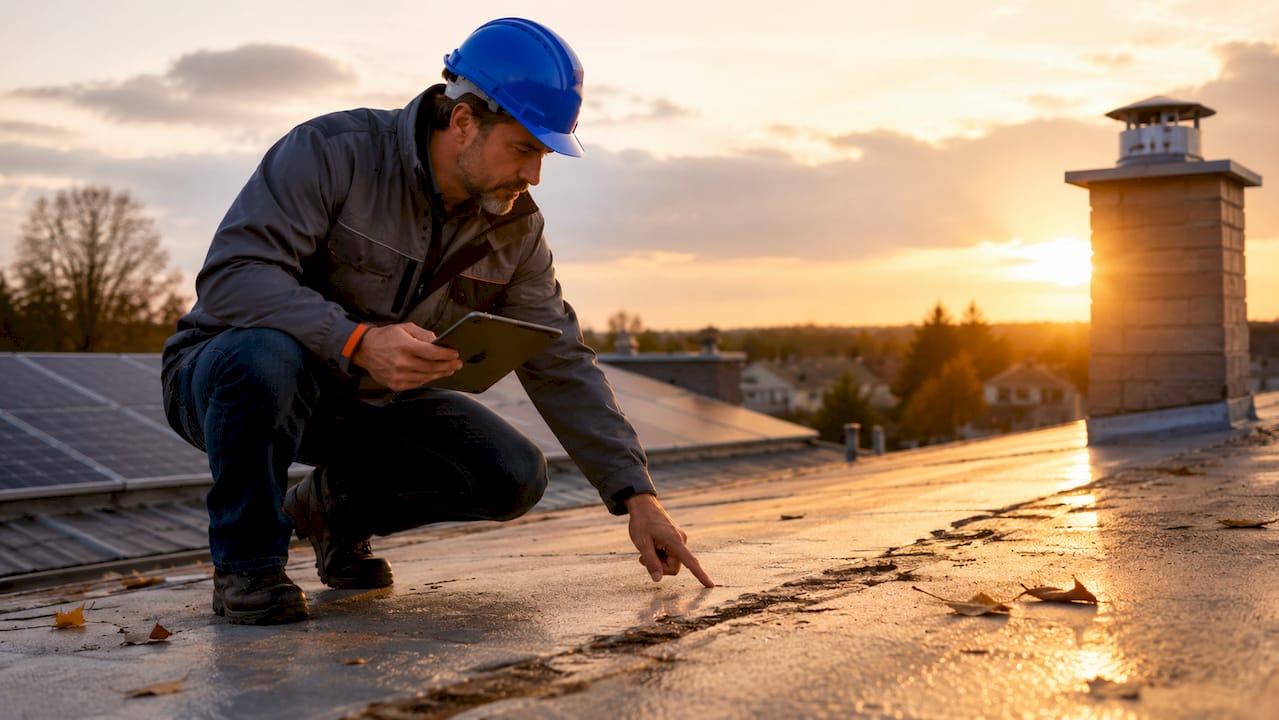
Emergency repairs are the real budget killer. Emergency roof repairs cost three to nine times more than scheduled maintenance. A $500 drain cleaning or seam repair done during a routine visit can prevent a $15,000 interior water damage claim after a heavy rainstorm.
The most common early failure points are small and easy to miss without a trained eye:
- Seam debonding along membrane edges
- Flashing lift at walls, curbs, and penetrations
- Clogged roof drains and scuppers
- Minor membrane cracks from UV exposure
- Backed-out fasteners on metal panels
Left unchecked, these issues cause leaks that damage insulation, roof decking, and building interiors. What starts as a $200 repair becomes a structural problem that requires full section replacement.
Pro Tip: Schedule a post-storm walkthrough within 48 hours of any significant weather event. Catching seam lifts and flashing displacement early costs almost nothing to fix. Waiting until the next scheduled inspection can mean weeks of hidden water intrusion.
How maintenance extends roof lifespan and protects your warranty
Routine upkeep does not just slow deterioration. It can extend roof life by 30% to 100% compared to neglected systems. That range depends on roof type, climate, and how consistently maintenance is performed. Even at the low end, 30% more life on a 20-year roof means six additional years before a full replacement.
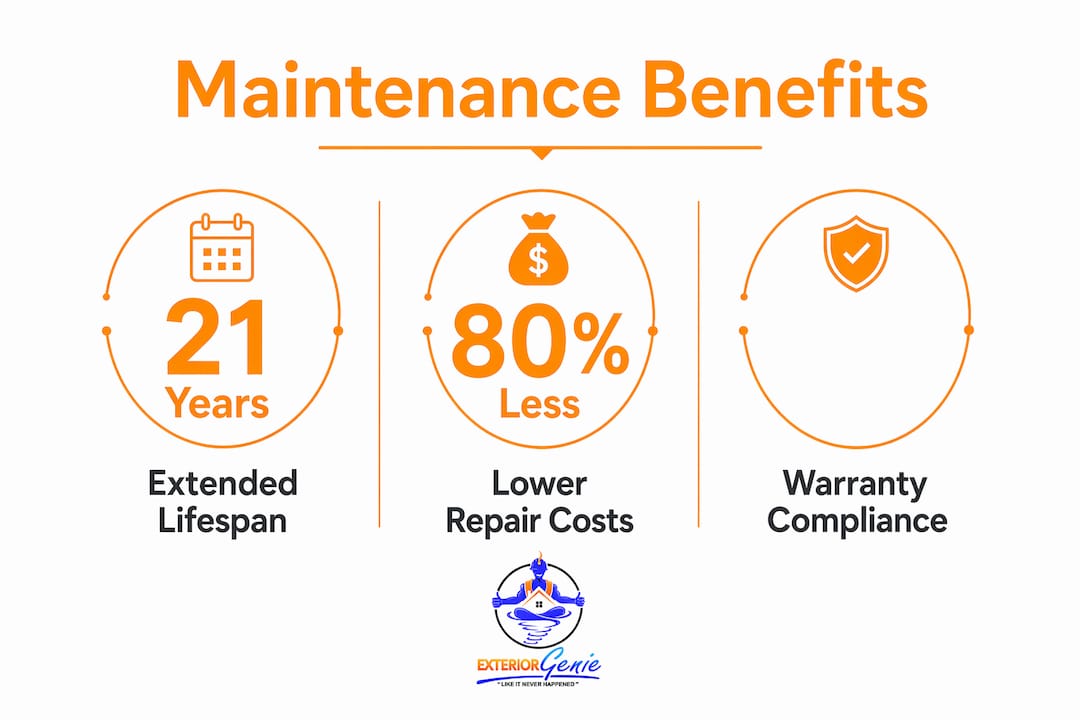
Warranty compliance is the issue most facility managers overlook. Most manufacturers require documented routine maintenance to keep the warranty valid. Skipping inspections does not just risk roof damage. It risks voiding the warranty entirely, leaving you with no recourse when a manufacturing defect causes a failure.
Neglecting maintenance can cut a roof's functional life in half compared to a maintained system. That means a 20-year roof could fail in 10 years without proper care, forcing a premature capital expenditure that no budget plan anticipated.
The table below shows how maintenance frequency affects key outcomes across roof age categories:
| Roof age | Recommended inspection frequency | Primary focus areas |
|---|---|---|
| 0–5 years | Twice per year | Baseline documentation, warranty compliance |
| 6–15 years | Twice per year | Seams, flashings, drainage, membrane condition |
| 16+ years | Quarterly | Full system assessment, capital planning |
Documentation is what makes maintenance count legally and financially. High-quality maintenance reports with annotated photos provide objective evidence that supports budget approval and warranty claims better than any verbal assessment. When a storm hits and you file an insurance claim, a documented maintenance history proves the roof was in good condition before the event.
Pro Tip: Ask your roofing contractor for a written report with photos after every inspection. Store these digitally with date stamps. This file becomes your strongest asset during warranty disputes and insurance negotiations.
What are the most frequent commercial roof issues?
The most common commercial roof problems share one trait: they start small and invisible. About 80% of leaks originate at flashings and penetrations, not in the open field of the membrane. That means the most critical inspection areas are the edges, curbs, pipe boots, and HVAC curbs, not the flat center sections most people assume are the problem.
Temperature cycles drive a significant share of roof damage. Winter freeze and thaw cycles create hidden micro-tears and seam lifts that are easy to repair if caught during a spring inspection. Left until summer, those micro-tears allow moisture into the insulation layer, where it causes rot and mold that requires far more invasive repairs.
Different roofing materials have different vulnerability profiles. Here is what to watch for by system type:
- TPO and EPDM membranes: Seam separation, UV degradation, and punctures from foot traffic or falling debris
- Metal roofing: Backed-out fasteners, rust at panel seams, and sealant failure around penetrations
- Modified bitumen: Surface cracking, blister formation, and granule loss that exposes the base sheet
- Built-up roofing (BUR): Alligatoring of the surface, flashing separation, and ponding water in low spots
Clogged drains deserve special attention on flat and low-slope roofs. Standing water adds structural load and accelerates membrane breakdown. A drain cleared twice a year costs almost nothing. Replacing a waterlogged roof deck costs tens of thousands of dollars.
Pro Tip: Walk the roof after every heavy rain. If you see ponding water that has not drained within 48 hours, the drain is either clogged or the roof has settled. Both are fixable early and expensive late.
Exteriorgenie's HAAG-certified inspectors are trained to identify all of these failure points during a single site visit. That level of credential matters because HAAG certification is the industry standard for forensic roof inspection, recognized by insurance carriers and manufacturers alike.
How to build an effective commercial roof maintenance plan
Start formal maintenance within the first five years of a new roof installation. Beginning documented maintenance early establishes a baseline condition record that protects warranty coverage and gives you a reference point for tracking deterioration over time. Waiting until problems appear means you have already lost the baseline.
A practical maintenance plan follows these steps:
- Commission a baseline inspection within the first year of installation or ownership. Document the roof's condition with photos and written notes on every component.
- Set an inspection schedule based on roof age and local climate. Twice per year is the standard for most commercial roofs. Quarterly inspections make sense for roofs over 15 years old or in high-storm regions.
- Prioritize spring and fall inspections. Spring catches winter damage before summer heat expands small cracks. Fall prepares the roof for freeze cycles and heavy rain.
- Require written reports after every visit. Reports should include annotated photos, a list of completed repairs, and a prioritized list of items to watch or address before the next visit.
- Integrate roof condition into capital planning. Use inspection data to forecast when sections will need repair or full replacement, so you can budget years in advance rather than reacting to failures.
Budgeting for maintenance is straightforward once you accept that maintenance converts unpredictable emergency expenses into fixed operational budget items. Set a per-square-foot annual maintenance budget, track actual spending against it, and adjust the capital reserve based on inspection findings each year.
When selecting a contractor, look for documented experience with your specific roof type, proof of insurance, and a clear scope of work in writing. A qualified commercial roofing contractor will provide itemized reports, not just a verbal summary after a visit. The importance of roof maintenance also shows up in how well your contractor documents findings, not just how well they repair what is visible.
Facility managers who also manage HVAC and other building systems will recognize the same logic at work. Proactive building system maintenance prevents the same pattern of invisible deterioration turning into expensive emergencies across every major building component.
Key takeaways
Regular commercial roof maintenance is the single most cost-effective action a facility manager can take to protect building value, control repair costs, and extend roof service life by decades.
| Point | Details |
|---|---|
| Proactive vs. reactive cost gap | Proactive maintenance costs 14 cents per square foot vs. 25 cents reactive, nearly 80% cheaper annually. |
| Lifespan extension | Maintained roofs last 21 years on average vs. 13 years for neglected roofs, a 61.5% longer service life. |
| Warranty protection | Most manufacturers void warranties without documented routine maintenance, making records legally critical. |
| Early start matters | Beginning formal maintenance within the first five years establishes the baseline that protects coverage long term. |
| Emergency cost multiplier | Emergency repairs cost three to nine times more than scheduled maintenance visits. |
The real cost of waiting: a field perspective
Most facility managers I talk to know their roof needs attention. The honest reason maintenance gets delayed is not budget. It is visibility. A roof that is not actively leaking does not feel urgent. That thinking is exactly what turns a $400 repair into a $40,000 remediation.
The most useful shift I have seen in how building owners approach this is treating the roof as a financial instrument, not just a building component. A well-documented maintenance program tells you when to repair, when to plan for replacement, and when to push back on a contractor who says you need a full tear-off. That information has real dollar value in capital planning conversations.
The other misconception worth addressing: newer roofs do not need maintenance. Every manufacturer I am aware of requires documented inspections to keep the warranty active, often starting in year one. Skipping the first few years of maintenance is the fastest way to void a 20-year warranty and face a premature replacement with no manufacturer support.
Roof maintenance is not a cost center. It is a tool for buying time, controlling capital outflows, and preserving one of the most expensive assets in your building portfolio. Treat it that way, and the numbers take care of themselves.
— Ebben
Exteriorgenie's commercial roofing services in Lexington, SC
Exteriorgenie brings 25 years of roofing experience and HAAG-certified inspection credentials to every commercial maintenance visit in Lexington, SC. Whether you need a baseline inspection for a new roof or a full maintenance program for an aging system, the team delivers written reports, photo documentation, and prioritized repair recommendations after every visit.

For facility managers facing repair costs, Exteriorgenie offers flexible financing options that make it easier to address maintenance and repairs without disrupting your operating budget. The veteran-owned team also provides 24/7 emergency response and personalized roof insurance claims assistance for storm-related damage. Contact Exteriorgenie to schedule your commercial roof inspection and get a clear picture of your roof's current condition.
FAQ
Why do commercial roofs need maintenance more than residential roofs?
Commercial roofs are typically flat or low-slope, which means water drains more slowly and puts more stress on membranes, seams, and drains. The larger surface area and heavier rooftop equipment load also create more failure points than a standard residential pitch.
How often should a commercial roof be inspected?
Most commercial roofs require inspection twice per year, typically in spring and fall. Roofs older than 15 years or located in high-storm regions benefit from quarterly inspections to catch accelerated wear.
What happens if I skip commercial roof maintenance?
Neglecting maintenance can cut a roof's functional life in half and risks voiding the manufacturer warranty. Emergency repairs that follow neglect cost three to nine times more than scheduled maintenance visits.
What does a commercial roof maintenance visit include?
A standard visit covers debris removal, drain clearing, seam and flashing inspection, minor repairs, and a written report with photos. Documentation from each visit supports warranty compliance and insurance claims after storm events.
When should I start a maintenance program for a new commercial roof?
Start within the first five years of installation. Early documented maintenance establishes a baseline condition record, protects warranty coverage, and gives you the data needed for long-term capital planning.