

Veteran-owned roofing companies are defined by a standard of discipline, accountability, and technical rigor that most general contractors simply do not match. The reasons why veteran-owned roofers offer value go well beyond patriotic preference. Military service builds problem-solving instincts, structured execution habits, and a zero-tolerance attitude toward shoddy work. These traits translate directly into better roofing outcomes for homeowners and small business owners who need a contractor they can trust to show up, do the job right, and stand behind their work.
Why veteran-owned roofers offer value through military training
Military training produces a specific kind of professional. Veterans enter civilian careers with skills that took years of high-pressure environments to develop, and roofing is one of the fields where those skills pay off most visibly.
The GAF Roofing Academy is the clearest proof of this pipeline. The program offers tuition-free training with a 49.54% job placement rate for veterans in 2026. That number means roughly half of every veteran who completes the program lands a roofing career immediately, which reflects both the quality of training and how well military habits align with roofing's demands.
Jacob Radford, a veteran who went through a structured roofing transition program, described the shift as natural. The chain of command, the attention to procedure, the expectation that every task gets done correctly the first time. These are not new concepts for someone who served. They are the baseline.
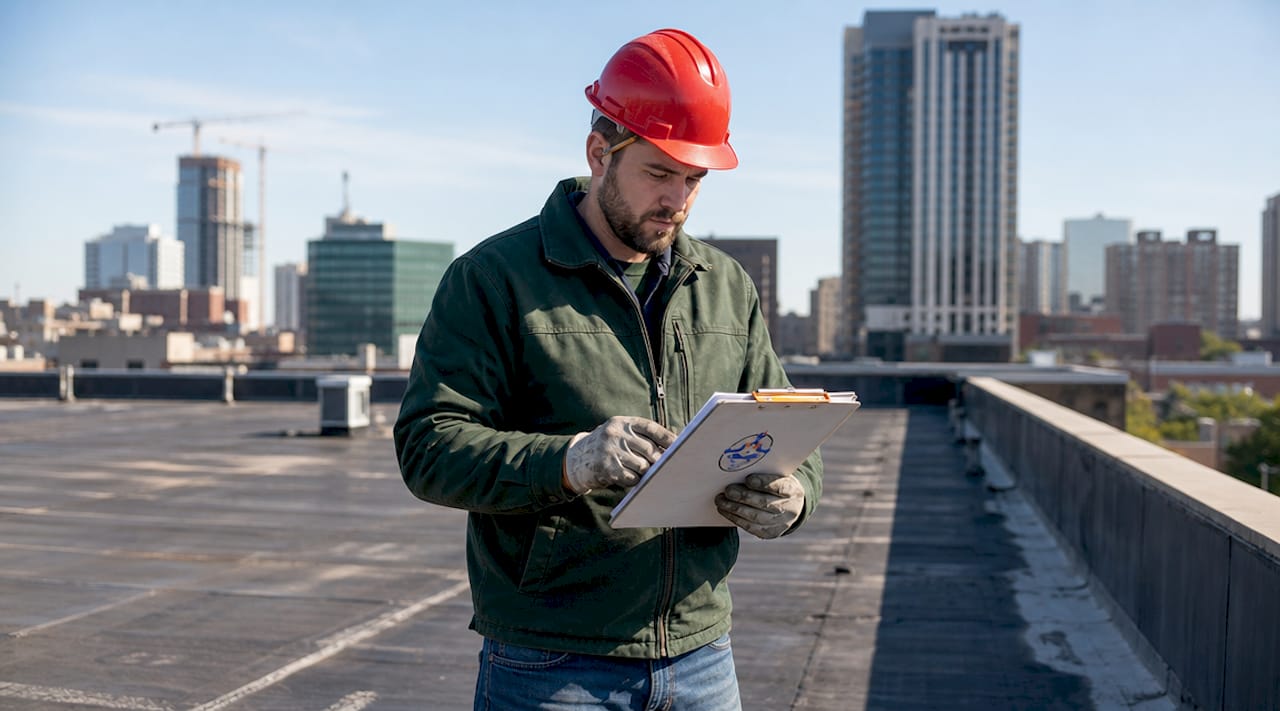
Veterans also bring structured problem-solving and accountability to roofing jobs, adapting quickly to challenges under pressure. A roof replacement during a weather window, a commercial repair with a tight deadline, or an emergency call after a storm. These are exactly the scenarios where military-trained instincts produce results.
The career paths available to veterans in roofing are also broader than most people realize:
- Field technician: Hands-on installation and repair work requiring precision and physical endurance
- Project manager: Coordinating crews, timelines, and materials with the kind of structured oversight veterans know well
- Safety officer: Enforcing OSHA compliance and site protocols, a natural fit for those trained in operational safety
- Sales and estimating: Building client relationships through honest communication and transparent pricing
- Business owner: Running a veteran-owned roofing company with the leadership skills developed in service
Pro Tip: When evaluating a veteran-owned roofing company, ask specifically which training programs their crew has completed. GAF Roofing Academy, OSHA 10 or 30 certification, and manufacturer-specific training are concrete indicators of a prepared team.
What standards do veteran roofers follow for durable roofing?
The connection between military service and roofing standards runs deeper than attitude. It runs through documented processes that mirror the kind of institutional rigor the military applies to its own facilities.
UFC 3-110-03 mandates that roofing design reviews for Department of Defense facilities be conducted by Registered Roof Consultants, ensuring compliance and long-term durability. This requirement exists because roofing failures on critical facilities are not acceptable. The same logic applies to your home or commercial property.
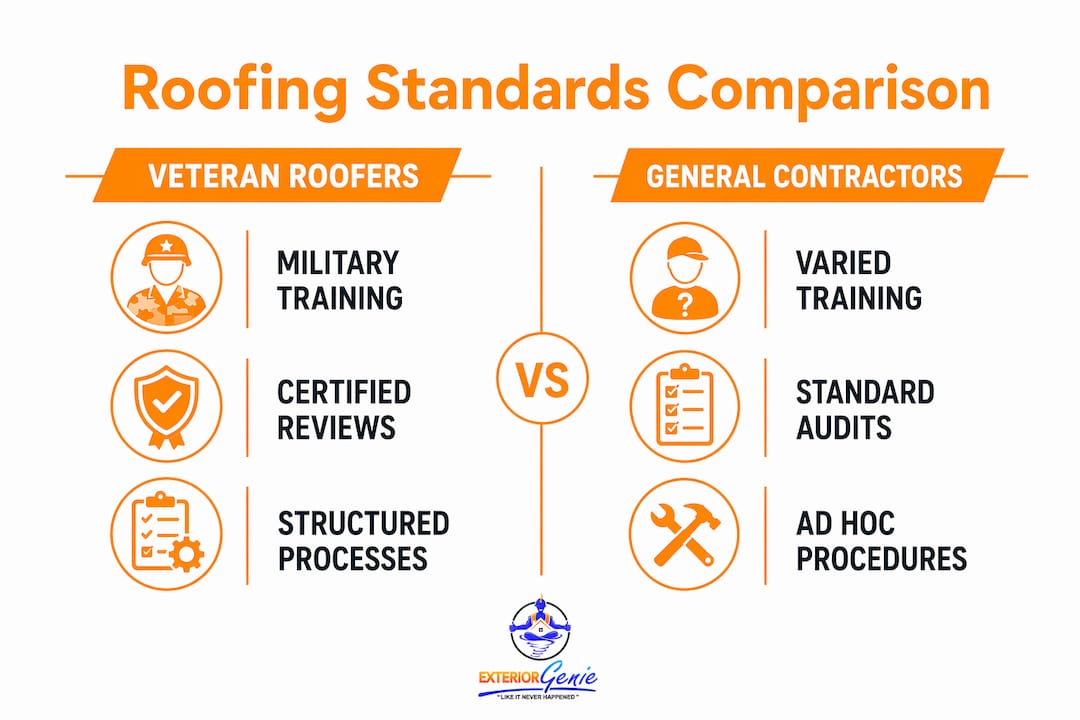
The Roofing Technical Center of Expertise provides certified review and consultation services to ensure roofing systems meet sustainability and lifecycle expectations. Veterans who have operated within these frameworks understand that a roof is not just a product. It is a system, and every component of that system must be specified, installed, and inspected correctly.
For homeowners, this translates into one practical question: does your roofer treat your project with the same process discipline that critical facilities demand? The table below shows how that standard maps to real-world roofing decisions.
| Standard | What it means for your roof |
|---|---|
| Registered Roof Consultant review | Design is verified by a credentialed expert before installation begins |
| Documented inspection protocol | Each phase of installation is checked against a written standard |
| Lifecycle compliance | Materials and methods are selected for long-term performance, not just upfront cost |
| UFC 3-110-03 alignment | Roofing systems meet the same durability benchmarks used for federal facilities |
Veterans who have worked within these frameworks bring that process rigor to residential and commercial projects. Before hiring any roofer, ask to see their inspection checklist and documentation process. A veteran-owned company that takes standards seriously will have both ready. You can also review what a thorough pre-repair inspection looks like before your project starts.
Operational advantages that veteran roofing companies deliver
The benefits of veteran roofers show up most clearly in day-to-day project execution. Military-style leadership does not just affect attitude. It shapes how a crew prepares, communicates, and performs on site.
Joe Bennett, whose military leadership lessons have been studied in the restoration and roofing industry, emphasizes that discipline creates attention to the details that customers actually experience. The crew that shows up on time, cleans up after itself, communicates clearly about delays, and does not cut corners on flashing or underlayment. These are not accidents. They are the product of a culture that values execution.
Certifications are another concrete differentiator. Veteran-led roofing businesses consistently invest in ongoing training through programs like EPA lead-safe certification, OSHA safety training, IICRC standards, and manufacturer-specific credentials. These are not decorative credentials. They represent hours of preparation that directly affect the quality of work on your roof.
Here is what the operational advantages of veteran roofing companies look like in practice:
- Scheduling discipline: Milestones are set and communicated upfront, reducing the ambiguity that causes most homeowner frustration
- Safety programs: OSHA-compliant site management protects your property and the crew, reducing liability exposure
- Transparent pricing: No surprise line items added after the contract is signed
- Quality control: On-site inspections at each phase, not just a final walkthrough
- Warranty responsiveness: Veterans understand obligation. When a warranty issue arises, they address it without deflection
Veteran-owned roofing firms also prioritize community engagement and sponsor local initiatives, reflecting a commitment that extends beyond the transaction. For homeowners who want their spending to support their community, this is a meaningful differentiator.
Pro Tip: Ask your roofing contractor to walk you through their scheduling milestones before work begins. A veteran-owned company will have a clear, written sequence. If a contractor cannot explain their project timeline in concrete steps, that tells you something important about how they operate.
Veteran-owned vs. non-veteran roofers: what actually sets them apart?
The comparison between veteran-owned and general roofing contractors is not about one being inherently better as a person. It is about the systems, habits, and values that military service instills and how those translate into measurable differences on your project.
Military background instills discipline and attention to detail that translate into operational excellence and quality control. This is not a soft claim. It shows up in training frequency, certification investment, and the way crews handle unexpected problems on site.
| Trait | Veteran-owned roofer | General contractor |
|---|---|---|
| Scheduling accountability | Structured milestones with written timelines | Variable, often informal |
| Safety culture | OSHA training embedded in team culture | Compliance-driven, reactive |
| Certification investment | Ongoing, multi-credential approach | Often limited to licensing minimums |
| Communication style | Direct, transparent, proactive | Varies widely by company |
| Warranty follow-through | Treated as an obligation, not a negotiation | Inconsistent across the industry |
| Community commitment | Frequent sponsorship and local engagement | Less common as a business priority |
Veteran-owned roofing companies prioritize safety programs, on-time completion, transparent pricing, and ethical business practices to build trust with clients. The discipline from military service informs every layer of project management and customer communication. For a homeowner or small business owner comparing bids, these traits are worth more than a slightly lower price from a contractor with no documented process.
The roof replacement process itself is complex enough that the contractor's organizational habits directly affect the outcome. Veteran roofers bring a structured approach to that complexity that general contractors often lack.
Key takeaways
Veteran-owned roofers deliver measurable value through military-trained discipline, certified expertise, and a structured approach to project execution that general contractors rarely match.
| Point | Details |
|---|---|
| Military training builds roofing skills | GAF Roofing Academy's 49.54% placement rate proves veterans transition effectively into skilled roofing careers. |
| Process rigor protects your investment | Standards like UFC 3-110-03 show how documented inspection and design review extend roof lifespan. |
| Operational discipline improves your experience | Scheduling milestones, safety programs, and transparent pricing reduce friction and surprises. |
| Certifications signal preparation | EPA, OSHA, and IICRC credentials reflect a team that trains consistently, not just at hiring. |
| Community commitment adds long-term value | Veteran firms often reinvest locally, making your roofing spend support more than just your roof. |
What I've learned from watching veteran roofers work
I have spent enough time around roofing projects to know that the difference between a good job and a frustrating one almost never comes down to materials. It comes down to the people managing the work and the habits they bring to the site.
Veteran roofers stand out in a specific way. They do not wait to be asked about a problem they spotted. They document it, flag it, and present a solution. That proactive accountability is rare in the trades, and it is almost always a product of military conditioning rather than industry training alone.
That said, I want to be direct about one thing: the veteran label alone is not a quality guarantee. I have seen veteran-owned businesses that coasted on the label without investing in certifications or documented processes. The label opens the door. What matters is whether the company backs it up with verifiable credentials, written inspection protocols, and a crew that has been trained recently, not just once at hiring.
My advice is to treat the veteran ownership as a strong signal worth investigating, not a final answer. Ask about HAAG certification for inspectors, ask about OSHA training frequency, and ask to see a sample inspection report. A company that has earned the right to its reputation will answer those questions without hesitation. One that deflects them is telling you something important.
The best veteran-owned roofers I have encountered treat every residential project with the same seriousness they would apply to a mission-critical facility. That mindset is exactly what your home deserves.
— Ebben
Trustworthy roofing services from a veteran-owned team in Lexington, SC

Exteriorgenie is a veteran-owned roofing company serving Lexington, SC, with 25 years of experience in residential and commercial roofing. The team combines military discipline with HAAG-certified inspections, 24/7 emergency response, and personalized insurance claim assistance. If you are weighing your options after a storm or planning a full replacement, Exteriorgenie offers flexible financing plans that make quality roofing accessible without compromising on materials or workmanship. For urgent situations, their emergency roof repair service is available around the clock. When you need a contractor who treats your property with the same accountability they brought to their service, Exteriorgenie is the team to call.
FAQ
Why do veteran-owned roofers tend to be more reliable?
Veterans bring structured scheduling habits, documented processes, and a culture of accountability that reduces project delays and communication failures. Military discipline directly informs how veteran roofers manage timelines and handle unexpected problems on site.
What certifications should I look for in a veteran roofing company?
Look for OSHA 10 or 30 certification, EPA lead-safe credentials, HAAG certification for inspectors, and manufacturer-specific training from programs like GAF Roofing Academy. These credentials confirm that the team has invested in preparation beyond the minimum licensing requirements.
Do veteran-owned roofing companies offer financing?
Veteran-owned roofing firms frequently offer financing options and participate in home improvement incentive programs to make roofing affordable. Exteriorgenie, for example, provides financing plans specifically designed for homeowners and small business owners managing larger roofing projects.
How does military training prepare veterans for roofing work?
The GAF Roofing Academy achieved a 49.54% placement rate for veterans in 2026, demonstrating that military habits align directly with roofing's demands. Veterans adapt quickly to physical complexity, safety requirements, and team coordination because those skills were built before they ever touched a shingle.
Is a veteran-owned label enough to choose a roofing contractor?
The veteran label is a strong starting signal, but you should verify it with documented certifications, written inspection protocols, and references from completed projects. A reputable veteran roofer will welcome those questions rather than deflect them.