
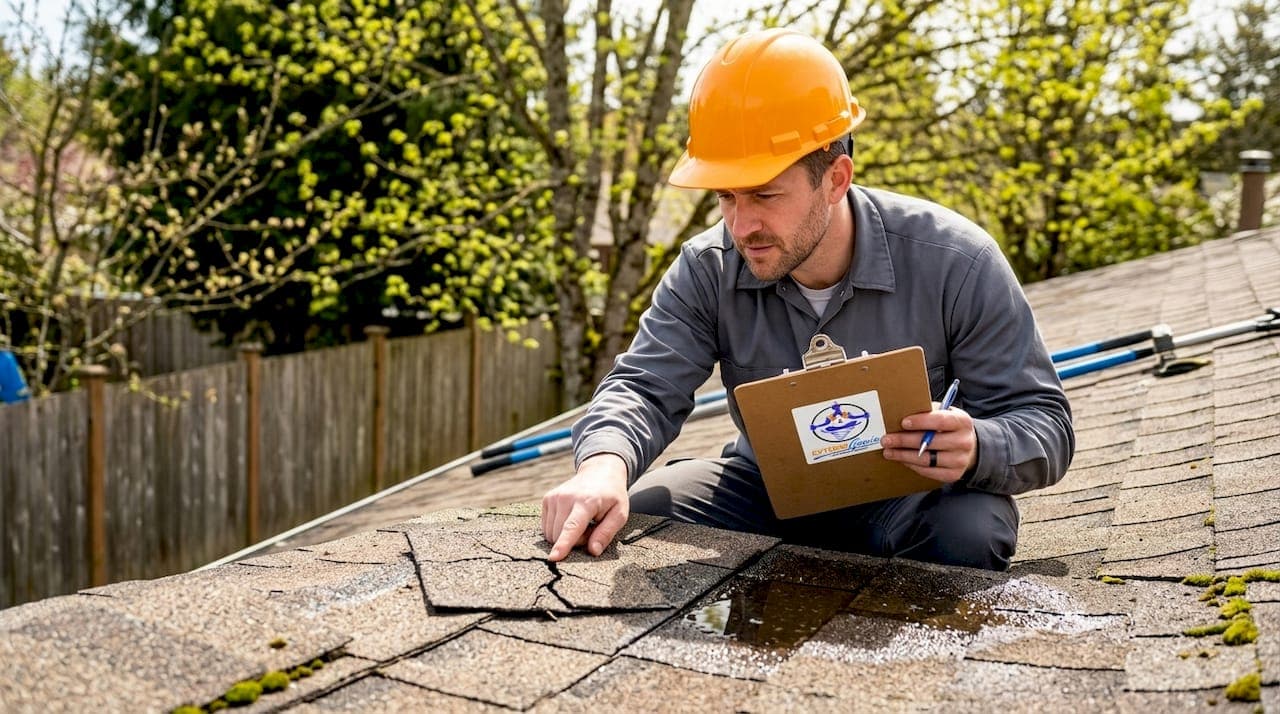
When your roof is failing after a storm, the pressure to hire someone fast can push you straight into a bad decision. Knowing the right emergency roofing contractor qualities before a crisis hits is the difference between a solid repair and a costly nightmare. Fraudulent contractors flood neighborhoods after every major weather event, and even well-meaning but inexperienced roofers can make a bad situation worse. This article breaks down what actually separates trustworthy emergency roofers from the rest, with specific, practical guidance you can use right now.
Table of Contents
- Key takeaways
- 1. Emergency-specific experience and insurance coordination skills
- 2. Current licensing and verified insurance coverage
- 3. Reputation, reviews, and what they actually reveal
- 4. Communication clarity and pricing transparency
- 5. Physical local presence and emergency readiness
- 6. A side-by-side view of what to look for in roofers
- My honest take on hiring in an emergency
- Why Exteriorgenie is built for exactly this situation
- FAQ
Key takeaways
| Point | Details |
|---|---|
| Experience beats general skill | Look for contractors with specific emergency roof repair skills, not just general roofing experience. |
| Always verify credentials | Confirm state licenses and insurance certificates independently before signing anything. |
| Mid-range reviews tell the truth | Three- and four-star reviews reveal the most honest picture of how a contractor handles problems. |
| Local presence means accountability | A contractor with a real local address and community ties is far less likely to disappear after payment. |
| Communication signals professionalism | Transparent pricing, clear contracts, and fast responses are the best features in roofing contractors during emergencies. |
1. Emergency-specific experience and insurance coordination skills
Not all roofing experience is equal. A contractor who has spent 20 years on new construction projects may be completely lost when it comes to rapid storm damage assessment and emergency repairs. The traits of emergency roofing contractors who truly excel include knowing how to triage damage fast, prioritize what needs immediate waterproofing, and move without hesitation.

The insurance side matters just as much as the repair itself. Emergency roof repair is often the first stage of the insurance claim process, and contractors who understand that dynamic help you avoid costly disputes down the road. The best ones use tools like drone photography and slope diagrams to present damage evidence to carriers, which leads to fairer settlements.
Local knowledge also plays a real role here. A contractor who works regularly in your region understands local building codes, common weather patterns, and what inspectors look for. That familiarity reduces the risk of code violations that could delay repairs or void future warranty claims.
Key things to verify about a contractor's experience:
- Ask specifically how many emergency repairs they have handled in the past two years
- Request examples of projects similar in scope and damage type to yours
- Ask whether they have HAAG certification or equivalent credentials for insurance inspections
- Confirm they understand your state's nailing requirements. In many wind zones, 6 nails per shingle are required by code, and shortcuts lead to premature failure
Pro Tip: Ask the contractor directly: "How do you handle unexpected decking damage once work begins?" Their answer tells you a lot about how transparent and fair they will be when surprises arise mid-job.
2. Current licensing and verified insurance coverage
This is where a lot of homeowners trust too easily. A contractor showing up with a business card and a confident pitch is not proof of legitimacy. Licenses can expire. Insurance can lapse. You need to verify both independently, not just take the contractor's word for it.
Here is a simple checklist to work through before any contract is signed:
- Ask for the contractor's license number and verify it through your state licensing board's official website. State licensing boards show current status and any disciplinary history.
- Request a certificate of general liability insurance, not just a verbal confirmation.
- Ask specifically about workers' compensation. Without it, an injury on your property could become your liability.
- Call the insurance carrier listed on the certificate to confirm the policy is active. Fraudulent certificates exist.
- Ask whether the work will be done by direct employees or subcontractors, and confirm that subcontractors carry their own coverage.
Reputable contractors hand over certificates of insurance without hesitation. Any reluctance or delay is a serious red flag.
Pro Tip: Never pay a large deposit upfront before work begins. Standard practice is a modest deposit with the balance due after completion. Any contractor demanding 50% or more before touching your roof warrants serious scrutiny.
3. Reputation, reviews, and what they actually reveal
Star ratings alone tell you almost nothing. A company with 50 perfect five-star reviews and no detail in any of them should raise questions, not confidence. What you actually want are 3- and 4-star reviews because these tend to contain the most honest, specific accounts of how a contractor handled a real problem.
When reading reviews for emergency context specifically, look for:
- Mentions of how quickly the company responded after a storm call
- References to cleanup quality after the job was done
- Whether the reviewer would hire the company again
- Any mention of a specific employee by name (a sign the review is genuine)
- Patterns in negative reviews, especially around communication failures or billing surprises
Be cautious of contractors who appear in your neighborhood right after a weather event with door-to-door solicitations. Legitimate, high-demand roofers are already fully booked after major storms and do not need to knock on doors. The Georgia Secretary of State has documented dozens of fraud complaints tied directly to door-to-door solicitations following hail and wind events. That pattern is not unique to Georgia.
Local standing in the community is a practical accountability mechanism. A contractor with a real history in your town has more to lose by doing poor work than someone passing through for storm season.
4. Communication clarity and pricing transparency
When your ceiling is dripping, it is tempting to just say yes to the first person who shows up and sounds confident. That urgency is exactly what bad contractors exploit. Strong communication is one of the qualities of reliable roofers that gets overlooked under pressure, but it matters enormously.
A trustworthy contractor will explain the cause of your damage clearly, including factors like attic ventilation issues that many homeowners never hear about until it is too late. Poor ventilation is a leading cause of premature roof failure, and a contractor who skips that conversation is either not thorough enough or not honest enough.
Here is how communication standards should compare across contractor types:
| Communication Factor | Strong contractor | Weak contractor |
|---|---|---|
| Response time after call | Same day, often within hours | Days later or inconsistent |
| Damage explanation | Clear, with visual documentation | Vague or rushed |
| Pricing breakdown | Itemized and written | Verbal only or lump sum |
| Contract detail | Scope, timeline, and warranty spelled out | Single-page or incomplete |
| Warranty type explained | Distinguishes material from labor warranty | Offers one blanket "warranty" with no detail |
Pro Tip: Ask the contractor to explain the difference between the manufacturer's material warranty and their own labor warranty. A contractor who cannot answer that question clearly has likely not done enough of this work to be trusted with yours.
5. Physical local presence and emergency readiness
A post office box is not a business address. Virtual office suites are not community ties. When you are hiring someone for urgent roof work, physical local presence is a meaningful measure of accountability.
The essential roofing contractor attributes around local presence go beyond just having a nearby office. They include:
- A verifiable street address that matches their license registration
- A crew and equipment already staged locally, not traveling in from three states away
- Community references you can contact, not just Google reviews
- Availability for emergency roof repair outside normal business hours
- A track record of completing warranty work months after the initial job
Storm chasers operate in sharp contrast to this. They arrive after a major weather event, collect deposits, do partial work or none at all, and move on to the next affected city. Rapid response capacity is directly tied to how close and how organized a contractor's local operation actually is. A company two hours away with no local crew simply cannot respond the way a genuinely local team can.
6. A side-by-side view of what to look for in roofers
When you are under pressure, a quick reference helps. Here is how the core qualities stack up and when each one matters most:
| Quality | Most critical when... | Minimum standard |
|---|---|---|
| Emergency experience | Damage is severe or insurance claim is involved | At least 5 years of active emergency work |
| Licensing and insurance | Always, no exceptions | Current state license, GL, and workers' comp |
| Reputation and reviews | Choosing between multiple contractors | 4+ rating with detailed, recent reviews |
| Communication and transparency | Scope is unclear or damage is widespread | Written contract with itemized pricing |
| Local presence | You need rapid response or warranty follow-up | Physical address, local crew, 24/7 availability |
A few additional things worth checking before you commit to anyone:
- Confirm they offer a storm damage repair warranty that covers workmanship, not just materials
- Ask what their process is for handling insurance adjuster meetings
- Get at least two written estimates before deciding, even in an emergency
My honest take on hiring in an emergency
I have talked to enough homeowners after storms to know the pattern. Someone knocks on the door, looks at the roof from the driveway, and says you need a full replacement. The homeowner, scared and overwhelmed, signs something they barely read.
In my experience, the biggest mistake people make is treating urgency as a reason to skip verification. It is not. A tarp over a damaged section of roof buys you 24 to 48 hours to do your homework. Use that time. Call the state licensing board. Verify the insurance certificate by phone. Look up the company's physical address on a map.
I have also seen what happens when attic ventilation gets ignored during an otherwise solid repair. The new shingles fail in three years instead of twenty. The manufacturer voids the warranty. The homeowner has no recourse because the contractor is long gone. Details like proper nail counts and ventilation assessment are what separate a contractor who knows their craft from one who just knows how to sell a job.
My honest advice: build a relationship with a local roofer before you ever need an emergency repair. A contractor who has been on your roof before and knows its history is worth ten times the value of the lowest bidder who shows up after a storm.
— Ebben
Why Exteriorgenie is built for exactly this situation
When you are in the middle of a roofing emergency, the qualities discussed in this article are not abstract. They are the difference between a repair that holds and one that fails again in the next storm.
Exteriorgenie is a veteran-owned roofing company in Lexington, SC with 25 years of experience handling both residential and commercial storm damage repairs. Their HAAG-certified inspectors handle insurance claim coordination directly, so you are not navigating that process alone. They offer 24/7 emergency availability with a real local crew, transparent pricing, and written warranties that cover workmanship. If you need emergency roof repair or want help with insurance claims assistance, Exteriorgenie has the credentials, the experience, and the local accountability to handle it right.
FAQ
What are the most important emergency roofing contractor qualities?
The most critical qualities are emergency-specific experience, verified licensing and insurance, clear communication, and a physical local presence. A contractor who can document all four is genuinely prepared for urgent roof repairs.
How do I spot a storm chaser vs. a legitimate contractor?
Legitimate contractors are typically booked solid after major storms and do not solicit door-to-door. Any contractor who approaches you unsolicited after a weather event and pressures you to sign the same day should be treated with caution.
What should a written roofing contract include?
A solid contract covers the full scope of work, itemized pricing, project timeline, and separate explanations of material and labor warranties. Verbal agreements or vague single-page documents are not sufficient protection.
Why does attic ventilation matter for emergency roof repairs?
Poor attic ventilation accelerates shingle deterioration and can void manufacturer warranties. A thorough emergency contractor will assess ventilation as part of any significant repair, not just replace the visible damaged materials.
How can I verify a roofing contractor's license?
Visit your state licensing board's official website and search by the contractor's name or license number. This confirms whether the license is current and shows any disciplinary history on record.