
A roof emergency is defined as any condition where active water intrusion, structural failure, or exposed decking puts your home and family at immediate risk. Most homeowners don't realize their roof has crossed from "needs attention" to "needs action today" until the damage is already spreading. Knowing the signs roof needs emergency repair before a storm rolls through Lexington, SC, or a slow leak turns into a mold problem, is the difference between a repair bill and a full replacement. This guide covers every critical indicator, what it means, and exactly what to do next.
1. What are the most obvious external signs your roof needs emergency repair?
The exterior of your roof tells the clearest story. When you see large sections of missing, cracked, or curling shingles, your roof's first line of defense is already gone. Granule loss, which looks like coarse sand collecting in your gutters, signals that shingles are breaking down and losing their ability to shed water.
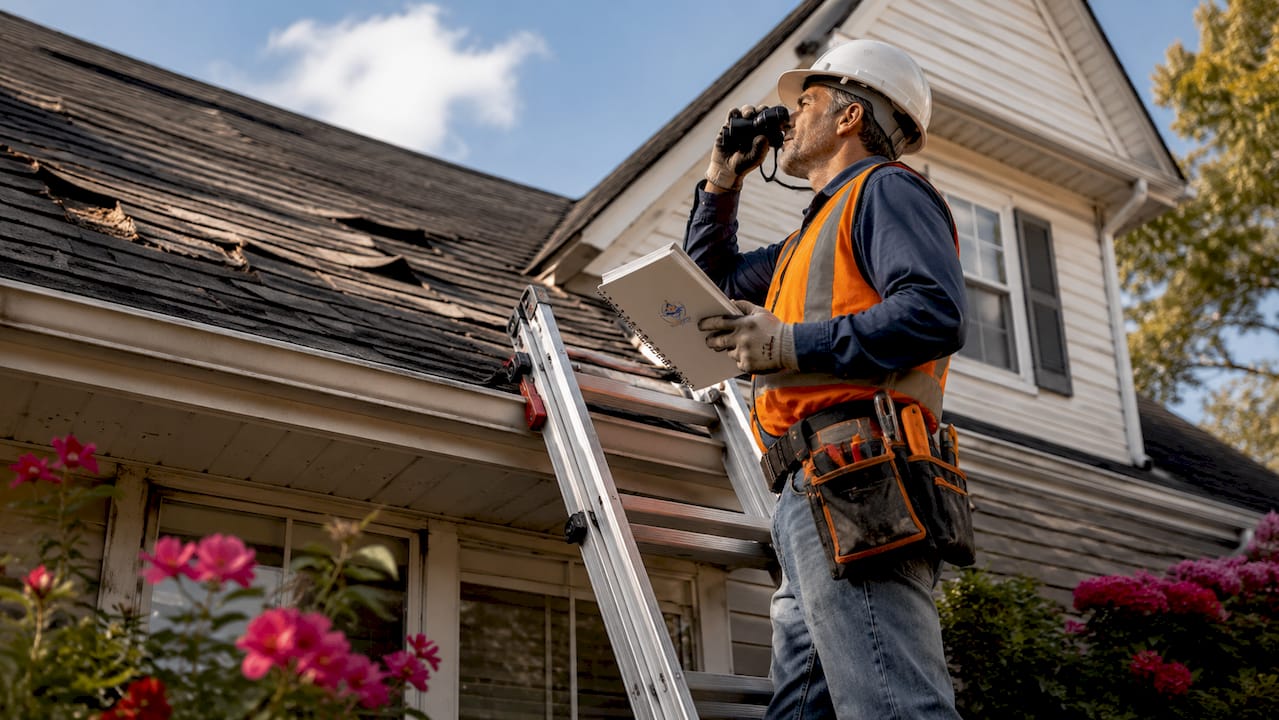
Exposed roof decking is a more severe warning. When the wooden boards beneath the shingles are visible from the ground, water is getting in with every rain event. Sagging roof areas indicate weakened decking and structural instability, and they create a potential collapse hazard that makes delay dangerous.
Tree impact damage deserves special attention. Tree damage often causes immediate emergency repair needs even when the visible damage looks minor, because impacts can crack structural members or puncture the underlayment in ways you cannot see from the ground.
- Missing or displaced shingles over large areas
- Cracked, curling, or buckled shingles exposing the underlayment
- Heavy granule loss visible in gutters or downspouts
- Exposed or visibly damaged roof decking
- Sagging or bulging sections anywhere on the roof plane
- Debris or tree limb impact with visible penetration
Pro Tip: Stand at ground level and use binoculars to scan your roof after any storm. You can identify most urgent roof damage warning signs without climbing a ladder, which keeps you safe and gives you documentation before calling a contractor.
2. How to recognize internal signs indicating emergency roof repair is needed
The inside of your home is often where a roof emergency announces itself first. Any water appearing in your attic or anywhere inside your home is a key sign of emergency roof repair, because it confirms the roof system has already failed to keep moisture out. Water stains on ceilings or walls, even old-looking ones, mean water has traveled from the roof to your living space.
A sagging or bulging ceiling is a structural red flag. Water has pooled above the drywall, and the ceiling can give way without warning. Get everyone out of that room and call a roofer immediately.
Visible daylight through roof boards in your attic means the roof decking is compromised. Light visible through attic boards signals that gaps exist large enough for water, pests, and cold air to enter freely.
Leaks near electrical wiring pose serious safety hazards including short circuits and fire risks. If you see water dripping near any light fixture, junction box, or wiring, shut off power to that circuit at the breaker panel before doing anything else.
- Active dripping or pooling water inside the home
- Brown or yellow water stains on ceilings and upper walls
- Sagging or bubbling ceiling drywall
- Daylight visible through attic roof boards
- Water near electrical fixtures or wiring
- Musty odors or visible mold in the attic
Pro Tip: Check your attic with a flashlight after every major rain event. Catching moisture at the attic level, before it reaches your ceilings, can save you thousands in drywall and insulation replacement.
3. Why standing water on your roof signals an emergency
Standing water is not a cosmetic problem. Large puddles of standing water on your roof are an urgent indicator for emergency repair because water accelerates deterioration of every roofing material it contacts. Asphalt shingles soften, wood decking rots, and membrane roofing on flat commercial surfaces begins to separate at the seams.
The most common causes of standing water are clogged gutters, improper roof slope, and failed drainage systems. When gutters are blocked, water backs up under shingles at the eave line, which is one of the most damaging leak pathways on any residential roof.
- Clear gutters and downspouts as a first step to restore drainage
- Check that downspout extensions direct water at least six feet from the foundation
- Look for low spots or depressions on the roof surface where water collects
- Contact a roofing professional if water remains pooled more than 48 hours after rain
The mold risk compounds the structural risk quickly. Mold can begin germinating within 24 hours after water intrusion and become visible within 24 to 72 hours. That timeline means a weekend of standing water can turn a drainage problem into a health hazard before Monday morning.
4. Comparing emergency roof repair signs with less urgent roof issues
Not every roof problem requires a same-day call. Knowing how to distinguish a true emergency from a scheduled repair prevents panic and helps you prioritize spending. The table below separates urgent roof repair signs from issues that can wait for a routine appointment.
| Condition | Emergency? | Recommended action |
|---|---|---|
| Active water dripping inside the home | Yes | Call for emergency repair immediately |
| Sagging ceiling or roof deck | Yes | Evacuate area, call roofer same day |
| Daylight visible through attic boards | Yes | Emergency inspection required |
| Water near electrical wiring | Yes | Shut off power, call roofer immediately |
| A few missing shingles, no active leak | No | Schedule repair within 1 to 2 weeks |
| Minor granule loss in gutters | No | Monitor and schedule annual inspection |
| Small water stain, no active dripping | No | Inspect attic, schedule professional diagnosis |
Professional diagnosis is essential because ventilation issues, plumbing leaks, and condensation can all mimic roof leak symptoms. A HAAG-certified inspector can confirm whether the source is the roof or something else entirely, which prevents unnecessary emergency spending. Understanding how roofers determine repair vs. replacement is also worth reviewing before your inspection call.
5. The age factor: when old roof signs become emergency indicators
An aging roof changes the calculus on every warning sign. A 10-year-old roof with two missing shingles is a repair. A 25-year-old roof with two missing shingles may be signaling systemic failure. The signs old roof needs replacement often overlap with emergency repair indicators, which makes age a critical piece of context.
Asphalt shingles carry a typical lifespan of 20 to 30 years depending on installation quality, ventilation, and climate exposure. In South Carolina, heat and humidity accelerate that timeline. When a roof approaches or exceeds its rated lifespan, indicators like widespread granule loss, cracking across multiple shingle fields, and recurring leaks in different locations all point toward replacement rather than repair.
The signs commercial roof needs replacement follow a similar pattern. Flat membrane roofs on commercial buildings show their age through widespread blistering, seam separation, and ponding water that no longer drains after repairs. At that stage, patching is a temporary measure at best. A full replacement guide can help you understand when repair stops making financial sense.
6. Steps to take immediately after spotting emergency roof damage
Speed matters, but so does safety. Homeowners often underestimate the urgency of early roof damage signs, and that delay increases both repair costs and health risks. Follow these steps in order the moment you identify a roof emergency.
- Prioritize safety first. If water is near electrical fixtures, shut off the circuit at the breaker. If a ceiling is sagging, keep everyone out of that room.
- Document everything. Take photos and video of all visible damage, both exterior and interior, before any cleanup or temporary repairs. Your insurance adjuster needs this record.
- Apply a temporary tarp. Temporary tarps placed properly can reduce water intrusion and limit emergency damage before professional repairs arrive. Secure the tarp tightly and extend it over the ridge to prevent wind displacement.
- Call your insurance company. Report the damage the same day. Most homeowner policies require prompt notification to preserve your claim.
- Contact a licensed emergency roofer. Look for contractors with 24/7 availability, verifiable credentials, and experience with insurance claims. Knowing the qualities of a reliable emergency contractor before you need one saves critical time.
- Move valuables away from the affected area. Water spreads further than the visible stain. Move furniture, electronics, and documents out of rooms below the damage.
Pro Tip: Keep a roll of 6-mil polyethylene sheeting and roofing nails in your garage. In a storm emergency, this material can cover a breach faster than a hardware store run and buys you hours of protection.
Key takeaways
Recognizing the signs roof needs emergency repair, specifically active leaks, structural sagging, daylight through roof boards, and water near electrical systems, requires immediate action to prevent mold, collapse, and escalating repair costs.
| Point | Details |
|---|---|
| Active leaks demand same-day response | Any water inside the home confirms roof system failure and requires immediate professional repair. |
| Sagging is a structural emergency | Sagging roof sections or ceilings indicate compromised decking that can collapse without warning. |
| Mold starts within 24 hours | Water intrusion triggers mold growth in under a day, making speed the most important factor in limiting damage. |
| Age changes the urgency threshold | Roofs past 20 to 25 years old should be evaluated for replacement, not just repair, when multiple signs appear. |
| Temporary tarps buy critical time | Properly secured tarping limits water intrusion while you wait for professional emergency repair. |
What 25 years of roofs have taught me about acting fast
Most homeowners I've worked with in Lexington, SC, share one regret: they waited. They saw a water stain and told themselves it was old. They noticed a few missing shingles and figured it could wait until spring. By the time they called, the damage had spread from one rafter bay to three, and what would have been a $900 repair turned into a $7,000 decking replacement.
The conventional wisdom says to get a roof inspection once a year. I'd push that further. After any storm with winds above 50 mph or any hail event, treat it as a trigger for an immediate visual check. You don't need to climb the roof. Binoculars from the yard and a flashlight in the attic take 15 minutes and can catch a problem before the next rain doubles the damage.
The other mistake I see constantly is homeowners hiring the first contractor who shows up after a storm. Storm chasers are real, and they target neighborhoods after severe weather. A veteran-owned company with HAAG-certified inspectors and a local track record is worth the extra hour of research. A bad repair on an emergency job can void your manufacturer warranty and leave you with the same leak three months later.
Regular roof inspections before repairs are not an upsell. They are the only way to know whether you need a patch, a section repair, or a full replacement. Skipping the inspection to save $150 and then paying for the wrong repair is one of the most expensive mistakes a homeowner can make.
— Ebben
Get emergency roof help from Exteriorgenie in Lexington, SC
When you spot the warning signs described above, the next call you make matters as much as the speed you make it.

Exteriorgenie is a veteran-owned roofing company serving Lexington, SC, with 24/7 emergency roof repair response and HAAG-certified inspectors who can confirm damage severity on the same visit. Whether you're dealing with storm damage, an active leak, or structural concerns on a residential or commercial property, Exteriorgenie provides transparent pricing, direct insurance claims assistance, and 25 years of workmanship you can verify. Don't let a temporary problem become a permanent one. Visit Exteriorgenie's roof repair services to schedule an emergency assessment today.
FAQ
What counts as a roof emergency?
A roof emergency is any situation involving active water intrusion inside the home, structural sagging, visible holes or daylight through the roof deck, or water near electrical systems. These conditions require same-day professional intervention.
How fast does mold grow after a roof leak?
Mold begins germinating within 24 hours of water exposure and becomes visible within 24 to 72 hours. This makes immediate action after any roof leak critical to preventing a health hazard.
Can I temporarily fix a leaking roof myself?
Yes, a properly secured polyethylene tarp can reduce water intrusion until a professional arrives. Effective tarping requires tight placement over the damaged area and securing it under roofing materials or with weighted boards to prevent wind displacement.
How do I know if my roof needs repair or full replacement?
Multiple signs appearing together, especially on a roof older than 20 years, typically indicate replacement over repair. A HAAG-certified inspector can confirm the diagnosis, since ventilation issues and plumbing leaks can mimic roof leak symptoms and lead to the wrong repair decision.
What should I do first when I find roof damage?
Shut off power to any circuits near water intrusion, document all damage with photos, apply a temporary tarp if safe to do so, and call both your insurance company and a licensed emergency roofer the same day.