
A commercial roof maintenance checklist is a systematic guide used to inspect, maintain, and repair commercial roofing before deterioration turns into costly structural damage. Property managers and business owners who follow a documented roof maintenance plan protect their buildings from water intrusion, membrane failure, and premature replacement. Industry standards call for inspections at least twice annually, typically in spring and fall, with quarterly checks for high-traffic or aging roofs. Skipping this routine is not a cost savings. It is a deferred liability that compounds with every season.
1. What to include on a commercial roof maintenance checklist
A thorough checklist for roof upkeep covers every component where water can enter or materials can fail. The following areas require evaluation on every inspection walk.
Membrane condition
The membrane is the roof's primary waterproofing layer. Look for blistering, cracks, splits, and surface erosion. Small blisters under 12 inches may be monitored, but blisters exceeding 12 inches or open seams require immediate professional evaluation.
Flashing integrity
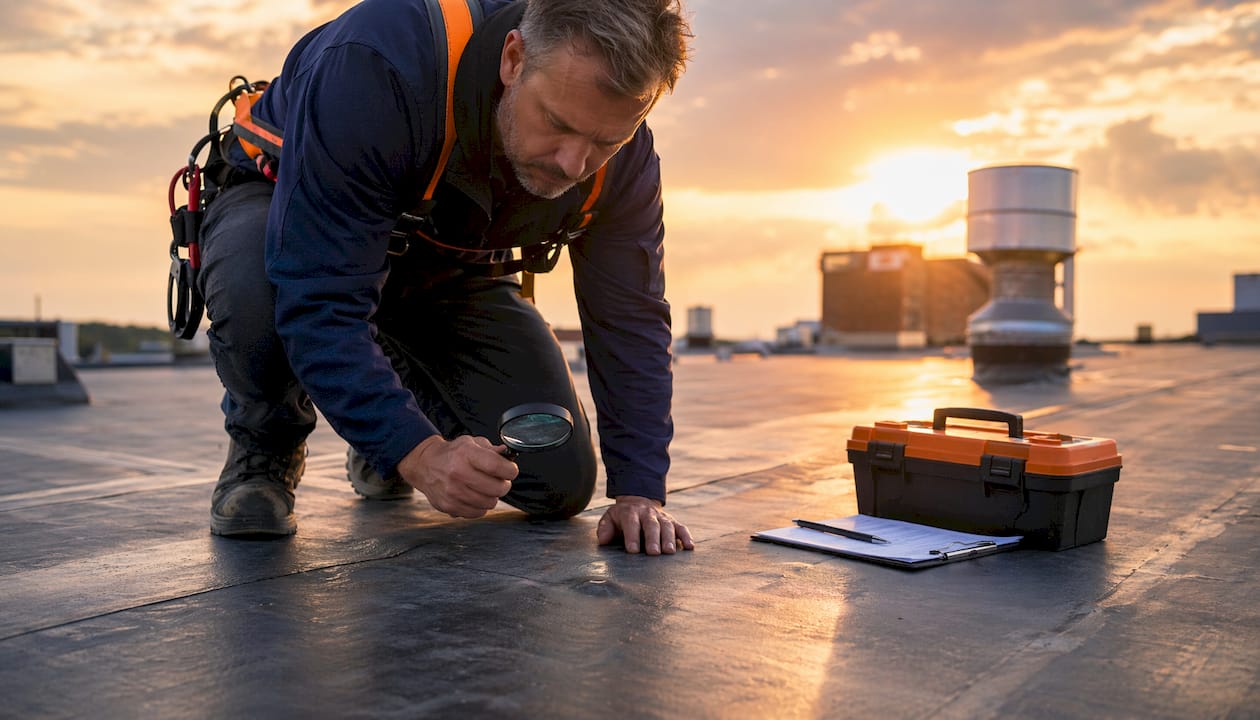
Flashing around penetrations and parapet wall transitions is the most frequent failure point on commercial roofs. Check for lifted edges, cracked sealant, loose fasteners, and separation at transitions. Prioritize these areas on every visit.
Drainage systems
Clogged drains, scuppers, and gutters cause ponding water. Ponding water that remains more than 48 hours after rain signals a drainage failure that needs immediate attention. Clear debris from all drainage points and confirm water flows freely.
Roof penetrations and rooftop equipment
HVAC units, vents, pipes, and skylights all create openings in the membrane. Inspect the base flashing and sealant around each penetration. Check equipment curbs for rust, movement, or separation from the roof surface.
Parapet walls and coping
Parapet walls take direct weather exposure. Inspect coping caps for cracks, loose sections, and failed caulk joints. Water entering a parapet migrates downward and can saturate insulation before any interior sign appears.
Interior signs of moisture
Walk the interior ceiling below the roof deck. Water stains, bubbling paint, soft ceiling tiles, and mold growth all indicate active or past leaks. Cross-reference interior findings with exterior inspection notes to locate the source.
Safety and access
Wear soft-soled footwear and inspect only in dry, calm weather. Notify building staff before roof access. Never walk near skylights or fragile membrane areas without confirmed load ratings.
2. How to build a commercial roof maintenance schedule
A commercial roof maintenance schedule defines when each task happens and who is responsible. Without a written schedule, inspections get skipped during busy periods and minor issues become major failures.
Recommended inspection timing
- Spring inspection (march through may): Check for winter damage, membrane movement from freeze-thaw cycles, and debris accumulation in drains.
- Fall inspection (september through november): Clear drains before heavy rain season, reseal any open joints, and confirm flashing is secure before cold weather.
- Post-storm inspection: Conduct a targeted walkthrough within 48 hours after any major wind, hail, or heavy rain event.
- Quarterly inspection: Required for roofs older than 15 years, high-traffic roofs with frequent equipment access, or roofs with a history of recurring issues.
Repair prioritization categories
Not every finding requires the same response. Categorize repairs by urgency to allocate resources correctly.
- Immediate (within 24–48 hours): Active leaks, large punctures, open seams, and standing water that has not drained. Active leaks require repair within this window to prevent structural damage.
- Short-term (within 30 days): Seam separations without active leaks, minor flashing lifts, and sealant cracks at penetrations.
- Scheduled maintenance: Surface cleaning, drain clearing, sealant renewal, and minor wear repairs that do not pose an immediate leak risk.
Preventive maintenance tasks and timing
- Clear roof drains and gutters: every inspection visit
- Reapply sealant at penetrations and transitions: annually
- Inspect and tighten equipment curb fasteners: annually
- Remove debris and vegetation growth: every inspection visit
- Schedule infrared moisture scan: every 3–5 years, or sooner for roofs over 15 years old
Pro Tip: Schedule your spring and fall inspections on the calendar at the start of each year. Treat them as fixed appointments, not optional walkthroughs. Roofs that get inspected on a set schedule consistently outlast those managed reactively.
Overhanging tree limbs accelerate debris buildup and can damage the membrane during storms. A seasonal tree care checklist helps property managers address vegetation near the building as part of their broader exterior maintenance program.
3. Documentation and record-keeping for roof maintenance
Proper documentation turns a one-time inspection into a long-term asset management tool. Photo logs with clear reference points enable faster decision-making and support warranty claims when damage disputes arise.
Every roof log entry should include:
- Date and inspector name: Establishes accountability and a timeline.
- Location-specific photos: Use compass directions or grid references so future inspectors can find the same spot.
- Description of condition: Note the size, severity, and any change from the previous inspection.
- Repair actions taken: Record contractor name, materials used, and date of completion.
- Follow-up items: Flag anything that needs re-inspection at the next visit.
Patterns in roofing issues matter more than single incidents. A roof log that documents every repair helps identify system-wide problems before a full failure occurs. If the same drain clogs every three months, the issue is structural, not seasonal.
Pro Tip: Store your roof log digitally with cloud backup. A paper binder in a maintenance closet disappears during staff turnover. A shared digital folder with dated photos and repair notes stays with the building, not the person.
Digital tools range from simple shared folders with labeled photos to field inspection apps that generate PDF reports. The format matters less than the consistency. A log that gets updated after every visit is worth more than a sophisticated system that goes unused.
4. Common commercial roof problems caught early by maintenance
A proactive commercial roofing service checklist catches problems when they are still inexpensive to fix. The following issues appear most often and carry the highest cost when ignored.
Ponding water and drainage failure
Standing water is the most visible sign of a drainage problem. Water weighs approximately 5 pounds per square foot per inch of depth. Sustained ponding accelerates membrane degradation and can exceed the structural load capacity of older buildings. Any water remaining after 48 hours requires a drain inspection and possible re-sloping evaluation.
Membrane blisters and splits
Blisters form when moisture or air becomes trapped beneath the membrane. Small blisters are often stable, but they grow over time. A blister that opens exposes the insulation layer directly to water. Splits along seams or field areas allow immediate water infiltration and require prompt repair.
Flashing deterioration
Flashing and transitions cause most commercial roof failures. Sealant at penetrations dries and cracks within a few years of application. Fasteners loosen under thermal expansion and contraction. Catching these early means a tube of sealant and an hour of labor. Missing them means a water-damaged ceiling and a contractor emergency call.
Rooftop equipment wear and traffic damage
HVAC technicians, satellite installers, and other tradespeople access commercial roofs regularly. Foot traffic without walk pads concentrates load on the membrane and causes punctures. Equipment vibration loosens base flashings over time. Designating marked walk paths and requiring walk pads near equipment reduces this damage significantly.
Small leaks and structural risk
A small leak that drips into insulation can travel laterally for several feet before appearing on the interior ceiling. By the time a stain appears, the insulation may already be saturated. Wet insulation loses its thermal value and adds weight. Left long enough, it promotes deck corrosion. Infrared scanning detects trapped moisture that visual inspection misses and is recommended for roofs older than 15 years.
For property managers tracking repair patterns over time, understanding common roof repair types helps set realistic budget expectations and recognize when a repair history signals the need for a full replacement evaluation.
Key takeaways
A documented commercial roof maintenance checklist, executed on a fixed schedule with thorough records, is the single most effective way to extend roof life and prevent emergency repair costs.
| Point | Details |
|---|---|
| Inspect at least twice annually | Schedule spring and fall inspections, plus a walkthrough after every major storm. |
| Flashing is the highest-risk area | Prioritize flashing at penetrations and parapet transitions on every inspection visit. |
| Categorize repairs by urgency | Fix active leaks within 24–48 hours; address seam separations within 30 days. |
| Document every finding with photos | A dated photo log supports warranty claims and reveals recurring failure patterns. |
| Ponding water needs immediate action | Standing water after 48 hours signals drainage failure and accelerates membrane damage. |
What 25 years of roofs taught me about maintenance mindsets
Most property managers treat the roof the same way most people treat their car's check engine light. They notice it, they mean to deal with it, and then something more urgent takes priority. I have seen that pattern play out on buildings across South Carolina, and the result is always the same. A $400 drain cleaning becomes a $14,000 membrane replacement because water sat for two seasons.
The shift that changes everything is treating the roof as a managed asset rather than a passive structure. When you have a written schedule, a photo log, and a contractor you trust, you stop reacting and start planning. Budgeting for a $1,500 annual maintenance contract is a straightforward line item. Budgeting for an unplanned $30,000 emergency repair in october is a crisis.
The other thing I have learned is that documentation reveals the truth. A roof that gets repaired in the same spot three times in four years is not having bad luck. It has an underlying failure that symptomatic repairs are not solving. The log tells you that. Without it, you just keep patching and wondering why the problem keeps coming back.
My strongest advice to any property manager: find a qualified commercial roofing contractor before you need one urgently. Vet them when you have time to think clearly. A contractor who knows your roof's history is worth more than the lowest bid from someone seeing it for the first time during a leak.
— Ebben
Exteriorgenie's commercial roofing services for property managers
Property managers in the Lexington, SC area who need professional support for their roof care guidelines have a reliable option in Exteriorgenie. As a veteran-owned company with 25 years of commercial and residential roofing experience, Exteriorgenie brings HAAG-certified inspectors to every job, providing the kind of detailed documentation that supports both maintenance planning and insurance claims.

Exteriorgenie offers 24/7 emergency repairs for active leaks, along with scheduled inspection services that align with the maintenance frequencies outlined in this guide. For property managers managing repair budgets, roofing financing options are available to spread the cost of larger projects. When storm damage is involved, the team provides hands-on insurance claim assistance from inspection through settlement. Contact Exteriorgenie at (803) 999-7663 to schedule a commercial roof inspection.
FAQ
How often should a commercial roof be inspected?
Commercial roofs require inspection at least twice annually, in spring and fall, plus a walkthrough after any major storm. Roofs older than 15 years or with heavy foot traffic need quarterly inspections.
What is the most common cause of commercial roof leaks?
Flashing deterioration at penetrations and parapet wall transitions is the leading cause of commercial roof leaks. Sealant cracks and fastener loosening at these points allow water entry long before the membrane itself fails.
How long can water pond on a commercial roof before causing damage?
Ponding water remaining more than 48 hours after rain indicates a drainage problem and actively degrades the membrane. Any standing water beyond that threshold requires immediate drain inspection and repair.
What should a commercial roof inspection log include?
Every log entry should include the inspection date, inspector name, location-specific photos, a description of each finding, any repairs completed, and items flagged for follow-up. Consistent records help identify recurring failures and support warranty claims.
When does a commercial roof need professional evaluation instead of routine maintenance?
Immediate professional inspection is warranted when standing water persists beyond 48 hours, blisters exceed 12 inches in diameter, seams are open, or any active leak is present inside the building.