

Roof coating is defined as a fluid-applied membrane installed over an existing commercial roof to waterproof, reflect UV radiation, and extend the roof's service life. The role of roof coating in commercial buildings goes well beyond surface protection. A properly applied coating forms a seamless waterproof barrier that reduces heat gain, prevents leaks, and defers costly full replacement. Industry bodies including the Roof Coatings Manufacturers Association (RCMA) and ASTM set the material and application standards that separate a true coating system from ordinary paint or sealant. Facility managers who understand these distinctions make better budget decisions and protect their roofing assets for the long term.
What benefits do roof coatings provide to commercial buildings?
A properly applied roof coating can extend a structurally sound roof's service life by 10–20 years. Recoating every 10–15 years can defer full replacement indefinitely. That single fact reframes how facility managers should think about annual maintenance budgets.
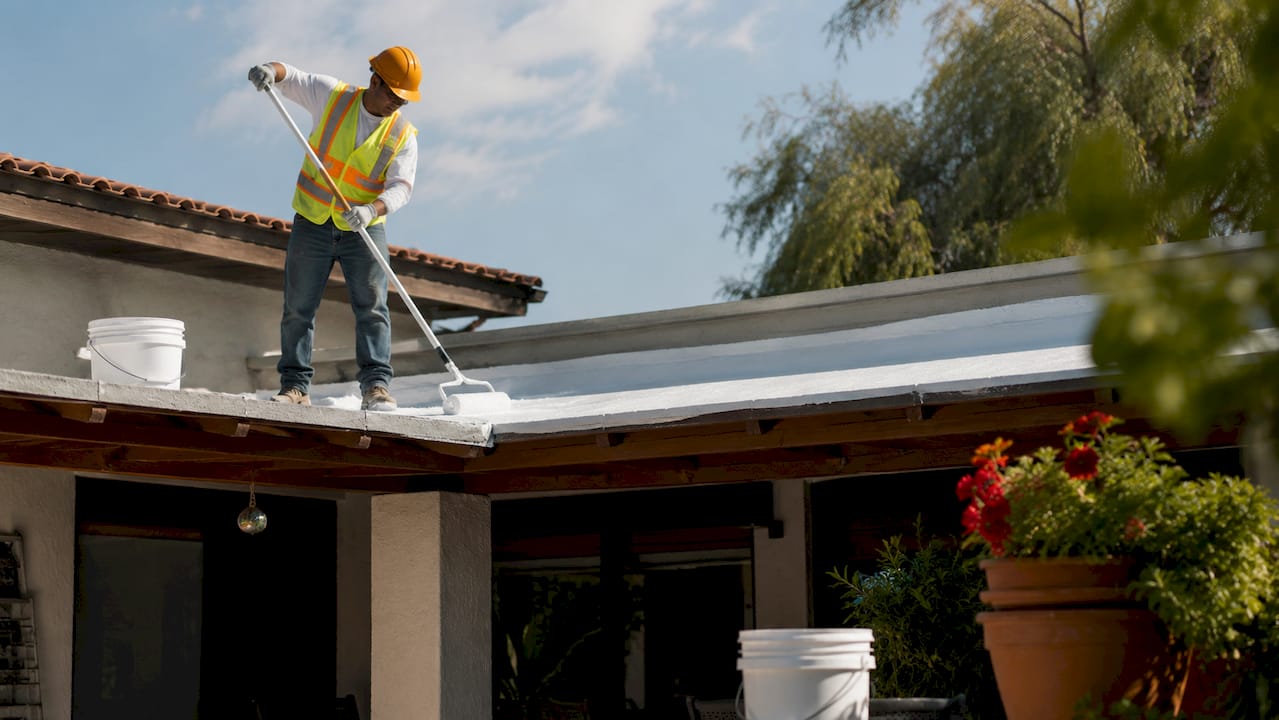
The financial case is equally strong. Roof coatings cost between $1.00 and $6.00 per square foot installed, compared to full replacement costs of $5.00 to $16.00 per square foot. That gap represents 50–70% savings versus replacement, which is a significant line item across a multi-building portfolio.
Beyond cost, coatings deliver several compounding benefits:
- Waterproofing: A coating applied at the correct thickness forms a continuous, joint-free membrane that eliminates the seams and penetrations where leaks typically start.
- UV and thermal protection: Reflective coatings block UV degradation, which is the primary cause of membrane brittleness and cracking over time.
- Energy savings: White reflective coatings reduce cooling costs by up to 30%, a benefit covered in detail in the energy efficiency section below.
- Minimal disruption: Coating application requires no tear-off, no heavy equipment, and no extended building closures. Most commercial projects complete in one to three days.
- Reduced landfill waste: Avoiding tear-off keeps thousands of pounds of roofing material out of landfills, which matters for sustainability reporting.
Pro Tip: Match the coating chemistry to your existing roof substrate before purchasing. Silicone coatings perform best on roofs with standing water exposure, while acrylic coatings work well in low-ponding environments with strong UV exposure. The wrong match reduces adhesion and voids warranties.
Which commercial roofs are good candidates for coatings?
Not every roof qualifies for a coating program. The most important threshold is structural integrity. If more than 25% of the roof area needs repair, coatings lose long-term value and full replacement becomes the more cost-effective path. Coating a failing substrate only delays an inevitable and more expensive problem.
Roofs that do qualify share a common profile: they are structurally sound, largely dry, and composed of materials that accept coating adhesion. The most compatible roof types include:
- TPO and PVC membranes: Single-ply systems accept silicone and acrylic coatings well, provided the surface is clean and free of contamination.
- EPDM (rubber) roofs: These require a primer coat to promote adhesion, but they respond well to silicone-based systems once properly prepared.
- Built-up roofs (BUR): Gravel-surfaced BUR roofs need de-gravel preparation, but the underlying felts bond reliably to elastomeric coatings.
- Metal roofs: Metal panels with minor rust or surface oxidation are excellent coating candidates. Coatings seal seams, stop rust migration, and add reflectivity in one application.
Before any coating is applied, two pre-application steps are non-negotiable. First, an infrared or nuclear moisture survey identifies wet insulation that must be removed. Second, adhesion testing confirms the coating will bond to the existing substrate. Skipping either step is the most common reason coating systems fail prematurely.
Coatings are also subject to code compliance requirements. ASTM standards govern material performance, and the International Building Code (IBC) sets rules for re-roofing that affect whether a coating qualifies as a maintenance action or triggers a permit. Knowing which category applies in your jurisdiction affects both your timeline and your budget.
Pro Tip: Engage a licensed commercial roofing contractor with documented coating experience before committing to a program. A thorough inspection report, including moisture mapping, gives you the data to make a defensible capital decision.
How do roof coatings improve energy efficiency?
Reflective white roof coatings reduce roof surface temperatures by 50–80°F under peak summer conditions. A Phoenix-area roof that reaches 170°F on a clear July afternoon can drop to 110°F after a white coating is applied. That 60-degree reduction directly cuts the heat load transferred into the building below.
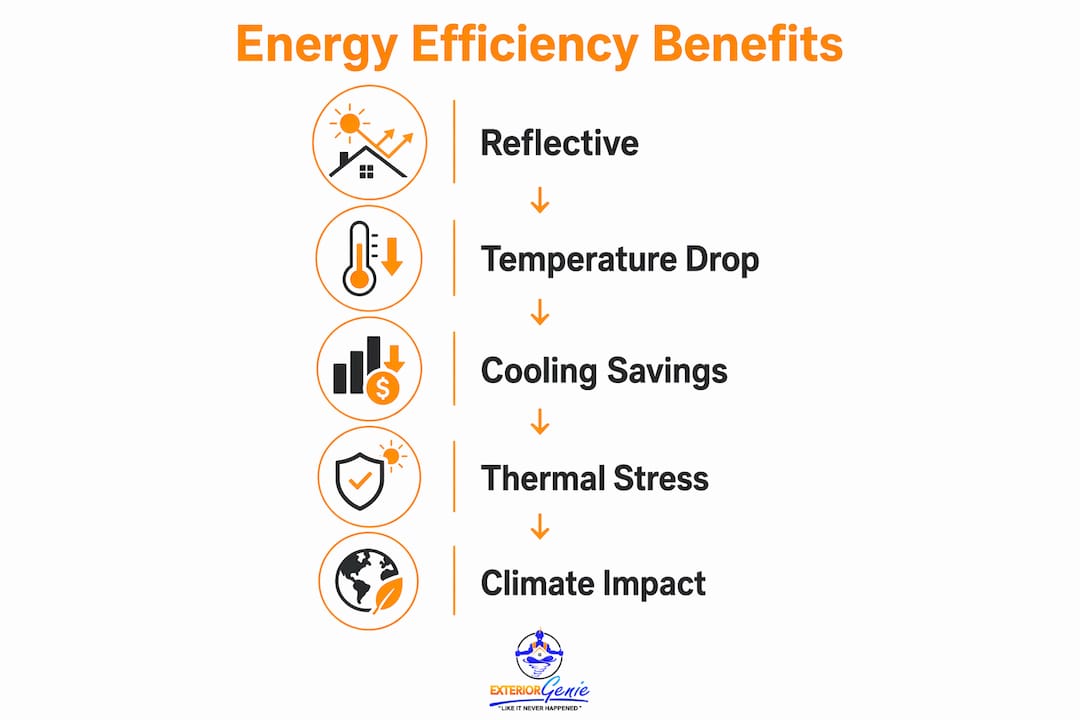
The energy impact is measurable. Reflective coatings decrease peak cooling demand by 10–15% and lower overall cooling costs by up to 30%. For a large commercial building running rooftop HVAC units through a South Carolina summer, that reduction translates to thousands of dollars annually.
The Solar Reflectance Index (SRI) is the key metric for comparing coating performance. A higher SRI means more sunlight reflected and less heat absorbed. White silicone and acrylic coatings typically achieve SRI values above 100, well above the ENERGY STAR threshold of 82 for low-slope commercial roofs.
Reflective coatings also reduce thermal cycling stress on the underlying membrane. Roofs that heat and cool dramatically every day expand and contract, which fatigues seams and accelerates cracking. Keeping surface temperatures lower and more stable extends the physical life of the membrane itself, independent of the waterproofing benefit.
| Coating type | Typical SRI | Surface temp reduction | Cooling cost reduction |
|---|---|---|---|
| White silicone | 100–110 | 60–80°F | Up to 30% |
| White acrylic | 90–105 | 50–70°F | Up to 25% |
| Gray elastomeric | 40–60 | 20–35°F | Up to 10% |
| Unpainted metal (baseline) | 20–40 | Minimal | None |
Climate matters significantly. Buildings in hot, sunny regions like the Southeast and Southwest see the largest energy gains. Buildings in northern climates with long heating seasons may see smaller net savings, since a reflective roof also reduces passive solar heat gain in winter.
What does a roof coating program cost?
Roof coatings cost between $1.00 and $6.00 per square foot installed, with the price varying by coating type. Acrylic systems run $2.50–$3.50 per square foot. Silicone systems run $3.50–$5.00 per square foot. Polyurethane systems, which offer the highest abrasion resistance, run $4.00–$6.00 per square foot. Full roof replacement, by contrast, costs $5.00 to $16.00 per square foot depending on the system and tear-off requirements.
The tax treatment adds another financial advantage. Roof coatings classified as maintenance can be fully expensed in the year of application under IRS rules. A full replacement, by contrast, must be depreciated over 39 years as a capital improvement. For a $200,000 coating project, that difference in tax treatment is material.
The hidden cost savings compound the direct savings:
- No tear-off disposal fees: Landfill tipping fees for old roofing materials can add $1.00–$2.00 per square foot to replacement costs.
- Minimal tenant disruption: No heavy equipment, no extended closures, and no noise from demolition means tenants stay productive and leases stay intact.
- Deferred replacement capital: Every year a coating extends roof life is a year that replacement capital earns returns elsewhere in the portfolio.
Property managers overseeing multiple buildings gain an additional advantage. Coating budgets stretch further than replacement budgets. A portfolio manager who would otherwise replace one roof per year can coat three or four roofs in the same budget cycle, protecting more assets simultaneously.
How should facility managers implement a coating program?
A coating program succeeds or fails in the planning phase. Follow these steps to build one that delivers full value:
- Schedule a professional roof inspection. A licensed contractor performs a visual inspection, moisture survey, and adhesion test to determine whether each roof qualifies. Document findings in writing.
- Repair the substrate first. Address all identified defects before coating. Coating over damaged areas traps moisture and accelerates failure. Repairs must cover less than 25% of the total roof area for coating to remain the right economic choice.
- Select the coating based on roof type and climate. Match chemistry to substrate and environment. Review commercial roofing material comparisons to understand which systems accept which coatings.
- Verify contractor credentials. Require proof of licensing, insurance, and manufacturer certification for the specific coating product. Manufacturer certification often determines warranty eligibility.
- Schedule around tenant activity. Plan application during low-occupancy periods. Most coatings require 24–48 hours of dry weather after application to cure properly.
- Build a recoating schedule into the maintenance plan. A coating applied today needs recoating in 10–15 years. Budget for it now so the decision is never deferred until the roof is already failing.
Understanding why commercial roofs need maintenance as a system, not just a reactive repair cycle, is what separates facility managers who protect asset value from those who constantly chase emergencies.
Key Takeaways
Roof coatings are the most cost-effective tool available to facility managers for extending commercial roof life, cutting energy costs, and deferring replacement capital by 10–20 years.
| Point | Details |
|---|---|
| Life extension | A properly applied coating extends a sound roof's life by 10–20 years with periodic recoating. |
| Cost savings | Coatings cost $1.00–$6.00 per sq ft versus $5.00–$16.00 for full replacement, saving 50–70%. |
| Energy efficiency | Reflective coatings cut cooling costs by up to 30% by reducing surface temps by 50–80°F. |
| Tax advantage | Coatings are expensed fully in the application year, unlike replacements depreciated over 39 years. |
| Eligibility threshold | Roofs with more than 25% damaged area need replacement, not coating. |
What I've learned after years of watching facility managers get this wrong
The most common mistake I see is facility managers treating roof coatings as a last resort. They wait until the roof is leaking in three places, the insulation is saturated, and the membrane is cracked before calling for a coating assessment. At that point, a coating cannot save them. The roof needs replacement, and the coating conversation is over before it starts.
Experts are clear on this point: coatings only restore structurally sound, dry roofs. Coating a failed roof wastes money and creates liability. The window for coating is the five to ten years before a roof reaches the end of its useful life, not after it has already failed.
The second mistake is treating a coating as a one-time fix rather than the first step in a long-term maintenance program. A coating applied without a recoating schedule in place is a budget decision made without a plan. The roof will need attention again in a decade. If that recoating is not budgeted, the facility manager ends up back at square one.
What I recommend is simple: inspect every commercial roof in your portfolio on a two-year cycle. Document condition scores. Flag roofs that are 10–15 years old and structurally sound as coating candidates. Build the coating cost into the five-year capital plan before the roof becomes urgent. That approach keeps you ahead of the problem and gives you the budget flexibility to coat multiple buildings in the same cycle rather than scrambling to replace one.
Property managers who stretch budgets across multiple buildings with coatings consistently outperform those who manage roofs reactively. The math is not complicated. The discipline to act before the crisis is the hard part.
— Ebben
Exteriorgenie's commercial roofing services in Lexington, SC
Exteriorgenie is a veteran-owned commercial roofing company serving Lexington, SC, with 25 years of field experience and HAAG-certified inspectors on staff. Whether your building needs a full coating assessment, substrate repairs before application, or storm damage addressed before a coating program can begin, Exteriorgenie delivers transparent pricing and documented workmanship.

Facility managers working with tight capital budgets can also explore roofing financing options that make coating and repair projects manageable without deferring critical maintenance. Contact Exteriorgenie for a professional roof inspection and a customized quote built around your building's actual condition, not a generic estimate.
FAQ
What is the role of roof coating in commercial buildings?
Roof coating protects, extends, and improves existing commercial roofing systems by adding a durable, waterproof, and reflective membrane. It reduces wear, prevents leaks, and cuts energy costs without requiring full roof replacement.
How long does a commercial roof coating last?
A properly applied coating lasts 10–15 years before recoating is needed. With periodic recoating, the underlying roof system can be maintained indefinitely, deferring full replacement for decades.
What types of commercial roofs can be coated?
TPO, EPDM, built-up roofs, and metal roofs are all compatible with commercial coating systems. Each substrate requires specific surface preparation and coating chemistry to achieve proper adhesion and warranty coverage.
How much does commercial roof coating cost compared to replacement?
Roof coatings cost $1.00–$6.00 per square foot installed, while full replacement runs $5.00–$16.00 per square foot. That difference represents 50–70% savings, plus the tax advantage of full expensing in the application year.
When is a roof coating not the right choice?
A coating is not appropriate when more than 25% of the roof area is damaged or when the substrate holds significant moisture. In those cases, full replacement delivers better long-term value than coating over a compromised system.