
Commercial roofing contractor credentials are the licenses, insurance policies, and manufacturer certifications that prove a contractor is legally authorized, financially protected, and technically qualified to work on your roof. Without verified credentials, you risk voided warranties, uninsured liability, and substandard work that costs far more to fix than it saved upfront. The industry standard term for this set of qualifications is "contractor credentialing," and it covers everything from state roofing licenses to elite designations like GAF Master Elite and Owens Corning Platinum Preferred. Knowing what to look for before you sign a contract is the single most effective way to protect your investment.
1. What licensing and insurance are required for commercial roofing contractors?
Roofing contractor licensing varies significantly by state, and that variation creates real risk for property owners who assume every contractor is equally regulated. Roughly 20 states delegate roofing license authority to local counties or municipalities rather than maintaining a state-level license. That means a contractor working in one county may face stricter requirements than one working just across the county line.
States that do issue roofing licenses use specific classifications. California uses the Class C-39 Roofing Contractor license, administered by the Contractors State License Board. Florida requires a Roofing Contractor license through the Department of Business and Professional Regulation (DBPR). These exams test knowledge of building codes, safety practices, and installation methods specific to roofing.
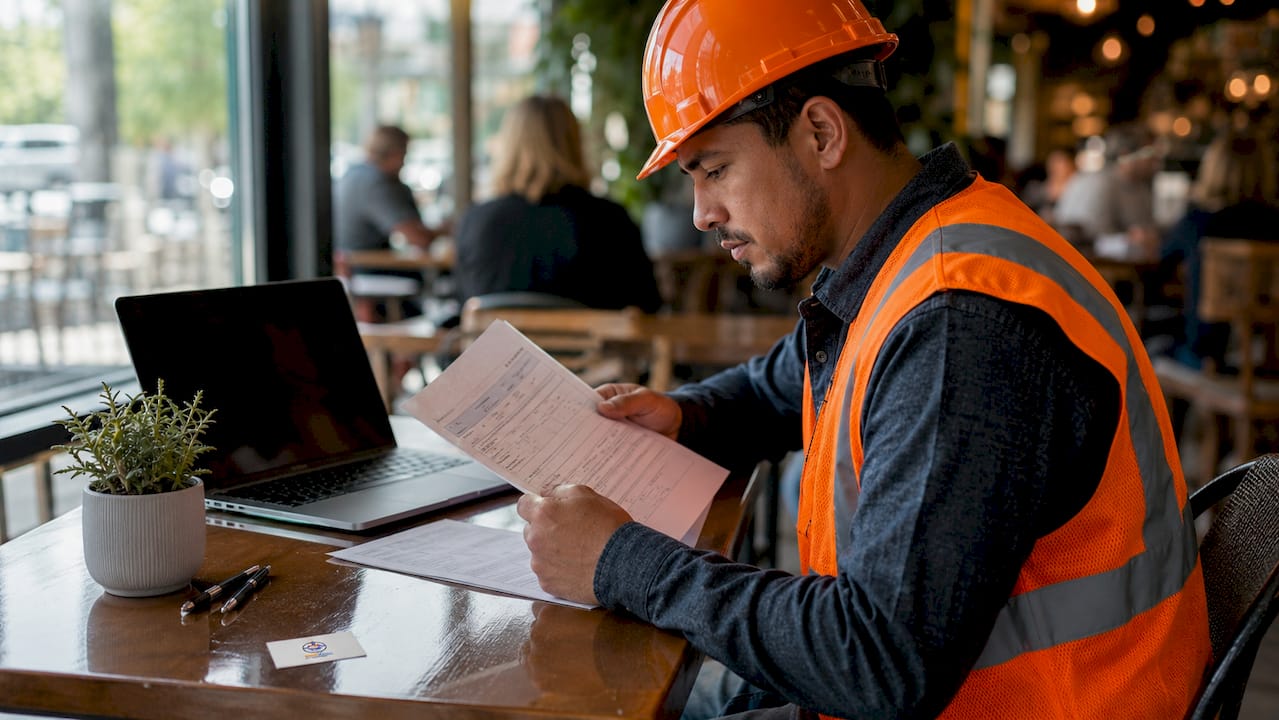
Insurance requirements are equally non-negotiable. Standard commercial roofing licenses require general liability coverage between $1 million and $2 million, plus workers' compensation for all employees. General liability protects your property if a contractor causes damage. Workers' compensation protects you from lawsuits if a worker is injured on your roof.
Pro Tip: Always request a certificate of insurance directly from the contractor's insurer, not just a copy from the contractor. Then call the insurer to confirm the policy is active and the coverage amounts are current.
To verify a license, visit your state's contractor licensing board website and search by the contractor's name or license number. If your state delegates to local authorities, contact your county building department directly.
2. Which manufacturer certifications indicate top-quality commercial roofing contractors?
Manufacturer certifications are the clearest signal of technical excellence in the roofing industry. Fewer than 1–2% of contractors nationwide achieve top-tier manufacturer statuses like GAF Master Elite or Owens Corning Platinum Preferred. That scarcity matters because these programs are not open applications. Manufacturers invite contractors based on installation volume, quality audits, customer satisfaction scores, and ongoing training completion.
GAF Master Elite is one of the most recognized designations in commercial roofing. Contractors holding this status must maintain proper licensing, carry adequate insurance, and demonstrate a strong reputation in their market. GAF conducts ongoing quality checks to ensure Master Elite contractors stay current. Ongoing training through programs like GAF Master Elite keeps contractors up to date with evolving roofing technology, which directly reduces the risk of outdated installation methods on your project.
Owens Corning Platinum Preferred operates on a similar model. CertainTeed offers the Select ShingleMaster designation, and GAF also has a Gold Elite tier for contractors who meet strong but slightly less demanding criteria than Master Elite. Each tier comes with different warranty access levels.
Manufacturer certifications are not just marketing labels. They are objective benchmarks that confirm a contractor has the specialized expertise needed for complex commercial roofing work.
The warranty benefit is concrete. Certified contractors unlock the highest warranty tiers from manufacturers. A non-certified contractor may install the same product but can only offer a standard warranty. A GAF Master Elite contractor can offer the GAF Golden Pledge warranty, which covers both materials and workmanship for up to 25 years on qualifying systems.
- GAF Master Elite: Requires licensing, insurance, strong reputation, and ongoing training
- Owens Corning Platinum Preferred: Requires installation volume benchmarks and customer satisfaction standards
- CertainTeed Select ShingleMaster: Requires product knowledge testing and installation quality verification
- GAF Gold Elite: Entry point to GAF's tiered certification program with solid warranty access
3. How to verify and compare commercial roofing contractor credentials
Verifying credentials takes less than 30 minutes and protects you from the most common contractor fraud scenarios. The process has four clear steps.
First, ask every contractor for their license number, general liability certificate, workers' compensation certificate, and any manufacturer certification IDs. Reputable contractors share credentials without hesitation. Reluctance to provide documentation is a direct red flag.
Second, cross-check the license number with your state or local licensing board. Most boards have a public online search tool. Confirm the license is active, not expired, and covers commercial roofing specifically.
Third, call the insurance carrier listed on the certificate to confirm the policy is current. Certificates can be backdated or altered. A quick phone call eliminates that risk.
Fourth, validate manufacturer certifications directly with the manufacturer. GAF, Owens Corning, and CertainTeed all maintain contractor locator tools on their websites. Search by zip code or contractor name to confirm the designation is current.
| Credential Type | Purpose | Verification Resource |
|---|---|---|
| State roofing license | Legal authority to perform roofing work | State contractor licensing board website |
| General liability insurance | Covers property damage caused by contractor | Contractor's insurance carrier (call directly) |
| Workers' compensation | Covers worker injuries on your property | Contractor's insurance carrier (call directly) |
| Manufacturer certification | Confirms technical expertise and warranty access | Manufacturer's contractor locator tool online |
| Local/county license | Required in states without state-level licensing | County building department |
Pro Tip: When comparing bids, create a simple spreadsheet listing each contractor's license number, insurance expiration dates, and certification tier. Contractors who cannot fill every column should not make your shortlist.
Red flags to watch for include contractors who offer only verbal assurances, certificates with expired dates, and manufacturer certifications that do not appear in the manufacturer's own database. You can also vet local roofing companies using a structured checklist that covers reputation, reviews, and documentation together.
4. When specialized credentials like roof certifications and RRC evaluations matter
Not every commercial roofing situation calls for the same set of credentials. Some projects require specialized qualifications beyond standard licensing and manufacturer certifications.
A roof certification is not the same as a roof inspection. Roof certification is a formal document confirming a roof meets specific performance standards, and it is commonly required by insurers or buyers during real estate transactions. An inspection is the evaluation process. Certification is the written conclusion that the roof complies with defined criteria. If you are purchasing a commercial property or filing an insurance claim, a certified roof report carries legal and financial weight that a standard inspection report does not.
Manufacturer warranties explicitly require that repairs and inspections be performed by certified professionals. Using a non-certified contractor for a repair on a warranted roof can void the entire warranty. That is a significant financial exposure on a commercial system that may have cost hundreds of thousands of dollars to install.
For high-stakes assessments, a Registered Roof Consultant (RRC) provides the highest level of independent expertise. The RRC credential is issued by IIBEC (International Institute of Building Enclosure Consultants). RRCs provide independent roof evaluations without any contractor affiliation, which eliminates conflicts of interest. An RRC is the right choice when you need an unbiased condition report before a major purchase, a large insurance claim, or a capital planning decision.
- Pre-purchase due diligence: Hire an RRC to assess roof condition before closing on a commercial property.
- Insurance claims: Request a formal roof certification to support your claim with documented compliance evidence.
- Warranty repairs: Confirm the contractor holds the manufacturer certification required to keep your warranty valid.
- Long-term maintenance planning: Use an RRC evaluation to build a multi-year maintenance and replacement budget.
Pro Tip: Ask your insurance adjuster whether a roof certification from a manufacturer-certified inspector will strengthen your claim. In many cases, it does.
5. How combined credentials affect project outcomes and warranty coverage
The strongest commercial roofing outcomes come from contractors who hold multiple credentials simultaneously. A contractor with a valid state license, active insurance, and a GAF Master Elite designation is not just checking boxes. Each credential addresses a different category of risk.
Licensing confirms legal authority. Insurance transfers financial risk away from you. Manufacturer certification confirms technical skill and unlocks the best warranty products available. When all three are present, you have legal, financial, and technical protection working together. Remove any one layer and a gap opens.
A certified contractor credential is an objective benchmark that filters out inexperienced providers. Contractors who invest in maintaining multiple high-tier credentials also tend to invest in their crews, their equipment, and their quality control processes. The credential maintenance process itself, which includes audits, training, and customer satisfaction reviews, creates accountability that benefits every project.
- Contractors holding both GAF Master Elite and Owens Corning Platinum Preferred simultaneously are exceptionally rare and represent the top tier of the industry.
- Ongoing training requirements built into certification programs mean these contractors stay current with new materials and installation methods.
- Quality audits required for certification renewal create a built-in accountability loop that benefits every client.
- Multiple certifications often translate to access to the strongest warranty products from more than one manufacturer, giving you more options.
For commercial roof replacement planning, credential verification should happen before you request a single bid. You can review a full commercial roof replacement guide to understand how credentials fit into the broader planning process.
Key takeaways
Verified commercial roofing contractor credentials, including active licenses, adequate insurance, and manufacturer certifications, are the most reliable way to protect your property, your warranty, and your budget.
| Point | Details |
|---|---|
| Licensing varies by state | About 20 states delegate licensing to local authorities, so always verify at the right level. |
| Insurance minimums matter | Require $1M–$2M in general liability and active workers' compensation before any work begins. |
| Top certifications are rare | Fewer than 1–2% of contractors hold GAF Master Elite or Owens Corning Platinum Preferred status. |
| Certifications protect warranties | Manufacturer warranties require certified contractors for repairs and inspections to stay valid. |
| RRCs offer unbiased assessments | A Registered Roof Consultant from IIBEC provides independent evaluations for high-stakes decisions. |
What 25 years of roofing taught me about credentials
Most property owners ask about price first and credentials second. That order is backwards, and it costs people money every year.
I have seen projects where a contractor showed up with a photocopied insurance certificate that turned out to be expired. The property owner had no recourse when a worker was injured on site. The lawsuit was expensive and entirely avoidable. A two-minute phone call to the insurance carrier would have caught it.
Manufacturer certifications tell me something price cannot. When a contractor holds GAF Master Elite status, I know they have been vetted by a third party with real financial skin in the game. GAF does not want warranty claims from bad installations. Their certification program is self-interested quality control, and that self-interest works in your favor.
The contractors I trust most are the ones who hand over their license number, insurance certificate, and certification IDs before I even ask. Transparency is not a courtesy in this industry. It is a baseline expectation. Any contractor who hesitates, deflects, or says "I'll get that to you later" is telling you something important about how they operate.
My honest advice: treat credential verification the same way you treat a background check. It is not optional, it is not rude, and it is not a sign of distrust. It is the minimum standard for any commercial roofing project.
— Ebben
Exteriorgenie's credentialed commercial roofing services in Lexington, SC
Exteriorgenie is a veteran-owned roofing company with 25 years of experience serving homeowners and business owners across Lexington, SC. The team holds HAAG certification for roof inspections and brings military-grade accountability to every project, from routine commercial work to emergency repairs.
Exteriorgenie offers 24/7 emergency response and personalized insurance claim assistance backed by certified inspectors who know how to document damage correctly. If budget is a concern, roofing financing options are available to help you move forward without delay. Contact Exteriorgenie to confirm credentials, get a transparent quote, and work with a team that puts documentation and quality first on every job.
FAQ
What credentials should a commercial roofing contractor have?
A qualified commercial roofing contractor should hold a valid state or local roofing license, general liability insurance of at least $1 million, workers' compensation coverage, and ideally a manufacturer certification like GAF Master Elite or Owens Corning Platinum Preferred.
How do I verify a roofing contractor's license?
Search your state's contractor licensing board website using the contractor's name or license number. If your state delegates licensing locally, contact your county building department for the correct verification process.
What is the difference between a roof inspection and a roof certification?
A roof inspection is the evaluation process. A roof certification is a formal document confirming the roof meets specific performance standards, and it is commonly required for insurance claims or real estate transactions.
Why does manufacturer certification matter for warranties?
Manufacturer warranties require that repairs and inspections be performed by certified contractors to remain valid. Using a non-certified contractor for warranty work can void coverage on the entire roofing system.
What is an RRC and when do I need one?
An RRC, or Registered Roof Consultant, is a credential issued by IIBEC that qualifies an independent expert to assess roof condition without contractor conflicts of interest. You need an RRC for pre-purchase due diligence, large insurance claims, or major capital planning decisions.