
Commercial roofing material comparisons are the foundation of every smart roofing decision a property owner or building manager makes. The right material affects your building's durability, energy costs, and total ownership expense over decades. Key evaluation criteria include installed cost per square foot, expected lifespan, chemical and weather resistance, and maintenance requirements. This guide covers the top commercial roofing options using current cost and lifespan data so you can match the right system to your building's specific needs.
1. What are the top commercial roofing materials and how do they compare?
The commercial roofing industry recognizes seven primary systems for low-slope and flat roofs. Each carries a distinct cost range, lifespan, and set of strengths. Understanding these differences is the starting point for any serious roofing material comparison.
| Material | Installed Cost (per sq ft) | Lifespan | Best For |
|---|---|---|---|
| TPO | $5–$9 | 15–25 years | Energy efficiency, budget builds |
| PVC | $6–$12 | 20–30 years | Chemical exposure environments |
| EPDM | $4–$8 | 20–30 years | Cold climates, low maintenance |
| Modified Bitumen | $6–$10 | 15–25 years | High foot traffic roofs |
| BUR (Built-Up Roofing) | $5–$10 | 15–30 years | Redundancy and durability |
| Spray Polyurethane Foam | $4–$7 | 15–20 years | Irregular roof shapes |
| Standing Seam Metal | $10–$18 | 30–60 years | Highest long-term ROI |
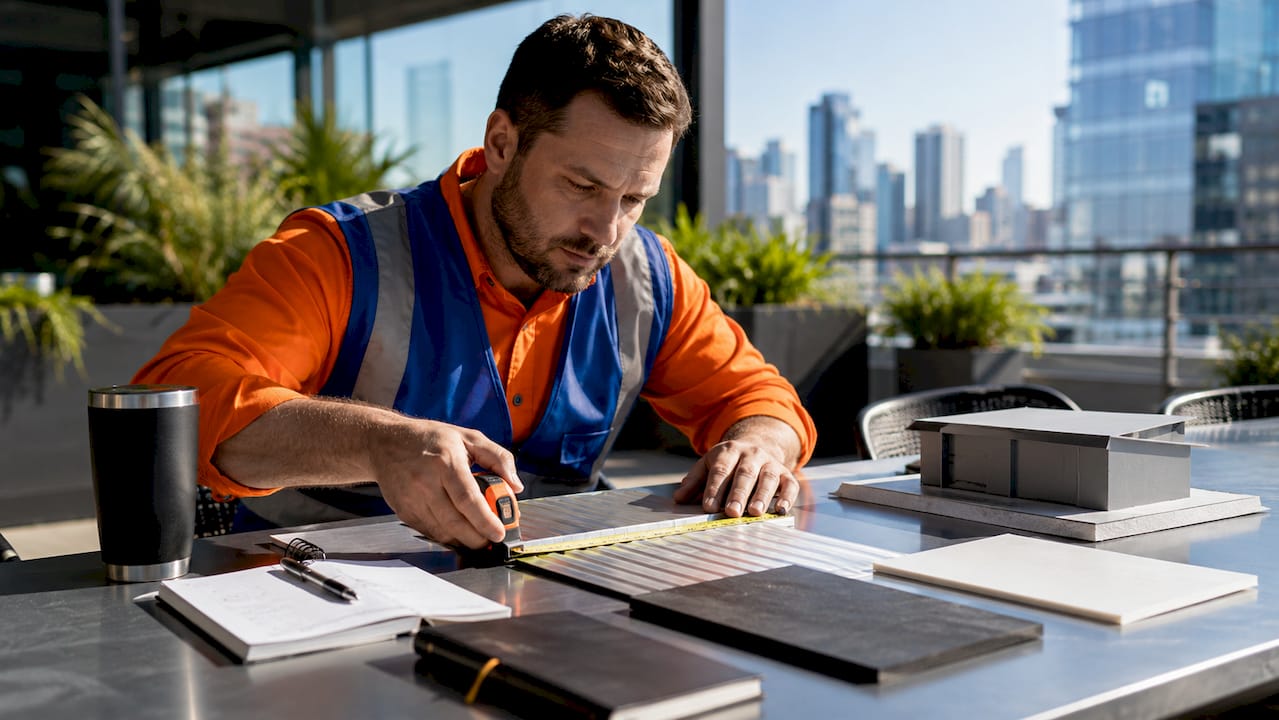
Metal roofing delivers the highest long-term ROI in industrial settings because of its 30–60 year lifespan, despite carrying the highest upfront installation cost. That gap between initial price and total ownership cost is exactly why life-cycle thinking matters more than sticker price.
Pro Tip: Calculate cost per year of service, not just installed price. A $10/sq ft metal roof lasting 50 years costs $0.20/sq ft per year. A $6/sq ft modified bitumen roof lasting 20 years costs $0.30/sq ft per year.
2. How chemical and environmental exposures influence material choice
Your building's rooftop environment is as important as your zip code when selecting a material. A restaurant, a chemical plant, and a warehouse each create very different conditions for a roof membrane.
- Chemical resistance: PVC outperforms TPO in buildings with chemical exposure. TPO often degrades within 5–10 years under grease or chemical contact, while PVC maintains integrity for 20–30 years in the same conditions. Restaurant rooftops with grease exhaust vents are the clearest example of where PVC earns its higher price.
- Foot traffic resilience: Roofs with heavy foot traffic need puncture-resistant materials. Modified bitumen handles regular maintenance foot traffic far better than thin single-ply membranes, making it the right call for buildings with rooftop HVAC equipment requiring frequent service.
- Energy efficiency in hot climates: White reflective TPO and PVC membranes lower cooling costs significantly in hot climates like South Carolina, Georgia, and Florida. Black EPDM absorbs heat and increases cooling loads, making it a poor fit for buildings in the Gulf Coast region without additional insulation.
- Cold climate performance: EPDM stays flexible in freezing temperatures, which prevents cracking and membrane failure during freeze-thaw cycles. It is the preferred material in northern states where temperature swings are severe.
- Wind uplift: Single-ply membranes like TPO and PVC with heat-welded seams perform well in high-wind conditions when installed correctly. Adhesive-bonded systems carry more risk of seam separation in sustained wind events.
3. What installation and maintenance factors should you consider?
Material choice alone does not determine how long your roof lasts. Installation quality and maintenance influence roof performance as much as the membrane itself. Poor installation can cause failure within 5–10 years regardless of which material you choose.
Seam method is one of the most consequential installation decisions. Heat-welded seams, used in TPO and PVC systems, create a bond that is often stronger than the membrane itself. Adhesive-bonded seams, common in EPDM, are more vulnerable to peeling over time, especially around penetrations like HVAC curbs, drains, and pipe boots.
- Penetration detailing: Improper flashing around HVAC units, skylights, and drains is the leading cause of premature roof failure. Any commercial roofing contractor you hire should demonstrate specific experience with your roof's penetration count and complexity.
- Inspection frequency: Annual inspections catch small issues before they become expensive failures. Buildings in storm-prone areas like Lexington, SC benefit from post-storm inspections as well.
- Maintenance cycles: TPO and PVC require minimal maintenance beyond keeping drains clear and seams inspected. Modified bitumen and BUR systems benefit from periodic recoating to extend service life.
- Warranty protection: Heat-welded repairs on TPO maintain manufacturer warranties. Adhesive patches on EPDM may void coverage if not applied by a certified installer.
Pro Tip: Request a written maintenance plan from your installer before signing any contract. A contractor who cannot provide one is signaling that post-installation support is not part of their service model.
4. Which materials excel in emergency repairs and long-term ROI?
Emergency repair performance separates materials in ways that standard comparisons rarely capture. When a storm tears open a membrane or a drain backs up and floods a roof deck, repair speed and reliability become the deciding factors.
TPO allows permanent heat-welded patches in 5–10 minutes, while EPDM patches require adhesive bonding that can take up to an hour to cure. That time difference directly affects how long your building interior is exposed to water intrusion. For commercial properties with sensitive inventory, equipment, or tenant operations, TPO's faster repair window has real financial value.
Repair costs also differ between systems. TPO emergency repairs run $8–$14 per square foot, while EPDM repairs cost $7–$12 per square foot with longer curing times. The lower material cost of EPDM repairs does not always offset the extended exposure time and potential for secondary damage.
| Material | Emergency Repair Method | Repair Speed | Warranty Impact |
|---|---|---|---|
| TPO | Heat-welded patch | 5–10 minutes | Maintained if certified |
| EPDM | Adhesive patch | Up to 1 hour | Risk of void if uncertified |
| PVC | Heat-welded patch | 5–10 minutes | Maintained if certified |
| Modified Bitumen | Torch or cold-applied patch | 30–60 minutes | Varies by manufacturer |
| Standing Seam Metal | Panel replacement | Hours to days | Typically maintained |
For large-scale storm damage, professional emergency enclosures outperform tarps in both protection quality and insurance documentation value. Enclosures reduce secondary damage risk and provide a defensible record for insurance claims, which matters significantly for commercial properties with high-value contents.
Standing seam metal delivers the strongest long-term ROI of any system. Its 30–60 year lifespan means a building owner who installs metal today may never replace that roof again. For owners with a long ownership horizon, that calculation changes the entire budget conversation.
For a deeper look at commercial roof replacement timing and cost planning, the factors above apply directly to deciding when to repair versus replace.
Key Takeaways
The best commercial roofing material is the one that matches your building's use, climate, and ownership timeline, not the one with the lowest installed price.
| Point | Details |
|---|---|
| Life-cycle cost beats sticker price | Calculate cost per year of service to compare materials accurately across their full lifespan. |
| Chemical exposure demands PVC | Buildings with grease or chemical rooftop exposure should choose PVC over TPO to avoid premature failure. |
| Installation quality is non-negotiable | Poor detailing around penetrations causes failure within 5–10 years regardless of material quality. |
| TPO wins on emergency repair speed | Heat-welded TPO patches take 5–10 minutes versus up to an hour for EPDM adhesive repairs. |
| Metal delivers the highest long-term ROI | A 30–60 year lifespan makes standing seam metal the most cost-effective choice for long-term owners. |
What I've learned from 25 years of commercial roofing decisions
The single most common mistake I see property owners make is treating roofing as a commodity purchase. They get three bids, pick the lowest number, and assume the materials are interchangeable. They are not.
A warehouse owner in a hot, humid climate like South Carolina who installs black EPDM to save $1 per square foot upfront will spend more on cooling costs within three years than the price difference ever justified. A restaurant owner who chooses TPO over PVC because it is cheaper will face membrane degradation from grease exhaust within a decade. The material has to match the building's actual operating environment, not just its roof slope.
What I have also seen is that the contractor matters as much as the material. A perfectly specified PVC system installed by a crew with no experience heat-welding seams around complex penetrations will fail faster than a well-installed TPO system. Credentials like HAAG certification and documented commercial installation experience are not marketing language. They are the difference between a roof that performs and one that becomes a recurring expense.
My honest advice: before you finalize any material decision, ask your contractor to walk you through the life-cycle cost calculation, not just the installed price. If they cannot do that, find someone who can.
— Ebben
Exteriorgenie's commercial roofing services for Lexington, SC property owners
Choosing the right roofing material is only half the decision. The other half is finding a contractor with the experience to install it correctly and the infrastructure to support you when something goes wrong.
Exteriorgenie is a veteran-owned roofing company with 25 years of commercial and residential experience in Lexington, SC. The team includes HAAG-certified inspectors who handle insurance claims directly, so you are not navigating that process alone. Flexible financing options are available to help you move forward without delaying a project that protects your building and your tenants. Exteriorgenie also provides 24/7 emergency repair response, which matters when a storm does not wait for business hours. Contact Exteriorgenie for a consultation and get a clear, transparent assessment of your building's roofing needs.
FAQ
What is the longest-lasting commercial roofing material?
Standing seam metal roofing lasts 30–60 years, making it the most durable commercial option available. It carries the highest installed cost but delivers the strongest return for long-term building owners.
Is TPO or EPDM better for commercial roofs?
TPO is better for hot climates and buildings that need fast emergency repairs, while EPDM performs better in cold climates. TPO's heat-welded seams also maintain manufacturer warranties more reliably than EPDM's adhesive patches.
How much does commercial roofing cost per square foot?
Installed costs range from $4–$7 per square foot for spray polyurethane foam to $10–$18 per square foot for standing seam metal. The right budget depends on your material choice, roof complexity, and regional labor rates.
Why does installation quality matter as much as material choice?
Poor installation can cause roof failure within 5–10 years regardless of material quality. Improper seam welding and inadequate flashing around penetrations are the two most common causes of premature commercial roof failure.
When should I choose PVC over TPO for a commercial building?
Choose PVC when your building has rooftop chemical exposure, such as grease exhaust from restaurant ventilation. PVC resists chemical degradation for 20–30 years in conditions where TPO can fail within 5–10 years.