

Quality roof installation is defined as a complete, system-based process where deck preparation, certified materials, and precise workmanship combine to protect a home for decades. The best examples of quality roof installations share three non-negotiable traits: a thorough deck inspection after full tear-off, manufacturer-compliant underlayment and flashing, and balanced attic ventilation. Industry bodies like the National Roofing Contractors Association (NRCA) and certification programs like FORTIFIED Roof set the benchmarks that separate lasting work from short-term fixes. Knowing what those benchmarks look like in practice gives you the power to evaluate any contractor's proposal before a single shingle goes down.
1. Examples of quality roof installations starting with full tear-off
Full tear-off is the first marker of a quality installation. Building codes limit residential roofs to two shingle layers, and most experienced contractors recommend tear-off even when a second layer is technically allowed. Skipping tear-off hides the deck condition and sets up future failures.
Overlays add 2–4 pounds per square foot of dead weight and trap moisture against the deck boards. That trapped moisture accelerates wood rot in ways that no shingle upgrade can fix. A quality project removes everything down to bare wood before any new material touches the roof.
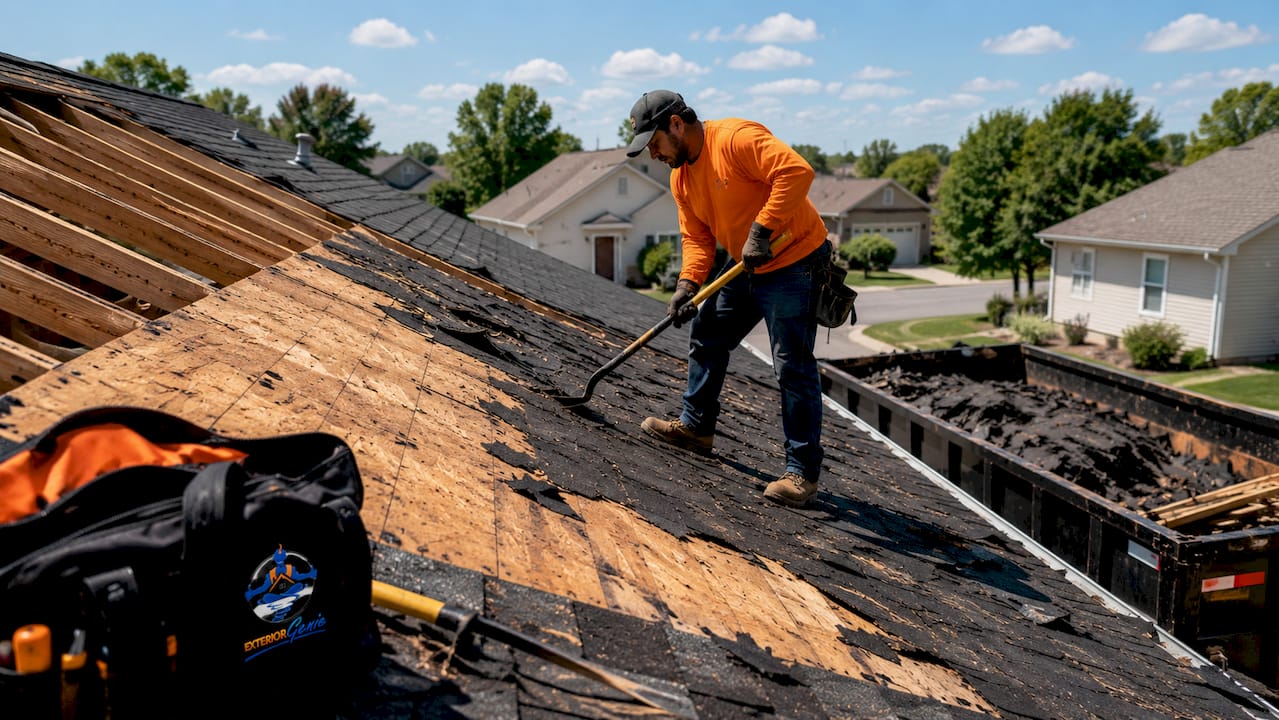
After tear-off, the deck inspection begins. Thorough deck inspection after full tear-off is the most critical step in any quality installation because it catches hidden wood rot and fastening deficiencies before new materials go on. Rushing this phase causes future failures regardless of shingle quality.
What a quality tear-off and deck prep phase looks like in practice:
- All existing shingles, underlayment, and felt paper removed to bare decking
- Every board checked for soft spots, delamination, and nail pops
- Damaged or rotted sections replaced with matching OSB or plywood before proceeding
- Deck surface swept clean and inspected for proper fastening into rafters
- Drip edge installed along eaves before underlayment application begins
Pro Tip: Ask your contractor to photograph the bare deck before underlayment goes down. That photo record proves the inspection happened and protects you if warranty questions arise later.
You can read more about when full replacement is needed and how the tear-off process works step by step.
2. Standing seam metal roofs with concealed fasteners
Standing seam metal roofing is one of the clearest high-quality roofing examples available to homeowners today. Standing seam metal roofs offer lifespans that often exceed 50 years, and concealed fasteners eliminate the leak and corrosion points common in exposed screw-down systems. That combination of longevity and watertight design makes it a benchmark for craftsmanship.
"Symmetry at hips, valleys, and low-profile flashing are the visual and functional proof of quality in a standing seam installation. Uniform panel alignment and clean flashing transitions signal that a crew handled complex geometry correctly, not just the flat runs."
Quality indicators to look for in a standing seam installation:
- Panels run parallel with no visible bowing or misalignment from the ground
- Hips and ridges show clean, symmetrical seams with no exposed fasteners
- Valley flashing sits flush with no gaps or visible sealant beads
- Penetrations like chimneys and vents have custom-fabricated collars, not generic boots
- Panel color and finish are consistent with no visible patching or mismatched sections
Standing seam performs especially well in hot or wet climates where thermal expansion and rain exposure stress exposed-fastener systems. The panels expand and contract through floating clips, which prevents the fastener holes from enlarging over time. A properly installed standing seam roof in South Carolina's heat and storm season is a long-term investment, not a short-term repair.
3. Luxury synthetic and composite roofing systems
Luxury synthetic roofing systems represent a category where installation quality is just as important as material quality. Products like Brava Cedar Shake and DaVinci Slate are composite materials that resist warp, rot, and UV degradation unlike natural cedar or slate. They deliver the look of premium natural materials with performance warranties that natural products cannot match.
A quality synthetic installation goes far beyond laying panels. The full system includes:
- Ice and water shield applied at all eaves, valleys, and penetrations before any panel goes down
- Synthetic underlayment installed with correct overlap per manufacturer specs
- Panels fastened in the designated nailing zone using ring shank nails for holding power
- Step flashing woven with each course at wall intersections, not applied as a single strip after the fact
- Copper accents and drip edge integrated at rakes and eaves for long-term corrosion resistance
- Ridge cap installed with proper ventilation clearance to allow attic airflow
Manufacturer certification matters here. Pre-installation verified certification protects both the material warranty and the workmanship warranty. When a certified installer completes the job, the homeowner receives dual warranty coverage: one from the manufacturer and one from the contractor. That dual protection is a concrete sign of a quality project.
Pro Tip: Before signing a contract for luxury synthetic roofing, ask the contractor to show their manufacturer certification card. An uncertified installer voids the product warranty on the day the job ends.
4. Key best practices visible in every quality installation
Long-term roofing performance depends on mastering fundamental details beyond material selection. Ventilation, underlayment application, nailing patterns, and flashing sequencing are the details that separate a quality installation from one that fails in five years.
Attic ventilation
Balanced attic ventilation is calculated at 1 square foot of net free area per 150 square feet of attic space. Without that balance, heat builds up in summer and ice dams form in winter. Both conditions shorten shingle life and void manufacturer warranties.
Underlayment and fasteners
Synthetic underlayment outperforms felt paper in tear resistance and moisture resistance. Correct overlap, typically 4–6 inches on horizontal seams and 6–12 inches at vertical seams, keeps water from wicking under the material. Fasteners placed outside the manufacturer's nailing zone cause shingles to lift in wind events, which is a failure that looks like storm damage but is actually an installation defect.
Flashing sequencing
Proper flashing sequencing follows a strict order: drip edge at eaves first, underlayment over it, then step flashing woven with shingle courses, then counter flashing at walls. Reversing any step creates a water entry point. Quality installations treat every penetration, including pipes, skylights, and chimneys, as a separate detail requiring custom flashing, not caulk.
Pro Tip: Walk the finished roof line from the street before the crew leaves. Uniform shingle alignment, clean ridge lines, and no visible caulk at penetrations are signs the installation met quality standards.
Proper detailing at hips, valleys, and penetrations also connects directly to roof and gutter coordination, since water that exits the roof cleanly depends on both systems working together.
Key Takeaways
Quality roof installations require full tear-off, certified materials, precise flashing sequencing, and balanced ventilation to deliver lasting protection and valid warranty coverage.
| Point | Details |
|---|---|
| Full tear-off is non-negotiable | Overlays trap moisture and hide deck damage that causes future failures. |
| Deck inspection drives quality | Identifying rot and fastening issues before new materials go on prevents callbacks. |
| Concealed fasteners signal craftsmanship | Standing seam and synthetic systems with hidden fasteners outlast exposed-fastener alternatives. |
| Ventilation ratios protect warranties | 1 sq. ft. of net free area per 150 sq. ft. of attic space is the standard that manufacturers require. |
| Dual warranties confirm certified work | Manufacturer plus contractor coverage is the clearest proof of a quality installation. |
What I've learned separates quality installations from average ones
After working on roofs across South Carolina for 25 years, the single biggest difference I see between quality installations and mediocre ones is not the shingle brand. It is the pace of the prep work.
Crews that rush through deck inspection and underlayment application almost always create problems that show up two or three years later. The homeowner blames the materials. The real cause is that nobody spent 45 minutes checking every board after tear-off. Premium roofing materials fail without attention to detail at transitions and flashings. That is not an opinion. It is a pattern I have watched repeat itself on re-roofing jobs where the previous crew used quality shingles but skipped the fundamentals.
The other thing homeowners underestimate is the planning phase. Planning ranges 4–8 weeks on complex projects, with documented submittals that confirm material certifications before installation starts. Homeowners who push for the fastest start date often end up with a crew that has not verified manufacturer certification, which voids the product warranty before the first nail goes in.
My advice: slow down the selection process. Ask for the deck inspection photos. Ask for the certification card. Ask how the crew handles step flashing at dormers. The answers tell you everything about whether you are hiring a quality installation team or a fast one.
— Ebben
Exteriorgenie brings quality roofing to Lexington, SC homeowners
Exteriorgenie has delivered certified residential roofing installations in Lexington, SC for 25 years, combining military-grade discipline with transparent workmanship on every project.
Every Exteriorgenie installation starts with a full deck inspection by HAAG-certified inspectors and follows NRCA-aligned installation standards from underlayment to ridge cap. Homeowners who want quality work without the financial pressure of a lump-sum payment can explore flexible financing options that make a properly installed roof accessible on any timeline. For a full overview of residential services and what a certified installation looks like from start to finish, visit the Exteriorgenie roof installation page or call for a no-obligation inspection.
FAQ
What makes a roof installation "quality"?
A quality installation combines full tear-off, thorough deck inspection, manufacturer-certified materials, and correct flashing and ventilation. The result is a roof that meets both building code and manufacturer warranty requirements.
How do I know if my contractor does quality work?
Ask for deck inspection photos after tear-off, proof of manufacturer certification, and a written explanation of their flashing process at penetrations. Contractors who answer those questions confidently and specifically are the ones doing quality work.
Why is full tear-off better than an overlay?
Overlays add 2–4 pounds per square foot and trap moisture against the deck, accelerating wood rot. Full tear-off exposes the deck for inspection and gives new materials a clean, stable surface to bond to.
What is FORTIFIED Roof certification?
FORTIFIED Roof is a certification standard that requires specific nails, sealed-deck water protection, and verified installation methods to reduce wind and hail damage. Homes with FORTIFIED Roof certification often qualify for insurance discounts.
How long does a quality metal roof last?
Standing seam metal roofs with concealed fasteners regularly exceed 50 years of service life. That lifespan depends on correct panel alignment, proper flashing at all penetrations, and a deck in sound condition before installation begins.