
Commercial roofing costs are calculated by combining roof size, material type, labor rates, structural complexity, and additional line items such as tear-off, disposal, and warranty requirements. The National Roofing Contractors Association recognizes that no two commercial roofs carry the same price tag, because each variable compounds on the others. Installed costs range from $3.50 to $18.00 per square foot, depending on the system chosen and the complexity of the project. Property owners who understand each cost driver can build accurate budgets and avoid the shock of a final invoice that bears little resemblance to the original estimate.
How commercial roofing costs are calculated: the core formula
Commercial roofing cost calculation is the process of multiplying base material and labor rates by total roof area, then adding fixed and variable line items specific to the project. The base rate covers materials, standard insulation, and installation labor. Everything else, including tear-off, permits, engineering, and warranty upgrades, sits on top of that figure.
The most important thing to understand is that square footage is only the starting point. A 20,000-square-foot roof with multiple HVAC penetrations, parapet walls, and a tight urban site will cost far more per square foot than a clean, open warehouse roof of the same size. Exteriorgenie uses a line-item estimating approach that separates each cost component so property owners can see exactly where their budget is going.
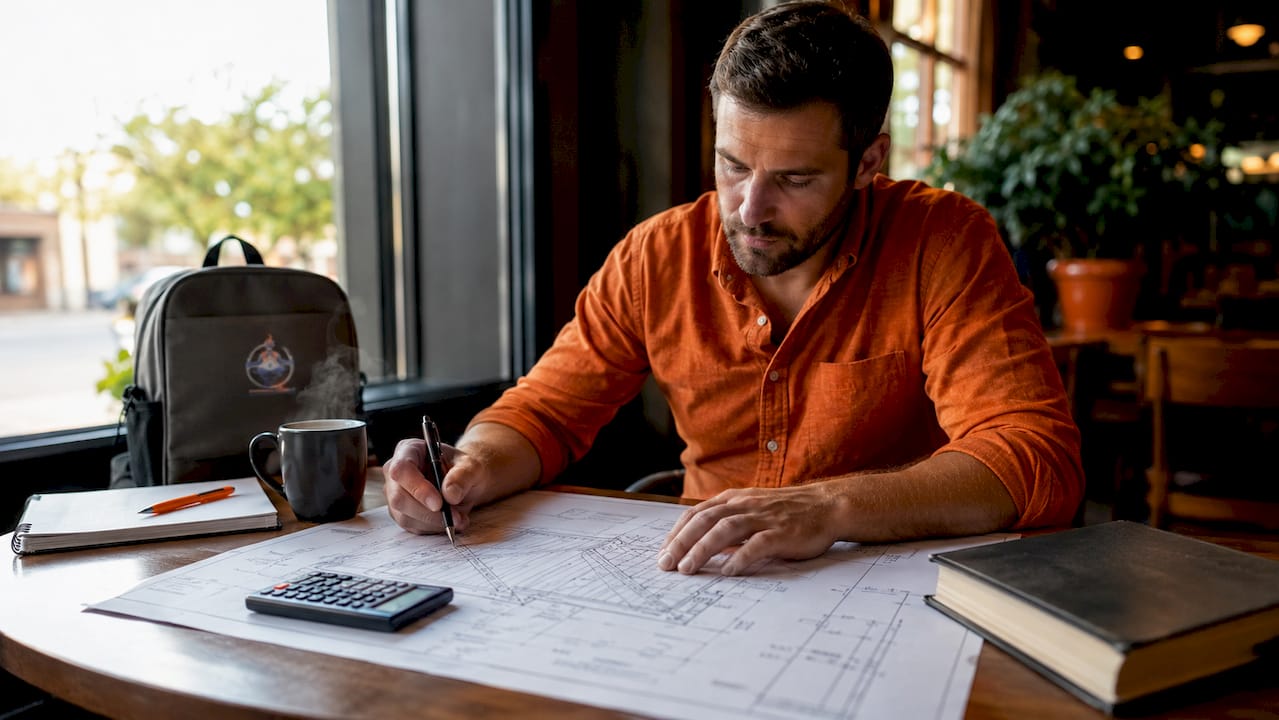
Material choice drives the widest cost variation. TPO membranes typically sit at the lower end of the installed cost range, while standing-seam metal roofs occupy the upper end. Understanding that spread is the first step in any commercial roofing cost breakdown.
What materials and roofing systems influence commercial roofing costs?
Material selection is the single largest variable in any commercial roof pricing guide. Each system carries a different installed cost, maintenance profile, and energy performance record.
The table below shows typical installed cost ranges for common commercial roofing systems in 2026. These figures include materials, standard insulation, and labor but exclude tear-off, permits, and engineering.
| Roofing System | Typical Installed Cost (per sq ft) |
|---|---|
| TPO (Thermoplastic Polyolefin) | $3.50 – $7.00 |
| EPDM (Ethylene Propylene Diene Monomer) | $4.00 – $8.00 |
| PVC (Polyvinyl Chloride) | $5.00 – $9.00 |
| Modified Bitumen | $4.50 – $8.50 |
| Standing-Seam Metal | $10.00 – $18.00 |
Upfront cost tells only part of the story. Total cost of ownership can run 2–3 times higher for cheaper systems over a 25-year period when you factor in maintenance frequency, repair costs, and energy impact. A TPO roof installed at $5.00 per square foot may look attractive today, but a thicker-membrane PVC system at $7.50 per square foot could cost less over its full service life.
For a deeper look at how each system performs across cost categories, the commercial roofing systems guide from Exteriorgenie breaks down material characteristics alongside pricing. Property owners who skip this comparison often end up optimizing for the wrong number.
Pro Tip: When comparing bids, ask each contractor to specify membrane thickness, insulation R-value, and attachment method. Two bids at the same dollar amount can represent very different products.
How do labor, location, and roof size affect pricing?
Labor typically accounts for 40–60% of a commercial roofing project's total cost. That share shifts depending on where you are, how large the roof is, and how complex the work turns out to be.
Regional labor markets vary significantly. Tariffs on steel, aluminum, and roofing chemicals reached up to 272% in 2026, pushing material costs higher in markets that rely on imported goods. Labor wages in high-cost metro areas compound that pressure. A project in a major coastal city will carry a noticeably higher labor rate than the same scope of work in a mid-size Southern market like Lexington, SC.
Roof size creates economies of scale that directly affect per-square-foot pricing. Large projects can run 20–30% lower per square foot than small retail installations because mobilization, equipment, and crew setup costs spread across more area. A 5,000-square-foot retail strip costs more per square foot than a 50,000-square-foot distribution center, even with identical materials.
Roof complexity adds labor hours that square footage alone does not capture. Rooftop HVAC units, parapet details, and drainage configurations all increase the time a crew spends on site. A roof with 12 HVAC curbs, multiple drains, and a complex parapet profile can take twice as long to install as a clean flat deck of the same area.
Key labor and location factors that affect your final number:
- Wage rates: Union vs. non-union markets create measurable cost differences.
- Site access: Restricted staging areas require more crew time and specialized equipment.
- Roof slope: Low-slope commercial roofs are faster to work on than steeply pitched surfaces.
- Crew availability: Contractors with full backlogs often price higher to manage their schedules.
What hidden costs should you budget for?
Tear-off and disposal are the most common sources of budget overruns on commercial roofing projects. They are also the costs most frequently underestimated in early-stage planning.
Removing an existing roof system adds $1.00 to $3.00 or more per square foot to the project cost. Multiple layers, wet insulation, or hazardous materials push that number higher. Multiple layers can add over $200 per 100 square feet in debris handling and landfill fees alone. That is a significant line item on a 30,000-square-foot roof.
Here is a numbered breakdown of the hidden cost categories property owners most often miss:
- Deck condition. Tear-off reveals the true state of the structural deck. Saturated or rotted decking requires replacement before any new system goes down. This cost is impossible to quote accurately before work begins.
- Disposal fees. Landfill charges vary by material weight and local regulations. Asbestos-containing materials trigger hazmat disposal protocols that can multiply removal costs.
- Building access and logistics. Urban sites with limited staging increase costs by 10–25% due to specialized equipment needs and extended labor hours.
- Permits and engineering. Many jurisdictions require structural engineering sign-off for re-roofing projects, especially when insulation thickness increases the load on the deck.
- Code-driven scope increases. Local building codes may require upgraded edge securement, drainage improvements, or fire-rating upgrades that were not part of the original scope.
Budgeting a 10–15% contingency on top of your base estimate is the standard recommendation for any commercial replacement project. That buffer exists specifically to absorb deck repairs and access complications that only appear once work starts.
Pro Tip: Ask your contractor to include a unit-price schedule for deck replacement in the original contract. That way, if damaged decking appears during tear-off, you already have an agreed rate and avoid emergency renegotiation.
How do warranty types change what you pay?
Warranty selection is one of the most underappreciated factors affecting roofing prices. Two bids for the same roof can differ by thousands of dollars simply because they specify different warranty tiers.
Contractor labor warranties cover workmanship defects for a fixed period, typically two to five years. They cost nothing extra because they are built into the contractor's standard pricing. NDL (No Dollar Limit) manufacturer warranties cover both materials and labor with no cap on repair costs, but they require factory-trained installers, pre-installation inspections, and post-installation audits. NDL warranties impose material standards and inspection schedules that raise bid amounts, but they offer far stronger long-term protection.
Key specification decisions that affect bid amounts:
- Warranty length: 10-year, 15-year, and 20-year NDL tiers each carry different price premiums.
- Insulation R-value: Higher R-value requirements increase material cost but may qualify for energy incentives.
- Edge securement: Specifying FM Global or ANSI/SPRI ES-1 wind uplift standards adds cost but reduces storm damage risk.
- Inspection requirements: NDL warranties often require third-party inspections at key installation milestones.
Specifying warranty type before soliciting bids is the only way to get comparable quotes. If one contractor prices a contractor labor warranty and another prices an NDL warranty, you are not comparing the same product. The commercial roof replacement planning guide from Exteriorgenie outlines how to write a specification that produces truly apples-to-apples bids.
How to estimate commercial roofing costs accurately
Accurate cost estimation starts with getting at least three detailed, line-item bids. Contractor quotes vary by 20–30% due to differences in overhead, safety programs, and current backlog. A lump-sum comparison tells you nothing about what is actually included.
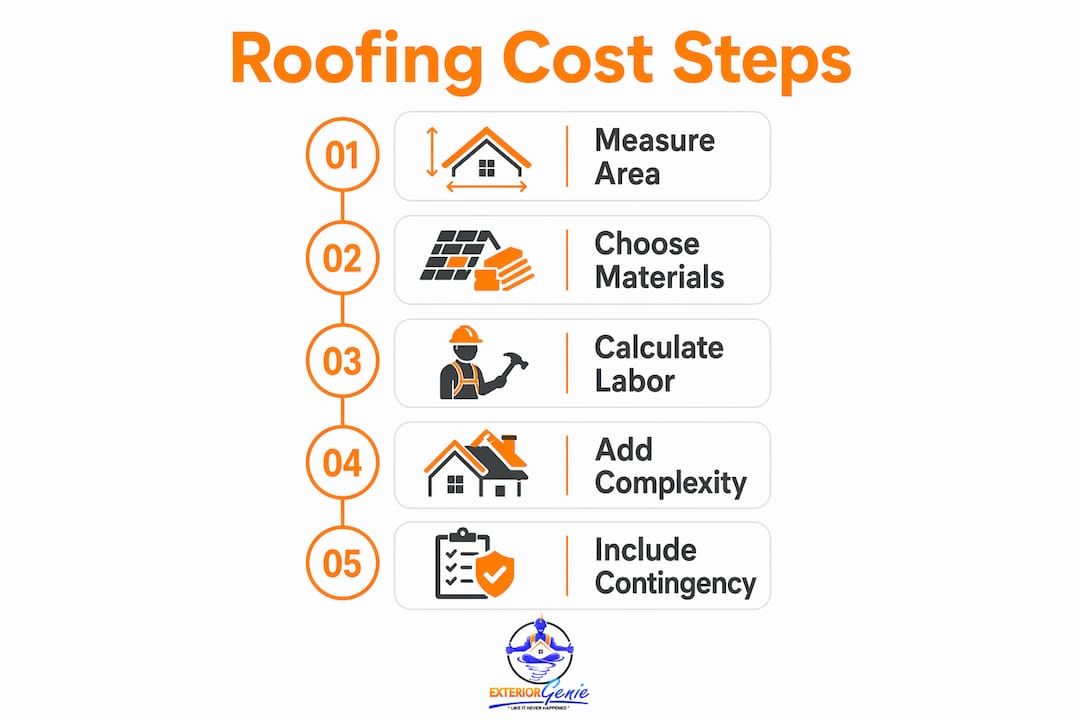
Steps that produce reliable estimates:
- Commission a professional measurement. Aerial measurement tools and on-site surveys eliminate the guesswork in square footage. Errors in area calculation cascade through every other line item.
- Request line-item breakdowns. Ask each contractor to separate material cost, labor cost, tear-off, disposal, insulation, accessories, and warranty into individual line items.
- Compare assumptions, not totals. Use a roofing estimate comparison checklist to verify that each bid uses the same membrane thickness, insulation R-value, and warranty tier.
- Factor in total cost of ownership. A bid that is $0.75 per square foot cheaper upfront may cost more over 20 years if it uses thinner materials or excludes a manufacturer warranty.
- Apply your contingency. Add 10–15% to the accepted bid total to cover deck repairs, access complications, and code-driven scope changes.
Pro Tip: When you receive bids, look for the contractor who asks the most questions before quoting. A thorough contractor is gathering the information needed to give you an accurate number, not just a low number to win the job.
For a step-by-step walkthrough of the bidding process, Exteriorgenie's guide on getting accurate roofing quotes covers how to structure your RFP and what to look for in each response.
Key Takeaways
Commercial roofing costs are determined by material system, labor rates, roof complexity, tear-off conditions, and warranty type working together, not by square footage alone.
| Point | Details |
|---|---|
| Base cost range | Installed costs run $3.50–$18.00 per square foot depending on system and complexity. |
| Total cost of ownership | Cheaper systems can cost 2–3 times more over 25 years when maintenance and energy impact are included. |
| Hidden cost buffer | Budget a 10–15% contingency for deck repairs, disposal fees, and access complications. |
| Warranty drives bid differences | Specifying NDL vs. contractor labor warranty before bidding is the only way to compare quotes fairly. |
| Get three line-item bids | Quotes vary 20–30% between contractors; comparing line items beats comparing lump sums every time. |
What I've learned after 25 years of commercial roofing projects
The number I see property owners get wrong most often is not the material cost. It is the contingency. Every experienced contractor knows that tear-off reveals surprises. Saturated insulation, rotted decking, and corroded fasteners are not rare exceptions. They show up on a meaningful share of commercial re-roofing jobs, and they add real money to the final invoice.
The property owners who handle this best are the ones who treat the contingency as a planned expense, not a worst-case scenario. They budget 10–15% above the accepted bid from day one. If the deck comes up clean, that money stays in their pocket. If it does not, they are not scrambling for emergency funds mid-project.
The second mistake I see regularly is chasing the low bid without reading the assumptions. A bid that skips the NDL warranty, uses minimum-spec insulation, and excludes a unit-price schedule for deck replacement is not a bargain. It is a liability. The contractor vetting process matters as much as the number on the page.
My honest recommendation: spend the time upfront to write a clear specification, get three line-item bids, and compare them assumption by assumption. That process takes longer than calling three contractors and picking the lowest number. It also produces a project that finishes on budget.
— Ebben
Exteriorgenie's commercial roofing services for Lexington, SC property owners
Managing a commercial roofing budget is easier when you have a contractor who prices transparently and explains every line item before work begins.
Exteriorgenie is a veteran-owned roofing company with 25 years of experience serving commercial property owners in Lexington, SC. The team offers roofing financing options to help spread project costs across manageable payments, which is especially useful when hidden deck repairs push a project over the original budget. For properties that have taken storm, wind, or hail damage, Exteriorgenie provides emergency roof repair around the clock, backed by HAAG-certified inspectors who can document damage for insurance claims. Contact Exteriorgenie for a detailed, line-item estimate on your next commercial roofing project.
FAQ
What is the average cost per square foot for commercial roofing?
Commercial roofing costs range from $3.50 to $18.00 per square foot installed, depending on the system type, insulation specification, and project complexity. Tear-off, permits, and engineering are additional line items not included in that base range.
Why do commercial roofing quotes vary so much between contractors?
Contractor quotes vary by 20–30% due to differences in overhead, safety programs, warranty tiers, and current workload. Comparing line-item bids rather than lump-sum totals is the only reliable way to identify what each quote actually includes.
What hidden costs should I plan for in a commercial roofing project?
The most common hidden costs are deck replacement after tear-off, disposal fees for multiple layers or hazardous materials, and access-related logistics on urban sites. A 10–15% contingency budget above the accepted bid covers most of these scenarios.
Does warranty type affect how much I pay for a commercial roof?
NDL (No Dollar Limit) manufacturer warranties require factory-trained installers and inspection milestones, which raises upfront costs compared to a standard contractor labor warranty. Specifying the warranty tier before soliciting bids is the only way to receive comparable quotes.
How does roof size affect the cost per square foot?
Larger commercial roofs benefit from economies of scale, with large projects running 20–30% lower per square foot than small retail installations. Mobilization, equipment, and crew setup costs spread across more area, reducing the per-unit rate.