
Getting accurate roofing quotes means securing at least three itemized, written estimates that specify materials, scope, and warranties so you can compare them fairly and make an informed decision. With the average U.S. roof replacement now costing $17,631 in 2025, a 33% increase over the prior four years, the stakes for getting this right have never been higher. A single vague or incomplete estimate can cost you thousands in scope creep, substandard materials, or warranty gaps you never knew existed. This guide walks you through exactly how to request, compare, and finalize roofing cost estimates so your project starts on solid ground.
How many roofing quotes should you get?
The industry standard is to collect 3 to 5 written, itemized estimates rather than verbal or ballpark figures. That range is not arbitrary. Each additional quote gives you a clearer picture of the local market rate and exposes assumptions that one or two contractors might make differently.
Here is why the number matters in practice:
- Three quotes establish a baseline price range and reveal whether one contractor is significantly above or below the others.
- Four or five quotes give you enough data to spot outliers, identify scope differences, and negotiate from a position of knowledge rather than guesswork.
- Verbal estimates carry no legal weight and often omit critical details like underlayment type, flashing replacement, or permit fees.
- Ballpark figures are useful only for rough budgeting. They should never be the basis for a signed contract.
Roofing bids vary widely because contractors make different assumptions about scope variables like tear-off method and warranty coverage. Two bids with a $3,000 price difference may actually reflect the same quality of work once you normalize the scope. Without multiple bids, you have no way to know.
Pro Tip: Ask each contractor to provide a written, line-item estimate within 48 to 72 hours of the site inspection. Any contractor who refuses or only offers a single total number is a red flag worth noting.
What variables should you standardize across quotes?
The bottom-line price on roofing quotes is rarely comparable without understanding the specific scope and materials behind each number. Before you request estimates, decide on your project specifications and require every contractor to quote against the same set of variables.
| Variable | What to specify |
|---|---|
| Tear-off vs. overlay | Require full tear-off for accurate deck inspection and longer-lasting results |
| Shingle brand and grade | Specify GAF Timberline HDZ, Owens Corning Duration, or CertainTeed Landmark by name |
| Underlayment type | Distinguish between 30-lb felt and synthetic underlayment such as GAF FeltBuster |
| Ice-and-water shield | Confirm coverage area: eaves only, valleys, or full roof |
| Flashing | State whether existing flashing is replaced or reused |
| Ventilation | Clarify whether ridge vent upgrades or soffit improvements are included |
| Decking repair | Require pricing as a per-sheet or per-square-foot allowance |
| Warranty | Specify manufacturer warranty length and workmanship warranty duration |
Forcing every contractor to quote the same scope and material assumptions is the single most effective way to make bids genuinely comparable. Without this step, you are comparing apples to oranges and the cheapest bid will almost always look better than it actually is.
Decking repair deserves special attention. Deck repair pricing should be clarified as a per-sheet or per-square-foot allowance before work begins. Contractors who leave this as a vague line item or exclude it entirely create the conditions for a surprise invoice mid-project.
Pro Tip: Create a one-page specification sheet listing your required materials and scope items. Email it to every contractor before the site visit. This saves time, prevents misunderstandings, and makes your comparison table far easier to build.
Step-by-step process to get accurate roofing quotes
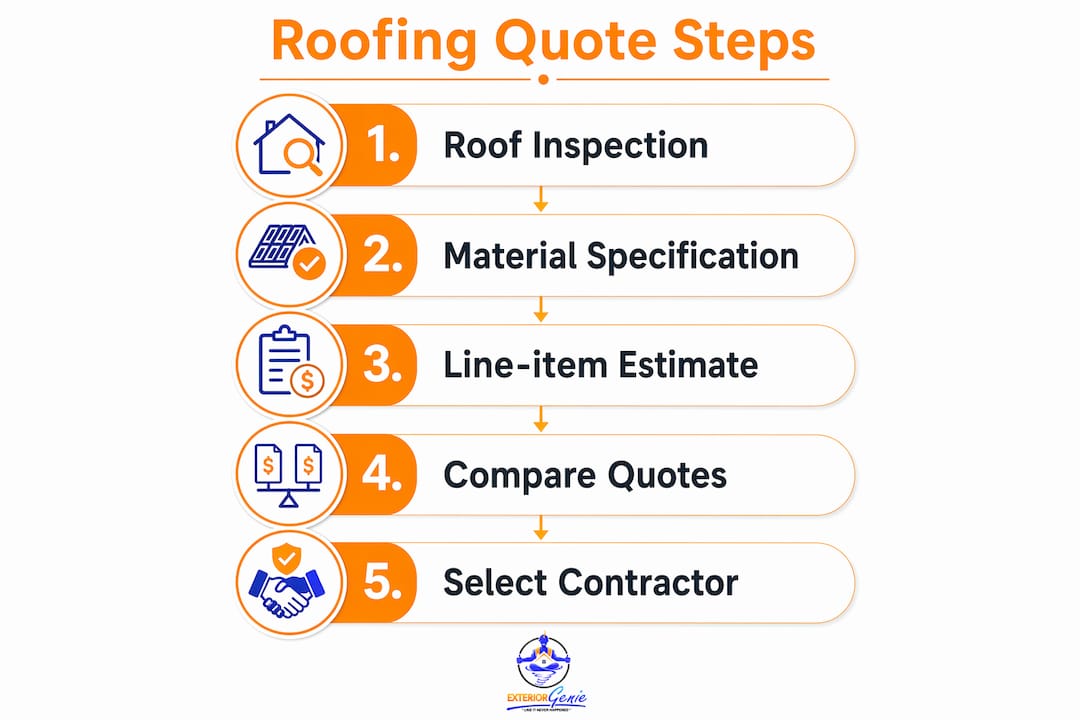
Getting reliable roofing cost estimates requires more than calling a few contractors. Follow this sequence to protect yourself and maximize the quality of information you receive.
-
Find qualified contractors through verified sources. Use manufacturer contractor locators from GAF, Owens Corning, or CertainTeed, or check your state licensing board. These resources confirm credentials and track records before you invest time in a site visit.
-
Schedule separate, independent onsite inspections. Each contractor must physically inspect your roof before quoting. A contractor who quotes without seeing the roof is guessing. Inspections also reveal hidden issues like soft decking, improper ventilation, or flashing failures that affect the final price.
-
Do not share other quotes with contractors. Allowing each roofer to inspect independently and build their own scope prevents anchored pricing, where a contractor simply undercuts the lowest number you reveal rather than building an honest estimate.
-
Verify insurance and licensing directly. Request Certificates of Insurance and licensing documentation from every contractor. Then verify credentials directly with the issuing provider, not just from a copy the contractor hands you. This step protects you from liability if a worker is injured on your property.
-
Request references and check them. Ask for three recent references from projects similar in scope to yours. A contractor with 25 years of experience should have no hesitation providing these. Call the references and ask specifically about timeline adherence, cleanup, and how the contractor handled unexpected issues.
-
Build a side-by-side comparison table. Once all written estimates arrive, map each line item across every bid using the eight variables from the previous section. This process often reveals that the lowest bid excludes synthetic underlayment, omits flashing replacement, or carries only a one-year workmanship warranty.
-
Ask clarifying questions about gaps. If a bid is missing a line item you specified, contact the contractor and request a written clarification. Silence or vague answers at this stage predict problems during the project.
-
Confirm every estimate detail appears in the contract. The legally binding contract must reflect every line item from the estimate, including materials, schedules, warranties, and permit responsibilities. If it is not in the contract, it does not exist.
A roof inspection before repairs is a useful starting point for understanding what your roof actually needs before contractors arrive, which makes your specification sheet far more accurate.
Common mistakes to avoid when comparing roofing bids
Even homeowners who collect multiple quotes make avoidable errors at the comparison and contracting stage. These are the most costly ones.
- Choosing the lowest bid without scope alignment. A bid that is $2,000 cheaper may use 15-year shingles instead of 30-year shingles, skip synthetic underlayment, or exclude permit fees. The savings disappear quickly.
- Accepting incomplete or verbal quotes. Any estimate without a full written scope is not a quote. It is a starting point for a conversation that could end in a dispute.
- Paying large upfront deposits. The BBB recommends no more than 10% or $1,000 upfront for roofing projects. Milestone-based payments tied to project phases protect you if work stalls or quality falls short.
- Ignoring permit responsibilities. Confirm in writing which party pulls the permit. A contractor who suggests skipping permits to save money is exposing you to code violations, insurance claim denials, and resale complications.
- Overlooking warranty transfer and voidance terms. Some manufacturer warranties from GAF or CertainTeed require installation by a certified contractor and void if specific underlayment or ventilation standards are not met. Read the warranty documentation before signing.
- Skipping cleanup confirmation. Nail punctures from roofing debris are a real liability. Confirm that debris removal, dumpster placement, and magnetic nail sweeping are included in the contract.
Pro Tip: Use competitive quotes as leverage, not as a blunt instrument. Instead of demanding a price cut, ask a preferred contractor whether they can match a specific scope item from a competing bid, such as a longer workmanship warranty or upgraded underlayment. This approach gets you more value without creating adversarial dynamics.
Contractor hiring tips that focus on vetting and contract review can save you significant money and stress before you commit to any bid.
Key takeaways
Accurate roofing quotes require at least three itemized written estimates that align on scope, materials, and warranty terms before any price comparison is meaningful.
| Point | Details |
|---|---|
| Collect 3 to 5 written bids | Verbal or ballpark estimates are not comparable and carry no legal weight. |
| Standardize scope variables | Require every contractor to quote the same tear-off method, shingle brand, and underlayment type. |
| Verify credentials independently | Confirm insurance and licensing directly with the issuing provider, not from contractor-supplied copies. |
| Limit upfront payment | Pay no more than 10% or $1,000 as a deposit; use milestone-based payments for the remainder. |
| Lock scope into the contract | Every estimate line item must appear in the signed contract to prevent scope drift and cost surprises. |
What I've learned from watching homeowners compare roofing bids
After 25 years in the roofing industry, the pattern I see most often is this: a homeowner collects three quotes, picks the middle price, and assumes the job is covered. It rarely is. The middle bid is not automatically the safest choice. It is just the number that feels psychologically comfortable.
The quotes I have reviewed that caused the most problems were not the cheapest ones. They were the ones with the most ambiguous language. Phrases like "replace as needed" for decking, or "standard underlayment" without a product name, are the lines that generate disputes six weeks into a project. Detail-rich quotes with clear manufacturer names, warranty terms, and scope specifics consistently correlate with better project outcomes.
My honest recommendation is to spend 30 minutes building a comparison spreadsheet before you make any decision. Map every variable side by side. The contractor who provides the most complete written scope is almost always the one who will deliver the fewest surprises. Price matters, but scope clarity is what actually protects your investment. The roof replacement process is complex enough without starting it on an ambiguous foundation.
— Ebben
Get a transparent roofing estimate from Exteriorgenie
Exteriorgenie is a veteran-owned roofing company based in Lexington, SC, with 25 years of experience delivering detailed, itemized estimates for both residential and commercial projects. Every quote includes a full scope breakdown covering materials, underlayment, flashing, ventilation, permits, and warranty terms so you can compare bids with confidence. HAAG-certified inspectors conduct onsite assessments and handle insurance claim documentation when storm damage is involved. Exteriorgenie also offers 24/7 emergency repairs for situations that cannot wait. If you are ready to move forward with your roofing project, request a roofing estimate or explore residential roofing services to see the full range of solutions available in Lexington, SC.
FAQ
How many roofing quotes should I get?
Get at least three to five written, itemized roofing estimates before making a decision. This range gives you enough data to establish a fair market price and identify scope differences between contractors.
Why do roofing quotes vary so much?
Roofing bids differ because contractors make different assumptions about tear-off method, underlayment type, shingle brand, and warranty coverage. Two bids are only comparable when they quote the exact same scope and materials.
What should a roofing quote include?
A complete roofing quote should specify shingle brand and grade, underlayment type, flashing replacement or reuse, ice-and-water shield coverage, decking repair pricing, permit fees, cleanup responsibilities, and both manufacturer and workmanship warranty terms.
How much should I pay upfront for a roofing project?
The BBB recommends paying no more than 10% or $1,000 as an upfront deposit. Structure remaining payments as milestones tied to project phases to protect yourself if work is delayed or quality falls short.
How do I know if a roofing contractor is legitimate?
Request Certificates of Insurance and a state license number, then verify both directly with the issuing provider. You can also use manufacturer contractor locators from GAF, Owens Corning, or CertainTeed to find credentialed installers in your area.