

Roof failure is defined as the breakdown of a roofing system's ability to protect a building's interior from weather, structural stress, and moisture intrusion. Understanding how roof failure affects business operations is not optional for facility managers. It is a financial and legal necessity. The 2025 Verisk US Roof Report found that repair and replacement costs reached nearly $31 billion in 2024, a 30% increase since 2022. That number reflects a pattern where deferred maintenance turns a manageable repair into a full operational crisis. OSHA regulations add a compliance layer that makes neglected roofs a liability risk, not just a maintenance problem.
How roof failure affects business operations: damage types and consequences
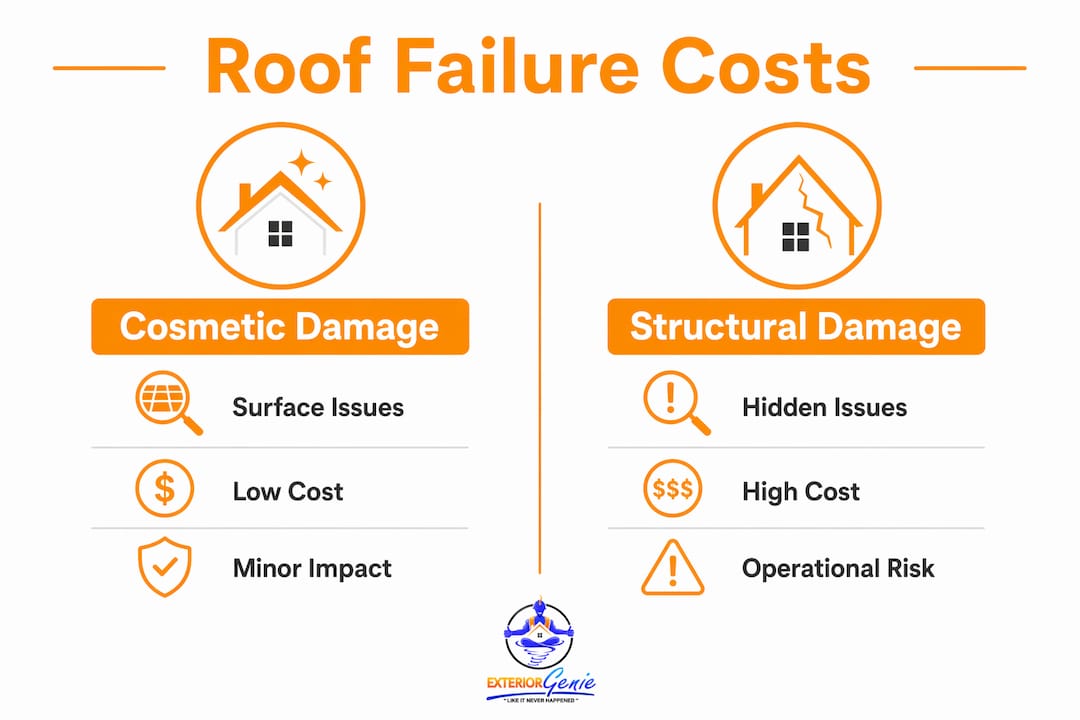
Roof failures fall into two categories: structural and cosmetic. The distinction matters because each type carries a different cost profile and a different threat to business continuity.
Cosmetic damage includes surface-level issues such as granule loss on shingles, minor surface cracks, and superficial staining. These problems affect appearance and can accelerate wear, but they rarely shut down operations on their own. Structural damage is a different matter. Compromised decking, failed membrane seals, collapsed drainage systems, and corroded support structures all threaten the physical integrity of the building itself.
The table below shows how each damage type translates into operational consequences:
| Damage Type | Common Causes | Operational Impact | Relative Cost |
|---|---|---|---|
| Cosmetic (granule loss, surface cracks) | UV exposure, aging materials | Accelerated wear, minor leaks | Low to moderate |
| Membrane failure | Poor installation, storm impact | Water intrusion, inventory damage | Moderate to high |
| Structural decking damage | Moisture saturation, heavy loads | Partial or full shutdown risk | High |
| Drainage system failure | Debris blockage, freeze-thaw cycles | Pooling water, ceiling collapse | High |
| Fastener and seal failure | Improper installation | Leaks during first heavy rain | Moderate |
Structural damage often evolves without visible warning. Early-stage corrosion and moisture saturation can progress silently for months before a sudden failure forces an emergency shutdown. That pattern is what makes structural roof damage uniquely dangerous for businesses. You cannot manage a risk you cannot see, which is exactly why regular professional inspections are not optional.
Business operations disruptions from roof failure extend beyond the building itself. Displaced employees, halted production lines, damaged inventory, and broken customer commitments all carry costs that dwarf the price of a timely repair. Shutdowns caused by roof failure displace employees, disrupt supply chains, and can damage customer relationships, with total costs exceeding direct repair expenses.
How does roof failure silently escalate costs beyond visible damage?
The most expensive roof failures are the ones you do not notice until the bill arrives. Hidden financial damage accumulates through three main channels: energy waste, repeated repairs, and insurance complications.
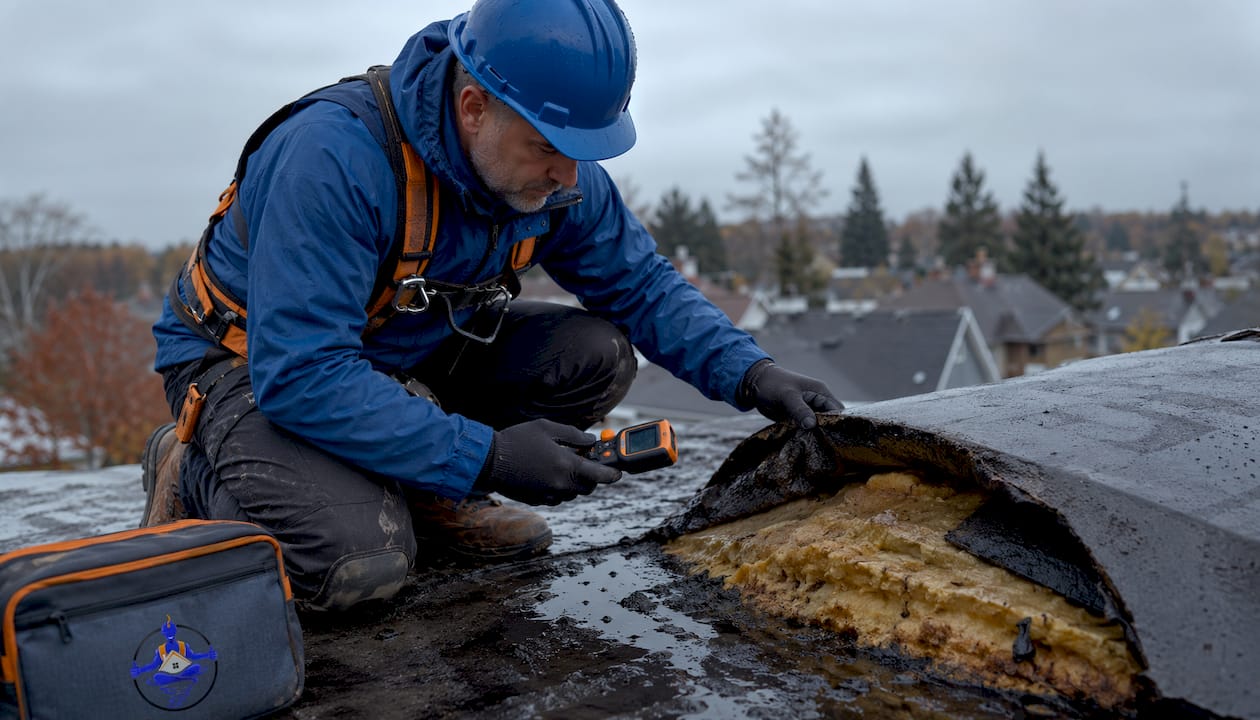
Saturated roof insulation is a primary driver of invisible cost growth. When moisture penetrates insulation layers, the material loses its thermal resistance and begins acting as a heat sink. HVAC costs rise 15–25% in facilities with saturated insulation. For a 40,000 square foot facility, that translates to $12,000 to $30,000 in additional energy costs per year, and up to $150,000 over five years. That is money leaving your budget every month without a single visible leak.
The repair cycle trap is equally costly. Many facility managers approve repeated patch repairs because each individual repair seems cheaper than a full replacement. The math does not hold over time. Emergency roof replacement can cost twice as much as a planned replacement due to crisis pricing and expedited scheduling. Every emergency call-out you authorize is a premium you pay for delayed planning.
Insurance complications add another layer of financial loss from roof failure:
- Roofs in moderate to poor condition carry 60% higher loss costs, which directly raises premiums.
- Insurers can deny claims on roofs with documented deferred maintenance, leaving businesses to absorb full replacement costs.
- A roof inspection report that shows proactive maintenance strengthens your claim position significantly.
- Poor roof condition can trigger policy non-renewal at the next underwriting review.
Pro Tip: Schedule a professional roof inspection every spring and fall, and keep written records of every repair. That documentation is your first line of defense if an insurer disputes a claim.
What safety and compliance risks does roof failure create for businesses?
Roof failure is a catalyst for compliance failure. The connection between a leaking roof and an OSHA citation is more direct than most facility managers realize.
OSHA regulations mandate documented structural integrity assessments before any roof work begins. Violations tied to roof-related hazards, including electrical exposure from water intrusion, compromised fire suppression systems, and degraded indoor air quality, carry penalties ranging from $15,625 to $156,259 per violation. A single inspection failure can generate multiple citations. That financial exposure compounds quickly.
Mold is the second major compliance threat. Mold growth begins within 24–48 hours of moisture intrusion. Federal data shows that 85% of commercial buildings have experienced past water damage, making mold a near-universal risk in facilities with any history of roof leaks. Mold exposure is a recognized occupational hazard, and employees who develop respiratory conditions can file workers' compensation claims or pursue litigation.
The legal exposure from premises liability is substantial. Roof failure that leads to a slip-and-fall injury, a ceiling collapse, or a mold-related illness can result in lawsuits exceeding $2 million for serious injuries. Courts consistently hold property owners responsible when documented warnings were ignored.
Here is a practical compliance framework for facility managers:
- Conduct documented inspections twice per year. Written records establish a pattern of due diligence that protects you in court and with insurers.
- Address moisture intrusion within 24 hours. Mold growth begins fast. A delayed response converts a repair issue into a health hazard.
- Verify contractor credentials before any roof work. OSHA requires structural integrity checks before work begins. Confirm your contractor follows this protocol.
- Maintain a repair log with photos and dates. This log is your evidence of responsible property management if litigation arises.
- Consult a property maintenance program to formalize your inspection schedule. A structured program reduces the chance of overlooked hazards.
Pro Tip: If your facility has experienced any water intrusion in the past 12 months, commission an air quality test before your next lease renewal or insurance review. The results protect you legally and give you leverage with your insurer.
How can businesses minimize disruption through proactive roof maintenance?
Proactive roof maintenance is the single most effective way to prevent business operations disruptions from becoming full-scale crises. The goal is to catch problems during the cosmetic phase, before they become structural failures.
Roof maintenance importance is often framed as a cost. The correct frame is risk management. A planned maintenance program costs a fraction of emergency replacement, and it keeps your facility compliant, your insurer satisfied, and your operations running. Poor installation is a leading cause of commercial roof failures that can void warranties and leave businesses responsible for costly replacements. Catching installation defects early through inspection prevents that outcome.
The core maintenance tasks that prevent operational disruption are straightforward:
- Clean roof drains and gutters at least twice per year to prevent pooling water and membrane stress.
- Inspect flashings and seals around penetrations, HVAC units, and parapet walls after every major storm.
- Check for granule accumulation in gutters, which signals accelerated shingle wear and approaching membrane vulnerability.
- Review commercial roof maintenance best practices to build a schedule that matches your roof type and local climate.
- Schedule a professional inspection before and after storm season, not just when a problem becomes visible.
Timing matters as much as frequency. Repairs made during the cosmetic phase cost a fraction of structural repairs. A facility manager who schedules a pre-storm roof inspection in early spring catches vulnerabilities before summer storms expose them. That single scheduling decision can prevent a six-figure emergency.
Key Takeaways
Roof failure is a direct threat to business continuity, financial stability, and legal compliance, and proactive maintenance is the most cost-effective defense available to facility managers.
| Point | Details |
|---|---|
| Structural vs. cosmetic damage | Structural failures can force shutdowns; catching damage early keeps repair costs manageable. |
| Hidden energy costs | Saturated insulation raises HVAC costs by 15–25%, adding up to $150,000 over five years for large facilities. |
| Insurance and compliance risk | Poor roof condition drives 60% higher loss costs and can trigger OSHA penalties up to $156,259 per violation. |
| Emergency vs. planned replacement | Emergency replacements cost roughly twice as much as planned ones; proactive scheduling cuts that risk. |
| Documentation as protection | Written inspection records reduce liability exposure and strengthen insurance claim positions. |
Why I treat roofing as a business asset, not a maintenance line item
Most facility managers I talk to think about the roof only when something goes wrong. That is the wrong mental model, and it costs businesses far more than they realize.
A roof is not a passive shell. It is an active component of your operational environment. When it degrades, your HVAC works harder, your employees breathe lower-quality air, your insurer reassesses your risk profile, and your legal exposure grows. None of those consequences show up on a repair invoice. They show up in your energy bills, your workers' comp claims, and your insurance renewals.
The businesses that handle roofing well treat it the same way they treat their HVAC or electrical systems: scheduled inspections, documented repairs, and a replacement budget built into the capital plan. The ones that treat it as a reactive expense end up paying emergency rates, fighting claim denials, and managing shutdowns that could have been avoided entirely.
My honest advice is this: if you cannot tell me the last time your roof was professionally inspected, that is your answer. Schedule one now, before the next storm season makes the decision for you.
— Ebben
Exteriorgenie: protecting your business from the roof down
Roof failure does not wait for a convenient time, and neither does Exteriorgenie. As a veteran-owned roofing company with 25 years of experience serving commercial and residential clients in Lexington, SC, Exteriorgenie offers the full range of services that facility managers need to stay ahead of roof-related disruptions.

From emergency roof repair available 24/7 to HAAG-certified inspections that support insurance claims, Exteriorgenie brings military-grade discipline to every job. Storm damage, chronic leaks, and aging systems all get the same thorough treatment. For facility managers working within a budget, roofing financing options make it easier to approve necessary repairs without waiting for the next budget cycle. Schedule an inspection with Exteriorgenie before a small problem becomes a shutdown.
FAQ
What is the financial impact of roof failure on a business?
Roof failure drives costs through emergency repairs, energy waste from saturated insulation, insurance premium increases, and potential liability lawsuits. Emergency replacements can cost twice as much as planned ones, and HVAC costs can rise 15–25% in facilities with compromised insulation.
How quickly does mold develop after a roof leak?
Mold growth begins within 24–48 hours of moisture intrusion. Federal data shows 85% of commercial buildings have experienced past water damage, making rapid response to any roof leak a health and compliance priority.
What OSHA penalties apply to roof-related violations?
OSHA penalties for roof-related violations, including electrical hazards and indoor air quality failures, range from $15,625 to $156,259 per violation. Documented structural integrity assessments before roof work are required under federal regulations.
How does roof condition affect business insurance premiums?
Roofs rated in moderate to poor condition carry 60% higher loss costs, which directly increases insurance premiums. Insurers can also deny claims on roofs with documented deferred maintenance, leaving businesses to cover full replacement costs.
How often should a commercial roof be inspected?
Commercial roofs should be inspected at least twice per year, typically in spring and fall, and after any major storm event. Written inspection records reduce liability exposure and support insurance claim approvals.