

A professional roof inspection is a documented assessment of your roof's condition, damage, and repair needs that serves as the primary evidence base for any insurance claim you file. Without one, you are asking an insurer to take your word for damage they cannot independently verify. The average wind and hail roof insurance claim payout was $14,747 between 2019 and 2023, with 1 in 36 insured homes filing a claim annually. That figure represents real money on the table, and how roof inspection supports insurance claim outcomes is the difference between a full payout and a denial. A thorough inspection report gives adjusters, insurers, and contractors a shared factual record to work from.
How roof inspection supports insurance claims from the start
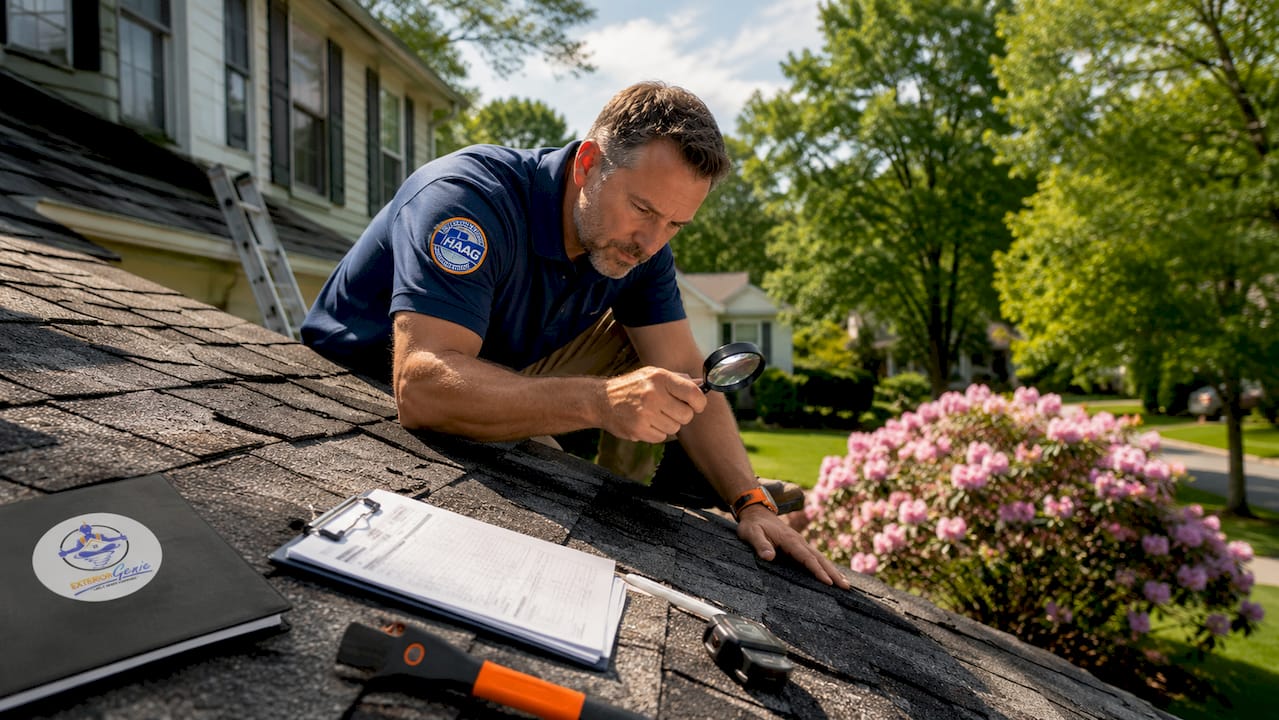
A professional inspection report details damage, its cause, and repair estimates, providing the essential evidence that supports a home insurance claim. This is the foundation of what the industry calls a "scope of loss" document. Insurers use it to verify that the damage is covered under your policy, that it resulted from a qualifying event like a hailstorm or wind event, and that the repair estimate is reasonable.
The inspection process covers several critical areas:
- Shingles and surface material: Inspectors look for hail bruising, cracking, granule loss, and wind uplift. These are the most common triggers for storm damage claims.
- Flashing and seals: Damaged flashing around chimneys, skylights, and vents is a leading cause of interior water damage, which compounds claim costs.
- Decking and structural components: Soft spots, rot, and sagging indicate deeper damage that adjusters may miss without a contractor present.
- Gutters and drainage: Dented gutters and downspouts are reliable secondary evidence of hail impact when shingle damage is disputed.
- Photographic documentation: Every finding is photographed with timestamps, creating a visual record that supports your claim narrative.
The report also identifies the cause of damage, not just its presence. A HAAG-certified inspector, for example, can distinguish between storm damage and wear-and-tear, which is a distinction that directly determines whether your insurer pays out or denies the claim.
Pro Tip: When hiring an inspector for insurance purposes, ask specifically whether they hold HAAG certification or equivalent forensic roofing credentials. General home inspectors often lack the training to document storm damage in the format insurers require.
What does a roof inspection checklist include for insurance?
A roof inspection checklist for insurance purposes goes beyond a standard maintenance review. It is structured to answer the questions an adjuster will ask: What is damaged? What caused it? What will it cost to restore the roof to pre-loss condition?
A complete insurance-focused checklist covers the roof surface, underlayment, ventilation, interior attic space, and all penetrations. Inspectors note the age of the roof, the material type, and any prior repairs, because insurers factor depreciation into payouts. The report should include a line-item repair estimate with material and labor costs broken out separately. This level of detail matters because independent inspection reports and contractor estimates can support claim appeals when an insurer's damage estimate undervalues the actual repair scope.
A well-structured report also documents what was not damaged. This protects you from future disputes about pre-existing conditions if you file a second claim within a few years.
How does inspection timing affect your claim outcome?
The timing of a roof inspection relative to a storm or damage event is one of the most underappreciated factors in the roof damage claims process. Homeowners insurance policies require timely claim filing and documented roof maintenance to prevent denial. Waiting weeks after a storm to inspect and file gives insurers grounds to argue that the damage worsened due to neglect, not the original event.
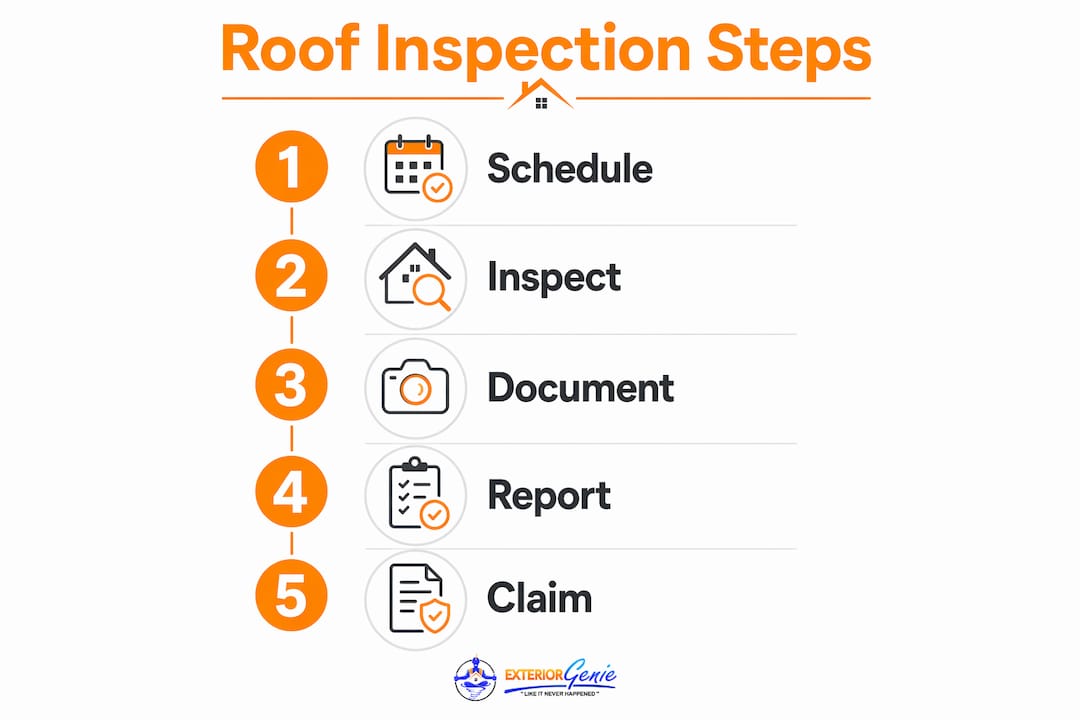
The recommended schedule for maximizing claim readiness is straightforward:
- Inspect twice per year. Spring and fall inspections catch seasonal wear before it becomes a claim-level problem. Professional inspections cost between $150 and $400, a fraction of the cost of a single emergency repair.
- Inspect within 48 to 72 hours after any severe weather event. This creates a timestamped record of the roof's condition immediately after the storm, which is the strongest possible evidence for a claim.
- Document the inspection history over time. Insurance companies increasingly require a documented history of roof condition to validate claims as scrutiny tightens. A single inspection is useful. A two-year history of clean reports followed by post-storm damage is nearly airtight.
- File your claim promptly after inspection. Use the inspection report as the basis for your filing, not as an afterthought.
Regular inspections convert unpredictable emergency roof expenses into planned maintenance, which most insurers prefer when evaluating claim credibility. An insurer reviewing a claim from a homeowner with two years of inspection records treats that file very differently than one with no maintenance history at all.
Pro Tip: Set calendar reminders for spring and fall inspections and keep all reports in a dedicated folder, digital or physical. If you ever need to appeal a claim denial, this paper trail is your strongest asset.
How to prepare for your inspection and maximize claim results
Preparation before and during the inspection directly affects the strength of your claim. Most homeowners treat the inspection as something that happens to them. The ones who get full payouts treat it as something they actively manage.
Before the inspector arrives, take your own photos and videos of every area of visible damage. Note the date and time of the storm or event that caused it. Write down what you observed: missing shingles, water stains on ceilings, debris on the roof. This personal record supplements the professional report and establishes your timeline independently of the inspector's visit.
During the inspection, be present. Homeowners who attend adjuster inspections and bring their roofing contractor see more accurate damage assessments. Adjusters work quickly and may miss damage on lower-slope sections or inside the attic. Your contractor can point out findings the adjuster overlooks, and that on-site conversation becomes part of the claim record.
After the inspection, compare the inspector's report against the adjuster's estimate line by line. Discrepancies in square footage, material specifications, or labor rates are common and often favor the insurer. If the numbers do not align, submit your contractor's independent estimate as a supplement. This is a standard part of the insurance claim and roof repair process, not a confrontational move.
Common mistakes that weaken claims include:
- Waiting too long to inspect after a storm
- Accepting the adjuster's estimate without a second opinion
- Failing to document pre-storm condition with prior inspection records
- Making repairs before the adjuster visits, which eliminates visible evidence
- Hiring an inspector without insurance claim experience
Understanding why insurance denies roof claims before you file puts you in a much stronger position to avoid those outcomes.
Routine vs. post-storm vs. forensic inspections: which do you need?
Not all roof inspections serve the same purpose in the insurance claim process. Choosing the right type for your situation affects both the quality of your documentation and the cost you pay upfront.
| Inspection type | Best used for | Typical cost | Insurer acceptance |
|---|---|---|---|
| Routine maintenance | Annual condition tracking, pre-sale | $150 to $400 | Useful as baseline history |
| Post-storm assessment | Filing a new claim after a weather event | $150 to $400 | Strong, especially with timestamps |
| Forensic/insurance claim | Disputed claims, appeals, litigation | $400 to $1,000+ | Highest, often required for disputes |
Routine inspections are the foundation. They establish the pre-damage baseline that makes post-storm inspections meaningful. Without a prior clean report, an insurer can argue that damage existed before the storm.
Post-storm assessments are the most common type used in the roof insurance claim process. They are conducted by roofing contractors or certified inspectors and focus specifically on identifying storm-related damage. These reports are formatted to align with insurance adjuster workflows.
Forensic inspections are reserved for disputed claims or situations where the insurer and homeowner cannot agree on the scope of damage. A forensic inspector, often HAAG-certified or a licensed engineer, produces a report that can withstand legal scrutiny. The cost is higher, but the return on a disputed $14,000 claim makes it worthwhile. If you are considering structural roof repairs as part of your claim, a forensic inspection is often the only report that fully documents the extent of that damage.
Routine inspections are typically not covered by insurance, but they prevent the larger, non-covered repair costs that result from undetected deterioration. Think of the $150 to $400 annual cost as insurance on your insurance claim.
Key takeaways
A professional roof inspection is the single most effective tool for substantiating, strengthening, and defending a roof insurance claim at every stage of the process.
| Point | Details |
|---|---|
| Inspection as evidence | A professional report documents damage, cause, and repair costs in the format insurers require. |
| Timing is critical | Inspect within 72 hours of a storm and maintain a twice-yearly schedule to build claim-ready documentation. |
| Preparation multiplies results | Be present during adjuster visits, bring your contractor, and compare reports line by line. |
| Choose the right inspection type | Routine, post-storm, and forensic inspections serve different roles; match the type to your claim situation. |
| History matters to insurers | A documented record of prior inspections significantly strengthens claim credibility and reduces denial risk. |
What I've learned after years of watching claims succeed and fail
After working with homeowners through hundreds of storm damage claims in Lexington, SC, the pattern is consistent. The claims that succeed are not necessarily the ones with the most damage. They are the ones with the best documentation.
Homeowners who treat roof inspection as a one-time event after a storm are already behind. The insurers who scrutinize claims most aggressively are looking for any gap in the maintenance record they can use to argue pre-existing conditions or neglect. A homeowner with two years of clean inspection reports and a post-storm assessment filed within 72 hours gives an adjuster almost nothing to work with.
The other mistake I see repeatedly is letting the adjuster's estimate stand without challenge. Adjusters are not adversaries, but they are working from a different set of incentives than you are. An independent contractor estimate submitted alongside the adjuster's report is not aggressive. It is standard practice, and insurers expect it.
The most underused tool in the entire process is the forensic inspection. Most homeowners do not know it exists until they are already in a dispute. If your claim is denied or the payout is significantly lower than your repair estimate, a HAAG-certified forensic inspector can often reverse that outcome. The cost is real, but so is the difference between a $6,000 partial payout and a $14,000 full settlement.
My honest advice: treat your roof the way you treat your car. You would not skip oil changes and then expect your mechanic to cover the engine failure. Scheduled inspections, documented records, and a contractor you trust before a storm hits are the three things that separate homeowners who get paid from those who don't.
— Ebben
Get expert roof inspection and claims support from Exteriorgenie

Exteriorgenie is a veteran-owned roofing company based in Lexington, SC, with 25 years of experience helping homeowners and property managers navigate storm damage and the roof insurance claim process. Their HAAG-certified inspectors produce the detailed, insurer-ready reports that support full claim payouts, not partial settlements. From post-storm assessments to forensic inspections for disputed claims, Exteriorgenie provides personalized claims assistance at every stage. If you have experienced storm damage or want to build a documented inspection history before the next weather event, contact Exteriorgenie for a thorough assessment. Their 24/7 emergency repair availability means you are never left waiting when it matters most. Visit Exteriorgenie to schedule your inspection today.
FAQ
What does a roof inspection include for an insurance claim?
A roof inspection for insurance includes a documented assessment of shingle condition, flashing, decking, gutters, and attic space, along with photographic evidence and a line-item repair estimate. The report identifies both the damage and its cause, which is the key distinction insurers use to approve or deny coverage.
How soon should I get a roof inspection after storm damage?
Inspect within 48 to 72 hours after a storm to create a timestamped record of damage before conditions change. Waiting too long gives insurers grounds to argue that deterioration occurred after the event, which can reduce or eliminate your payout.
Can a roof inspection help if my claim was denied?
Yes. Submitting an independent inspection report or a forensic inspection from a HAAG-certified inspector is a standard method for appealing a denied claim. Forensic reports carry the highest level of insurer acceptance and can reverse underpayment decisions.
How often should I have my roof inspected?
Professional inspections should be scheduled at least twice yearly and after any severe weather event. This schedule builds the documented maintenance history that insurers increasingly require to validate claims.
Are roof inspections covered by homeowners insurance?
Routine roof inspections are typically not covered by homeowners insurance policies. However, the cost of $150 to $400 per inspection is minimal compared to the claim value they protect, making them one of the highest-return maintenance investments a homeowner can make.