
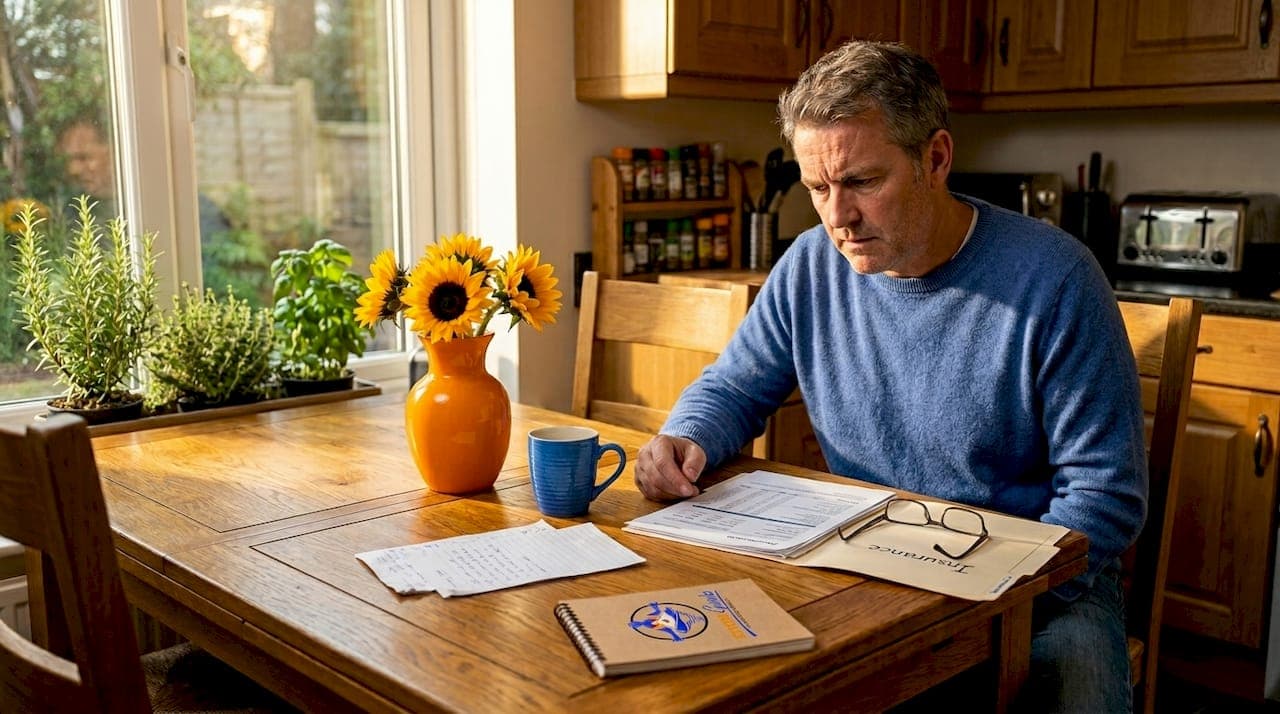
Getting a roof insurance claim denied is one of the most frustrating experiences a homeowner can face. You file what feels like a straightforward claim after a storm, and weeks later you get a letter saying the damage isn't covered. Understanding why insurance denies roof claims, formally called "claim denial" in the industry, is the first step to fighting back effectively. The reasons are almost always specific and documented, and they point directly to what you need to fix. This article breaks down the most common denial reasons, the policy traps most homeowners miss, and exactly what to do after a denial.
Table of Contents
- Key takeaways
- Why insurance denies roof claims: the most common reasons
- Policy exclusions and procedural missteps that cause denials
- How insurers use wear and tear to contest storm damage
- What to do after your roof claim is denied
- My take after 25 years of roofing claims
- Get professional claim support for your roof damage
- FAQ
Key takeaways
| Point | Details |
|---|---|
| Denial reasons are specific | Insurers cite specific categories like wear and tear, cosmetic damage, or late filing in every denial letter. |
| Documentation drives outcomes | Multiple photos showing damage patterns and extent can reverse many denials. |
| Policy exclusions catch homeowners off guard | Exclusions for wear and tear, flooding, and faulty workmanship are often buried in policy language. |
| Storm damage looks different from aging | Localized, directional damage patterns support storm causation; uniform deterioration supports wear and tear. |
| Appeals work when done right | Re-inspections, weather data, and professional advocates significantly improve reversal chances. |
Why insurance denies roof claims: the most common reasons
Roof claim denials typically fall into five distinct categories: no covered peril, cosmetic damage only, insufficient documentation, wear and tear, and scope disputes. Knowing which category your denial falls into tells you exactly which evidence to gather for an appeal.
Here is what each category actually means:
- No covered peril or date dispute. Your policy only covers damage from specific events like hail, wind, or fire. If the insurer can't confirm that a covered weather event caused the damage on the date you claim, they deny the claim outright. This is where weather data and storm reports become critical.
- Cosmetic damage only. Cosmetic damage is often denied because the roof remains functional even if hail or wind has visibly marked the surface. Many standard policies draw a hard line between cosmetic and functional impairment.
- Insufficient documentation. The adjuster simply didn't have enough photographic evidence or written detail to approve the scope of damage claimed. This is one of the most fixable denial reasons.
- Wear and tear. The insurer classifies the damage as the result of age and deferred maintenance rather than a sudden covered event.
- Scope or quantity disputes. The insurer agrees damage exists but disputes the extent, the square footage affected, or the replacement materials required.
| Denial reason | Insurer's rationale | What you need to counter it |
|---|---|---|
| No covered peril | Damage wasn't caused by a covered storm event | Weather reports, storm data, dated photos |
| Cosmetic damage | Roof is still functional | Policy language review, structural damage proof |
| Insufficient documentation | Not enough photo or measurement evidence | Additional photos, contractor estimates |
| Wear and tear | Damage is from aging, not a storm | Maintenance records, professional inspection report |
| Scope dispute | Insurer accepts less damage than claimed | Independent contractor estimate, re-inspection |
Pro Tip: The exact wording in your denial letter is your roadmap. The appeal approach hinges entirely on that language, not on your assumptions about what the insurer thought. Read it twice before doing anything else.

Understanding insurer rationale is what separates a homeowner who accepts the denial from one who successfully reverses it.
Policy exclusions and procedural missteps that cause denials
Most homeowners read the "covered perils" section of their policy and stop there. The exclusions section is where claims actually die.
Standard homeowner policies frequently exclude flood damage, faulty workmanship, gradual deterioration, and pre-existing damage. Even when a storm is clearly involved, an insurer can argue that pre-existing wear made the roof vulnerable and deny the claim on that basis. This is the "concurrent causation" problem, and it trips up a lot of homeowners.
Beyond the exclusions themselves, procedural mistakes generate a surprising share of denials:
- Late claim submission. Most policies require you to report damage within a specific window after the event. Missing deadlines and failing to comply with proof of loss requirements are common, legally solid grounds for denial.
- Failure to mitigate further damage. If you knew about damage and did nothing to prevent it from worsening, the insurer may deny the resulting additional damage. Placing a tarp or boarding up affected areas matters more than most people realize.
- Not complying with examination under oath. Some policies require you to submit to a formal recorded interview. Refusing or missing this can void your right to payment.
- Incomplete proof of loss. This is a sworn statement of damages you submit to the insurer. Missing or incorrect information gives the insurer grounds to deny.
Pro Tip: Before filing any claim, locate the "duties after loss" section of your policy. That section lists every procedural requirement you must meet. Failing even one of them can result in denial regardless of whether the storm damage was real.
The cost of different damage types also affects how insurers categorize and document claims, so understanding the distinction between cosmetic and structural damage before filing puts you in a stronger position.
How insurers use wear and tear to contest storm damage
This is where a lot of claims fall apart, and where the insurer's argument can look convincingly reasonable if you don't know what to look for.
Insurers are increasingly focused on roof age and condition after storms to assess claim validity. An older roof is almost automatically scrutinized for pre-existing deterioration, and adjusters are trained to document aging features like granule loss, cracked caulking, and sagging decking as justification for a wear and tear denial.

The problem is that wear and tear denials often conflate aging with storm damage. The legal distinction comes down to damage patterns, not just roof age.
Storm damage shows specific characteristics:
- Localized impact marks concentrated on one slope facing the storm direction
- Dented or fractured shingles in a pattern consistent with hail trajectory
- Granule displacement that follows directional wind patterns
- Damaged gutters, siding, or neighboring properties confirming a storm event
Wear and tear looks completely different. It spreads uniformly across the roof surface, appears on all slopes equally, and shows no directional pattern.
"Storm damage follows the storm. Aging damage follows gravity and time. These two patterns are distinguishable by any qualified inspector, and that distinction is often the difference between a paid claim and a denial."
Pro Tip: Get a HAAG-certified inspector to document damage before the adjuster's visit. Their report establishes professional causation findings that are harder for an insurer to dismiss than a homeowner's photos alone.
If your hail-damaged roof was denied on wear and tear grounds, the pattern analysis above is exactly the evidence that reverses those decisions most often.
What to do after your roof claim is denied
A denial letter is not the end of the road. It is actually the start of the appeal process, and the quality of your response determines whether you get paid.
Follow these steps in order:
- Read the denial letter in full. Identify the exact reason cited. Every subsequent action should respond directly to that stated reason, nothing else.
- Gather additional photographic evidence. Multiple photos from different angles showing the extent and pattern of damage are the single most effective tool for reversing documentation-based denials.
- Pull weather records. NOAA storm data, local weather service reports, and hail mapping services can confirm a weather event occurred on the date of your claimed damage. This directly addresses peril and date disputes.
- Collect your maintenance records. Receipts from past repairs, annual inspection reports, and photos taken before the storm show the insurer that the roof was maintained and the damage is new.
- Request a re-inspection and be present with your contractor. Re-inspections accompanied by your own contractor demonstrate the damage extent more effectively than photos alone and give you a professional witness during the assessment.
- Write a formal appeal letter. Reference specific policy language, attach your evidence, and rebut each cited denial reason point by point. Vague appeal letters rarely succeed.
- Consider hiring a public adjuster or attorney. Public adjusters and attorneys who specialize in insurance disputes know policy language deeply and often increase the chances of reversal or a fair settlement significantly.
- Contact your state insurance commissioner. Every state has a department of insurance that handles complaints against insurers. Filing a complaint adds regulatory pressure and sometimes prompts the insurer to reconsider.
Pro Tip: Never accept a verbal denial. Get everything in writing, and respond in writing. A documented paper trail protects you throughout the appeals process and in any legal proceedings that follow.
You can also review our insurance claims assistance page to understand how professional claim support works and what documentation standards HAAG-certified inspectors use.
My take after 25 years of roofing claims
I've sat across the table from insurance adjusters hundreds of times. What I've learned is that the homeowners who lose their appeals almost always share one thing in common. They misread the denial reason.
They get a letter citing "wear and tear" and assume the insurer is just being unfair. So they resubmit the same photos and write an emotional letter about how bad the storm was. That approach almost never works. The denial letter told them exactly what they needed to prove, and they ignored it.
What actually works is precision. You match your evidence to the stated reason, point by point. Wear and tear denial? You document storm-specific damage patterns with a qualified inspector. Insufficient documentation? You come back with 40 photos, a contractor's detailed estimate, and weather service data. Procedural denial? You review your policy for remedy options and address the missed step directly.
I've also seen homeowners wait too long. They sit on a denial for two months and then try to appeal. By that time, the storm evidence on the roof has further deteriorated, the damage looks less acute, and the insurer's position looks stronger by comparison. Time destroys your evidence. Act fast.
The other thing most homeowners miss is that a professional advocate changes the dynamic completely. Public adjusters and attorneys who handle insurance disputes speak the insurer's language. They know which arguments work and which ones the insurer routinely ignores. If your roof damage is significant and the denial looks solid, the cost of professional help is almost always worth it.
Stay focused on the evidence, respond to the specific denial reason, and get the right professionals involved early. That is the formula that works.
— Ebben
Get professional claim support for your roof damage

Facing a denied roof claim alone is harder than it needs to be. Exteriorgenie's HAAG-certified inspectors have spent 25 years helping homeowners in Lexington, SC, document damage, navigate insurer pushback, and get claims paid fairly. From the first inspection through the final appeal, the team provides personalized roof insurance claims assistance backed by military-grade discipline and genuine expertise.
Whether your roof repair needs involve storm damage, hail impacts, or wind destruction, Exteriorgenie handles it with transparent pricing and 24/7 emergency availability. If you are preparing to file a claim, dealing with an existing denial, or simply not sure what your damage actually involves, visit Exteriorgenie to schedule an inspection and get a clear picture of your options before the insurer writes the story for you.
FAQ
Why do insurance companies deny roof claims?
Roof claim denials typically occur because the insurer classifies damage as wear and tear, cosmetic only, or caused by a non-covered peril. Insufficient documentation and missed procedural deadlines are also among the most common denial reasons.
Can I appeal a denied roof insurance claim?
Yes. You can appeal by gathering additional evidence, requesting a re-inspection, and submitting a formal written response that addresses the specific denial reason cited in the insurer's letter. Hiring a public adjuster or attorney improves your odds significantly.
How does wear and tear differ from storm damage?
Storm damage shows localized, directional patterns like impacts concentrated on one roof slope, while wear and tear spreads uniformly across the surface. A HAAG-certified inspector can document these differences in a report that supports your claim.
How long do I have to appeal a roof claim denial?
Deadlines vary by policy and state, but most policies require you to act within 12 months of the loss date. Review your policy's "duties after loss" section and your denial letter for specific timeframes, and consult a claims professional if you are unsure.
Does roof age affect whether my claim gets approved?
Roof age plays a significant role. Insurers scrutinize older roofs more closely for pre-existing deterioration after storms. Maintaining documented repair and inspection records helps counter age-based denial arguments by showing the roof was properly maintained before the damage occurred.