

A veteran contractor is defined as a licensed, military-trained professional who applies disciplined project management and certified expertise to exterior home repairs. The role of veteran contractor exterior repairs plays in protecting your property goes far beyond patching visible damage. Veteran contractors bring manufacturer certifications from brands like GAF and Owens Corning, 24/7 emergency response, and a mission-first accountability that general contractors rarely match. For homeowners and property managers in Lexington, SC and beyond, understanding what separates veteran contractor services from standard options is the difference between a lasting fix and a costly repeat repair.
What distinguishes veteran contractors' approach to exterior home repairs?
Veteran contractors apply a military-grade discipline to every project. That means clear timelines, daily jobsite cleanup, and zero tolerance for vague communication. Homeowners rarely get that level of structure from a general contractor who juggles multiple crews without a defined chain of accountability.
The mission-first approach veteran-led teams use mirrors how military operations run: objectives are defined upfront, progress is tracked daily, and no task is considered complete until it meets the standard. For exterior repairs, that translates to written scopes of work, scheduled milestones, and a single point of contact who answers your questions directly.
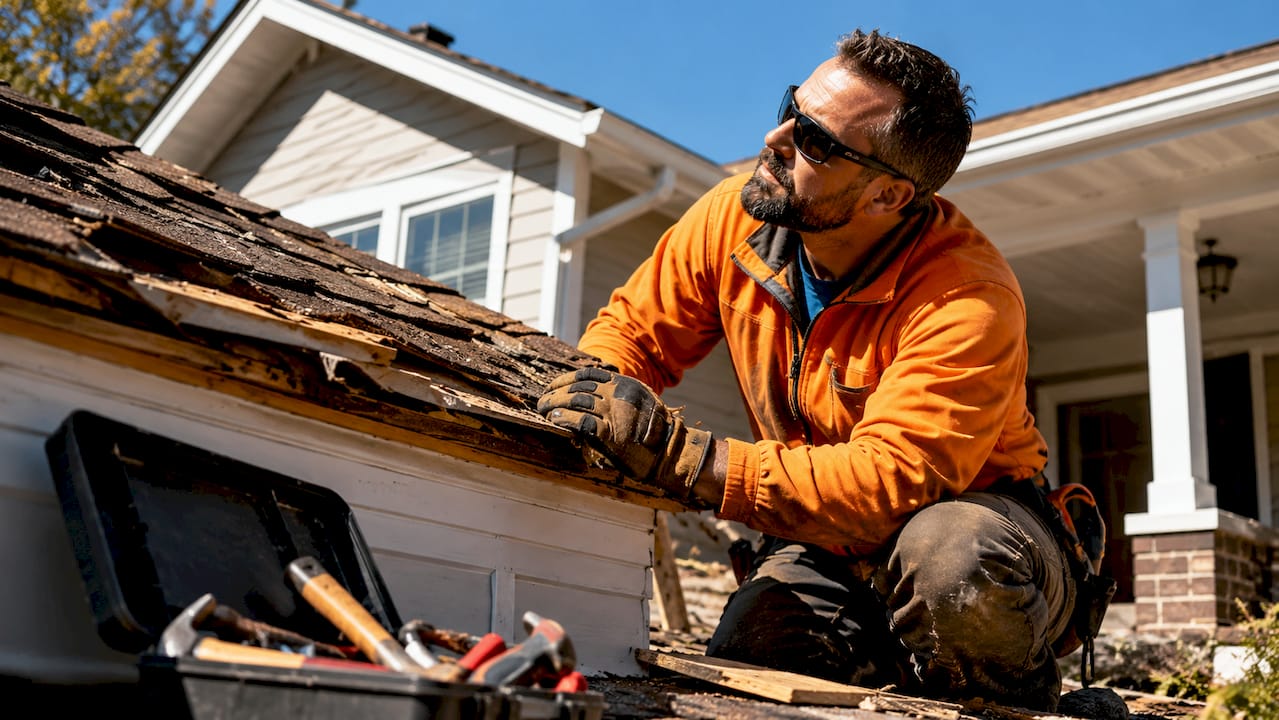
Certifications from manufacturers like GAF and Owens Corning are not just marketing badges. These credentials confirm that a contractor follows the exact installation protocols required to keep product warranties valid. Ignoring those protocols can void warranties and cause thousands of dollars in damage over time.
Key practices that define the veteran contractor standard:
- Written estimates with root cause findings. Not just a price, but an explanation of what caused the damage and what will prevent it from recurring.
- Strict manufacturer installation compliance. Every shingle, panel, and flashing installed to spec, protecting your warranty coverage.
- Daily jobsite cleanup. A clean site signals a disciplined crew and protects your property during the repair window.
- Transparent scheduling. You know the start date, the expected completion date, and who to call if anything changes.
- Insurance and licensing verification. Licensed contractors prevent costly structural failures by ensuring all exterior repairs meet safety and code standards.
Pro Tip: Ask any contractor to show you their manufacturer certification before signing a contract. A GAF Master Elite or Owens Corning Preferred contractor has passed third-party vetting that a general license alone does not require.
When should homeowners choose repairs versus replacements?
The repair versus replacement decision is the most consequential call in any exterior project. Veteran contractors make it based on inspection data, not gut instinct or the cheapest option.
Moisture intrusion behind panels or damage covering more than 20–30% of a surface typically signals that replacement is more cost-effective than continued patching. Proactive replacement at that threshold prevents structural rot that can cost thousands more in remediation. A veteran contractor will tell you that number plainly, not steer you toward the higher ticket item without evidence.
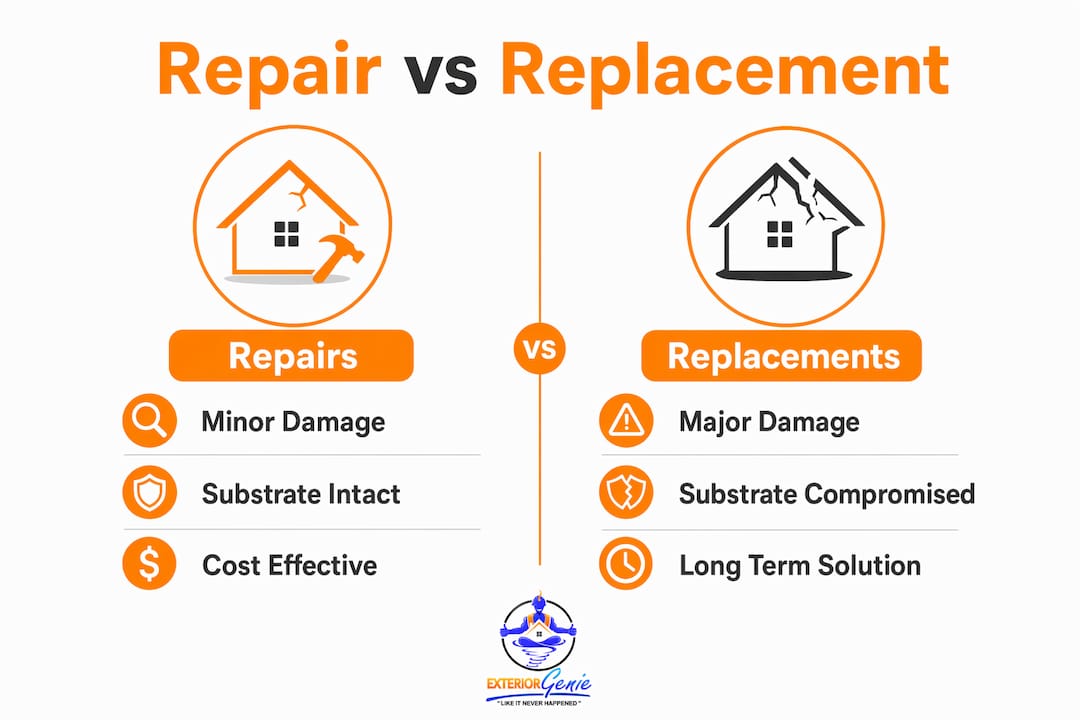
Visible exterior damage often masks hidden substrate problems like moisture-induced rot. Veteran contractors insist on full inspections before any repair work begins, because fixing the surface without addressing the substrate guarantees a repeat call within a season or two.
The decision framework veteran contractors use in 2026:
- Inspect the substrate first. Pull back damaged panels or shingles to assess the decking, sheathing, or framing underneath before quoting any repair.
- Calculate the damage percentage. If more than 20–30% of the surface is compromised, replacement math almost always wins over repeated repairs.
- Identify the root cause. A leak is a symptom. The cause could be flashing failure, improper slope, or a failed sealant. Fix the cause, not just the symptom.
- Provide a written estimate with both options. Homeowners deserve a side-by-side cost comparison of repair versus replacement so they can make an informed decision.
- Factor in age and remaining service life. A 15-year-old roof with localized damage may still have years of life left. A 25-year-old roof with the same damage is a different calculation entirely.
| Scenario | Recommended Action |
|---|---|
| Less than 20% surface damage, substrate intact | Targeted repair with root cause fix |
| 20–30% or more surface damage | Full replacement evaluation |
| Moisture intrusion behind panels | Immediate inspection, likely replacement |
| Repeated repairs in the same area | Root cause analysis, possible replacement |
| Roof or siding under 10 years old, isolated damage | Repair with manufacturer-compliant materials |
Pro Tip: Always ask for a repair vs. replacement breakdown in writing. A contractor who refuses to provide one is not giving you the full picture.
How do veteran contractors handle emergency roofing repairs differently?
Emergency roofing response is where the veteran contractor's discipline shows up most clearly. A standard contractor may schedule you for next week. A veteran contractor treats an active leak or storm breach the same way a soldier treats a breach in the perimeter: it gets addressed immediately.
Exteriorgenie offers 24/7 emergency repairs backed by HAAG-certified inspectors who document damage thoroughly from the first visit. That documentation matters because it forms the foundation of your insurance claim. Incomplete or inaccurate documentation is the leading reason insurance claims get underpaid or denied.
Key advantages of veteran contractors in emergency scenarios:
- Same-day stabilization. Tarping, temporary sealing, and water diversion happen on the first visit to stop active damage from spreading.
- Free on-site inspections with written findings. Reputable contractors provide detailed written estimates that identify root causes, not just surface issues, with project timelines ranging from same-day emergency fixes to 1–2 week scheduling for larger projects.
- Insurance claim liaison services. Veteran contractors act as expert liaisons with your insurer, preventing underpayments by ensuring thorough damage documentation from the start.
- Proven materials under pressure. Emergency repairs use the same certified materials as standard jobs. There is no "good enough for now" standard on a veteran contractor's crew.
- Financing options for unexpected costs. Storm damage rarely fits a budget. Veteran contractors who offer flexible financing remove the barrier between you and a safe roof.
Pro Tip: Take your own photos of the damage before any contractor arrives. Pair them with the contractor's HAAG-certified inspection report for the strongest possible insurance claim.
What practical benefits do homeowners and property managers gain?
Hiring a veteran contractor delivers measurable advantages that show up in your project outcome, your insurance settlement, and your long-term repair costs. The benefits are not abstract. They are structural.
Veteran contractors integrate with insurance processes as expert liaisons, preventing claim underpayments by ensuring proper damage documentation. Their military training in project management translates directly to superior claim handling. For property managers overseeing multiple units, that expertise can mean the difference between a fully covered repair and a significant out-of-pocket gap.
| Factor | General Contractor | Veteran Contractor |
|---|---|---|
| Project communication | Variable, often reactive | Scheduled updates, single point of contact |
| Manufacturer certification | Not always required | GAF, Owens Corning, or equivalent standard |
| Insurance documentation | Basic photos and invoice | HAAG-certified inspection with written findings |
| Emergency response | Next available slot | 24/7 availability, same-day stabilization |
| Warranty compliance | Often unverified | Strict installation protocol adherence |
| Substrate inspection | Surface-level assessment | Full inspection before any repair begins |
Consistent project timelines protect property managers from tenant complaints and liability exposure. A veteran contractor's schedule adherence is not a courtesy. It is a professional standard built from years of operating under conditions where delays have real consequences. That mindset carries directly into how they run a roofing or siding job.
Long-term structural protection is the most underrated benefit. Thorough inspections that catch hidden substrate damage prevent the kind of recurring failures that drain maintenance budgets year after year. One complete repair done right costs less over five years than three partial fixes that miss the root cause.
Key Takeaways
Veteran contractors deliver superior exterior repair outcomes because their military discipline, manufacturer certifications, and thorough inspections address root causes rather than surface symptoms.
| Point | Details |
|---|---|
| Mission-first project management | Veteran contractors use military discipline to keep timelines, communication, and jobsite standards consistent. |
| Manufacturer certification matters | GAF and Owens Corning credentials confirm proper installation and protect your warranty coverage. |
| Repair vs. replacement threshold | Damage covering 20–30% or more of a surface typically makes replacement more cost-effective than repeated repairs. |
| Emergency response capability | 24/7 availability and same-day stabilization stop active damage before it becomes a structural failure. |
| Insurance claim expertise | Veteran contractors document damage thoroughly, acting as liaisons to prevent underpayments or denials. |
Why I think most homeowners underestimate what veteran contractors actually do
Most homeowners hire a contractor the way they hire a plumber: find someone available, check a review or two, and hope for the best. That approach works fine for a leaky faucet. It fails badly on a storm-damaged roof or a siding system with hidden rot.
What I have seen consistently is that veteran contractors operate with a level of pre-job preparation that most homeowners never notice because it happens before the crew even arrives. The inspection is thorough. The estimate is specific. The scope of work is written down. That preparation is not a sales tactic. It is how military-trained professionals manage risk.
The part that surprises homeowners most is the insurance piece. Most people assume their insurer will pay what the damage is worth. Veteran contractors know that insurers pay what is documented. A HAAG-certified inspector with a written report and photo evidence gets a fundamentally different result than a contractor who hands over a one-page invoice. That gap in outcomes is real, and it is one of the strongest reasons to choose a veteran contractor for any significant exterior repair.
The construction industry is also changing. Veterans entering the trades bring a professionalism that is raising the standard for everyone. Certifications, written estimates, and transparent communication are becoming expectations rather than differentiators. Veteran contractors did not wait for that shift. They built their businesses around it from day one.
— Ebben
Exteriorgenie's veteran contractor services for exterior repairs
Exteriorgenie is a veteran-owned roofing company based in Lexington, SC, with 25 years of experience handling residential and commercial exterior repairs. Their HAAG-certified inspectors respond to emergencies around the clock and provide thorough documentation that supports insurance claims from the first visit.

For homeowners facing storm damage, active leaks, or aging exterior systems, Exteriorgenie offers emergency roof repair with same-day stabilization and no-obligation inspections. Their roofing financing options make it possible to address urgent repairs without waiting for budget cycles to align. If you need insurance claims assistance or a full exterior assessment, Exteriorgenie's veteran contractor team brings the certifications, discipline, and documentation to get the job done right.
FAQ
What is the role of a veteran contractor in exterior repairs?
A veteran contractor applies military-trained project management and manufacturer-certified installation skills to exterior repairs, ensuring root causes are addressed, warranties are protected, and homeowners receive transparent communication throughout the project.
How do veteran contractors decide between repair and replacement?
Veteran contractors inspect the substrate first, then assess the percentage of surface damage. Damage covering 20–30% or more of a surface typically makes full replacement more cost-effective than continued repairs.
Why does manufacturer certification matter when hiring a contractor?
Certifications from GAF or Owens Corning confirm that a contractor follows the exact installation protocols required to keep product warranties valid. Ignoring those protocols can void coverage and lead to expensive long-term repairs.
How do veteran contractors help with insurance claims?
Veteran contractors act as expert liaisons with insurers, providing HAAG-certified inspection reports and thorough damage documentation that prevent claim underpayments or denials. Their project management training makes them effective advocates in the claims process.
What should homeowners ask before hiring a contractor for exterior repairs?
Ask for a written estimate that identifies the root cause of damage, proof of manufacturer certification, and confirmation of 24/7 emergency availability. A contractor who cannot provide all three is not operating at the veteran contractor standard.