
A 24/7 roofing service is a professional emergency roofing solution available at any hour to rapidly address urgent roof damage and stop further structural harm to your home or business. Unlike standard roofing contractors who work business hours, these services operate around the clock because storms, fallen trees, and sudden leaks do not wait for Monday morning. The industry term for this model is emergency roofing response, and understanding how it works gives you a clear advantage when a crisis hits. This article breaks down how these services operate, what real benefits they deliver, and exactly what you should do before the crew arrives.
How do 24/7 roofing services work when an emergency happens?
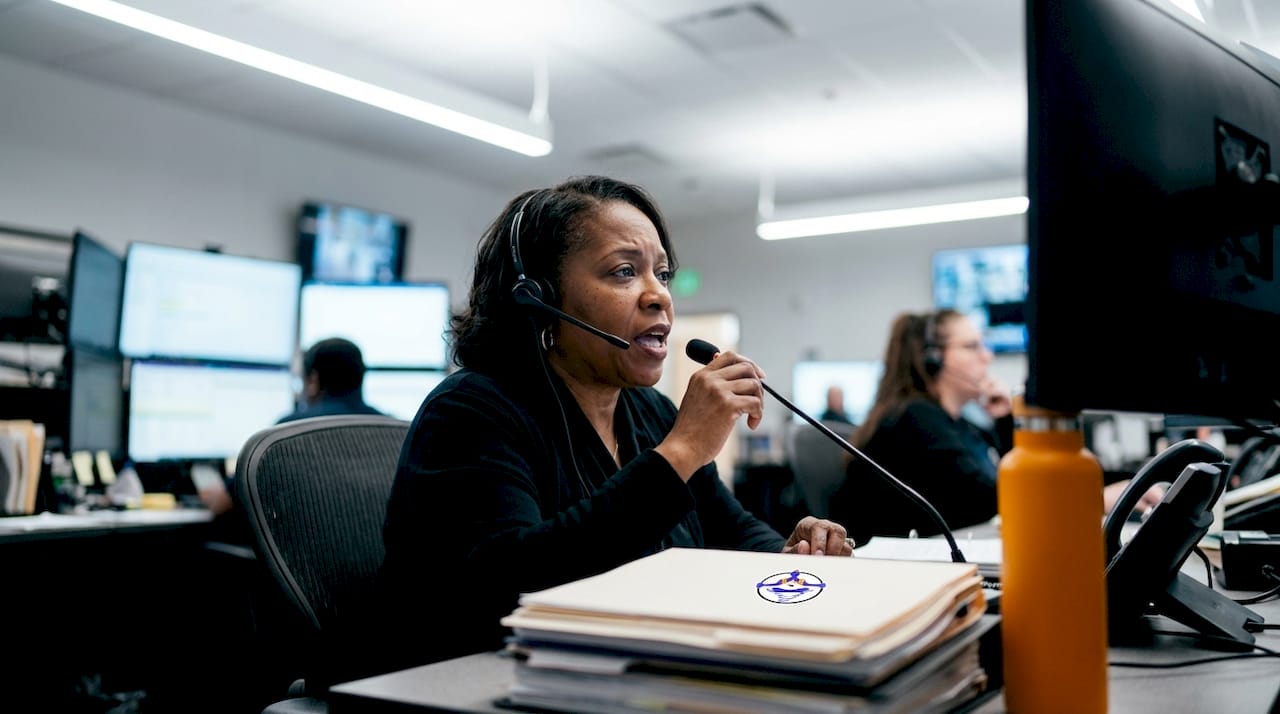
The moment you call a legitimate 24/7 emergency roofing service, a dispatcher logs your location, damage type, and severity. From there, crews dispatch within 1 to 4 hours depending on weather conditions and call volume. That window matters because every hour of an open roof during rain multiplies interior damage.
When the crew arrives, their first job is triage, not full repair. The primary goal of emergency response is stabilizing the roof to prevent secondary damage before any permanent fix is proposed. That means assessing which areas are structurally compromised, identifying active leak points, and deciding whether exterior work is safe to begin.
Here is the typical sequence of events during an emergency roofing response:
- Initial call and dispatch. You describe the damage. The dispatcher confirms your address and sends the nearest available crew.
- On-site damage assessment. The crew inspects the roof and interior for structural risk, active water intrusion, and safety hazards.
- Interior containment. If rain is still falling or the roof is too dangerous to access, the crew sets up interior containment to limit water spread.
- Temporary exterior protection. During the first safe weather window, the crew installs heavy-duty tarping. Emergency tarping protects the structure for 60 to 90 days and costs between $300 and $700 depending on roof size.
- Documentation and planning. The crew photographs all damage, writes a preliminary report, and schedules permanent repairs once weather permits.
One critical operational detail: high-intensity storm conditions prevent safe roof climbs, so professional crews perform interior containment first and wait for the first safe weather window before deploying tarps externally. This is not a delay. It is the correct protocol.
Pro Tip: Ask your 24/7 roofing provider whether they use heavy-duty secured tarps or lightweight poly sheeting. Heavy-duty tarps withstand wind and last through the repair scheduling period; lightweight tarps often fail within days.
What are the benefits of choosing a 24/7 roofing service?
The most direct benefit of round-the-clock roofing help is damage containment speed. A roof breach left unaddressed for 12 hours during a rainstorm can saturate insulation, warp ceiling joists, and trigger mold growth within 24 to 48 hours. A rapid emergency response stops that chain reaction before it starts.
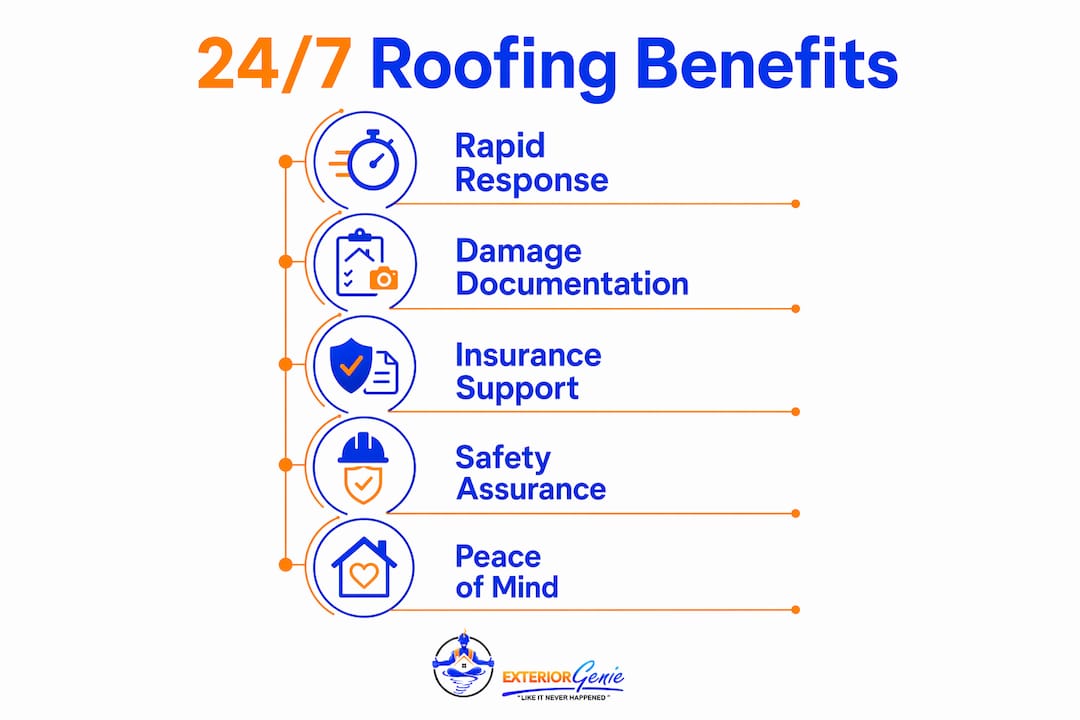
Here are the core advantages that separate true 24/7 emergency roofing services from standard roofing contractors:
- Prevention of secondary damage. Fast leak containment stops water from reaching electrical systems, flooring, and structural framing.
- Documented damage for insurance. Emergency crews photograph and report damage before any materials are moved, which is exactly what insurance adjusters require.
- Expert stabilization. Crews trained in emergency response know how to prioritize structural safety over cosmetic fixes.
- Insurance claim support. Reputable providers supply itemized estimates that separate temporary measures from permanent repairs, which speeds claim processing.
- Guaranteed availability. You get a real crew, not a voicemail, at 2 a.m. during a hurricane.
The last point deserves emphasis. Verify that a 24/7 provider has dedicated on-call crews rather than a third-party answering service. Many companies advertise 24/7 availability but route after-hours calls to a call center that schedules a callback for the next business day. That is not emergency service. That is a marketing claim.
"The difference between a true 24/7 roofing service and one that only answers calls after hours is the difference between a crew at your door by 3 a.m. and a voicemail returned at 8 a.m. For a homeowner with water pouring through the ceiling, that gap is everything."
You can learn more about vetting emergency roofers before a crisis forces the decision. Doing that research now saves critical time later.
What should you do while waiting for 24/7 roofing help?
Your actions in the first 30 minutes after discovering roof damage directly affect both the extent of interior damage and the strength of your insurance claim. The right moves are simple, safe, and documented.
- Call your 24/7 roofing service immediately. Do not wait to see if the rain stops. The sooner the crew is dispatched, the sooner damage is contained.
- Set up interior containment. Place buckets under active drips. If a ceiling is bulging with trapped water, use a screwdriver to puncture a small hole at the lowest point to release it in a controlled stream rather than letting it collapse.
- Document everything before touching it. Take photos and video of all visible damage, including wet insulation, stained drywall, and any displaced roofing materials visible from inside.
- Stay off the roof. Homeowners should never climb on a leaking roof during a storm due to safety risks and the potential to complicate insurance claims through unprofessional repairs.
- Prioritize by severity. Active leaks and sagging roof decks require immediate 24/7 service, while small isolated drips may qualify as high-priority next-day visits rather than true emergencies.
Pro Tip: Keep a waterproof phone case or a zip-lock bag in your emergency kit. Photographing damage during active rain is far easier when your phone is protected, and those time-stamped photos carry real weight with insurance adjusters.
One counterintuitive fact about interior water damage: water leaks inside often travel far from the actual entry point because water follows rafters and seams before dripping. The wet spot on your ceiling may be 10 feet from the actual breach. Do not assume you have identified the source just because you found where it is dripping.
How do 24/7 roofing services assist with insurance claims?
Emergency roofing services do more than patch your roof. They generate the documentation that makes or breaks an insurance claim. Documenting damage before any materials are moved is critical, and reputable roofers provide itemized estimates that clearly separate temporary measures from permanent repairs to expedite claims processing.
The table below outlines what a strong insurance claim package from a 24/7 roofing provider should include:
| Documentation Item | Why It Matters |
|---|---|
| Time-stamped photos of all damage | Proves damage occurred before any repairs were made |
| Written damage assessment report | Gives the adjuster a clear scope of loss |
| Itemized estimate (temporary vs. permanent) | Prevents claim disputes over what was emergency work |
| Receipts for emergency tarping and containment | Establishes reimbursable emergency costs |
| Weather event records | Ties damage to a covered storm event, not wear and tear |
Most standard homeowner and commercial property policies cover storm damage, hail, and wind events. They exclude damage caused by neglect or normal wear and tear. That distinction is where claims get denied. A HAAG-certified inspector, like those at Exteriorgenie, can document the difference between storm-caused damage and pre-existing deterioration, which is the exact argument your adjuster needs to approve full coverage.
Filing your claim promptly after the emergency response is equally important. Most policies require notification within a specific window after a loss event. Your 24/7 roofing provider should be able to work directly with your insurance adjuster and advocate for complete coverage of both temporary and permanent repairs. For a deeper look at how inspection reports affect claim outcomes, the guide on roof inspection and insurance claims is worth reading before you file.
Key takeaways
A 24/7 roofing service delivers its core value through speed of response and quality of documentation, both of which directly determine how much damage your property sustains and how smoothly your insurance claim resolves.
| Point | Details |
|---|---|
| Emergency response is triage | Crews stabilize and contain damage first; permanent repairs come after safe conditions return. |
| Dispatch windows matter | Legitimate services send crews within 1 to 4 hours, not callbacks the next morning. |
| Interior containment is immediate | Buckets, pressure release, and containment limit damage while exterior work waits for safe weather. |
| Documentation drives claims | Time-stamped photos and itemized estimates are the foundation of a successful insurance claim. |
| Verify real on-call crews | Confirm your provider has actual staff ready to dispatch, not a third-party answering service. |
What I've learned from 25 years of emergency roofing calls
After two and a half decades in this industry, the pattern I see most often is homeowners underestimating how fast a small roof breach becomes a major structural problem. A missing shingle during a dry week is a maintenance issue. That same missing shingle during a South Carolina thunderstorm is a water intrusion event that can compromise ceiling joists, insulation, and electrical systems within hours.
The second pattern I see is people attempting DIY fixes during the emergency itself. I understand the instinct. You want to protect your home. But climbing onto a wet, storm-damaged roof at night is genuinely dangerous, and it creates a documentation problem with your insurance carrier. Adjusters look for signs of unprofessional repair attempts, and those signs can be used to reduce or deny your claim.
What I tell every homeowner and business owner: treat the first hour after discovering roof damage the same way you would treat a medical emergency. Call the professionals immediately, do what you safely can from inside, and document everything. The crew handles the rest.
The one thing most articles do not tell you is that not all 24/7 roofing services are equal. Some companies answer calls around the clock but cannot actually dispatch a crew until morning. Ask directly: "Do you have a crew available to arrive tonight?" If the answer is vague, keep calling. The right provider gives you a clear arrival window, not a promise to try.
— Ebben
Exteriorgenie is ready when your roof is not
When a storm hits Lexington, SC at midnight, Exteriorgenie's crews are already on call. As a veteran-owned company with 25 years of experience, Exteriorgenie provides true round-the-clock emergency roofing response for both residential and commercial properties. From immediate emergency roof tarping to full damage stabilization, every response is handled by trained professionals, not a call center.

Exteriorgenie's HAAG-certified inspectors document damage thoroughly and work directly with your insurance adjuster to support full claim coverage. Transparent pricing, no surprise fees, and a commitment to getting your property protected fast are what set this team apart. If you need emergency roof repair in Lexington, SC, Exteriorgenie is the call that gets a crew to your door.
FAQ
What does a 24/7 roofing service actually do?
A 24/7 roofing service dispatches trained crews at any hour to assess urgent roof damage, perform interior containment, and install temporary protection like heavy-duty tarps. The primary goal is stabilizing the structure to prevent further damage until permanent repairs can be scheduled safely.
How fast does an emergency roofing crew arrive?
Most legitimate emergency roofing services aim to arrive within 1 to 4 hours of your call, depending on weather severity and crew availability. If a provider cannot give you a firm arrival window, that is a sign they may not have real on-call crews ready to dispatch.
Will my homeowner's insurance cover emergency roof repairs?
Most standard homeowner's policies cover storm, hail, and wind damage but exclude wear and tear or neglect. Filing promptly and providing time-stamped photos along with an itemized contractor estimate significantly improves your chances of full coverage.
Is it safe to go on my roof during a storm to stop a leak?
No. Climbing on a wet or storm-damaged roof creates serious injury risk and can complicate your insurance claim if adjusters find evidence of unprofessional repair attempts. Stay inside, contain water damage with buckets, and let the professional crew handle exterior work during the first safe weather window.
How do I know if my roof issue is a true emergency?
Active leaks, sagging roof decks, and any situation where structural integrity or interior safety is compromised qualify as true emergencies requiring immediate 24/7 service. Small isolated drips with no structural concern are high-priority issues that can typically wait for a next-day appointment.