
Common residential roof repair types include shingle replacement, leak repair, flashing fixes, gutter repairs, and structural damage correction. Each addresses a distinct failure point that, left untreated, accelerates deterioration across the entire roofing system. 38% of U.S. residential roofs are currently in moderate to poor condition, which translates directly to higher insurance costs and shortened roof lifespan. Whether your home has asphalt shingles, metal panels, or tile, knowing which repair type applies to your situation is the fastest way to protect your investment and avoid a full replacement.
1. Common residential roof repair types: shingle damage
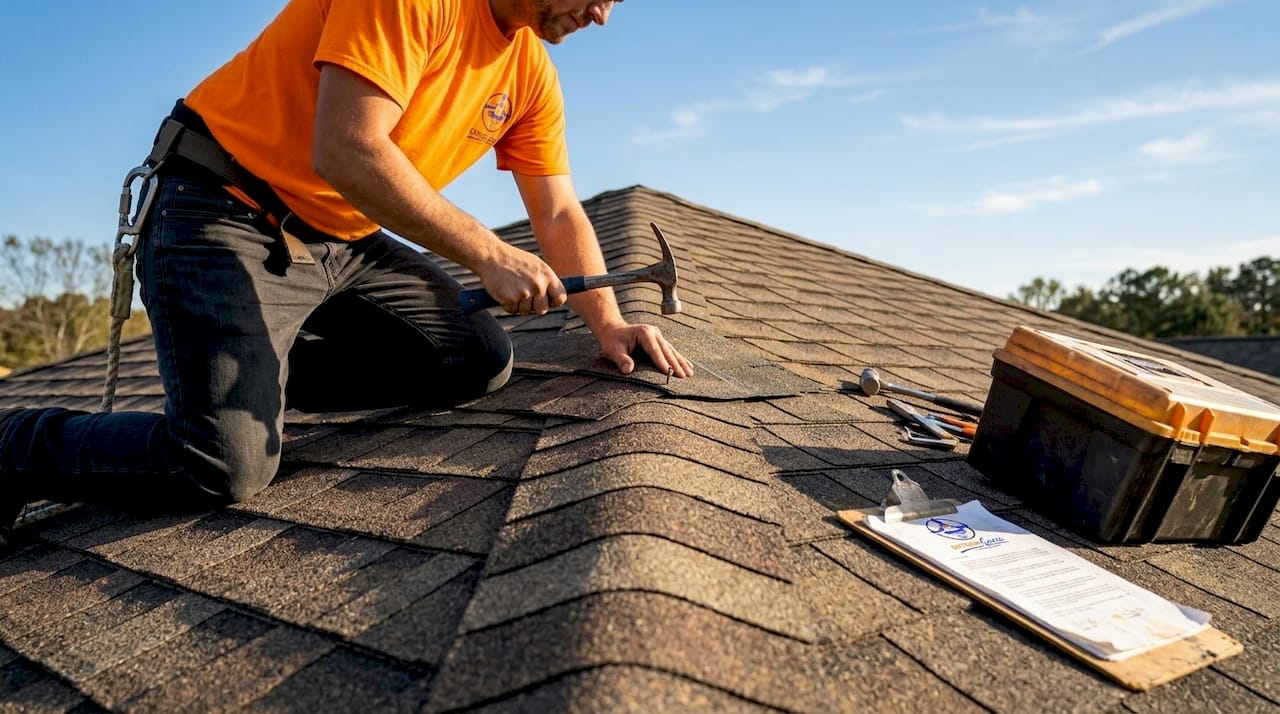
Shingle damage is the most frequently reported residential roofing problem, and it takes four distinct forms: missing shingles, cracked shingles, curling edges, and granule loss. Each signals a different stage of deterioration and calls for a different repair response.
- Missing shingles expose the underlayment to direct rain and UV damage. Replace them within days, not weeks.
- Cracked shingles result from thermal cycling and age. Individual shingles can be swapped out if the surrounding field is intact.
- Curling edges (cupping or clawing) indicate moisture imbalance or aging adhesive strips. Widespread curling usually means a section replacement is more cost-effective than patching.
- Granule loss shows up as bare patches or granule accumulation in gutters. It reduces the shingle's UV protection and accelerates aging.
Minor shingle repairs typically run $400 to $600, while major repairs involving large sections can reach $1,500 to $8,000. That cost gap makes early detection the single most valuable roof maintenance tip a homeowner can act on. Matching replacement shingles to the existing color and manufacturer matters more than most homeowners realize. A mismatched shingle absorbs heat differently, which can cause uneven wear across the roof surface.
Pro Tip: Never pressure wash asphalt shingles to clean them. The high-pressure stream strips protective granules directly off the surface, accelerating roof deterioration and voiding most manufacturer warranties.
2. Leak repair: diagnosing the source before patching
Repairing leaks in roofs is one of the most mishandled residential roofing fixes because homeowners treat the symptom (the wet ceiling) rather than the source. The water entry point is almost always several feet away from where the stain appears inside.
Common leak origins include:
- Flashing failures at chimneys, skylights, and roof-to-wall intersections
- Pipe boots (the rubber collar around plumbing vents) that crack after 10 to 15 years
- Open valleys where two roof planes meet and water volume concentrates
- Nail pops that lift shingles and create small but persistent entry points
Flashing issues at penetrations are the leading cause of roof leaks and require professional repair to avoid recurrent damage. That fact alone explains why so many DIY leak patches fail within a season. Standard hardware store caulk is the other common mistake. Hardware store caulk fails within one freeze-thaw cycle. Roofing-grade sealants, such as polyurethane or rubberized asphalt formulas, bond to wet surfaces and flex with temperature changes.
If you notice soft spots on the decking when you walk the roof, or if the wood around a leak point feels spongy, you are dealing with rot beneath the surface. Patching over rotted decking creates a temporary fix that fails faster than the original damage.
Pro Tip: Trace leaks on a dry day by having someone run a garden hose over specific roof sections while you watch from the attic. This method pinpoints the entry zone without the risk of working on a wet roof.
3. Flashing and gutter repairs: stopping water at the edges
Flashing is the thin metal (typically galvanized steel or aluminum) installed at every roof intersection and penetration. Its job is to redirect water away from joints that shingles alone cannot seal. When flashing fails, water enters the most vulnerable structural zones of the roof.
Typical flashing faults follow a predictable pattern:
- Cracks in step flashing along dormers or sidewalls, caused by thermal expansion over years
- Gaps at chimney counter-flashing where the sealant has dried and separated from the masonry
- Improperly lapped sections installed by a previous contractor who cut corners on overlap dimensions
- Rust and corrosion on older galvanized flashing that was never coated or maintained
Gutters connect directly to roof health because clogged or damaged gutters force water to back up under the drip edge and into the fascia. That water path causes fascia rot, soffit damage, and eventually interior leaks that look like roof leaks but originate at the eave. Cleaning gutters twice a year and inspecting the gutter-to-fascia connection prevents a large category of water damage that gets misdiagnosed as a shingle problem. Gutter guards reduce cleaning frequency but do not eliminate it. Debris still accumulates at downspout openings and inside the guard channels.
4. Structural roof repairs: when the problem goes deeper than shingles
Structural damage is the category of roof repair that homeowners most often underestimate. The visible signs are subtle until the problem becomes expensive.
Watch for these indicators:
- Sagging roof deck visible from the street, especially along the ridge or between rafters
- Daylight visible in the attic through gaps in the decking or at the eaves
- Soft or spongy areas when walking the roof surface
- Staining on attic rafters indicating long-term moisture infiltration
- Bowed or cracked rafters from sustained water weight or impact damage
Structural repairs range from partial decking replacement to full section rebuilds, and the cost directly influences whether repair or full replacement makes more financial sense. Hail and high winds cause structural damage that is not always visible from ground level. A HAAG-certified inspector can identify impact fractures in decking and rafter stress that a standard visual inspection misses. No surface patch resolves a structural issue. Applying new shingles over rotted or compromised decking is one of the most expensive mistakes in residential roofing because it delays the inevitable while adding labor costs on top.
5. Roof repair methods and maintenance tips by material type
Different roofing materials require different repair approaches. Using the wrong method on the wrong material shortens the repair's lifespan and can void manufacturer warranties.
| Roof type | Common repair method | Maintenance interval |
|---|---|---|
| Asphalt shingles | Individual shingle swap, section replacement, flashing reseal | Annual inspection, gutter cleaning twice yearly |
| Metal panels | Fastener and washer replacement, seam resealing, panel swap | Inspection every 5 to 7 years for fastener condition |
| Clay or concrete tile | Cracked tile replacement, mortar repair at ridges | Inspection after every major storm event |
| Flat (BUR or TPO) | Two-ply patch wider than the damaged area, membrane resealing | Biannual inspection, drain clearing after storms |
Rubber washers on metal roof screws degrade faster than the metal panels themselves, making fastener inspection the most overlooked maintenance task on metal roofs. For flat roofs, applying a two-ply patch wider than the damaged area is the standard method for mimicking the original built-up roofing system's performance. Skipping the second ply is the most common reason flat roof patches fail prematurely.
Proper maintenance can extend a 15-year roofing system to 30 to 40 years of service, particularly for metal roofs. That figure reframes maintenance spending from a cost into a return on investment. Understanding repair needs by material before you buy a home or schedule a repair saves significant money over the life of the roof.
DIY repairs are appropriate for minor shingle damage under 10 square feet, but flashing repairs demand professional expertise. A DIY flashing patch lasts one to three years on average. A professionally installed flashing repair lasts the life of the roof.
Pro Tip: Document every inspection and repair with dated photos and contractor invoices. Failing to document repairs can compromise insurance claims and reduce resale value, especially in storm-prone regions where wind mitigation certifications are required.
Key takeaways
The most cost-effective approach to residential roof repair is early identification of the specific damage type, followed by material-matched repair methods and documented maintenance records.
| Point | Details |
|---|---|
| Identify damage type first | Shingle, leak, flashing, gutter, and structural repairs each require different methods and budgets. |
| Match materials to repair | Using the wrong sealant or patch method shortens repair lifespan and can void warranties. |
| Document every repair | Dated photos and invoices protect insurance claims and support resale value. |
| Maintenance extends lifespan | Regular inspections and gutter cleaning can double a roof's functional service life. |
| Structural damage needs professionals | No surface patch resolves decking rot or rafter damage. Call a licensed contractor. |
What 25 years on roofs has taught me about repair priorities
Most homeowners call a roofer when water hits the ceiling. By that point, the damage has usually been building for six to eighteen months. The ceiling stain is the last symptom, not the first sign of trouble.
The misconception I see most often is that a roof either needs a full replacement or it's fine. That binary thinking costs homeowners thousands of dollars. A properly diagnosed flashing repair or a targeted shingle section replacement can add five to ten years to a roof that a less experienced contractor would have called a total loss. The repair vs. replacement decision is genuinely nuanced, and it depends on the age of the system, the extent of the damage, and the material type.
I also think the roofing industry does a poor job of educating homeowners on what a good inspection actually looks like. Walking the perimeter and glancing at the ridge is not an inspection. A real inspection includes the attic, the decking, every penetration, and all flashing transitions. If a contractor quotes you a repair without going into your attic, get a second opinion.
The homeowners who spend the least on roofing over a 20-year period are the ones who schedule a professional roof inspection every two to three years and fix small problems before they become structural ones. That discipline is not complicated. It just requires treating your roof like the critical system it is rather than something you think about only when it fails.
— Ebben
Protect your home with Exteriorgenie's roof repair expertise

Exteriorgenie serves homeowners across Lexington, SC, with the full range of residential roofing fixes covered in this guide. From targeted shingle repairs and flashing replacements to structural deck work and storm damage response, the team brings 25 years of field experience and HAAG-certified inspection credentials to every job. Exteriorgenie's roof repair services include transparent pricing, insurance claim assistance, and 24/7 emergency response for urgent situations. If you are unsure whether your roof needs a repair or a full replacement, start with a professional assessment. Visit Exteriorgenie's residential roofing page to schedule your inspection and get a clear picture of your roof's condition before the next storm season.
FAQ
What are the most common residential roof repair types?
The most common types are shingle repair or replacement, leak repair, flashing repair, gutter repair, and structural deck repair. Each addresses a distinct failure point and requires a different repair method and budget.
How do I know if my roof leak needs a patch or a full repair?
If the leak originates from a failed pipe boot or minor flashing gap, a targeted professional repair is usually sufficient. If the decking beneath the leak feels soft or spongy, structural repair is required and patching alone will not hold.
Can I repair roof shingles myself?
DIY shingle repairs are reasonable for damage under 10 square feet using matching materials and proper adhesive. Anything involving flashing, valleys, or structural components requires a licensed roofing contractor.
How often should I have my roof inspected?
A professional inspection every two to three years is the standard recommendation, plus an inspection after any significant storm event. Consistent inspections are the most effective roof maintenance tip for catching problems before they become costly repairs.
Does roof condition affect my homeowner's insurance?
Yes. Roof condition is now a core underwriting factor, and poor condition roofs carry approximately 60% higher loss costs, which insurers price directly into premiums or use as grounds for coverage denial.