
If you can see daylight through your ceiling, hear framing groaning under weight, or watch your roofline sagging in real time, get everyone out of the building immediately. Call 911 first if anyone is hurt, trapped, or if you smell gas. That single decision matters more than anything else in this article.
A caved-in roof is a structural failure where the decking, framing, or trusses that hold your roof up have already dropped into the living space, or are actively failing and about to. It's not a leak. It's not a soft spot you can poke with a broom handle and forget about. When structures "cave in," they fail suddenly and often without support, which is exactly why professionals treat any active sagging or new cracking as an emergency rather than a maintenance item.
Call 911 immediately if: someone is injured or trapped, you smell natural gas, you see sparking or exposed wiring, or you hear active structural movement (cracking, popping, or shifting) while people are still inside. Do not go back inside to grab belongings, pets, or "just check one thing" until officials or a qualified inspector clears the building.
Key Takeaways
Acting within hours, not days, of discovering a caved-in roof reduces injury risk, limits secondary water damage, and strengthens your insurance claim from day one.
| Point | Details |
|---|---|
| Safety comes before everything | Evacuate immediately and call 911 for injuries, entrapment, gas odor, or active structural movement. |
| Document from the ground | Photograph sagging, cracks, and water stains with scale references before anyone re-enters the space. |
| Get the right professional first | Structural engineers assess stability; roofers repair the roofing system; don't confuse the two roles. |
| Temporary protection has limits | Tarping and board-up stop weather damage but never restore structural integrity on their own. |
| Exterior Genie handles the full sequence | 24/7 emergency response, HAAG-certified inspections, tarping, and insurance coordination in one call. |
Where to Learn More or Share With Your Adjuster
- The Cambridge Dictionary's definition of "cave-in" is a useful, neutral reference if you need to explain the term precisely to an adjuster or engineer.
- News coverage of a New Jersey retail roof collapse during heavy rain shows how quickly weather-driven failures can escalate and why emergency response coordination matters.
- The Astoria ceiling collapse report illustrates how a local building department's vacate order and engineer report process actually plays out.
- Your local building department or Department of Buildings may require permits or issue vacate orders directly; check their published procedures if your collapse affects a shared or multi-unit structure.
Table of Contents
- What a Caved In Roof Looks Like Before It Fully Fails
- What to Do in the First Hour After a Roof Collapse
- How to Tell If Your Home Is Safe to Approach
- Tarping vs. Board-Up: Which Temporary Fix Do You Need?
- Insurance and Repair Costs After a Roof Collapse
- Who to Call First, Second, and Third
- Why Roofs Actually Cave In
- What a Real Repair Timeline Actually Looks Like
- Why Speed Matters More Than Most Homeowners Realize
- Get Emergency Roof Help Without the Runaround
- Sources
- FAQ
What a Caved In Roof Looks Like Before It Fully Fails
Most roof collapses don't happen in one dramatic instant. They build for days, weeks, or sometimes months, and the building usually tries to warn you before the framing finally gives out.
The visual signs are the most reliable. Watch for:
- A sagging roofline visible from the street or driveway, especially a dip or wave that wasn't there last season
- A bowed or bulging ceiling, particularly in the middle of a room away from load-bearing walls
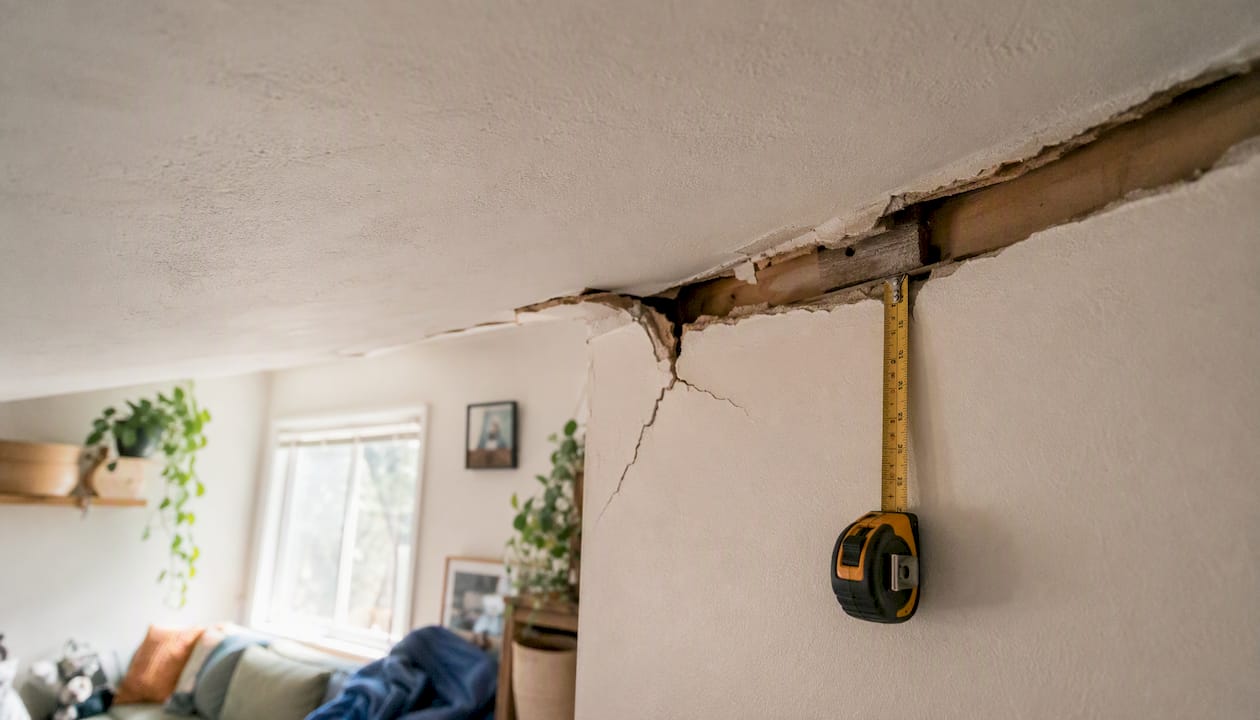
- New cracks, or widening old cracks, where the wall meets the ceiling
- Large or spreading water stains on drywall or plaster, especially with a brownish ring pattern
- Drywall that's buckling, sagging, or feels soft and spongy when lightly touched from below
Sound and behavior around the house tell you almost as much as your eyes do. Creaking, popping, or snapping noises from the attic or ceiling, especially under wind or snow load, are the building's way of telling you something is under stress it wasn't designed for. Doors and windows that suddenly stick or won't close flush can mean the frame of the house is shifting because the roof structure above it is no longer distributing weight evenly. A light dusting of plaster or small chunks falling before anything bigger happens is one of the clearest last warnings you'll get.
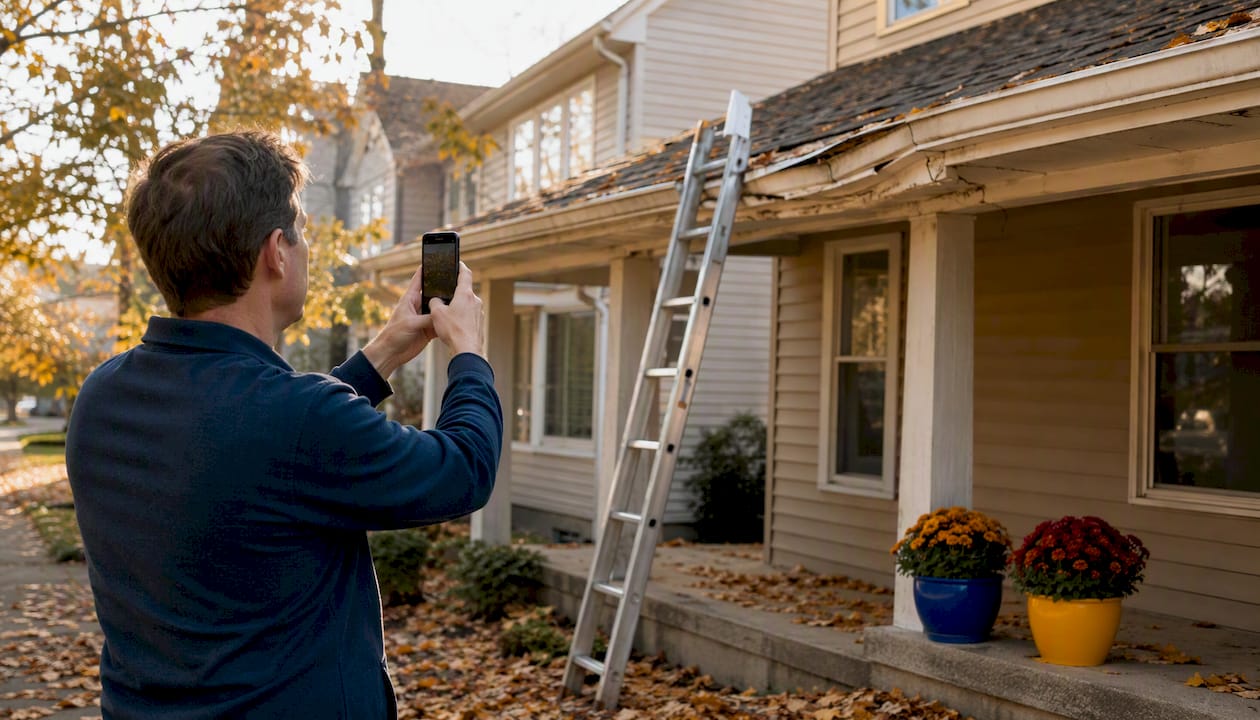
If you can safely do so from the ground or a doorway, photograph the sagging areas, the water stains (hold a tape measure or ruler in frame for scale), the cracks at wall corners, and anything visible on the exterior roof like pooling water or missing shingles. These photos become critical later for both your insurer and your structural engineer.
Pro Tip: Don't wait for noise to convince you something's wrong. Long-term rot and hidden moisture damage often fail completely silently. If you see active sagging or a fresh water stain, treat it as urgent even if the house has been dead quiet.
What to Do in the First Hour After a Roof Collapse
If anyone is injured or trapped, call 911 now. That's the entire decision tree for the first 60 seconds. Everything below assumes people are safe and out of the structure.
- Evacuate and establish a perimeter. Get everyone, including pets, out of the building and keep a safe distance from the affected area. Roofs that have partially failed can continue to collapse, sometimes minutes or hours later.
- Call 911 for injuries, entrapment, gas odor, or active structural movement. Emergency responders are trained to stabilize scenes exactly like this one; heavy rain caused a partial roof collapse at a New Jersey warehouse store that briefly trapped people inside, and first responders coordinated the rescue and scene safety.
- Shut off utilities only if you can do it safely without re-entering a dangerous area. If the gas or electrical shutoff is inside the collapse zone, leave it and let the utility company or fire department handle it.
- Never touch wet wiring, standing water near outlets, or downed electrical lines. Water and electricity together are a fast way to turn a property emergency into a fatality.
- Do not climb onto the roof, and do not attempt to move large debris yourself. Compromised framing can fail further under any added weight, including your own.
- Do not sleep, work, or store belongings under any area with visible sagging or cracking, even in another room of the same house if the framing is connected.
- Skip open flames or anything with a pilot light near damaged gas lines, including candles, lighters, and gas stoves.
- Photograph and video the damage from the ground once everyone is safely outside. Wide shots of the exterior, close-ups with scale references, and a few seconds of video walking the visible perimeter all help later.
- Write down who was present, what time the collapse or damage was discovered, and any sounds or events leading up to it. Memory fades fast under stress; a phone note takes 90 seconds.
- Call your insurance company to open an emergency claim once the immediate safety steps are handled. Most insurers have a 24-hour emergency line specifically for this.
How to Tell If Your Home Is Safe to Approach
You don't need an engineering degree to make a smart first call. You need to know what red flags mean "stay out and call someone" versus what's a normal, if unpleasant, repair.
From the ground or a doorway, look for cracks wider than a pencil, visible gaps between walls and ceilings, a foundation that looks like it's shifted, or any utility hazard like a hissing gas smell or a downed line touching the house. Any one of those means you wait outside for a professional, full stop. Don't attempt a walkthrough "just to see how bad it is."
Different professionals solve different problems, and knowing who does what saves you a frustrating runaround during a stressful week.
Fire and EMS handle injuries and immediate danger to life. They'll also often make the initial call on whether a structure is safe enough for anyone, including you, to approach.
The utility company gets called for suspected gas leaks or exposed electrical hazards, separate from any roofing issue. They'll shut off service at the meter or pole if needed.
A licensed structural engineer determines whether the building's frame is actually stable, and issues the kind of report your insurer, your contractor, and your local building department will all want to see. This is different from a roofing contractor: an engineer evaluates load-bearing capacity and code compliance, while a roofer evaluates and repairs the roofing system itself, from decking to shingles to flashing.
A licensed roofer or emergency repair contractor handles the visible roofing damage and installs temporary protection like tarps once the structure has been deemed safe enough to work on.
Local building departments sometimes get involved directly, particularly after a collapse affecting multiple units or a public space. In one recent case, a partial ceiling collapse at a supermarket in Astoria injured four shoppers, and the city's building department issued a vacate order and required a structural engineer's report before anyone could reoccupy the space. If you receive any official notice, whether it's a vacate order or an inspection requirement, keep a copy and follow it exactly. It becomes part of your paper trail with the insurer, too.
Tarping vs. Board-Up: Which Temporary Fix Do You Need?
Temporary protection stops the bleeding. It does not fix the wound. A tarp or board-up keeps rain, wind, and animals out while you wait for an engineer's sign-off and a permanent repair plan, but neither one restores the structural integrity of a failed roof.
| Factor | Tarp | Board-Up |
|---|---|---|
| Deployment speed | Fast, often same-day for emergency crews | Fast, similar timeline to tarping |
| Weather protection | Strong against rain and wind when properly secured | Strong for openings, walls, and windows, less suited to full roof sections |
| Visual security | Low, doesn't deter entry | High, blocks sightlines and physical access |
| Typical duration | Weeks, depending on material and weather exposure | Weeks to a couple months for vacant or unsafe sections |
A professional tarping crew typically runs through a set sequence: a safety check of the area, removal of loose debris that could puncture the tarp or fall further, then installation of heavy-duty sheeting anchored well beyond the damaged section. Expect this within hours of your call for a true emergency, not days.
Board-up work usually pairs with tarping when a section of wall or a window has failed alongside the roof, sealing the building against weather and unauthorized entry at the same time.
- Never let untrained people attempt shoring or bracing where structural collapse risk still exists.
- Temporary shoring is a job for qualified crews or licensed engineers, not a weekend project.
- Amateur bracing can create new hazards and, in some cases, void your insurance coverage entirely.
Insurance and Repair Costs After a Roof Collapse
Insurers move fastest when you hand them a clean, dated paper trail. Start building one the moment it's safe to do so.
Your documentation checklist should include photos and video taken from a safe distance, dated written notes about what happened and when, any report from a structural engineer or contractor, and receipts or invoices for emergency tarping or temporary repairs. Save every single receipt, even small ones for tarps or plywood you bought yourself in a pinch.
Most homeowner policies distinguish between sudden, unexpected perils, like a tree falling on the roof or a snow load causing sudden failure, and long-term wear-and-tear, which is typically excluded. That distinction is exactly why the documentation from a licensed inspector matters so much: it establishes cause and timeline in language your adjuster can act on quickly.
Repair costs vary widely based on a handful of factors that your contractor and adjuster will both be looking at:
- How much of the structural framing, not just the roofing surface, needs replacement
- Whether current building codes require upgrades beyond a like-for-like repair
- The extent of secondary damage to attic insulation, drywall, and interior finishes from water intrusion
- Whether the damage is isolated enough for a partial repair or extensive enough to require full roof replacement
Once your immediate safety needs are handled, call your insurer to open a claim and keep every receipt tied to emergency mitigation. Adjusters generally view prompt mitigation, meaning you tarped or boarded up quickly, as a sign you're working to limit further loss, which usually works in your favor rather than against it.
Who to Call First, Second, and Third
The order you make calls in actually matters, because each professional depends on information the last one provides.
Call 911 first if there's any injury, entrapment, or immediate danger. Call the utility company next if you suspect a gas leak or electrical hazard, even if you already called 911, since utilities often need a separate dispatch. After that, call a licensed roofer or emergency repair crew to get temporary protection installed before more weather rolls in. A structural engineer typically comes next to issue the stability report your insurer and permit office will want. Finally, call your insurance claims adjuster to formally open the file, ideally with documentation already in hand.
When you get any contractor or repair crew on the phone for the first time, ask directly: How fast can you get someone on-site? Are you licensed and insured in this state? Will you provide written documentation I can hand to my insurance company? Do you work with HAAG-certified inspectors for storm damage claims?
That last question matters more than most homeowners realize. A HAAG-certified inspector has completed specialized training in storm damage assessment, which carries real weight when an insurance adjuster is deciding what your claim covers. Before you sign anything with a rapid-response crew, confirm their license, confirm their insurance, ask for a local reference if you have time, and get the scope of temporary work in writing.
Why Roofs Actually Cave In
Understanding the cause doesn't just satisfy curiosity. It shapes what your engineer looks for and what your insurer classifies your claim as.
Excessive snow or ice load is one of the most common culprits, particularly on flat or low-slope roofs never designed to carry that much dead weight at once. Long-term water intrusion and rot is arguably the sneakiest cause, because it can progress for months without dramatic visible signs before framing finally gives way. Poor original construction, undersized joists or trusses that were never adequate for the span or the load they carry, shows up more often in older homes and additions than most owners expect. Impact damage from a fallen tree, heavy equipment, or storm debris can compromise framing instantly, and heavy rain events themselves have triggered sudden partial roof collapses at commercial buildings with little warning. Fire damage, even when a blaze itself was contained, can leave structural members weakened well beyond what's visible from below.
Preventing the next one is mostly about consistency, not heroics:
- Schedule a roof inspection after every major storm, not just when you notice a problem
- Repair leaks the moment you spot them rather than monitoring a "small" stain for a season
- Keep attic ventilation and moisture control in good shape to prevent the slow rot that precedes many collapses
- Hire professional snow removal for flat or low-slope roofs when accumulation gets heavy, rather than attempting it yourself
- Never add rooftop storage, solar arrays, or HVAC equipment without an engineer confirming the structure can carry that added load
A reasonable inspection rhythm looks like: after any major storm, once a year if your roof is older than 15 to 20 years, and before installing any new rooftop equipment. If you want a structured way to walk your own roof between professional visits, a homeowner inspection checklist gives you a repeatable framework.
What a Real Repair Timeline Actually Looks Like
Homeowners staring at a caved-in section of ceiling almost always ask the same question: how long is this going to take, and what am I actually paying for at each stage? The honest answer follows a fairly predictable sequence when you're working with a qualified crew.
Safety triage and emergency services come first, sometimes within the same hour as the collapse. Next comes an on-site assessment and full documentation, photos, measurements, and notes that will eventually support your insurance claim. Temporary stabilization, meaning tarping or shoring, typically happens within the same visit or the same day for a true emergency. An engineer's report and permit planning follow once the structure is deemed safe enough to fully evaluate. Permanent repair or replacement, along with a final inspection, closes out the process, and timeline here depends heavily on the extent of structural damage and how quickly permits move through your local building department.
A contractor worth hiring for this kind of work should be able to show you a license, proof of insurance, and ideally a HAAG-certified inspector on staff for storm damage documentation. References or examples of past emergency response work are fair to ask for, too. Exterior Genie approaches caved-in roof calls with 24/7 emergency response, HAAG-certified inspectors for insurance documentation, temporary tarping and board-up service, and direct coordination between structural engineers and your insurance adjuster so you're not the one relaying technical reports back and forth.
By the end of that process, you should walk away with photo documentation of the damage, an itemized invoice for any emergency repair work, an engineer's report if the situation required one, and a written estimate for permanent repair that includes permit notes. If a contractor can't produce those deliverables, that's worth noticing before you sign anything.
Why Speed Matters More Than Most Homeowners Realize
The instinct after discovering a caved-in section of roof is often to wait and see, maybe get a second opinion, maybe check if it's really as bad as it looks. That instinct costs people money and, occasionally, their safety.
Every hour a compromised roof sits open to weather is another hour of water working its way into insulation, drywall, and framing that wasn't already damaged. Insurers also pay close attention to how quickly you moved to mitigate further loss, and a homeowner who tarped within a day looks very different on a claim file than one who waited a week because the damage "didn't seem urgent." The injury risk is real too. A section of ceiling that held for three days after the first crack doesn't mean it will hold for a fourth.
Pro Tip: Even when the visible damage looks minor, a fresh water stain, a new hairline crack, or a slight sag deserves a structural or HAAG-certified inspection. Write down the date you first noticed it and what the inspector finds. That single habit has saved homeowners real money on claims that otherwise get disputed over timing.
Get Emergency Roof Help Without the Runaround
When your ceiling has already come down or looks like it's about to, you don't need a sales pitch, you need someone on the phone who can move fast and document everything correctly the first time. Exterior Genie provides 24/7 emergency roof response backed by HAAG-certified inspectors, which means the paperwork your insurer needs gets built into the process from the first visit instead of scrambled together later.

Services homeowners lean on most in a caved-in roof situation include emergency tarping and board-up, temporary shoring coordination, full roof repair or replacement, and direct insurance claims assistance so you're not stuck translating engineer reports to your adjuster yourself. For homes with structural damage severe enough to need a full rebuild of the roofing system, the residential roofing team handles everything from the temporary fix through final inspection.
When you call, have your address ready, a brief description of the damage, whether anyone is injured, and any photos you were able to take safely. If your situation involves active storm damage rather than a slow structural failure, the storm damage roof repair line connects you directly with a crew equipped to assess and tarp the same day. Get in touch now, before the next rain event turns a repairable problem into a full replacement.
Sources
- Cambridge Dictionary — cave-in
- NBC News — BJ’s roof collapses during heavy rain in New Jersey
- QNS — Four injured in partial ceiling collapse in Astoria
- Hindustan Times — Ceiling plaster falls at condo, residents seek structural audit
FAQ
What should I do if my roof is caving in right now?
Get everyone out of the building immediately and call 911 if anyone is injured, trapped, or if you smell gas. Once people are safe, keep a distance from the structure and call a licensed emergency roofing contractor to arrange tarping and an engineer's assessment.
Why is there a dent or sag in my roof?
A dent or sag usually points to weakened framing beneath the surface, often from long-term water damage, excessive snow or ice load, or undersized structural members that were never adequate for the roof's span. Any new or worsening sag warrants a professional inspection rather than a wait-and-see approach.
What are the warning signs of a ceiling collapse?
Watch for a bowed or sagging ceiling, new or widening cracks at wall-ceiling joints, large water stains, doors that suddenly stick, and creaking or popping sounds from above. Some failures happen with little audible warning, so visible sagging and active water intrusion deserve more weight than the absence of noise.
What happens after a roof actually collapses?
Immediate priorities are life safety and evacuation, followed by documentation, temporary protection like tarping, a structural engineer's stability report, and coordination with your insurer to open a claim. Local building departments sometimes issue a vacate order until an engineer confirms the space is safe to reoccupy again.
Can I stay in my house after a partial roof collapse?
Only if a qualified inspector or building official has confirmed the unaffected areas are structurally sound and separated from the compromised section. When in doubt, stay out until you have that confirmation in writing, since companies like Exterior Genie can arrange both the emergency assessment and temporary stabilization in the same visit.