
The main factors that worsen existing roof damage are unchecked minor leaks, clogged gutters, poor attic ventilation, failed flashings, nearby trees, and repeated weather exposure. Left alone, each one compounds the other. A small drip in October becomes a rotted deck by spring.
Three things to do right now if you suspect active damage:
- Photograph every visible problem from ground level, including gutters, valleys, and any attic stains, and timestamp the files.
- Clear gutters and roof valleys of debris so water has a path off the roof.
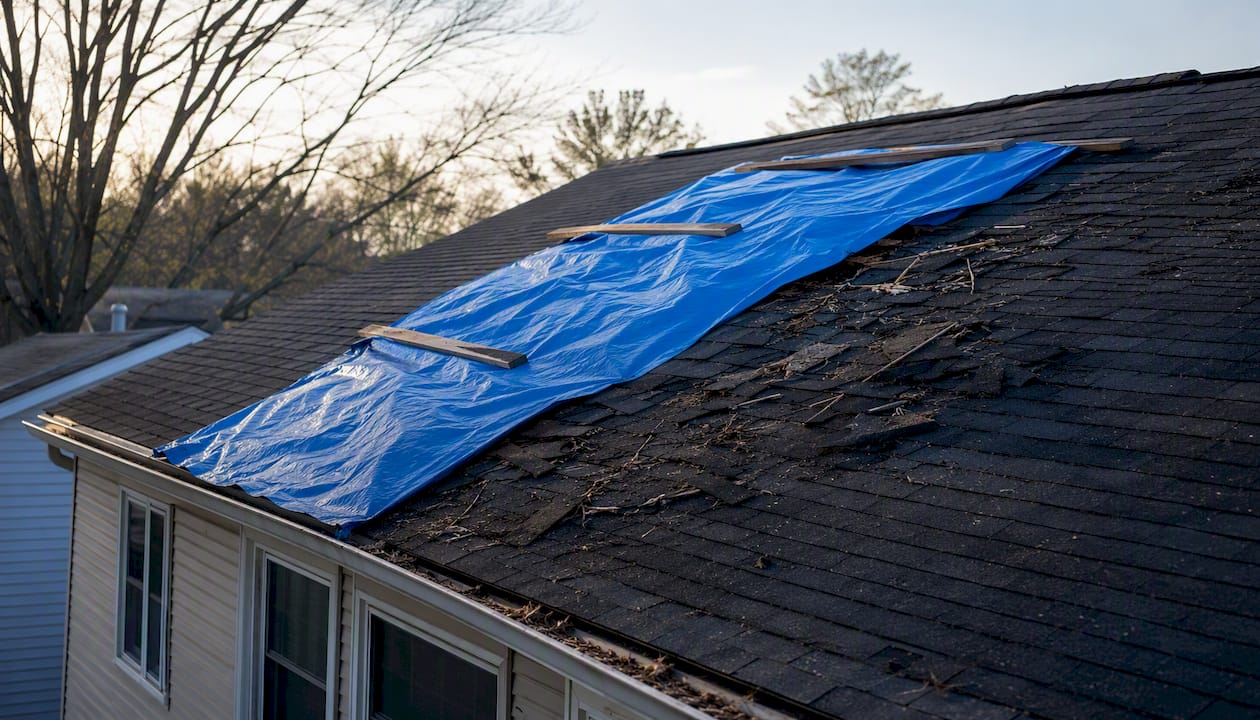
- If water is actively entering the home, call for emergency tarping before the next rain event.
Stop DIY work immediately and call a professional if you see a sagging roof deck, daylight through the attic sheathing, or water dripping inside the home. Those are structural signals, not maintenance tasks.
Key Takeaways
Unchecked minor leaks, clogged gutters, failed flashings, poor ventilation, and weather exposure are the primary factors that worsen roof damage, and acting within 48 hours of spotting red flags consistently limits repair costs.
| Point | Details |
|---|---|
| Document before anything else | Take dated photos of the roof, attic, and gutters annually and after every major storm. |
| Prioritize active leaks | Tarp immediately, photograph before and after, and open an insurance claim before permanent repairs begin. |
| Ventilation and installation matter | Poor attic ventilation can shorten shingle life by 20–25%; installation defects can cut wind resistance by 30–50%. |
| Clear gutters every season | Clogged gutters back water under the drip edge and accelerate deck rot faster than most weather events. |
| Exteriorgenie for inspections and emergencies | HAAG-certified inspectors and 24/7 emergency tarping in Lexington, SC for storm damage, repairs, and insurance claims. |
Table of Contents
- What specifically worsens roof damage, cause by cause
- How to inspect your roof safely and document what you find
- How different weather types make existing damage worse
- Red flags that tell you damage is actively getting worse
- When to call a pro and how to protect your insurance claim
- How to stop damage from getting worse: a seasonal maintenance plan
- Expert roof-care tips from Exteriorgenie's HAAG-certified team
- The cost of waiting is almost always higher than the cost of acting
- Exteriorgenie is ready when your roof needs attention
- Sources
What specifically worsens roof damage, cause by cause
Understanding the full list of worsening factors helps you prioritize. Some are weather-driven; others are entirely preventable with routine maintenance.
-
Wind and uplift. High winds create negative pressure that lifts shingle edges and breaks the sealant bond. Once a shingle lifts, wind-driven rain can force lateral entry beneath it. Installation defects like incorrect nail placement or sealant failure can cut shingle wind resistance by 30–50%, meaning a moderate storm does what should require a hurricane.
-
Hail impact. Hail knocks granules off asphalt shingles and creates micro-fractures in tiles. Granule loss exposes the asphalt layer directly to UV radiation, which accelerates embrittlement and eventual cracking. Check gutters after any hail event: a heavy accumulation of granules is a reliable early indicator.
-
Heavy rain and standing water. Flat or low-slope areas that hold water saturate the roof deck over time. Saturated wood decking loses structural integrity and becomes a breeding ground for mold.
-
Snow, ice, and ice dams. When heat escapes through a poorly ventilated attic, it melts snow at the roof surface. That meltwater refreezes at the cold eaves, forming an ice dam that backs water under shingles. Freeze-thaw cycles also widen existing cracks in tiles and sealants.
-
UV radiation and heat. UV exposure, elevated temperatures, and moisture chemically degrade roofing materials, causing embrittlement, corrosion, and rot. Asphalt shingles become brittle; metal flashings oxidize; rubber pipe boots crack. This is a slow process, but it accelerates sharply on roofs that already have granule loss or compromised sealants.
-
Salt air and coastal corrosion. In coastal climates, airborne salt corrodes metal flashings, fasteners, and gutters faster than inland environments. Corroded fasteners lose grip; corroded flashings develop pinholes that let water track into the deck.
-
Tree branches and debris. Branches that touch or overhang the roof abrade shingles with every wind gust and deposit moisture-retaining debris. Keeping trees at least 10 feet from the roofline reduces both abrasion damage and the risk of a branch impact during storms.
-
Clogged gutters and valleys. When gutters back up, water pools against the fascia and works under the drip edge. Clogged valleys concentrate water flow and push it under shingles at the seam. Both scenarios accelerate deck rot.
-
Poor installation and failed flashings. Flashings around chimneys, skylights, and pipe penetrations are the most common leak entry points. Improperly sealed or corroded flashings let water track directly onto the deck. Poor attic ventilation alone can noticeably shorten asphalt shingle life, and installation defects compound that loss.
-
Biological growth: moss and algae. Moss holds moisture against the shingle surface, accelerating granule loss and keeping the underlying material wet. Algae creates dark streaks and changes the surface's reflectivity, increasing heat absorption. Standard power washing strips protective granules and drives water under shingles, so avoid it. Use low-pressure methods or air-sweeping instead.
-
Repeated minor leaks. Small leaks expand into major failures during seasonal storms because increased water volume, wind-driven rain, and freeze-thaw cycles widen cracks and saturate building materials. A drip that costs a few hundred dollars to fix in September can become a full deck replacement by March.
Pro Tip: Never pressure-wash an asphalt shingle roof. The force strips granules and forces water under shingles, accelerating the exact damage you're trying to clean away.
How to inspect your roof safely and document what you find
A methodical inspection catches deterioration early and builds the photo record insurers need. Work from safe ground first; only access the roof if it is low-slope, dry, and you have proper footwear and fall protection.
-
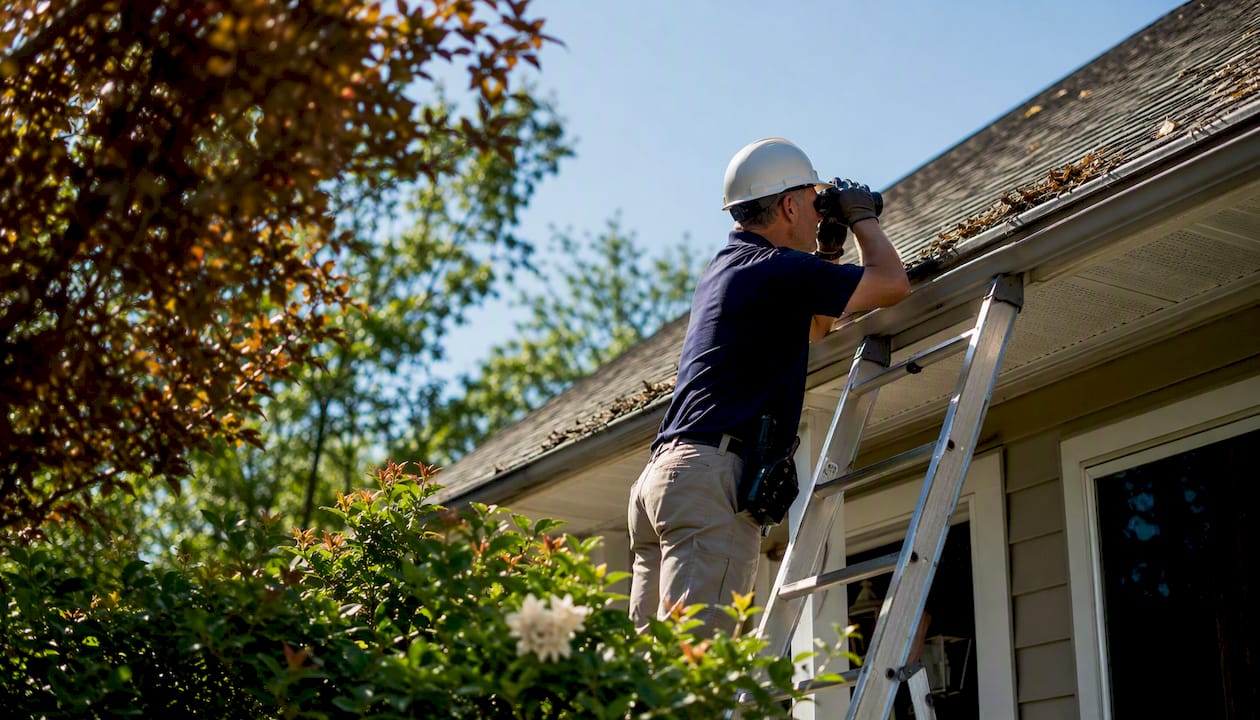
Ground-level visual scan. Walk the full perimeter. Look for missing, curled, or creased shingles; sagging sections; and visible debris accumulation in valleys. Binoculars help on steep roofs.
-
Gutter and valley check. Inspect gutters for granule buildup, rust, and standing water. Check that downspouts are clear and that water discharges away from the foundation.
-
Attic inspection. On a dry day, enter the attic and look for wet insulation, dark staining on sheathing, daylight through the deck, and any odor of mold or rot. Hidden damage from wind-driven rain often shows first as wet insulation or dark attic spots, sometimes days after the storm.
-
Flashing and penetration check. From ground level or a ladder at the eave, look at chimney base flashings, pipe boots, and skylight curbs for lifted edges, rust, or cracked sealant.
-
Photo documentation. Take wide shots of each roof plane, close-ups of any damage, attic evidence photos, and gutter shots. Name files with the date (e.g.,
2026-04-15_north-slope-missing-shingle.jpg). Many forms of roof damage are invisible from the ground, so dated attic photos are as important as exterior shots for insurance purposes. -
Priority triage. Fix in this order: active leaks (tarp immediately), clogged gutters (clear within 24–48 hours), and broken or lifted flashings (schedule a pro within a week).
Pro Tip: Use your phone's GPS-tagged photo feature so every image carries an automatic timestamp and location. Insurers and contractors can verify the date without additional paperwork.
Safety note: avoid climbing steep, wet, or icy roofs. If the slope is above 6:12 or conditions are unsafe, hire a professional for the physical inspection.
How different weather types make existing damage worse
Weather doesn't just create new damage. It finds the weak spots you already have and tears them open faster. Here's how each weather type works against a compromised roof:
-
Wind uplift. Negative pressure on the leeward side of the roof pulls shingle edges upward. On a properly installed roof, the sealant strip holds. On one with installation defects or aged sealant, the shingle lifts, breaks the bond, and the next gust takes it off entirely.
-
Wind-driven rain. Rain falling at a steep angle forces water laterally under lifted shingles and around imperfect flashings. This is how a roof with no missing shingles still develops attic leaks during a storm.
-
Hail. Impact dents metal components and knocks granules off asphalt. Even hail that doesn't crack a shingle outright creates micro-fractures that widen under subsequent UV and freeze-thaw stress.
-
Heavy rain and ponding. Flat sections that hold water for more than 48 hours begin saturating the deck. Saturated OSB or plywood loses up to half its structural strength before visible rot appears.
-
Freeze-thaw cycles. Water that enters a crack expands when it freezes, widening the crack. Clay tiles with high water absorption are especially vulnerable to spallation under repeated freeze-thaw stress.
-
UV and heat. UV radiation and elevated temperatures chemically degrade roofing materials, causing embrittlement and corrosion. The damage accelerates on surfaces where granule loss has already removed the UV-protective layer.
-
Salt air. Coastal salt deposits corrode metal flashings and fasteners at a rate that can be several times faster than inland exposure, depending on proximity to the ocean and prevailing wind direction.
| Weather type | Primary damage mechanism | Immediate signs to look for |
|---|---|---|
| Wind uplift | Breaks sealant bond, lifts shingles | Creased or missing shingles, exposed nail heads |
| Wind-driven rain | Lateral water entry under shingles | Attic wet spots, ceiling stains with no missing shingles |
| Hail | Granule loss, micro-fractures | Granules in gutters, dented gutters and flashings |
| Heavy rain / ponding | Deck saturation, rot | Soft spots underfoot, dark attic staining |
| Freeze-thaw | Crack widening, tile spallation | Cracked tiles, widened flashing gaps |
| UV / heat | Embrittlement, sealant cracking | Curled shingle edges, cracked pipe boots |
| Salt air | Metal corrosion | Rust streaks, pinholes in flashings |
For a deeper look at storm-specific damage types, the Exteriorgenie blog covers each scenario with inspection photos.
Red flags that tell you damage is actively getting worse
Some signs are urgent. If you see any of the following, the damage is no longer stable.
- Active water dripping inside the home during or after rain
- A sagging or visibly bowed roof deck section
- Large areas of missing shingles after a storm
- Continuous granule accumulation in gutters across multiple rain events
- Mold smell or visible dark staining in the attic
- Lifted or visibly broken flashing around chimneys, skylights, or vents
- Daylight visible through the roof sheathing when viewed from the attic
- Widespread denting across gutters and flashings from a recent hail event
Any one of these signals requires action within 24–48 hours. Storm events commonly cause granule loss, lifted shingles, damaged flashing, and hidden attic moisture, and the damage you can't see is often worse than what's visible from the yard.
If damage is storm-related: tarp the affected area immediately, photograph everything before any repairs begin, and contact your insurer to open a claim. Do not discard debris until the adjuster has seen it or given clearance.
When to call a pro and how to protect your insurance claim
Some situations are beyond a homeowner's safe reach, and calling a professional early usually costs less than calling one after secondary damage sets in.
Call a contractor or HAAG-certified inspector when you have:
- Any active interior leak, regardless of how small it appears
- Visible structural sagging in the deck or rafters
- Storm damage covering more than one roof plane
- Repeated leaks from the same location after prior repairs
- Damaged or lifted flashings at chimneys, skylights, or wall junctions
A HAAG-certified inspector brings a documented, court-recognized methodology to the inspection. They check nail patterns, sealant activation, flashing integrity, and ventilation calculations, and they produce a written report that carries weight with insurance adjusters.
What a professional inspection covers:
- Flashing condition at all penetrations and transitions
- Underlayment exposure and condition
- Fastener pattern and depth (over-driven or under-driven nails both cause early failure)
- Deck condition and any soft or delaminated areas
- Attic ventilation adequacy relative to the roof area
Insurance documentation checklist:
- Dated photos taken before any repairs (wide plane shots, close-ups, attic evidence, gutters)
- A video walkthrough of the full roof and attic
- Written contractor estimate with line-item scope
- HAAG inspection report if storm damage is involved
- Debris samples kept on-site until the adjuster confirms they can be discarded
- Photos of any emergency tarping, taken immediately after installation
Pro Tip: Open your insurance claim before scheduling permanent repairs. Repairs made before an adjuster visit can complicate coverage. Emergency tarping is always acceptable and should be photographed as part of the claim record.
For guidance on common repair scopes and what to expect from contractors, the Exteriorgenie blog breaks down the most frequent repair types by severity.
How to stop damage from getting worse: a seasonal maintenance plan
The most cost-effective roof care happens before damage occurs. A simple seasonal schedule catches the conditions that worsen roof damage before they become repair bills.
Spring
- Clear gutters and downspouts of winter debris and check for sagging sections.
- Inspect valleys for accumulated leaves and moss growth.
- Check attic for any moisture or staining that developed over winter.
Summer
- Assess attic ventilation: if the attic is noticeably hotter than outside air, intake or exhaust vents may be blocked or undersized.
- Inspect pipe boots and sealants for cracking from summer heat.
- Trim any tree branches that have grown within 10 feet of the roofline.
Fall
- Clear gutters before the first freeze to prevent ice dam formation.
- Remove debris from valleys and flat sections.
- Check flashings and reseal any gaps before winter rain and snow.
Winter
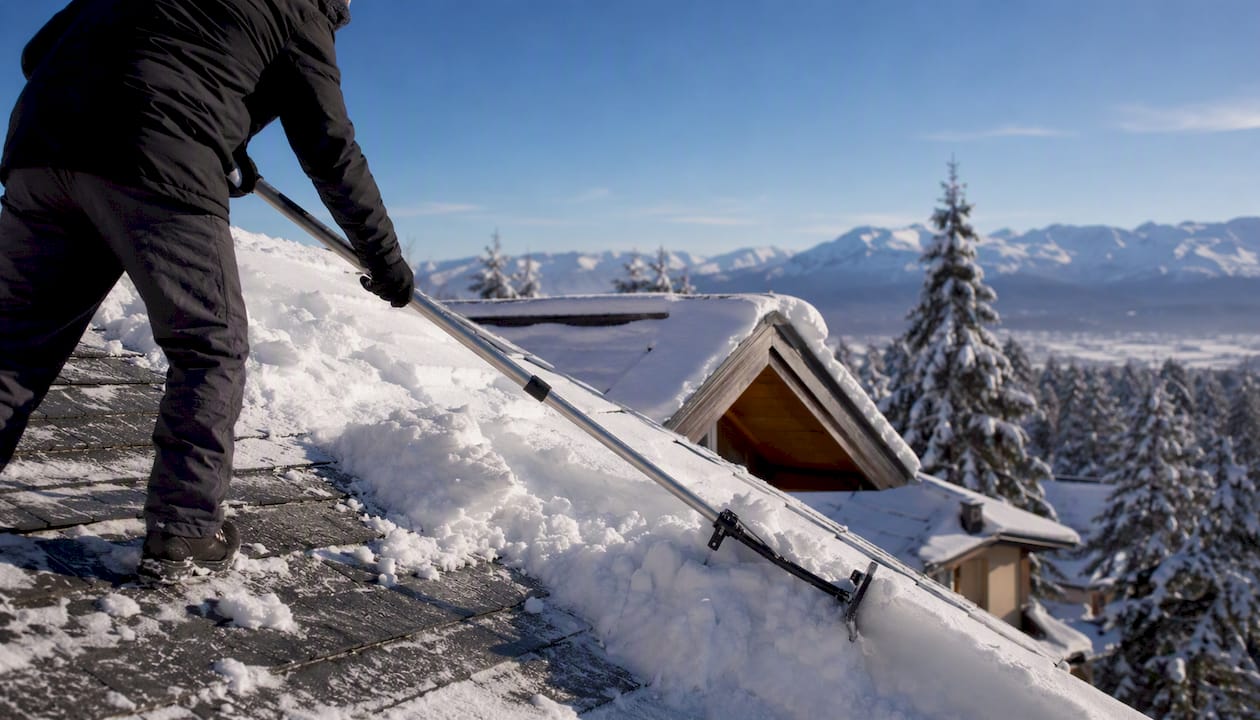
- After heavy snowfall, use a roof rake from ground level to reduce ice dam risk on low-slope sections.
- Check the attic after the first major storm for new moisture or staining.
Quick fixes homeowners can do safely:
- Clear gutters and downspouts (from a ladder at the eave, not from the roof)
- Remove loose debris from valleys using a soft broom or leaf blower
- Replace a cracked pipe boot if it is accessible on a low-slope section
- Apply temporary roofing tape or a tarp over a small damaged area before a storm arrives
Leave these to a professional:
- Flashing repairs and resealing at chimneys or skylights
- Any work on slopes above 6:12
- Underlayment replacement or deck repairs
- Anything involving structural members
Document every DIY repair with dated photos. If you later file an insurance claim, that record shows you mitigated damage promptly, which supports rather than complicates the claim. For seasonal timing guidance on repairs, timing a replacement or major repair to the right season can also affect material performance and contractor availability.
Pro Tip: A roof rake is an inexpensive tool and can help prevent ice dams that cause costly damage. Use it after any snowfall that exceeds six inches on a low-slope section.
Expert roof-care tips from Exteriorgenie's HAAG-certified team
Contractor-grade roof care comes down to a handful of habits that most homeowners skip until something goes wrong.
Build a dated photo baseline every year. Take wide shots of each roof plane, close-ups of flashings and penetrations, and attic photos. Store them in a dated folder. When a storm hits, you have before-and-after evidence that an adjuster can use without guesswork.
Keep trees 10 feet back. Branches that brush the roof don't just scratch shingles. They deposit debris, hold moisture, and create a path for pests. Trim annually, not just after a storm causes a problem.
Track granule loss quarterly. After each significant rain, check the downspout discharge area for granule accumulation. A small amount is normal on new roofs; a steady increase on an older roof signals accelerating UV exposure.
Check attic ventilation every spring. Balanced intake and exhaust ventilation keeps attic temperatures closer to outside air, which reduces shingle heat stress and prevents the conditions that form ice dams. Poor ventilation is one of the most common factors affecting roof longevity, and it's often invisible until shingles start curling.
Schedule a professional inspection annually and after every major storm. Many forms of damage are invisible from the ground. A HAAG-certified inspector from Exteriorgenie checks nail patterns, sealant activation, flashing integrity, and ventilation calculations, and produces a written report that supports insurance claims and defines accurate repair scope.
Pro Tip: After any storm with winds above 50 mph or hail larger than a quarter, schedule a professional inspection within 72 hours. Insurance policies often have claim windows, and delayed documentation can cost you coverage.
The cost of waiting is almost always higher than the cost of acting
Here's what I've seen consistently: homeowners who treat roof maintenance as a once-a-decade concern end up paying for it twice. A flashing that costs a few hundred dollars to reseal becomes a deck replacement when it's ignored through two winters. A clogged gutter that takes an afternoon to clear becomes a fascia replacement and a mold remediation job.
The math isn't complicated. Early repairs are almost always a fraction of the cost of deferred ones, and the secondary damage, mold, rot, compromised insulation, is often not covered by insurance when it's clearly the result of neglect rather than a sudden event.
What I'd push back on is the idea that annual inspections are optional. They're not. They're the mechanism that keeps small, fixable problems from becoming structural ones. Treat an inspection the same way you'd treat a car service interval: skip it once and you might be fine, skip it three times and you're gambling with a much larger repair bill.
Exteriorgenie is ready when your roof needs attention
When storm damage, a persistent leak, or a failed flashing puts your home at risk, you need a contractor who can respond fast and document everything correctly the first time.

Exteriorgenie is a veteran-owned roofing company serving Lexington, SC and the surrounding Midlands area, with 25 years of experience and HAAG-certified inspectors on staff. The team handles 24/7 emergency roof tarping, storm and hail repairs, wind damage, full roof replacement, gutter services, and insurance claims assistance backed by a written HAAG inspection report. When you call, the first step is a photo review and triage, followed by a site visit to define scope and document conditions for your insurer. No guesswork, no vague estimates. To schedule an inspection or request emergency service, visit Exteriorgenie or call directly.
Sources
- Roof damage warning signs to watch before a hurricane | USA TODAY
- 2026 Roofing Material Lifespan Report (Field Data) | TRB
- An overview of the weathering of roofing materials — OSTI
- Understanding roof storm damage: causes, signs, how to inspect and next steps | GAF
- How do seasonal storms exacerbate the damage caused by unaddressed minor roof leaks? | RoofingSafe