
Yes, a properly specified and installed metal roof can be highly impact resistant, often meeting UL 2218 Class 4, the highest rating in the industry. But that rating is not automatic. It depends on the right material, gauge, panel profile, and a roof assembly that matches what was actually tested in the lab. Before you buy or file a claim, three things matter most:
- Check the UL 2218 Class rating (or Intertek listing number) on the manufacturer's documentation, not just a sales brochure.
- Confirm the tested assembly conditions — the specific deck type, underlayment, and fastener pattern the lab used when the panel earned its rating.
- Collect and keep the warranty and installation specs before your contractor leaves the job site. Insurers and adjusters will ask for them.
Pro Tip: If you live in a hail-prone area, request the actual test report, not just a "Class 4 certified" label. The report shows the exact assembly that earned the rating. If your installation deviates from it, the certification may not protect you in a claim.
Key Takeaways
A properly specified and installed Class 4 metal roof resists hail damage, qualifies for insurance discounts, and lasts 40–50 years or longer — but only when the field installation matches the tested assembly.
| Point | Details |
|---|---|
| Class 4 rating requires the right assembly | UL 2218 Class 4 applies to the tested deck, underlayment, and fastener pattern — not the panel alone. |
| Gauge and profile affect real-world performance | Thicker gauges (24 vs. 26) and deeper ribs resist denting better; always confirm the gauge matches the test specimen. |
| Metal roofs last 40–50 years or longer | Consumer Reports lab testing confirms metal shingles outperform asphalt in durability, impact resistance, and corrosion resistance. |
| Insurance discounts require documentation | Carriers require the test standard, manufacturer name, year, and brand on the product label to grant premium credits. |
| Exteriorgenie provides HAAG-certified inspections | Exteriorgenie's credentialed inspectors document functional vs. cosmetic damage and support insurance claims in Lexington and Columbia, SC. |
Table of Contents
- How hail and impact actually damage a roof
- Do metal roofs really resist hail? The factors that determine real-world performance
- What UL 2218 Class 4 actually tests and how you verify it
- A homeowner checklist for spotting hail damage after a storm
- Costs, lifespan, insurance, and what to do right after a hailstorm
- How to choose and verify an impact-resistant metal roof
- What lab tests and manufacturer listings actually show
- A contractor's perspective on specifying impact-resistant metal roofs
- Exteriorgenie handles the hard parts of storm damage and metal roofing
- Sources
- FAQ
How hail and impact actually damage a roof
Hail does not just dent metal. It delivers kinetic energy in a fraction of a second, and how a roof responds depends on the material, the panel geometry, and what is underneath it. Understanding the failure modes helps you tell a cosmetic dent from a real problem.
The mechanics work like this: a hailstone hits a panel, compresses the metal, and transfers energy downward. On a well-supported panel, that energy spreads across the substrate and the dent stays shallow. On an unsupported span, the metal flexes more, and the dent deepens. If the impact is severe enough, or the panel thin enough, the metal can crease at a seam, displace a fastener, or tear the underlayment beneath it.
Typical visible effects on metal roofs after a storm:
- Dents in flat panel fields — usually cosmetic, especially on thicker gauges
- Crease or seam separation where two panels meet — functional damage that can allow water infiltration
- Displaced or backed-out fasteners on exposed-fastener systems
- Cracked or missing sealant at flashings, penetrations, and ridge caps
- Underlayment tears visible only from the attic or during a professional inspection
- Flashing failure at valleys, chimneys, and skylights — often the first place a leak appears
For context on how these failure modes compare across roofing types, the storm roof damage guide at Exteriorgenie's blog covers the full picture.
Pro Tip: After a storm, photograph every surface from the ground before anyone walks the roof. Use a coin or tape measure in the frame for scale. Timestamp every photo. Attic stains photographed the same day are some of the strongest evidence in a claim.
Do metal roofs really resist hail? The factors that determine real-world performance
Metal roofs can resist hail far better than asphalt shingles, but "metal roof" covers a wide range of products. A 29-gauge corrugated panel and a 24-gauge standing seam system are both metal roofs. They do not perform the same way under impact.
Material: steel vs. aluminum
Steel panels are denser and generally more dent-resistant than aluminum at the same gauge. Aluminum is lighter and naturally corrosion-resistant, but it dents more easily under the same impact force. For hail-prone regions, steel with a protective coating is usually the stronger choice for impact performance.
Gauge and thickness
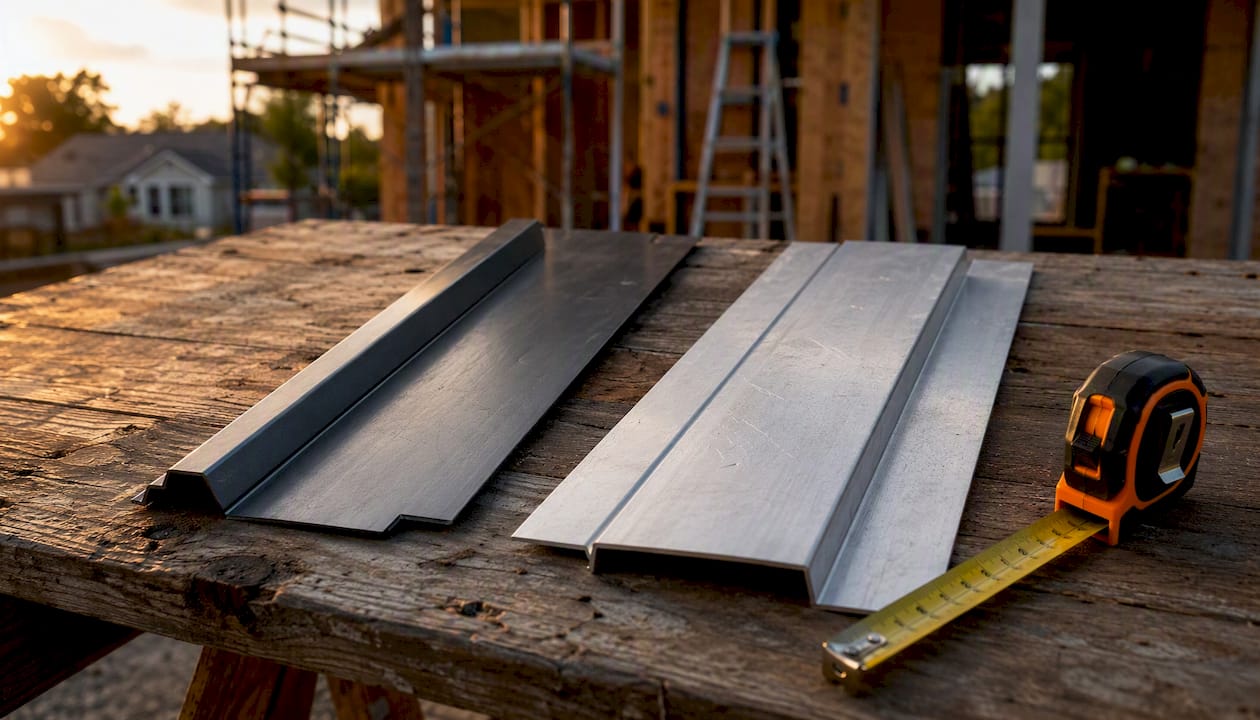
Gauge is counterintuitive: lower numbers mean thicker metal. A 24-gauge panel is thicker than a 26-gauge panel. Thicker gauges and deeper ribs generally resist denting better, and Class 4 can be achieved with several gauge and profile combinations, as long as the installation matches the tested assembly. Most residential metal roofing runs 24–29 gauge; 24-gauge is the standard for serious storm performance.
Profile and geometry
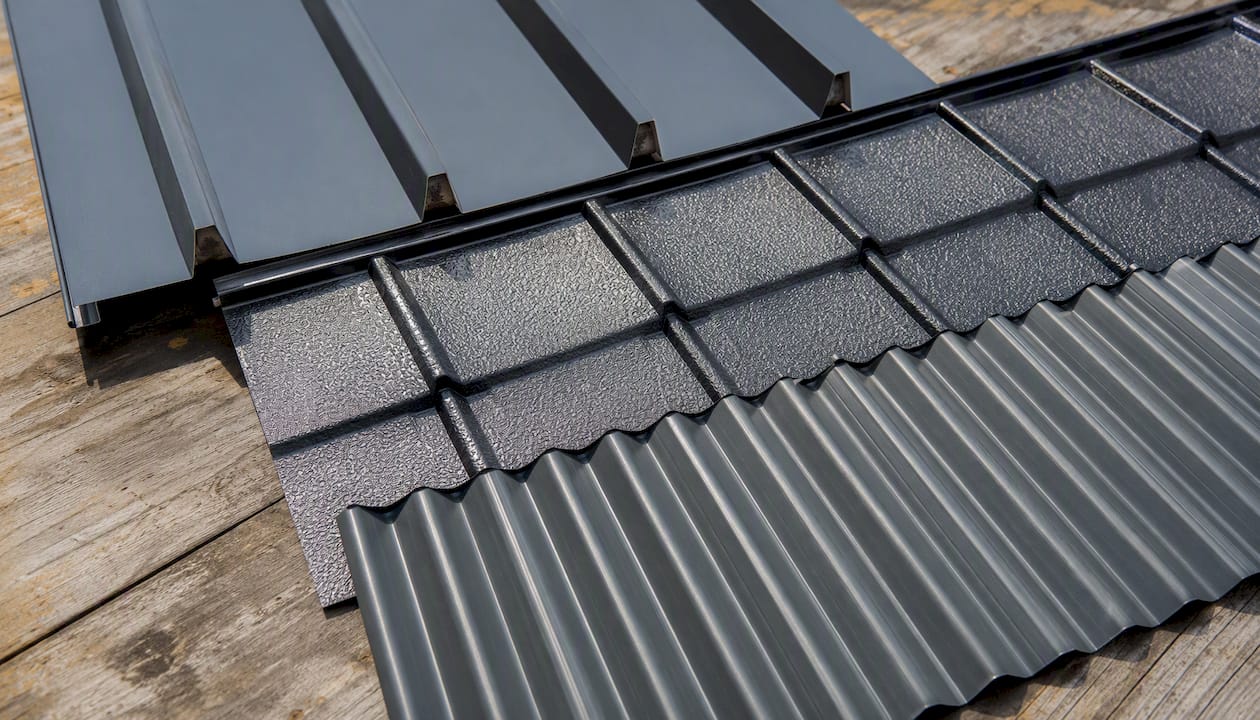
Shape matters as much as thickness. A standing seam panel with deep ribs distributes impact energy along the rib rather than concentrating it in the flat field. Embossed metal shingles use a similar principle — the texture breaks up the flat surface and stiffens the panel. Corrugated profiles offer moderate rib depth. Flat panels with wide unsupported spans are the most vulnerable to visible denting.
Coatings and substrate protection
The metal under the paint matters. Nucor's A792 aluminum-zinc coated steel uses a 55% aluminum–zinc alloy that resists corrosion at cut edges and carries manufacturer-backed warranties — a meaningful advantage in coastal or high-humidity environments where a dent plus bare metal can accelerate rust. PVDF (Kynar) paint systems add UV and fade resistance on top of the substrate coating.
Mounting and assembly
Concealed seam systems (standing seam, snap-lock) keep fasteners out of the weather and reduce the number of penetration points that can fail under impact. Exposed-fastener systems are more vulnerable at each screw location. More importantly, independent panel tests show that panels mounted over a solid substrate dent less visibly than unsupported panels — which is exactly why the tested deck and underlayment in a UL 2218 report are not optional details.
Two panels can share the same Class 4 rating and still behave differently in the field. A 26-gauge standing seam panel installed over the tested plywood deck with the specified underlayment will perform as rated. That same panel installed over open purlins without the tested underlayment will not.
What UL 2218 Class 4 actually tests and how you verify it
UL 2218 is the industry standard for impact resistance in roofing. The test drops a steel ball onto a roofing specimen from a set height, then inspects the back of the specimen for cracking or tearing. Class 4 uses a 2-inch steel ball and requires that the specimen show no cracking, splitting, or opening after impact. It is the highest class in the system.
The part most homeowners miss: the rating belongs to an assembly, not just a panel. The Interlock/Delta Building Products listing (Intertek Spec ID 33876) is a clear example — it documents UL 2218 Class 4 certification for specific aluminum and steel profiles, but the listing ties that rating to a specific deck, underlayment, and installation method. Change the deck or skip the underlayment, and the lab result no longer applies to your roof.
What to request from a contractor or manufacturer
- The actual test report or Intertek/UL listing (not just a brochure claim)
- The Spec ID or report number (e.g., Intertek Spec ID 33876)
- The tested assembly description: deck type, underlayment product, fastener pattern
- Confirmation that the field installation will match those conditions
Insurance discounts for Class 4 roofs
Texas Department of Insurance guidance shows how state programs work: to qualify for an impact-resistant roofing discount, the product label must include the test standard, manufacturer name, year, and brand. Insurers rely on that documentation to determine premium credits. Many carriers in hail-prone states offer meaningful discounts for documented Class 4 roofs — but "meaningful" varies by carrier and state, so confirm the specific percentage with your insurer before assuming a number.
Pro Tip: Ask your insurer what documentation they require before installation, not after. Some carriers want the test report number on file. Getting that detail wrong costs you the discount.
A homeowner checklist for spotting hail damage after a storm
Do not climb a steep roof after a storm. Wet metal is slippery, and the structural condition of the roof after severe weather is unknown. Use binoculars from the ground, inspect from a ladder at the eave, or hire a HAAG-certified inspector whose reports are widely accepted by insurance carriers.
Here is a safe, practical inspection sequence:
- From the ground: Look for obvious dents, displaced ridge caps, or missing panels. Check gutters and downspouts for dents — hail that dents aluminum gutters almost certainly hit the roof too.
- At the eave (from a ladder): Check the first few feet of roofing for dents, seam separation, and cracked sealant at the drip edge.
- Siding and trim: Dents on aluminum or vinyl siding confirm hail size and direction. This is useful corroborating evidence for a claim.
- Skylights and penetrations: Look for cracked glazing, damaged flashing, or displaced sealant.
- Gutters and downspouts: Granules from nearby asphalt surfaces washing into gutters signal impact; dents in aluminum gutters confirm hail size.
- Attic interior: Check for daylight, water stains, or wet insulation — these indicate functional damage, not just cosmetic denting.
Pro Tip: Photograph damage within 24–48 hours of the storm. Adjusters and HAAG-certified inspectors can correlate your photos with local weather data to confirm the storm event. Waiting weeks makes that correlation harder and can complicate a claim.
Costs, lifespan, insurance, and what to do right after a hailstorm
What impact-rated metal roofs cost and how long they last
Metal roofing costs more upfront than asphalt. Installed costs for residential metal roofing typically run higher than asphalt shingles, but the gap narrows over time because metal lasts far longer. Consumer Reports lab testing found metal roofs can last 40–50 years or longer, compared to 15–25 years for most asphalt products. Over a 50-year horizon, a metal roof often requires fewer replacements, less maintenance, and carries stronger warranties.
For a broader comparison of roofing materials and long-term value, the residential roofing materials guide at Exteriorgenie covers the full range of options.
Insurance implications of a Class 4 roof
A documented UL 2218 Class 4 roof can qualify you for premium discounts in many states. The key word is documented. As Texas Department of Insurance guidance makes clear, the product label must include the test standard, manufacturer, year, and brand to qualify. Keep the following on file:
- The manufacturer's test report or Intertek/UL listing with Spec ID
- The installation contract specifying the deck, underlayment, and fastener pattern
- Photos of the installed product label before it is covered
Step-by-step actions after a hailstorm
- Secure the roof immediately. If there is visible damage or a suspected leak, call for emergency tarping before rain returns. Exteriorgenie offers 24/7 emergency repairs for exactly this situation.
- Document everything. Photograph all exterior surfaces within 24–48 hours, including gutters, siding, and any attic stains.
- Contact your insurer. Report the storm event and ask what documentation they require to process a claim.
- Get a HAAG-certified inspection. A credentialed inspector's report is widely accepted by carriers and distinguishes functional damage from cosmetic denting. Exteriorgenie's insurance claims assistance includes HAAG-certified inspections.
- Collect manufacturer documentation. Pull the test report, Spec ID, and installation specs before the adjuster visits. These documents support your claim and confirm the roof's rated performance.
- Get a repair or replacement estimate. For hail damage roof repair in Lexington, SC, Exteriorgenie provides transparent estimates backed by 25 years of field experience.
How to choose and verify an impact-resistant metal roof
Before you sign a contract, run through this checklist. It takes 15 minutes and can save you from a roof that claims Class 4 performance but was never installed to earn it.
Questions to ask every contractor and manufacturer
- Can you provide the UL 2218 or Intertek test report and the Spec ID number?
- What deck type and underlayment does the tested assembly require?
- What gauge is the panel, and does it match the tested specimen?
- What is the coating system — A792 aluminum-zinc, galvalume, or another substrate?
- What finish is on top — PVDF/Kynar or polyester?
- What does the manufacturer warranty cover, and for how long?
- Do you offer a separate workmanship warranty, and what does it exclude?
Red flags that should stop a conversation
- A contractor who says "it's Class 4" but cannot produce a report number
- An installation plan that uses a different deck or underlayment than the test report specifies
- No written warranty, or a warranty that excludes hail damage
- Refusal to provide the test documentation before signing
The short decision checklist
- Verify certification — get the Spec ID or report number and confirm it with the lab.
- Verify assembly — confirm the field installation matches the tested deck, underlayment, and fastener pattern.
- Verify warranty — read both the manufacturer's material warranty and the installer's workmanship guarantee.
- Verify installer credentials — ask whether the crew includes or works with a HAAG-certified inspector for post-installation documentation.
Pro Tip: A contractor who hands you the test report without being asked is a contractor who understands what Class 4 actually means. That detail alone tells you a lot about how they install.
What lab tests and manufacturer listings actually show
Independent testing gives homeowners a more complete picture than a single impact rating. Consumer Reports tested metal shingles across four dimensions: wind resistance, impact from dropped weights simulating heavy hail, seam strength, and 240 hours of saltwater spray exposure to simulate coastal corrosion. Metal shingles held up structurally across all four tests, resisting denting without puncture and maintaining seam integrity under wind load. That multi-factor result matters because a roof faces all of those stresses simultaneously, not one at a time.
Intertek listings like the one for Interlock/Delta Building Products (Spec ID 33876) show that specific metal profiles can achieve UL 2218 Class 4, but they also show exactly what assembly conditions are required. The listing is not a blanket endorsement of the panel — it is a certification of the panel in a specific configuration. That distinction is worth repeating because it is the detail most homeowners and even some contractors overlook.
On the substrate side, Nucor's A792 coating uses a 55% aluminum–zinc alloy that provides corrosion resistance and self-healing at cut edges. In a hail-prone or coastal environment, a dent that exposes bare steel can rust within months. A792 and similar coatings slow that process significantly and are backed by manufacturer warranties. For any steel roofing panel, the coating specification is not a minor detail.
Key documents to request and what each one protects:
- UL 2218 / Intertek test report — confirms impact resistance class and assembly requirements
- Consumer Reports lab results — independent multi-factor durability evidence
- Manufacturer coating spec (e.g., A792) — confirms corrosion protection and warranty terms
- ASTM A792 designation — the material standard for aluminum-zinc coated steel substrate
A contractor's perspective on specifying impact-resistant metal roofs
The gap between a Class 4 label and Class 4 performance in the field is almost always an installation problem. Panels earn their rating in a controlled lab over a specific deck and underlayment. When a crew substitutes a different underlayment because it is cheaper or more available, or skips the specified deck thickness to save time, the homeowner ends up with a roof that carries a Class 4 sticker but was never installed to earn it.
At Exteriorgenie, the verification process starts before the first panel goes up. Every project references the manufacturer's test report to confirm the deck and underlayment match the tested assembly. When a homeowner needs documentation for an insurance claim, Exteriorgenie's HAAG-certified inspectors produce reports that carriers accept, distinguishing cosmetic denting from functional damage that warrants a claim. The 24/7 emergency repair capability matters too — a tarp installed the night of a storm prevents secondary water damage that can turn a manageable repair into a full replacement.
What homeowners should expect from any trustworthy installer: a written workmanship warranty, the test report handed over at project completion, and a clear explanation of what the roof replacement service in Austin, TX manufacturer warranty covers and excludes. If an installer cannot provide all three, that is a reason to keep looking.
Exteriorgenie handles the hard parts of storm damage and metal roofing
Storm damage moves fast. The gap between a hailstorm and a filed claim is where most homeowners lose money — either from underdocumented damage or from contractors who install panels without matching the tested assembly.

Exteriorgenie is a veteran-owned roofing company serving Lexington and Columbia, SC, with 25 years of field experience and HAAG-certified inspectors on staff. The services most relevant after a storm: residential metal roofing installation, HAAG-certified damage inspections, insurance claims assistance, 24/7 emergency tarping, and storm damage restoration. Financing options are available for homeowners managing the higher upfront cost of impact-rated systems. Call Exteriorgenie at (803) 999-7663 or request an inspection online to get a documented assessment and a transparent estimate before you talk to your adjuster.
Sources
- 3 Best Metal Roofing Shingles of 2026, Lab-Tested and Reviewed - Consumer Reports
- Interlock® Metal Roofing — UL 2218 Class 4 Impact Resistance Certification
- Impact Resistance Test On Metal Roof Panels: Definition Plus Video
- Class 4 Metal Roof Gauge: Understanding Impact-Resistant Panels – Rescreening Masters
- Products qualifying for impact-resistant roofing credits
FAQ
What is a UL 2218 Class 4 impact-resistant metal roof?
UL 2218 Class 4 is the highest impact-resistance rating in the industry, awarded when a roofing specimen shows no cracking or tearing after being struck by a 2-inch steel ball dropped from a specified height. The rating applies to the full tested assembly, including the deck and underlayment, not the panel alone.
How long does an impact-resistant metal roof last?
Consumer Reports lab testing found metal roofs typically last several decades, significantly outlasting asphalt shingles under similar conditions.
How much more expensive is an impact-resistant metal roof?
Installed metal roofing costs more upfront than asphalt, but the long-term cost per year of service is often lower given the 40–50-year lifespan and reduced replacement frequency. The exact premium varies by gauge, profile, and region; get itemized quotes that specify the panel gauge and tested assembly so you are comparing equivalent systems.
Does having a Class 4 roof qualify me for an insurance discount?
Many insurers in hail-prone states offer premium discounts for documented Class 4 roofs, but qualification requires proper labeling showing the test standard, manufacturer, year, and brand. Confirm the specific discount percentage and documentation requirements with your carrier before installation, since programs vary by state and insurer.
Do I need a HAAG-certified inspector after hail damage?
You do not legally need one, but a HAAG-certified inspector's report is widely accepted by insurance carriers and clearly distinguishes functional damage from cosmetic denting — a distinction that directly affects claim payouts. Exteriorgenie's HAAG-certified inspectors provide that documentation as part of their insurance claims assistance service.