

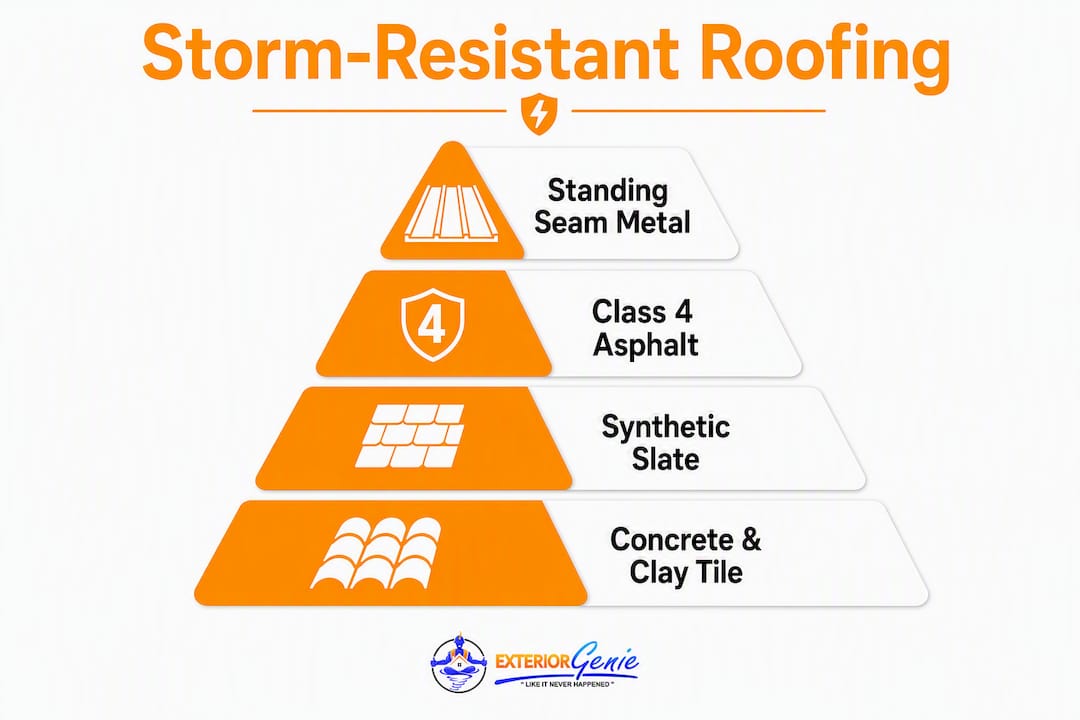
For 2026, the five strongest storm-resistant roofing materials are standing seam metal, FORTIFIED-compliant Class 4 asphalt shingles, synthetic slate/composite, concrete or clay tile, and fully adhered TPO or modified bitumen for low-slope roofs. No single material wins for every home. The right pick depends on your wind zone, hail exposure, framing capacity, and how long you plan to stay in the house.
Here is the shortlist at a glance:
- Standing seam metal — Best for coastal and hurricane-prone zones; very high uplift ratings when installed as a full system with hurricane straps and concealed clips
- FORTIFIED Class 4 asphalt shingles — Best for budget-conscious homeowners in hail-prone or moderate-wind regions; ASTM D7158 Class H wind rating, UL 2218 Class 4 impact rating, moderate installation cost
- Synthetic slate/composite — Best for homeowners who want slate aesthetics with engineered impact resistance and lower structural load
- Concrete or clay tile — Best for hot, dry, or coastal climates with strong framing; rated to 150 mph with proper fastening but requires a structural check first
- Fully adhered TPO or multi-ply modified bitumen — Best for flat or low-slope roofs; fully adhered systems outperform mechanically fastened in high-wind events
The single most important thing to understand: A material's wind or hail rating only holds if the rest of the system matches it. Field failures consistently occur at flashing, ridge vents, and unsecured edges — not through the shingle itself. System-level verification (Miami-Dade NOA, IBHS FORTIFIED) matters more than any single spec number.
Table of Contents
- How do the top storm-resistant materials compare side by side?
- Are Class 4 asphalt shingles worth it for storm protection?
- Why does standing seam metal outperform in high-wind zones?
- How does synthetic slate hold up against real storms?
- When does concrete or clay tile make sense for storm protection?
- What are the best storm-resistant options for flat or low-slope roofs?
- How do you choose the right storm-resistant roofing material for your home?
- Why do installer credentials and documentation matter more than the product brand?
- Key Takeaways
- The part most homeowners get wrong about storm-resistant roofing
- Exteriorgenie installs storm-resistant roofs in Lexington, SC
- Authoritative references and standards for storm-resistant roofing
How do the top storm-resistant materials compare side by side?
| Material | Best for | Wind/uplift rating | Impact/hail (UL 2218) | Installed cost ($/sq ft) | Lifespan | Maintenance | Aesthetic fit |
|---|---|---|---|---|---|---|---|
| Standing seam metal | Coastal, hurricane zones | Very high mph ratings | Class 4 (most products) | $12–$20 | 40–70+ years | Low | Modern, contemporary |
| FORTIFIED Class 4 asphalt | Hail-prone, moderate wind | Meets Class H wind rating | Class 4 | $7–$10 | Typical lifespan | Low-moderate | Traditional, versatile |
| Synthetic slate/composite | Aesthetic + impact priority | Moderate wind ratings | Class 4 | $9–$15 | 30–50 years | Low | Historic, upscale |
| Concrete/clay tile | Hot/dry/coastal, strong framing | Rated for high wind when properly installed | Class 3–4 | $15–$25 | 50+ years | Moderate | Mediterranean, Spanish |
| TPO/modified bitumen | Flat or low-slope roofs | Varies by attachment | N/A (membrane) | Moderate installation cost | Typical lifespan | Moderate | Flat/commercial |
Quick tradeoffs:
- Metal costs more upfront but pays back over its long lifespan with minimal maintenance and the lowest claim rates in Florida hurricane data
- FORTIFIED asphalt costs $2–$3/sq ft more than standard installation, but insurance discounts and lower claim risk can recoup that premium in 8–15 years in coastal counties
- Tile delivers excellent longevity in the right climate but can be heavy, which often triggers a structural upgrade that changes the total project cost significantly
- Synthetic slate splits the difference between tile aesthetics and metal-level impact performance, usually without the framing upgrade
Are Class 4 asphalt shingles worth it for storm protection?
For most homeowners who need storm protection without a full budget overhaul, the answer is yes — with one condition. The shingle grade alone does not deliver the protection. The installation method does.
What the ratings actually mean:
- UL 2218 Class 4 is the highest impact-resistance rating, tested by dropping a 2-inch steel ball from 20 feet. Class 4 shingles reduce hail damage probability substantially and are the threshold most insurers require for a premium discount
- ASTM D7158 Class H is the wind-resistance standard. Class H covers 150 mph design wind speeds and is what IBHS FORTIFIED designation requires
- SBS-modified (impact-modified) shingles use a rubber polymer blend that gives the shingle flexibility under impact — these are the products most likely to carry both ratings simultaneously
Installation details that determine real-world performance:
- A peel-and-stick self-adhering underlayment (sealed deck) across the full roof surface, not just valleys
- Six-nail fastening pattern or ring-shank nails at specified spacing
- Starter strips at eaves and rakes, properly nailed
- Rated edge metal and drip edge secured to code
Skip any of those steps and the Class 4 shingle rating becomes theoretical. A true FORTIFIED-style assembly combines all of these elements; the insurance and field performance benefits come from the full stack, not the shingle alone.
Cost and lifespan: Installed cost is higher for a FORTIFIED-compliant system than for a standard architectural shingle install. Expected service life is typical for this category with proper ventilation and maintenance.
Why does standing seam metal outperform in high-wind zones?
Standing seam metal is the top performer in hurricane-prone regions when installed correctly, and the gap between it and other materials widens as wind speeds climb. Metal standing seam with 150–180+ mph uplift ratings and FORTIFIED-style installation has the lowest claim rate in Florida hurricane data through 2020–2025.
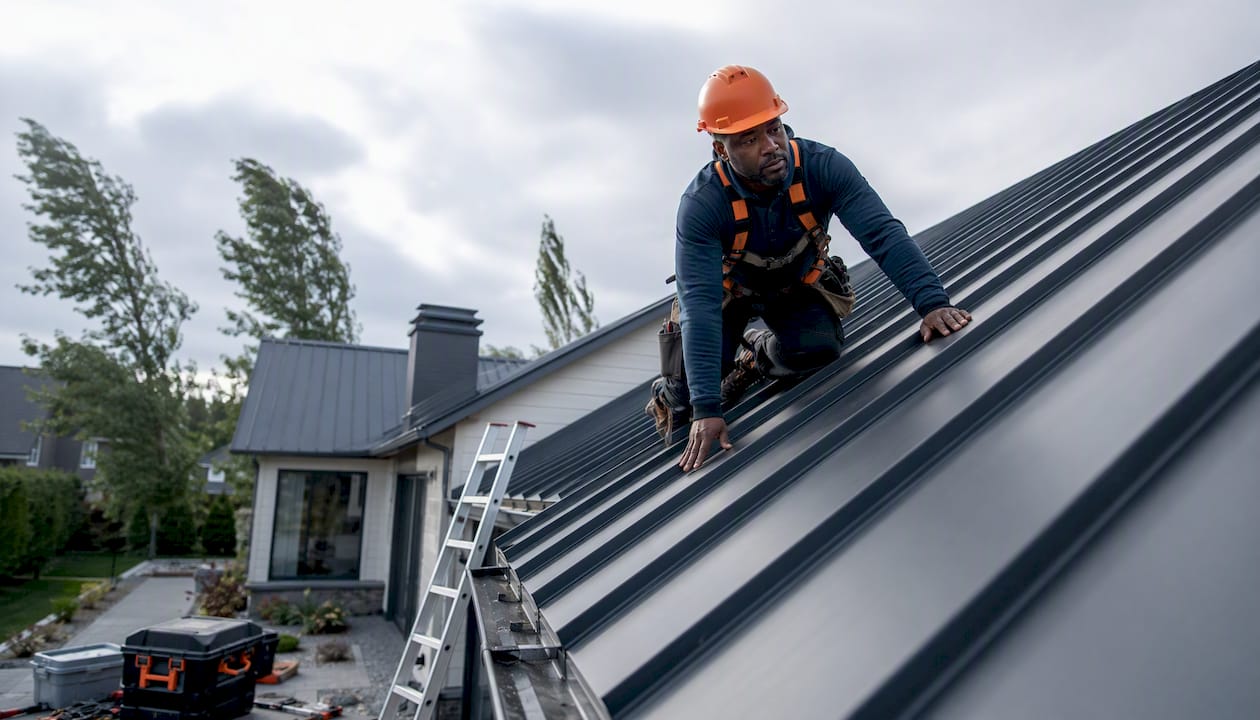
The structural reason: concealed clips allow the panels to float with thermal expansion while maintaining a continuous mechanical lock at every seam. There are no exposed fasteners to back out, no penetrations for water to enter, and no individual shingles to lose at 140 mph.
Wind and hail performance specifics:
- Standing seam panels with Miami-Dade NOA (Notice of Acceptance) approval are tested to High-Velocity Hurricane Zone (HVHZ) standards, the toughest in the country
- Most standing seam products carry UL 2218 Class 4 impact ratings; hail typically dents the panel surface but does not cause a cover failure or leak
- Metal roofs can last 40–70+ years and shed snow cleanly, which makes them a strong choice in mixed-climate regions where freeze-thaw cycles damage brittle materials
Cost and maintenance: Installed cost runs $12–$20/sq ft depending on panel profile and gauge. Maintenance is minimal: annual inspection of seams, penetrations, and edge metal. No granule loss, no moss, no periodic recoating.
Pro Tip: Ask your contractor specifically for concealed-fastener standing seam panels, not exposed-fastener corrugated metal. In high-wind zones, exposed fasteners are a known failure point. The clip spacing and seam-lock depth should appear on the product's NOA or test report.
Installation red flags to watch:
- Exposed-fastener panels proposed for a coastal or high-wind home
- No Miami-Dade NOA or FM approval documentation
- Clip spacing that exceeds the manufacturer's tested maximum
- Inadequate seam locking depth (less than the tested profile)
How does synthetic slate hold up against real storms?
Synthetic slate and composite roofing panels approximate the look of natural slate with a fraction of the weight and none of the brittleness. For homeowners who want the aesthetic of a historic material with engineered storm performance, they are worth a serious look.
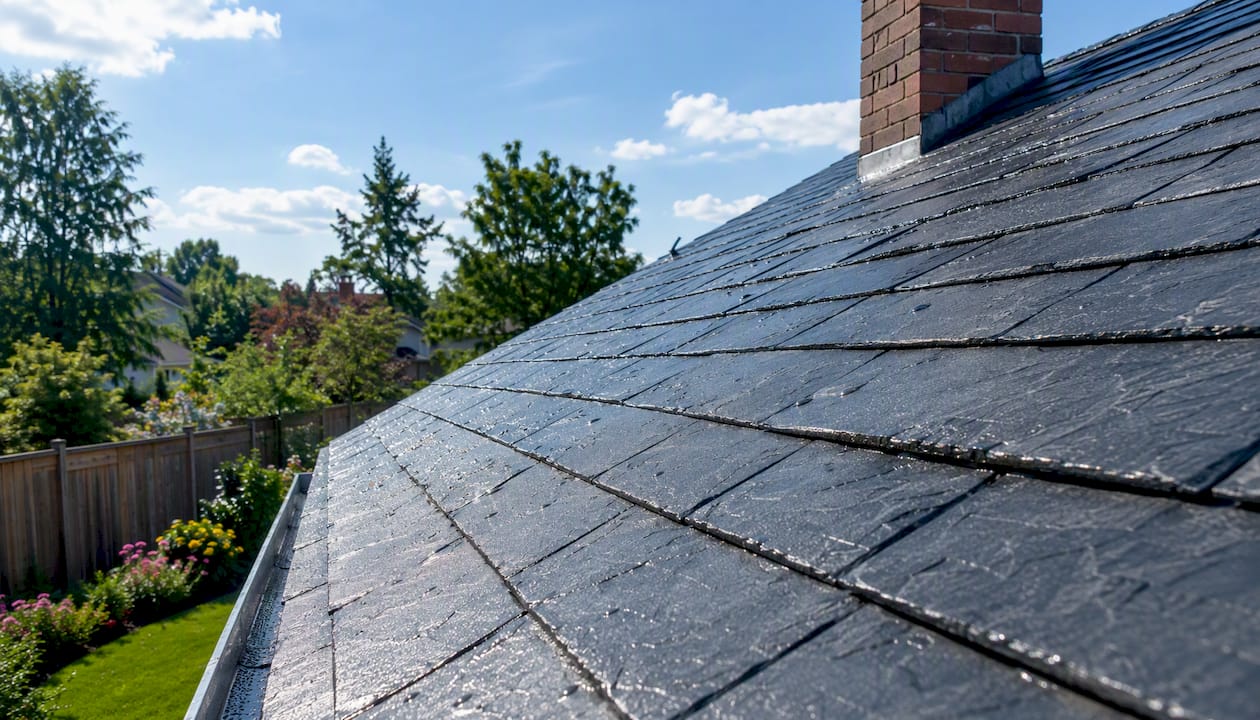
Weight advantage: Natural slate runs 700–1,500 lb per square depending on thickness. Most synthetic slate products weigh 100–200 lb per square, which means they can often be installed on standard residential framing without a structural upgrade. That alone can save thousands of dollars on a retrofit project.
Storm performance:
- Most premium synthetic slate products carry UL 2218 Class 4 impact ratings
- Wind ratings typically fall in the 110–130 mph range, which covers most non-coastal U.S. wind zones
- UV and weathering resistance varies significantly by manufacturer; look for products with 50-year limited warranties and documented accelerated weathering test results
Where synthetic slate makes sense: Homes in historic districts or neighborhoods with aesthetic covenants, where natural slate would be required but the framing cannot support the weight. Also a strong choice in high-hail inland regions where impact resistance matters more than extreme wind uplift.
Where natural slate still wins: Coastal HVHZ zones where you need Miami-Dade NOA documentation. Most synthetic products do not carry HVHZ approval, and the wind ratings are lower than standing seam metal or FORTIFIED tile systems.
Installed cost runs $9–$15/sq ft with a 30–50 year expected lifespan. The lifecycle math is competitive with metal in moderate-wind regions.
When does concrete or clay tile make sense for storm protection?
Tile performs well in hurricane lab tests, and in the right climate with the right framing, it is one of the most durable long-term options available. The caveats are real, though, and skipping the structural check is how tile projects go wrong.
Performance in storms: Concrete and clay tile can meet 150 mph ratings with proper fastening in HVHZ counties, but individual tile breakage from hail or wind-borne debris is common even when the system holds. The roof may not leak, but you will likely replace broken tiles after a major storm.
Climate fit:
- Excellent in hot, dry, and coastal climates (Florida, California, the Southwest) where thermal mass and salt-air resistance matter
- Poor choice in freeze-thaw regions unless specifically rated freeze-thaw products and installation details are used; water infiltration under tiles can crack them through repeated freeze cycles
The structural reality: Tile can weigh 800–1,200 lb per square, and many residential roof structures were not designed for that load. A structural engineer's assessment before committing to tile is money well spent. Framing reinforcement, when needed, adds meaningfully to the total project cost.
Pros and cons at a glance:
- Pros: 50+ year lifespan, excellent thermal performance, strong hurricane ratings with proper fastening, low maintenance once installed
- Cons: High installed cost ($15–$25/sq ft), heavy (structural check required), individual tile loss in hail events, poor freeze-thaw performance without special products
What are the best storm-resistant options for flat or low-slope roofs?
Flat and low-slope roofs face a different storm threat than pitched roofs: uplift pressure at edges and seams, not shingle loss. The attachment method matters more than the membrane material.
The most storm-resilient systems:
- Fully adhered TPO or EPDM: The membrane bonds to the substrate across its entire surface, which distributes uplift load and eliminates the localized stress points that cause mechanically fastened systems to fail at fastener rows
- Multi-ply modified bitumen: Two or more plies of reinforced bitumen membrane, hot-mopped or torch-applied, with a granulated cap sheet; performs well in both wind and impact events
Attachment method tradeoffs:
- Mechanically fastened: Lower installed cost, but fastener rows create stress concentrations that can unzip in high-wind events
- Fully adhered: Higher cost, stronger uplift resistance, preferred for wind-exposed locations
- Ballasted: Gravel or pavers hold the membrane down; not recommended in high-wind zones where ballast becomes projectile debris
Maintenance and failure points:
- Seam integrity is the primary failure mode; inspect seams and lap joints annually and after every significant storm
- Edge metal and perimeter termination bars must be rated and secured; this is where most storm failures begin on low-slope roofs
- Penetrations (HVAC curbs, drains, vents) need flexible, properly lapped flashing details
Suitability checklist for homeowners:
- Roof slope less than 2:12? A low-slope membrane system is your category
- Located in a wind zone above 130 mph? Specify fully adhered, not mechanically fastened
- Existing roof a ballasted system? Get a wind uplift assessment before the next re-roof
How do you choose the right storm-resistant roofing material for your home?
Start with your wind zone and hail history, not your aesthetic preference. Everything else flows from those two data points.
Decision flow:
- Determine your design wind speed. ASCE 7 wind maps and your local building department will tell you the minimum design wind speed for your address. Coastal South Carolina, for example, sits in a 130–150 mph design wind zone in many counties.
- Check your hail history. The NOAA Storm Prediction Center tracks hail events by county. If your area sees 1-inch or larger hail regularly, UL 2218 Class 4 is not optional.
- Assess your framing. Tile and natural slate require a structural check. Metal and synthetic slate generally do not.
- Set a realistic budget and time horizon. If you plan to sell in five years, FORTIFIED asphalt shingles offer the best cost-to-insurance-discount ratio. If you are staying 20+ years, metal's lifecycle cost beats everything else.
- Check insurance incentives. The 2026 shift from RCV to ACV policies means verified storm-resistant systems are now a financial strategy, not just damage prevention. Ask your insurer specifically what IBHS FORTIFIED designation or Class 4 shingles do to your premium.
Questions to ask every contractor:
- What is your IBHS FORTIFIED installation experience, and can you show completed project photos?
- Do you use HAAG-certified inspectors for pre- and post-installation documentation?
- What Miami-Dade NOA or ASTM test reports apply to the specific products you are proposing?
- Will you provide a written spec sheet listing wind and impact ratings for every component?
Red flags that should end the conversation:
- Vague answers about wind ratings ("it's a good shingle")
- No written documentation of impact or wind ratings
- Exposed-fastener metal panels proposed for a coastal or high-wind home
- No mention of sealed deck, ring-shank nails, or starter strips for an asphalt install
Pro Tip: Use the contractor vetting guide to build your interview checklist before you call anyone. Contractors who cannot answer those questions in writing are not the right fit for a storm-resistant system.
Why do installer credentials and documentation matter more than the product brand?
Contractors often overemphasize product brand while underemphasizing installer storm-mitigation experience — and the field data backs that up. A premium shingle installed without a sealed deck and proper fastening will fail before a standard shingle installed to FORTIFIED specs.
What HAAG certification means for you: A HAAG-certified inspector has completed standardized training in storm damage assessment and documentation. When a HAAG-certified inspector documents your pre-installation condition and post-installation compliance, that report becomes evidence in an insurance claim. It is the difference between a smooth claim and a disputed one.
IBHS FORTIFIED tiers explained:
| FORTIFIED tier | What it requires | Typical benefit |
|---|---|---|
| FORTIFIED Roof | Sealed deck, ring-shank nails, rated edge metal, verified install | Insurance discount in participating states; lowest tier |
| FORTIFIED Silver | Roof + opening protection (windows, doors) | Larger discount; required for some coastal programs |
| FORTIFIED Gold | Silver + continuous load path (straps, connections) | Maximum discount; required for IBHS Gold designation |
The 2026 insurance shift you need to understand: As insurers move from Replacement Cost Value (RCV) to Actual Cash Value (ACV) settlements, a depreciated roof after a storm means you pay the gap out of pocket. A verified FORTIFIED or Class 4 system often keeps you in an RCV policy longer and qualifies for premium discounts that offset the upgrade cost. Verified, impact-rated roofs are now a financial risk mitigation strategy, not just a construction upgrade.
Documents to request and keep:
- Manufacturer's product data sheet with UL 2218 and ASTM D7158 ratings
- Miami-Dade NOA or FM approval (for coastal/HVHZ installs)
- HAAG inspection report (pre- and post-installation)
- IBHS FORTIFIED verification certificate (if applicable)
- Installer's manufacturer-specific certification (not just a general contractor license)
- Installation photos showing sealed deck, fastener pattern, and edge metal
Keep these in a dedicated folder. Your insurer and any future buyer will want them.
Key Takeaways
Standing seam metal and FORTIFIED-compliant Class 4 asphalt shingles lead the 2026 storm-resistant shortlist, but system-level installation and verified documentation determine actual storm performance.
| Point | Details |
|---|---|
| System beats product | A sealed deck, ring-shank nails, and rated edge metal matter more than the shingle brand for storm survival. |
| Class 4 pays back | FORTIFIED asphalt shingles cost $7–$10/sq ft installed; insurance discounts can recoup the premium in 8–15 years in coastal counties. |
| Metal leads in wind zones | Standing seam metal with 150–180+ mph uplift ratings and concealed clips has the lowest claim rate in Florida hurricane data. |
| Tile needs a structural check | Concrete and clay tile can weigh 800–1,200 lb per square; confirm framing capacity before committing. |
| Exteriorgenie installs verified systems | Exteriorgenie's HAAG-certified inspectors and FORTIFIED-compliant installs in Lexington, SC provide the documentation and credentials that protect both your roof and your insurance position. |
The part most homeowners get wrong about storm-resistant roofing
The roofing industry has done a good job marketing impact ratings and wind speeds. It has done a poor job explaining that those numbers are lab results, not field guarantees.
Here is what actually happens after a major storm: the shingles hold, the ridge vent blows off, water enters at the unsecured edge metal, and the insurer argues the damage is from "improper installation" rather than storm force. The homeowner with a Class 4 shingle and no FORTIFIED documentation is now in a coverage dispute. The homeowner with a HAAG inspection report and a FORTIFIED certificate is not.
The 2026 RCV-to-ACV shift makes this gap more expensive than it has ever been. Depreciation on a 10-year-old roof can leave you covering $15,000 or more out of pocket on a full replacement. A verified storm-resistant system is not a premium product for wealthy homeowners. It is the financially rational choice for anyone who cannot afford to self-insure a roof replacement.
The other thing worth saying plainly: the contractor matters more than the material. A mediocre installer with a premium shingle will lose to a skilled installer with a mid-grade shingle in a real storm, every time. Vet the installer as hard as you vet the product. Ask for FORTIFIED completions, HAAG credentials, and written specs before you sign anything. The contractor vetting process is not bureaucratic box-checking; it is how you find out whether the person you are hiring actually knows what they are doing.
Exteriorgenie installs storm-resistant roofs in Lexington, SC
When a storm rolls through the Midlands, the difference between a $500 repair and a $25,000 replacement often comes down to one question: was the roof installed as a verified system, or just as a product swap?
Exteriorgenie is a veteran-owned roofing contractor in Lexington, SC with 25 years of experience installing FORTIFIED-compliant systems and providing HAAG-certified inspection support for homeowners navigating storm damage and insurance claims. Every install includes documented fastener patterns, sealed deck verification, and rated edge metal — the components that actually determine whether your roof survives the next storm and whether your insurer pays when it does not.
Services include storm damage repair and insurance claims assistance, full residential roof replacement with FORTIFIED-compliant options, 24/7 emergency tarping, and flexible financing to cover the cost of upgrading to a storm-resistant system. If you are ready to get a verified, documented roof that protects both your home and your insurance position, contact Exteriorgenie for a free estimate.
Authoritative references and standards for storm-resistant roofing
Knowing which documents to request from a contractor is as important as knowing which materials to specify. These are the standards and programs that matter:
- UL 2218 Class 4 — The highest impact-resistance rating for roofing products, tested by the Insurance Institute for Business & Home Safety (IBHS); Class 4 is the threshold for most insurer discounts
- ASTM D7158 Class H — Wind-resistance standard for asphalt shingles; Class H covers 150 mph design wind speeds and is required for IBHS FORTIFIED designation
- Miami-Dade NOA (Notice of Acceptance) — The toughest product approval in the U.S., required for installation in Florida's High-Velocity Hurricane Zone; ask for the NOA number and verify it at the Miami-Dade product approval database
- IBHS FORTIFIED program — Three-tier designation (Roof, Silver, Gold) that verifies system-level installation; the most credible third-party verification available to residential homeowners
- FM Global approvals — Used primarily for commercial low-slope systems; FM-rated assemblies are tested for wind uplift as a complete system, not just the membrane
- NOAA hail history data — Use to confirm your county's hail frequency and size history before selecting an impact rating
- Exteriorgenie residential roofing services — Service overview for FORTIFIED-compliant installs and storm damage repair in Lexington, SC
Documents to request from your contractor before signing:
- Manufacturer product data sheet showing UL 2218 and ASTM D7158 ratings for every component
- Miami-Dade NOA number (coastal/HVHZ installs)
- IBHS FORTIFIED verification certificate (if applicable)
- HAAG inspection report covering pre- and post-installation condition
- Installer's manufacturer-specific certification
- Installation photos showing sealed deck, fastener pattern, and edge metal details