
Roof replacement red flags are clear warning signs that tell you when to walk away from a contractor, a bid, or a rushed repair decision. Missing these signals costs homeowners thousands of dollars and, in serious cases, puts structural safety at risk. The National Roofing Contractors Association (NRCA) and the Federal Trade Commission both document contractor fraud and poor workmanship as leading causes of avoidable roofing losses. This guide covers the physical signs of roof failure, the contractor behaviors that predict bad outcomes, and the bid details that protect your investment.
What roof replacement red flags should you avoid first?
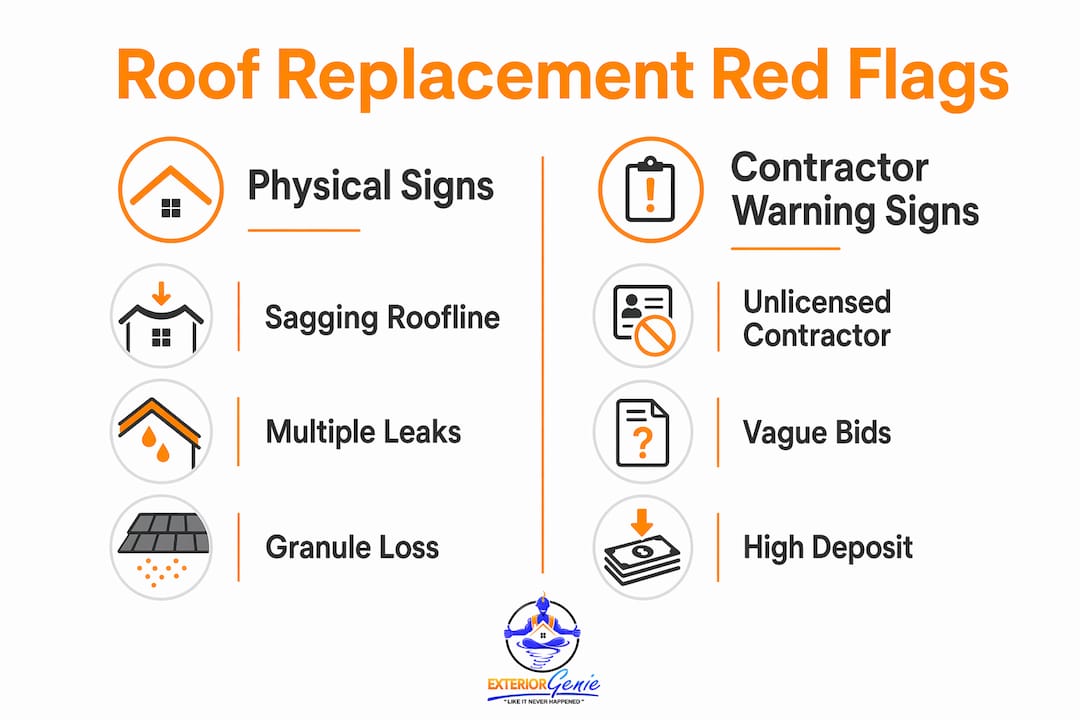
The most dangerous roof replacement warning signs fall into two categories: physical signs on the roof itself and behavioral signs from the contractor you hire. Both can cost you equally. Knowing how to spot roof problems in each category before you sign anything is the single most protective step you can take.
Asphalt roofs typically last 22 or more years. A roof showing structural failure at year 12 is not a repair candidate. It is a replacement candidate, and the decision to patch it instead is where most homeowners lose money.
The repair versus replace decision is a math problem. Short-term repair costs stack up fast when the underlying system has failed. Replacement, despite the higher upfront cost, often delivers better value across the full roof lifespan. Exteriorgenie's HAAG-certified inspectors assess exactly this calculation on every job.
What physical signs indicate your roof likely needs replacement?
A sagging or bowing roofline visible from the street signals deck or rafter compromise that goes far deeper than shingle damage. A wavy roofline means the structural deck beneath the shingles has likely rotted or buckled. Replacing shingles on a compromised deck is money wasted.
Multiple unrelated leaks usually mean systemic underlayment failure. A single leak from a clear cause, like a cracked flashing around a vent pipe, can often be repaired. But when water enters in three or four unrelated spots, the underlayment has broken down across the whole roof. That is a replacement job.
Granule loss in your gutters is another sign the roof is past its useful life. Asphalt shingles shed granules as they age, and heavy granule accumulation in gutters means the shingles have lost their UV protection. Widespread curling or blistering across multiple roof sections confirms the same conclusion.
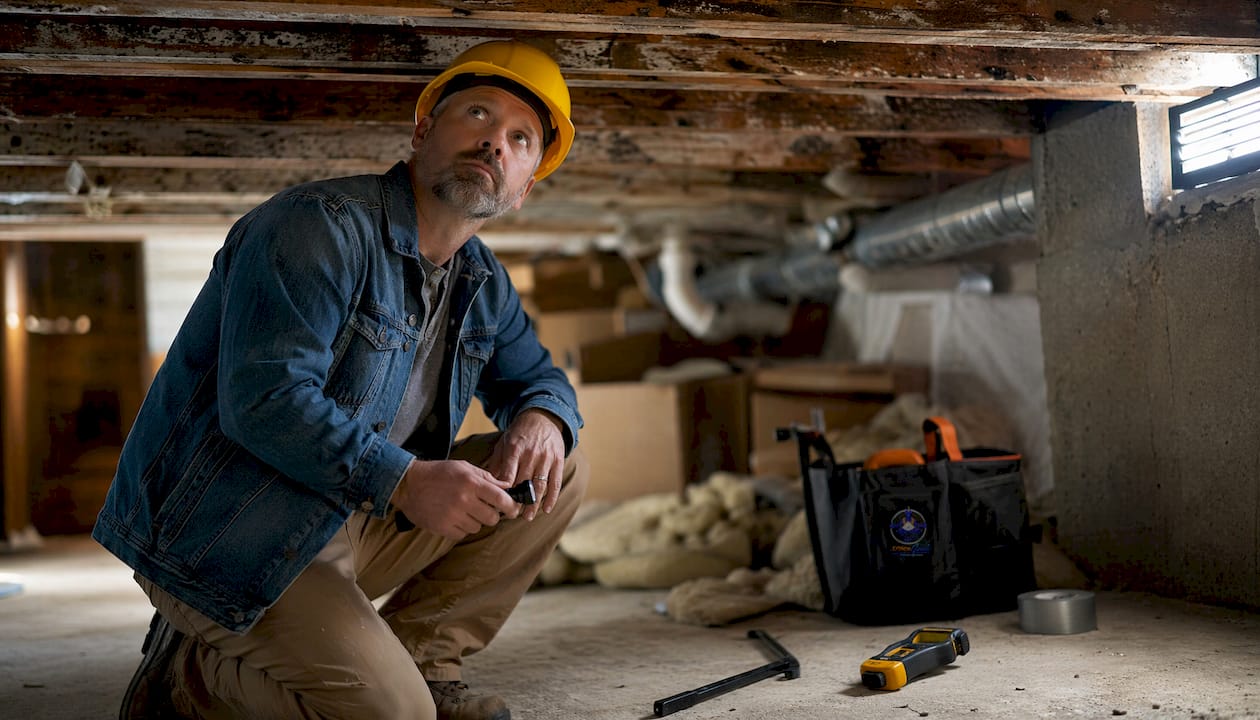
Pro Tip: Check your attic before you call any contractor. Viewing the attic for daylight or moisture stains reveals structural and leak issues that a curbside look will never show. Bring a flashlight and look for soft spots, water stains, and any visible light coming through the decking.
| Physical sign | Recommended action |
|---|---|
| Sagging or bowing roofline | Full replacement, structural assessment required |
| Visible daylight in attic | Full replacement, deck inspection needed |
| Multiple unrelated leaks | Full replacement, underlayment failure likely |
| Widespread curling or blistering | Full replacement, shingles past useful life |
| Heavy granule loss in gutters | Replacement evaluation, UV protection gone |
| Single isolated leak, clear cause | Targeted repair may be sufficient |
For a deeper breakdown of how professionals make this call, the guide on how roofers determine replacement vs repair walks through each physical indicator in detail.
What contractor red flags should you watch for?
Contractor red flags in roofing are behaviors and business practices that predict fraud, poor workmanship, or both. The Federal Trade Commission warns homeowners specifically about storm-chasing contractors who appear after severe weather, pressure for quick decisions, and demand large cash deposits before work begins.
A reasonable upfront deposit is 0 to 10%. Legitimate contractors finance their own materials. Any contractor demanding 30%, 50%, or full payment upfront before a single shingle is removed is a serious red flag. Cash-only payment requests carry the same warning.
Watch for these contractor red flags before signing anything:
- No verifiable license or active insurance certificate
- Unable or unwilling to provide 3–5 recent local references
- No physical business address, only a cell number or P.O. box
- High-pressure tactics urging you to sign the same day
- Large upfront deposit or cash-only payment demands
- No written workmanship warranty of at least 5 years
- Vague or verbal-only scope of work with no written bid
Contractors should provide 3–5 recent references, a physical address, an active license, and a written workmanship warranty. These are not extras. They are the baseline for any legitimate roofing professional.
Pro Tip: Call your state contractor licensing board directly to verify a license number. Do not rely on the contractor's word or a photocopy. The verification takes two minutes and eliminates the most common fraud vector homeowners face.
The roofing contractor vetting guide for homeowners covers every verification step in one place, including what to ask references and how to read an insurance certificate.
How do you evaluate bids to avoid costly surprises?
A legitimate roofing bid is an itemized document, not a single number on a piece of paper. Transparent, itemized bids include materials, labor, tear-off scope, flashing, decking allowance, and warranties. When any of these line items is missing, you are looking at a bid designed to win on price and recover margin through change orders after tear-off begins.
Contractors who are loud about price but quiet about details leave homeowners exposed to cost overruns. The cheapest bid is often the most expensive decision long term. A bid that omits flashing replacement, for example, will likely require a separate charge once the old roof is stripped and the contractor "discovers" the flashing needs work. That discovery was predictable from the start.
Contractors frequently exclude flashing, drip edges, or decking allowances to keep bids artificially low. Demand explicit inclusion of each component in writing, or a clear written explanation of why it is excluded. Any contractor unwilling to do this is not a contractor you want on your roof.
Written contracts should include detailed payment schedules and lien waivers. A lien waiver protects you from a subcontractor placing a lien on your home if the general contractor fails to pay them. This is not a rare scenario. It happens regularly on jobs where the contract was vague from the start.
| Bid element | Good bid | Red flag bid |
|---|---|---|
| Materials | Named brand, quantity specified | "Shingles" with no detail |
| Labor | Line-item cost | Bundled into one total |
| Tear-off scope | Layers and disposal included | Not mentioned |
| Flashing | Explicitly included or excluded with reason | Absent entirely |
| Decking allowance | Per-sheet cost stated | No mention |
| Warranty | Written, minimum 5 years workmanship | Verbal only or absent |
| Payment schedule | Milestone-based with lien waiver | Large upfront, no schedule |
For a full review of what a solid contract looks like, the new roof contractor contract review guide breaks down every clause worth scrutinizing.
How to do your own basic roof check before hiring anyone
You do not need to climb on your roof to catch most warning signs. A ground-level curbside check, an attic walk-through, and a gutter inspection give you enough information to have an informed conversation with any contractor.
Follow these steps before you call anyone:
- Curbside visual check. Stand at the street and look for sagging ridgelines, uneven surfaces, or shingles that appear lifted or missing.
- Attic inspection. Go into the attic during daylight. Look for light coming through the decking, moisture stains on rafters, or soft spots when you press on the boards.
- Gutter inspection. Check your gutters after rain for granule accumulation. A heavy layer of gritty black or gray material signals shingle deterioration.
- Document everything. Take photos of every issue you find. Photos give you leverage when comparing bids and support any insurance claim you may file.
- Ask the right questions. Before any contractor visits, prepare questions about their license number, insurance carrier, references, and physical business address.
Common mistakes homeowners make at this stage include ignoring attic findings because the roof "looks fine" from the street, and rushing contractor selection after a storm because they feel pressure to act fast. Both mistakes are avoidable. The questions to ask before a roof replacement guide gives you a ready-made list for every contractor conversation.
When you need a professional opinion on timing, the resource on when to call a roofing professional outlines the specific conditions that require immediate expert assessment rather than a wait-and-see approach.
Key Takeaways
Avoiding roof replacement red flags requires catching physical failure signs early, vetting contractors thoroughly, and demanding itemized bids with written warranties before any work begins.
| Point | Details |
|---|---|
| Physical signs demand action | Sagging rooflines, attic daylight, and multiple leaks signal full replacement, not repair. |
| Contractor vetting is non-negotiable | Verify license, insurance, references, and physical address before signing anything. |
| Itemized bids protect you | Demand line-item detail for materials, flashing, decking, and warranties in every bid. |
| Deposit size reveals intent | A legitimate contractor asks for 0–10% upfront; anything higher is a warning sign. |
| Attic inspection is underused | Most homeowners skip the attic, but it reveals structural and moisture issues no curbside check can show. |
What 25 years in roofing taught me about red flags
I have seen the same patterns repeat across hundreds of jobs. Homeowners who get burned almost never made one big mistake. They made three or four small ones: they skipped the attic check, they chose the lowest bid without reading it carefully, and they felt too rushed to ask for references. Each step alone seemed minor. Together, they handed a bad contractor the keys.
The red flag I see homeowners miss most often is the vague bid. A contractor who gives you a single number with no breakdown is not being simple. They are being evasive. Every legitimate cost on a roofing job is predictable before tear-off begins. Flashing, decking, disposal, and labor are not surprises. They are line items. When they are missing from a bid, they will show up as change orders once your old roof is sitting in a dumpster and you have no leverage.
My honest advice: slow down. The roof that needs replacing today needed replacing six months ago. One more week of getting three detailed bids and calling references will not hurt it. Rushing will cost you. Patience and a written contract with a lien waiver will protect you more than any single product or brand ever will.
— Ebben
Exteriorgenie's approach to roof replacement you can trust
Exteriorgenie is a veteran-owned roofing company serving Lexington, SC, with 25 years of field experience and HAAG-certified inspectors on staff. Every job starts with a transparent, itemized bid and a written workmanship warranty. There are no vague estimates and no pressure tactics.

If cost is a concern, Exteriorgenie offers flexible roofing financing options that make full replacement accessible without cutting corners on materials or labor. For homeowners dealing with storm damage, the team provides direct insurance claim assistance from inspection through settlement. Request a free roof inspection from Exteriorgenie's residential roofing team and get a bid that shows every line item before a single shingle comes off your home.
FAQ
What are the most common roof replacement warning signs?
Sagging rooflines, visible daylight in the attic, multiple unrelated leaks, widespread curling shingles, and heavy granule loss in gutters are the most reliable physical signs that a roof needs full replacement rather than repair.
How much of a deposit should a roofing contractor ask for?
A legitimate contractor typically requests 0–10% upfront. Demands for large deposits or cash-only payment before work begins are recognized red flags for contractor fraud.
What should a roofing bid always include?
Every legitimate bid should list materials by brand and quantity, labor costs, tear-off scope, flashing, a decking allowance, a written warranty, and a milestone-based payment schedule with lien waivers.
How do I verify a roofing contractor's license?
Contact your state contractor licensing board directly with the contractor's license number. Do not rely on photocopies or verbal confirmation. The verification is free and takes only a few minutes.
Can I inspect my roof without climbing on it?
A curbside visual check, an attic walk-through during daylight, and a gutter inspection after rain give you enough information to identify most major warning signs before any contractor visit.