
What is roofing square measurement, and why does it matter?
A roofing square is a standardized unit of measurement equal to exactly 100 square feet of roof surface area. Picture a 10-foot by 10-foot section of your roof — that is one square. Every shingle bundle, underlayment roll, and contractor quote in the U.S. roofing industry is built around this unit.
Why not just use square feet? Because 100 is a clean divisor that makes material ordering, labor pricing, and estimate comparisons fast and consistent. When a contractor tells you your roof is "22 squares," they mean 2,200 square feet of actual sloped roof surface. That single number drives everything from the shingle order to the final invoice.
- 1 roofing square = 100 square feet = a 10 ft × 10 ft section of roof surface
- Contractors, suppliers, and manufacturers all price materials and labor per square
- The unit standardizes communication so you can compare quotes from different roofers on equal footing
Table of Contents
- How to calculate roofing squares for any roof
- How many shingles come in a roofing square?
- Why accurate measurements matter and what affects your square count
- What roofing squares typically cost in the United States
- Expert insights on getting roofing square calculations right
- Exteriorgenie brings 25 years of precision to every roofing estimate
- Key Takeaways
How to calculate roofing squares for any roof
The math is straightforward once you break the roof into its individual planes. A plane is any flat section of roof surface — a simple gable roof has two, while a hip or complex roof can have six or more.
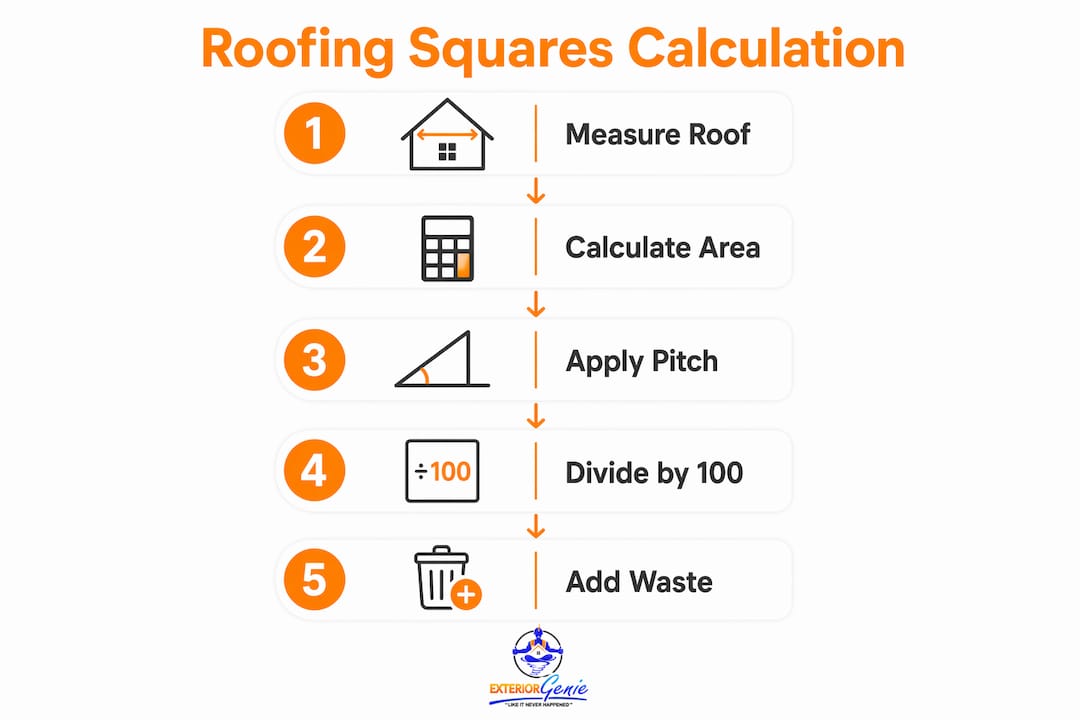
Step-by-step calculation
- Measure each roof plane. Use a tape measure on the roof itself, or measure the building footprint from the ground and adjust for pitch later. Record the length and width of every plane.
- Multiply length × width for each plane to get its area in square feet.
- Add all plane areas together to get the total roof surface area.
- Divide the total by 100. The result is your roofing square count.
- Apply a pitch multiplier if you measured from the ground footprint rather than on the roof itself (see table below).
- Add a waste factor of 10–15% for cuts at valleys, hips, and rake edges, then round up to the nearest whole square.
Practical example: A roof with two planes, each measuring 40 ft × 30 ft, gives you 1,200 sq ft per plane, or 2,400 sq ft total. Divide by 100 and you get 24 base squares. Add a 15% waste factor: 24 × 1.15 = 27.6, which rounds up to 28 project squares.
| Roof Pitch | Pitch Multiplier |
|---|---|
| — | 1.20 |
| 12/12 | 1.41 |
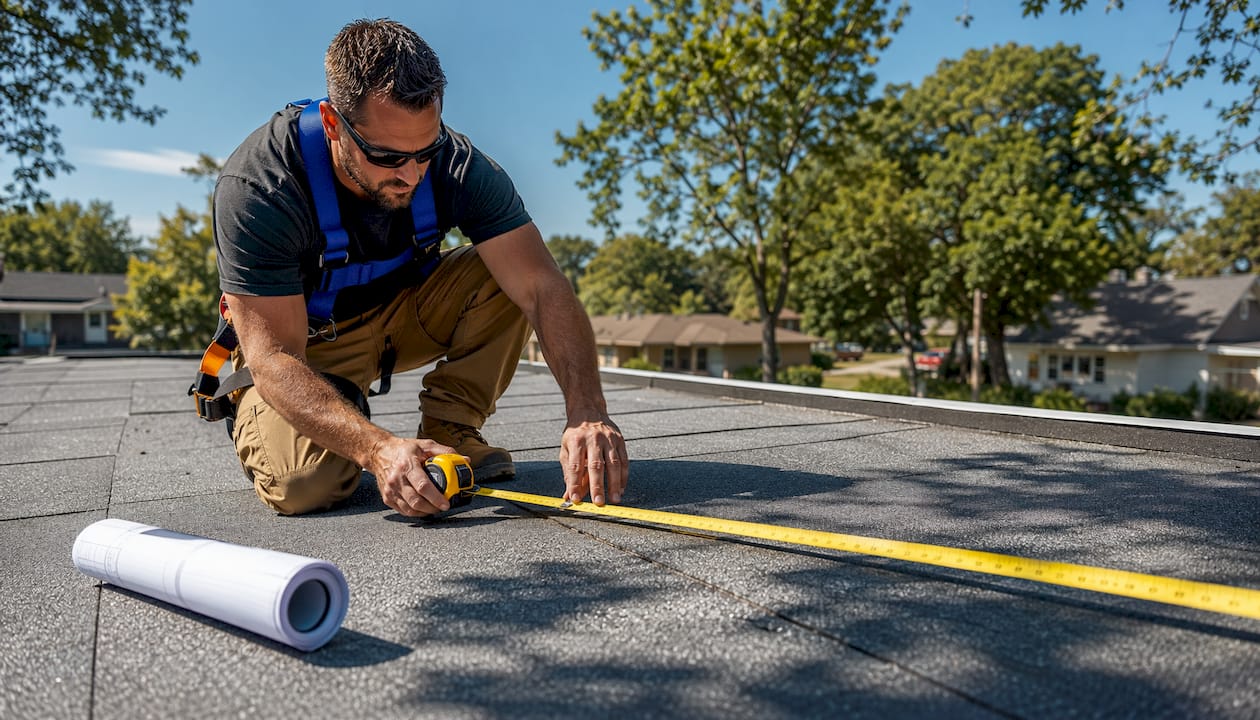
Multiply your ground-level footprint area by the appropriate multiplier to get the true sloped surface area before dividing by 100.
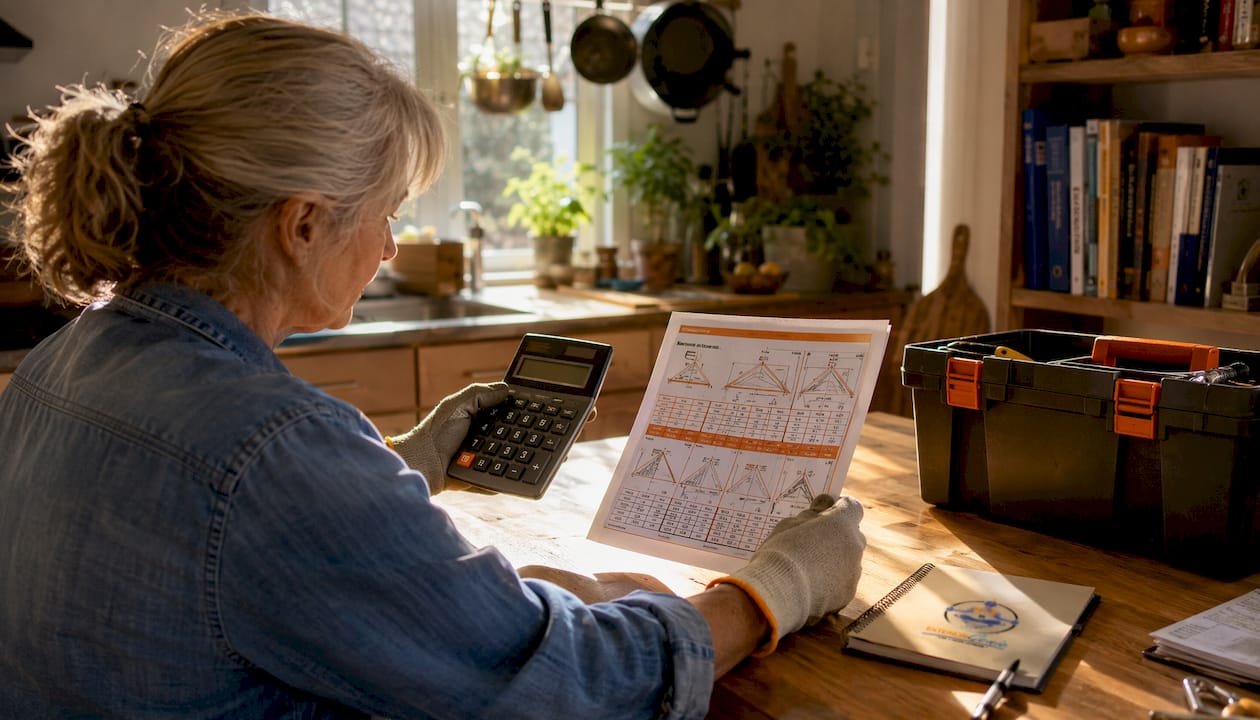
Pro Tip: Never use your home's living area or floor plan square footage as a stand-in for roof area. Roof overhangs, pitch, and architectural features all push the actual roof surface well beyond the building footprint — often by 30% or more on steeper roofs.
How many shingles come in a roofing square?
One roofing square corresponds to approximately three bundles of standard architectural shingles. That relationship is baked into how manufacturers package their products — three bundles of GAF Timberline HDZ, Owens Corning Duration, or CertainTeed Landmark will cover one square of roof surface.
- Architectural (laminate) shingles: 3 bundles per square
- Class 4 impact-rated shingles (e.g., GAF Timberline AS II): 4 bundles per square
- Underlayment rolls: one roll typically covers 4–5 squares of synthetic underlayment
Knowing the bundle-to-square ratio lets you cross-check a contractor's material list against your square count. If your roof is 28 project squares and the quote lists 84 bundles of architectural shingles, the math checks out. A number that is dramatically off in either direction deserves a question.
Why accurate measurements matter and what affects your square count
Precise square counts protect you in two situations where the stakes are high: ordering materials and filing insurance claims. Order too few squares and the job stalls waiting for a restock. Overestimate and you are paying for shingles that sit in a dumpster. For insurance claims, an inaccurate square count is one of the most common triggers for payment disputes.
Several factors push the real square count above what a simple footprint calculation suggests:
- Roof pitch. A steeper slope means more actual surface area. A 12/12 pitch roof has 41% more surface than a flat footprint of the same building.
- Dormers and hips. These add roof planes that must each be measured and included.
- Valleys. Where two planes meet, the geometry creates additional surface area and extra waste from cuts.
- Overhangs and eaves. Roof overhangs extend beyond the building walls and must be counted in the total surface area.
Measurement methods each have trade-offs. A tape measure on the roof is the most accurate but requires safe access. Ground-level measurements with a pitch multiplier are safer but introduce more room for error. Aerial measurement tools like EagleView or RoofSnap pull satellite imagery and calculate area automatically, which is faster and often accurate enough for estimates, though they can miss fine details on complex roofs.
Pro Tip: Add a 10% waste factor for simple gable roofs and 15% for complex roofs with multiple valleys and hips. Cutting shingles to fit angles wastes material, and running short mid-job is far more expensive than having a few bundles left over.
What roofing squares typically cost in the United States
Roofing materials and labor are priced per square across the U.S. market, which is why knowing your square count is the first step to understanding any quote. Costs vary by material, region, roof complexity, and contractor.
- 3-tab asphalt shingles: roughly $150–$300 per square installed
- Architectural (laminate) shingles: roughly $350–$550 per square installed
- Metal roofing panels: roughly $600–$1,200 per square installed
- Slate or tile: $1,000 or more per square installed, depending on material and region
Labor alone typically runs $150–$300 per square, depending on roof pitch and local market rates. A steeper or more complex roof costs more per square because it takes longer and requires more safety equipment. For a more detailed breakdown of residential roofing materials and how square counts affect total project cost, the material type is usually the biggest variable in the final number.
Note on getting accurate quotes: The average American home sits between 17 and 26 roofing squares depending on footprint and pitch. A quote that lists your square count alongside per-square pricing is far easier to verify than one that gives only a lump-sum total. Always ask for the square breakdown.
Expert insights on getting roofing square calculations right
The single most misunderstood concept in roofing estimates is the difference between geometric squares and project squares. A geometric square is the actual measured surface area divided by 100. A project square is the material order, which runs higher because cuts at valleys, rakes, and hips waste shingle material. A roof with a geometric area of 22 squares might require ordering 26 project squares to complete the job without running short.
That gap between geometric and project squares is also where homeowners get surprised by material costs. The waste factor is not padding — it is a real cost of cutting shingles to fit the geometry of your specific roof.
Common measurement pitfalls to avoid:
- Relying on a home's listed square footage instead of measuring the actual roof surface
- Forgetting to include overhangs, which can add several squares on larger homes
- Using a flat-footprint measurement on a steep-pitch roof without applying a pitch multiplier
- Skipping the waste factor on complex roofs with multiple valleys
Pro Tip: When the stakes are high, such as a full replacement or a major insurance claim, get a professional measurement. HAAG-certified inspectors use calibrated tools and aerial data to produce square counts that hold up in claim negotiations.
Exteriorgenie brings 25 years of precision to every roofing estimate
Getting your square count right is the difference between a fair quote and an expensive surprise. Exteriorgenie, a veteran-owned roofing company based in Lexington, SC, has spent 25 years turning precise measurements into accurate estimates for homeowners and businesses across the region.

HAAG-certified inspectors handle every measurement, which means the square count on your estimate is the same number your insurance adjuster will see. Whether you are dealing with storm damage, planning a full replacement, or navigating an insurance claim, Exteriorgenie's 24/7 availability and transparent per-square pricing mean you always know exactly what you are paying for and why. Contact Exteriorgenie today for a professional roof measurement and estimate.
Key Takeaways
One roofing square equals exactly 100 square feet, and every material order, labor quote, and insurance settlement in U.S. residential roofing is built around that single unit.
| Point | Details |
|---|---|
| One square = 100 sq ft | A roofing square is a 10 ft × 10 ft section; divide total roof area by 100 to get your square count. |
| Pitch multipliers matter | Steeper roofs have more surface area than their footprint suggests; always apply a pitch multiplier when measuring from the ground. |
| Three bundles per square | Standard architectural shingles require three bundles to cover one roofing square; Class 4 impact-rated shingles require four. |
| Geometric vs. project squares | A roof measuring 22 geometric squares may need 26 project squares ordered once waste from cuts is factored in. |
| Exteriorgenie | HAAG-certified inspectors provide precise square counts for estimates, replacements, and insurance claims in Lexington, SC. |