
Haag certification is the industry standard credential that verifies an inspector's expertise in commercial roof damage assessment and insurance claim documentation. Issued by Haag Engineering, one of the most respected forensic engineering firms in the United States, this credential separates trained forensic inspectors from general contractors who simply climb on roofs. For commercial property owners and facility managers, understanding why Haag certification matters for commercial roofing decisions directly affects both repair quality and insurance claim outcomes.
Why Haag certification matters for commercial roofing inspections
The Haag Certified Inspector for Commercial Roofing, known as the HCI-C, is a specialized credential introduced in 2009 to address the unique demands of flat and low-slope commercial roofing systems. That distinction matters because commercial roofs fail differently than residential shingles. Membrane separation, ponding water, wind uplift failure, and substrate deck deterioration require a trained eye that standard residential inspection training does not cover.
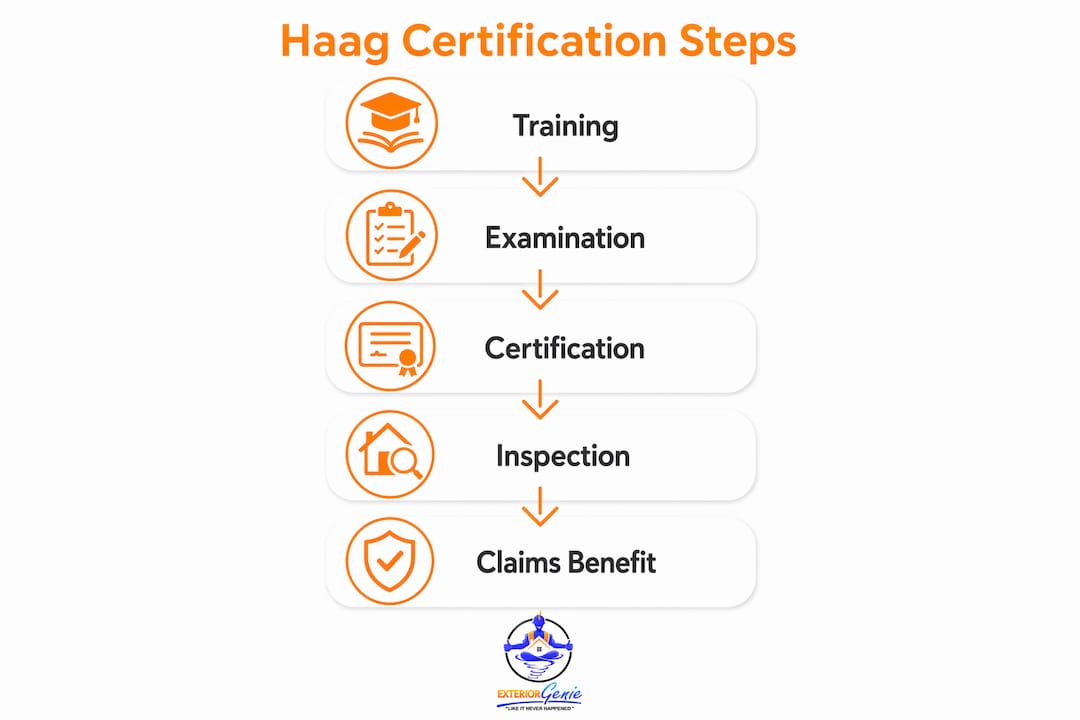
Haag Engineering offers intensive 2–5 day training programs costing $1,800 to $3,200 per course, followed by a rigorous examination before certification is awarded. That investment reflects the depth of knowledge required. Inspectors learn to identify hail impact patterns on TPO, EPDM, and modified bitumen membranes, assess wind uplift damage against ASCE 7 load standards, and document findings using forensic methodology that holds up under insurer scrutiny.
Facility managers benefit directly from this level of training. A certified inspector does not guess at damage causes. The HCI-C credential signals that the inspector can distinguish a manufacturing defect from a storm event, which is exactly the distinction that determines whether your insurance carrier pays or denies.
Pro Tip: Ask any inspector you hire to show you their specific HCI-C certificate, not just a company brochure. The credential belongs to the individual, not the business.
Key areas covered in Haag commercial roofing certification include:
- Wind uplift analysis and membrane edge failure evaluation
- Hail impact identification on low-slope membrane systems
- Deck integrity assessment and moisture intrusion mapping
- Forensic photography and measurement documentation standards
- Differentiation between storm damage and normal wear and tear
These competencies give facility managers a reliable inspection framework that goes well beyond a visual walkthrough.
How does Haag certification improve insurance claim outcomes?
First-pass denial rates for storm damage claims can reach 50% without certified inspection reports. That number reflects a systemic problem: insurers receive vague, undocumented damage claims that give adjusters no forensic basis for approval. A Haag-certified report changes that dynamic entirely.
Haag reports use standardized forensic language that insurance carriers recognize and respect. The methodology separates storm damage from normal wear using objective criteria, which removes the ambiguity that adjusters use to justify denials. When a report clearly documents hail impact density, membrane puncture patterns, and wind uplift evidence with photographs and measurements, the insurer has far less room to dispute the claim.
Many insurance adjusters themselves hold Haag training credentials. That means a Haag-certified inspector speaks the same technical language as the person reviewing your claim. The result is faster negotiation, fewer back-and-forth disputes, and a higher likelihood of full settlement.
The practical benefits of Haag-certified documentation for insurance claims include:
- Forensic reports that meet carrier evidentiary standards
- Clear separation of pre-existing conditions from covered storm events
- Photographic evidence organized by damage type and roof zone
- Repair cost estimates tied directly to documented damage scope
- A credible third-party assessment that carries weight in dispute resolution
Facility managers who have navigated a commercial roof claim without certified documentation often describe the process as frustrating and slow. Those who bring a Haag-certified report to the table from day one report a noticeably different experience. The role of roof inspection in claim success is not incidental. It is the foundation of the entire process.
What should you verify when hiring a Haag-certified inspector?
Haag certifications belong to individuals, not companies. A roofing business can advertise Haag affiliation, but only the specific inspector who passed the exam and holds a current certificate carries the credential. That distinction is the single most important thing facility managers need to understand before signing an inspection agreement.
Certification expires and requires annual renewal to stay current with evolving roofing materials, building codes, and forensic standards. An inspector who earned the HCI-C in 2019 and never renewed it is working from outdated knowledge. Verifying the certificate date is not optional. It is the only way to confirm the inspector's training reflects current standards.
Here is a practical verification process for facility managers:
- Request the certificate directly. Ask the inspector to provide their Haag certificate showing their name, credential type, and expiration date.
- Confirm the credential type. The HCI-C is the commercial-specific credential. The residential HCI-R is a separate certification and does not qualify an inspector for flat or low-slope commercial roof assessment.
- Check the renewal date. A certificate expired more than 12 months ago signals a lapse in continuing education and code awareness.
- Cross-reference with Haag Engineering. Haag Engineering maintains records of certified inspectors. A quick verification call or email confirms active status.
- Evaluate the inspection scope. A qualified inspector will outline a written inspection plan covering membrane condition, drainage, flashings, penetrations, and deck integrity before starting work.
Pro Tip: Never rely on a company's website claim of "Haag-certified inspections" alone. Request the individual inspector's certificate before scheduling. Marketing language and valid credentials are not the same thing.
Understanding roofing certifications that matter helps property owners ask the right questions and avoid paying for inspections that will not hold up with their insurer.
What are the broader benefits of a Haag-certified commercial roof inspection?
A Haag-certified inspection delivers value well beyond the insurance claim process. The comprehensive reports include photographs, measurements, and prioritized repair recommendations that give facility managers a clear picture of roof condition and urgency. That documentation supports capital planning, contractor communication, and long-term asset protection.
Safety identification is another direct benefit. A certified inspector trained in deck integrity assessment will flag areas where substrate deterioration creates fall-through risk, a hazard that a surface-level visual inspection routinely misses. Catching those conditions before a contractor crew walks the roof protects both workers and the property owner from liability.
Haag certification complements but does not replace the expertise of licensed roofing contractors. The inspector's role is forensic assessment and documentation. The contractor's role is technical repair execution. Pairing both produces the most reliable commercial roof management outcome.
The broader advantages of certified inspection for commercial properties include:
- Accurate repair scope that prevents over-specification or missed damage
- Transparent documentation that aligns contractor bids with actual conditions
- Identification of safety hazards before repair crews access the roof
- Capital planning support based on remaining roof life estimates
- Property value protection through documented maintenance and repair history
Facility managers who integrate Haag-certified inspections into their annual maintenance schedule gain a consistent record of roof condition over time. That record strengthens future insurance claims, supports lease negotiations, and provides defensible documentation if a roofing dispute ever reaches litigation. Choosing a qualified commercial roofing contractor who works alongside certified inspectors is the most reliable path to protecting a commercial property's largest exterior asset.
Key Takeaways
Haag certification is the single most effective credential for ensuring accurate commercial roof damage assessment and improving insurance claim acceptance rates.
| Point | Details |
|---|---|
| HCI-C targets commercial roofs | The Haag commercial credential, introduced in 2009, covers flat and low-slope systems that residential certifications do not address. |
| Certified reports reduce claim denials | First-pass denial rates can reach 50% without certified documentation; Haag reports improve insurer acceptance significantly. |
| Credentials belong to individuals | Always verify the specific inspector's certificate, not the company's marketing claims, and confirm the renewal date. |
| Forensic language aligns with adjusters | Many adjusters hold Haag training, so certified reports accelerate negotiation and reduce disputes. |
| Inspection supports long-term planning | Detailed reports with photos and repair priorities support capital budgeting, safety management, and property value protection. |
What 25 years in roofing taught me about Haag certification
The first time I saw a commercial roof claim get denied, the inspector's report was two pages long with three blurry photos. The adjuster rejected it in under 48 hours. The second time that same property filed a claim after a hail event, we sent a Haag-certified inspector. The report was 40 pages, organized by damage zone, with forensic measurements and membrane close-ups. The carrier approved it in full within two weeks.
That contrast is not a coincidence. Haag certification forces inspectors to document damage the way insurers think about damage. It is not about finding more problems. It is about presenting real problems in a language the carrier cannot dismiss.
What I caution facility managers about is the marketing noise around this credential. Every roofing company in a storm-prone market seems to advertise "Haag-certified inspections." Some of those companies have one certified inspector who handles a fraction of their jobs. Others have inspectors whose certificates lapsed two years ago. The credential only protects you if the person who actually walks your roof holds a current, valid HCI-C.
My honest recommendation: build Haag-certified inspections into your annual facility management calendar, not just your post-storm response. A baseline inspection report from a certified inspector gives you a documented starting point. When a storm hits, you can show the insurer exactly what changed. That before-and-after record is worth more than any single inspection report filed in isolation.
— Ebben
Exteriorgenie brings Haag-certified expertise to your commercial roof
Exteriorgenie is a veteran-owned roofing company serving commercial property owners in Lexington, SC, with 25 years of field experience and HAAG-certified inspectors on staff. When storm damage hits your facility, the difference between a denied claim and a full settlement often comes down to the quality of your inspection documentation.
Exteriorgenie's team provides thorough commercial roof inspections backed by forensic-grade documentation, and offers personalized insurance claim assistance to guide you through every step of the process. Flexible financing options are available for repair projects following damage assessments. Contact Exteriorgenie to schedule a certified inspection and get documentation your insurer will respect.
FAQ
What is Haag certification for commercial roofing?
Haag certification, specifically the HCI-C credential, verifies that an inspector has completed specialized forensic training for flat and low-slope commercial roofing systems. It is issued by Haag Engineering and recognized by insurance carriers across the United States.
Does Haag certification improve insurance claim approval rates?
First-pass denial rates for storm claims can reach 50% without certified inspection reports. Haag-certified documentation uses standardized forensic language that insurers recognize, which significantly improves claim acceptance rates.
How often does a Haag certification need to be renewed?
Haag certification requires annual renewal to remain valid. Property owners should verify the expiration date on the individual inspector's certificate before scheduling any commercial roof inspection.
Is the Haag commercial certification different from the residential one?
The HCI-C is the commercial-specific credential covering flat and low-slope membrane systems. The residential HCI-R is a separate certification and does not qualify an inspector to assess commercial roofing systems.
Can a roofing company hold Haag certification?
Haag certification belongs to individual inspectors, not companies. Always request the specific inspector's certificate with their name, credential type, and current expiration date before proceeding with an inspection.