
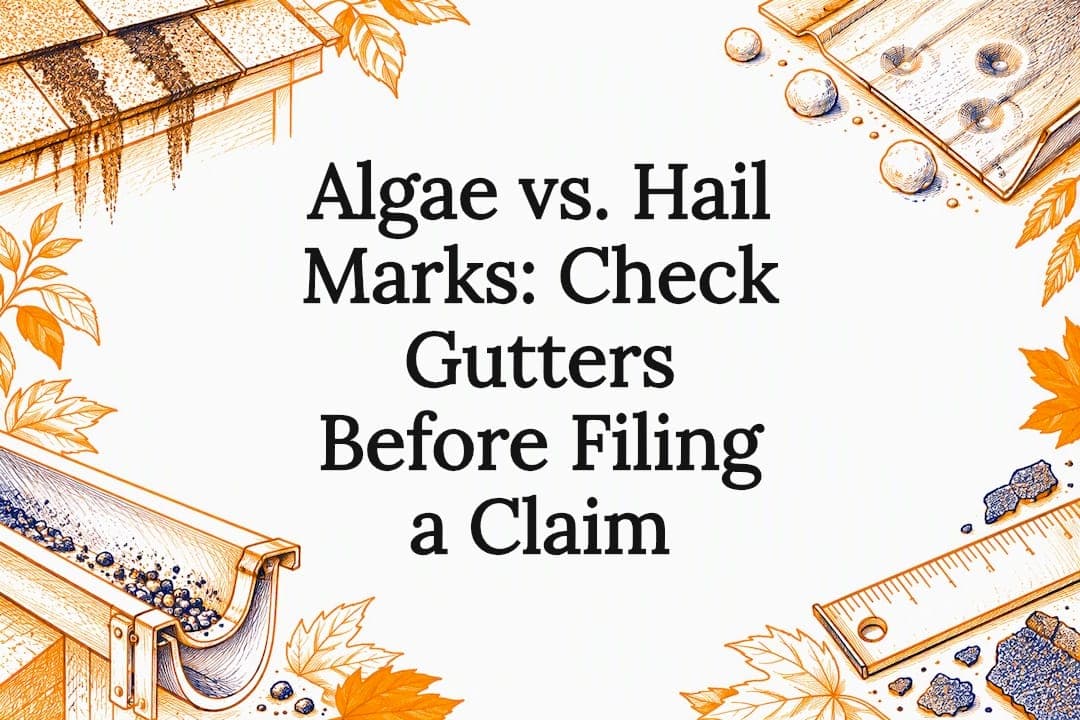
Dark streaks that follow water flow are almost always algae, and round dents or "bruise" marks appearing after a storm are probably hail. The fastest checks are pattern (runoff lines versus random scatter) and corroboration on soft metal like gutters or AC fins. If marks showed up right after a storm, photograph them and inspect nearby metal fixtures, or have a roofer confirm before you assume either cause.
TL;DR:
- A close inspection should test suspected marks for soft or cracked spots, pressed in granules, and random distribution across multiple roof slopes.
- Matching dents on gutters, vents, air conditioner fins, or mailboxes strengthen hail evidence; inspect these fixtures and gutter granules before judging roof marks.
- Cosmetic dents may be excluded by policy endorsements, so photograph every slope and document storm timing, bruising, exposed asphalt, and matching metal dents before filing.
- For algae, use a low pressure sprayer with bleach based or manufacturer approved cleaner, protect nearby plants, and avoid pressure washing or scrubbing shingles.
- Call a roofer if you find soft spots, active leaks, exposed asphalt in several areas, or matching metal dents; stay off wet or steep roofs.
Table of Contents
- Visual cues: compare algae streaks and hail impact marks from the ground or ladder
- Close-up checks inspectors use: tactile tests and property-wide corroboration
- When marks justify an insurance claim: cosmetic versus functional damage
- Action plan: safe DIY algae cleaning and concrete triggers to call a professional for hail
- Exterior Genie inspection checklist: what pros document and why it matters
- Author perspective: common mistakes and practical risk priorities
- How Exterior Genie can help with inspection, documentation and repair
- FAQ
- Sources
Visual cues: compare algae streaks and hail impact marks from the ground or ladder
From a safe distance, algae and hail leave distinct fingerprints. Algae shows up as dark, vertical or irregular streaks that trail downward in the direction water runs off the roof, and it tends to cluster on north facing or shaded slopes where moisture lingers longest. The organism behind most of this staining is Gloeocapsa magma, a cyanobacteria that feeds on the limestone filler in shingle granules and leaves behind a dark, almost sooty residue.
Hail leaves a different signature. Instead of streaks, you get round or oval pits scattered without any clear pattern, often with granules knocked loose to expose the darker asphalt mat underneath. These marks are typically 0.5 to 2 inches in diameter, and their size and depth vary with the hailstone that caused them.
A few lookalikes trip up homeowners every year:
- Blistering: steep sided pits, usually a quarter inch across or smaller, caused by trapped moisture or manufacturing defects rather than impact.
- Age and wear: thinning granules in a repeating, uniform pattern across the whole roof rather than random spots.
- Foot traffic: scuffed or displaced granules concentrated near vents, chimneys, or walk paths, not spread evenly across exposed slopes.
If you're unsure whether recent spotting is storm related, our guide on what to check first for hail damage walks through the same visual checks in more detail. Understanding how storm damage differs by type also helps rule out wind or impact damage that can mimic hail at a glance.
Close-up checks inspectors use: tactile tests and property-wide corroboration
Before climbing anything, inspect from the ground with binoculars and only get on a ladder if you're comfortable and the roof is dry. Steep slopes, wet shingles, or a roof with existing damage are reasons to call a professional instead of risking a fall.
The core close-up technique is what inspectors call the bruise test:
- Press gently on a suspected mark with a finger or soft tool to feel for a spongy or cracked spot beneath the surface, which signals hail fracture rather than surface staining.
- Check whether granules are pressed into the mat (hail) or simply missing in a clean, shallow patch (often blistering or a washed off algae spot).
- Look for a scattered, random pattern across multiple slopes rather than marks lined up or clustered in one area.
Pro Tip: Carry a small magnet or flashlight on your inspection. Raking light at a low angle makes shallow dents and granule loss far easier to spot than direct overhead sun.
Corroborating evidence matters as much as the shingle itself. Travelers Insurance notes that hail impacts often leave shallow dents with granules pressed in, and matching dents on soft metal are a strong clue that ties roof marks to an actual storm rather than age or algae. Check gutters, AC fins, fence caps, and mailboxes for similar dings, and look in the gutters themselves for loose granules. A hailstorm can also wash away years of algae buildup and leave clean looking spots that resemble impacts, which is exactly why the tactile test and metal corroboration matter together rather than alone.

When marks justify an insurance claim: cosmetic versus functional damage
Not every hail mark is worth a claim, and insurers draw a hard line between cosmetic and functional damage. Functional damage involves penetrations, leaks, or a compromised waterproof barrier, while cosmetic damage is purely visual, like a dent that doesn't affect performance. Many policies carry cosmetic damage endorsements that exclude payout for marks that look bad but don't threaten the roof's function.
Adjusters typically weigh several factors together rather than any single mark:
- A random, scattered pattern across multiple slopes instead of one isolated spot.
- Tactile bruising confirmed by pressing on suspected impact sites.
- Matching dents on gutters, vents, or AC fins.
- Fresh, dark asphalt exposed where granules were knocked loose.
- Timing that lines up with a documented storm in the area.
Adjusters prioritize pattern and corroborating exterior damage over any single mark. A scattered distribution combined with metal dents nearby carries real weight in a claim review, more than an isolated shingle anomaly ever will.
Document everything before you call anyone: timestamped wide shots of each slope, mid range shots showing distribution, and close ups with a coin or ruler for scale. Note the storm date if you know it, and if the evidence feels ambiguous, a professional inspection is worth the call before you file. Our step by step claims guide covers the paperwork side in more depth.
Action plan: safe DIY algae cleaning and concrete triggers to call a professional for hail
Algae is one you can usually handle yourself. A bleach based roof cleaner or a manufacturer approved product, applied with a low pressure sprayer and rinsed gently, removes most biomass without stripping granules. Avoid pressure washing or aggressive scrubbing, since it can knock loose the granules that protect shingles from UV and weather.
- Wet surrounding plants and cover them before applying any bleach based cleaner.
- Apply the solution with a pump sprayer, let it sit per the product's instructions, then rinse from the top down with low pressure water.
- Check the roof again after it dries and repeat only the stubborn spots rather than the whole surface.
Pro Tip: Zinc or copper strips near the ridge line slow future algae growth by releasing trace metals with every rain, which is a maintenance step worth asking a roofer about.
Hail is different. Stop and call a professional if you feel soft, spongy spots, see multiple areas of exposed asphalt, find matching dents on metal fixtures, notice any active leak, or see granule loss spread across several slopes. A proper inspection documents findings for a claim and determines whether the roof needs scoped repair or full replacement, something our roof impact damage guide explains in more detail.
Exterior Genie inspection checklist: what pros document and why it matters
When our HAAG certified inspectors assess a roof after a storm, we follow a consistent sequence rather than spot checking at random:
- Walk the full exterior perimeter first, noting damage on siding, windows, and trim before touching the roof.
- Check soft metal fixtures, gutters, downspouts, and AC fins, for dents that match the size and spacing of suspected hail strikes.
- Perform close up tactile checks on a sample of shingles across every slope, not just the one visible from the driveway.
- Measure impact diameters and log their distribution to see whether the pattern is random or clustered.
- Take annotated, multi scale photos, wide context shots, mid range distribution shots, and close ups with a reference object for scale.
Matching metal dents and directionality help tie roof marks to a specific storm date rather than general wear. Insurers respond best to annotated photos, a clear scope of recommended work, and inspection by a credentialed professional, which is exactly what we document before any repair conversation starts. For a closer look at how gutter dents factor into this, see our guide on gutters and the 25% rule.
Author perspective: common mistakes and practical risk priorities

The most common mistake I see is homeowners assuming every dark spot or dent is hail, when half the time it's algae, a blister, or a smear that's been there for years. The opposite mistake happens too: dismissing real impact marks as "just weathering" because they look minor from the ground.
My priority after any storm is safety and documentation first, repairs second. A rushed patch job without photos can cost you a legitimate claim, and a missed bruise can turn into a leak within a season.
— Ebben
How Exterior Genie can help with inspection, documentation and repair
If you're not sure what you're looking at, some contractors offer HAAG inspired inspections, photo documentation, and emergency tarping when marks appear after a storm, along with assistance in the insurance process once damage is confirmed.

Start with our storm damage restoration page to request an inspection and get a written scope of work.
FAQ
How do I get rid of algae on my roof?
A bleach based or manufacturer approved roof cleaner applied with low pressure, followed by a gentle rinse, removes most algae without damaging granules. Avoid pressure washing, which can strip the protective granule layer along with the stains.
What does hail splatter look like?
Hail marks appear as random, circular or oval dents scattered across a roof slope, often with granules knocked loose to expose darker asphalt underneath. Fresh impacts look dark and shiny before weathering to a duller gray over time.
Is it worth claiming hail damage on a car?
That depends on your deductible, the extent of dents, and whether the damage is purely cosmetic or affects function, similar logic to roof claims. A body shop or adjuster can give you a repair estimate to compare against your policy's deductible before you decide.
Can insurance adjusters tell how old hail damage is?
Adjusters look at clues like how dark and sharp edged exposed asphalt is, since fresh damage looks darker and more defined before it oxidizes and dulls with age. They also cross reference storm dates with matching metal dents on gutters or AC fins to help confirm timing.
How can I tell if marks on my gutters or garage door are from hail?
Dents in soft metal like gutters, AC fins, or garage doors that match the size and spacing of roof marks are strong corroborating evidence of a specific hailstorm. One garage door repair resource notes that hail dents on doors tend to follow the same random, scattered pattern seen on roofs struck by the same storm.
Sources
- Black streaks on roofs — National Roof Cleaning Authority
- Identifying hail damage to your roof — Travelers Insurance
- Overview of weathering of roofing materials — technical review
- Congress