
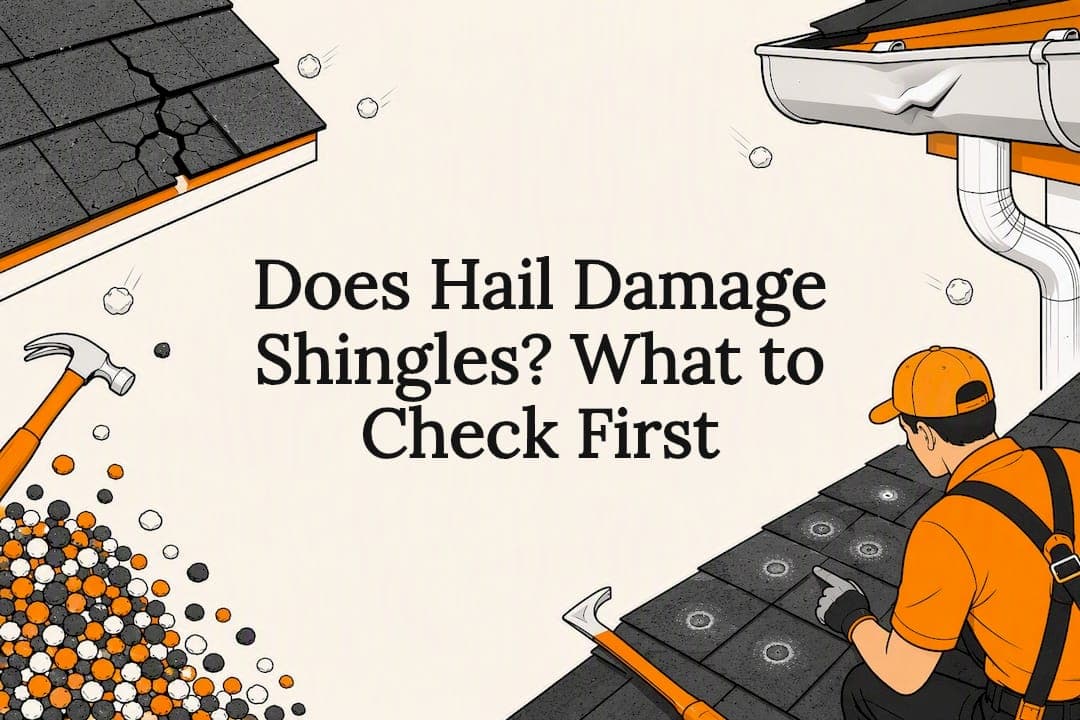
Yes, hail damages asphalt shingles, and it does so in two distinct ways that matter enormously for your wallet. Cosmetic damage just dings the surface. Functional damage cracks the shingle's fiberglass mat or strips it down to bare asphalt, which shortens the roof's remaining life and opens the door to leaks. Insurance treats these two outcomes very differently, so knowing which one you're looking at changes what you do next.
Right after a storm, take two actions before you do anything else. First, document everything from the ground: wide shots of each roof slope, plus close-up photos of your gutters, downspouts, and any exposed AC unit or vent caps. Second, check the soft metals around your property for dents, since gutters and vents that show impact marks corroborate what's happening on the roof surface even before you get eyes on the shingles themselves.
- Photograph roof slopes, gutters, and soft metals immediately after the storm.
- Skip climbing onto a wet or steep roof; a fall risk isn't worth a photo you can get from a ladder or drone.
- Note the date, time, and hail size if you can find intact stones in your yard.
The Insurance Institute for Business & Home Safety tracks shingle performance under hail impact, and their research backs a simple rule: the earlier you document, the stronger your claim. If your roof is more than a few years old or you're unsure what you're looking at, a HAAG-certified inspector from Exteriorgenie can walk the roof safely and tell you within an hour whether you're dealing with cosmetic wear or something that belongs on an insurance claim.
TL;DR:
- Hail impact energy increases dramatically with hailstone size, making golf-ball-sized and larger stones much more likely to cause functional damage.
- Damage affecting less than 10% of a roof slope typically warrants repairs, while over 10-20% often requires complete replacement, especially on older roofs.
- Photographing and documenting impact signs such as bruises, granule loss, and dents in soft metals within days of a storm strengthens insurance claims.
- Temperature influences damage type: warmer shingles tend to bruise, while cold conditions cause more cracking during impacts of the same size.
- A HAAG-certified inspection and detailed photographic record before filing can significantly improve chances of insurance coverage for functional hail damage.
Table of Contents
- Visual and Tactile Signs of Hail Damage on Asphalt Shingles
- How Hail Size, Roof Age, and Temperature Change the Damage You'll See
- Cosmetic vs. Functional Damage: What Insurers Look For
- Safe Inspection Workflow and Evidence Collection for Claims
- Repair vs. Replacement: Thresholds, Costs, and Timing
- Prevention and Material Choices: Impact-Rated Shingles and Ventilation
- Exterior Genie's Inspection and Claims Assistance After Hail
- What Happens If You Ignore Hail Damage on Your Roof
- Common Misconceptions About Hail Damage and Roofing Warranties
- How Long Does the Hail Damage Repair Process Take?
- What actually matters here is not sold in stores or Owens Corning showrooms
- Get a HAAG-Certified Inspection Before You File
- Key Takeaways
- Sources
- FAQ
Visual and Tactile Signs of Hail Damage on Asphalt Shingles
Hail leaves a signature that's easy to miss if you're not looking for it, and easy to confuse with normal aging if you are. The most reliable sign is a bruise: a dark, circular spot where the hailstone compressed the shingle and knocked granules loose from the asphalt coating underneath. Unlike a scuff or a stain, a bruise has a soft, slightly spongy feel when you press it, because the mat beneath has been compressed even if it hasn't cracked yet.
Granule loss is the second telltale. Every asphalt shingle is coated in ceramic granules that shield the asphalt from UV light. A hail strike knocks those granules loose in a tight cluster, and you'll often find the confirming evidence not on the roof but in your gutters, where displaced granules accumulate after a damaging storm. A gutter full of granules after a hailstorm, especially if it wasn't like that before, is one of the fastest ways to confirm impact without ever setting foot on the roof.
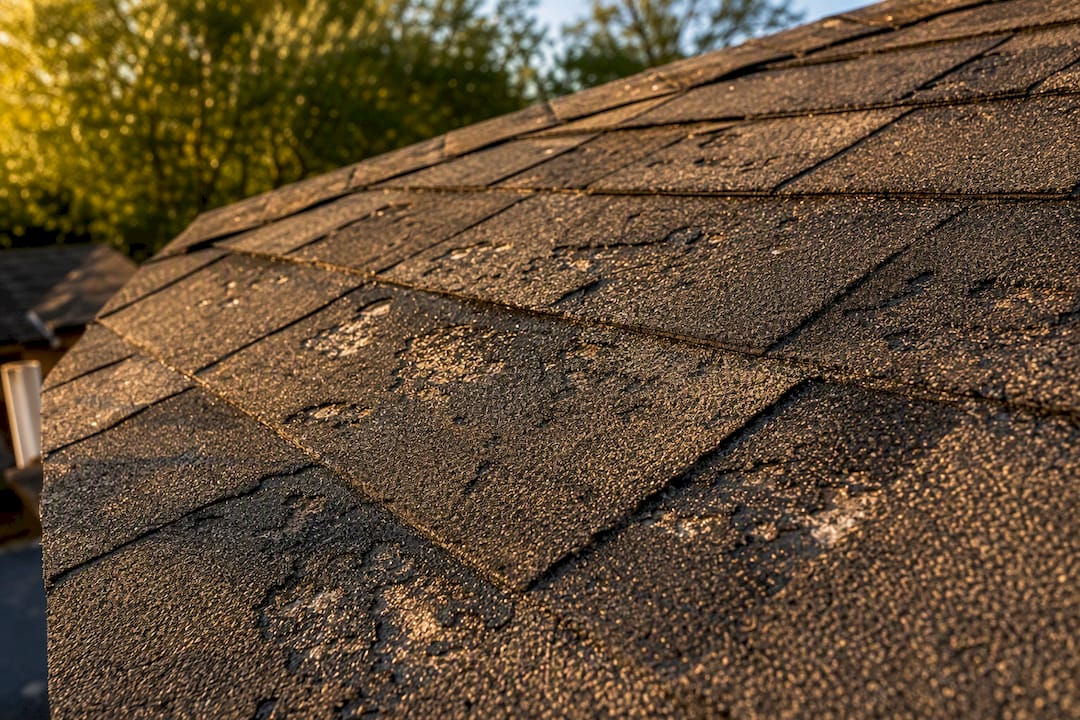
More severe hits go further. Cracking or fracturing of the fiberglass mat underneath the granules is functional damage, not cosmetic, because it compromises the shingle's ability to shed water. In the worst cases, you'll see punctures straight through the shingle, or tabs that have been knocked loose or blown off entirely, exposing the roof deck underneath.
Here's how to work through an inspection systematically once you're safely positioned (ground level with binoculars, or a stable ladder against the eave):
- Scan each roof slope for clusters of dark spots rather than isolated marks. Hail hits in patterns, not single dots.
- Compare north/northwest-facing slopes to south-facing ones. Hail typically arrives at an angle, so damage often concentrates on one or two slopes.
- Look at metal flashing, roof vents, and any skylight frames for small dents that match the size of hail reported in your area.
- Check the attic from inside if it's accessible. Water stains on the underside of the decking suggest a puncture has already let moisture through.
- If you find suspicious spots but can't tell if they're bruises or just wear, use the chalk-rub test described below.
The chalk-rub test is a trick inspectors have used for years and one you can replicate at home with a piece of sidewalk chalk. Rub chalk lightly across a suspected impact area. On sound shingle, the chalk coats evenly. Where the granules have been displaced or the mat has been compressed, the chalk fails to fill the depression in the same way, leaving a visible outline you can photograph for your claim file. Pair it with a thumb press: gently push on a suspect spot, and if it gives more than the surrounding shingle, that's compression damage, not surface dirt or algae staining.
Pro Tip: Take your chalk-rub photos with a tape measure or a coin next to the mark. Adjusters want scale in every photo, and a quarter placed next to a bruise does more to establish size than a caption ever will.
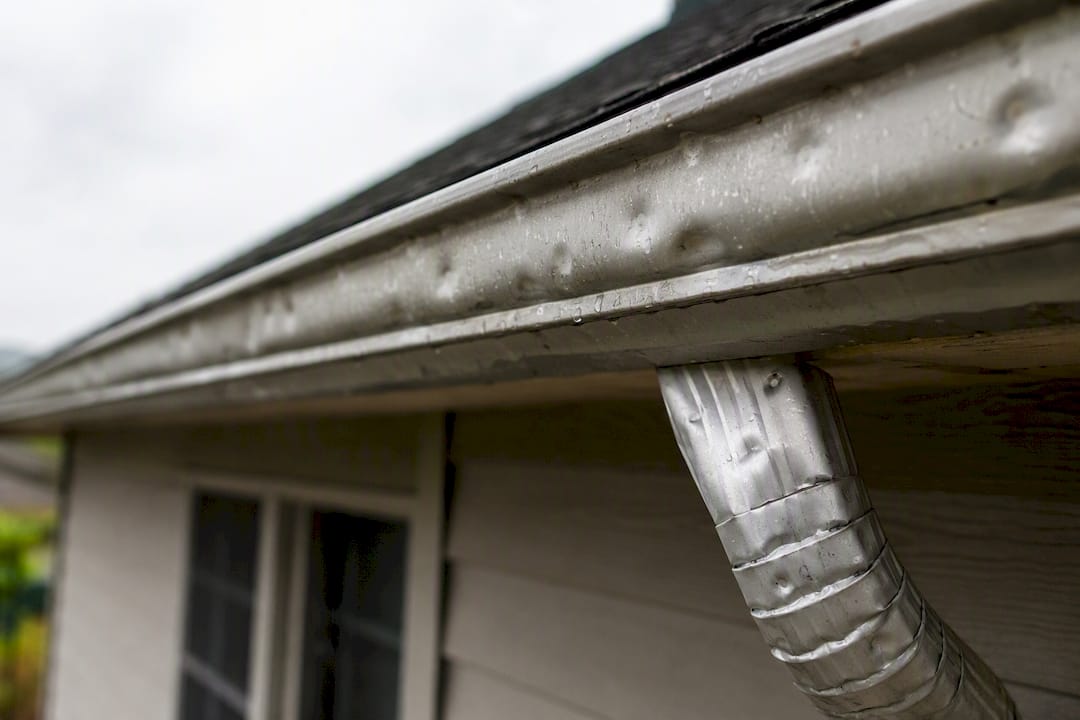
Don't rely on shingle marks alone. Walk the perimeter of your house and look at every exposed piece of soft metal: gutter runs, downspout elbows, window screens, and AC condenser fins. These materials dent far more easily than asphalt shingles, so if you find dime-sized dents in your gutters but nothing obvious on the roof, that's a strong sign you need a closer inspection, not proof that your roof escaped the storm.
How Hail Size, Roof Age, and Temperature Change the Damage You'll See
The size of the hailstone matters more than almost any other single factor, because impact energy scales with the cube of the stone's diameter. A hailstone twice as wide as another doesn't hit twice as hard. It hits roughly eight times harder, which is why the jump from pea-sized to golf-ball-sized hail is so consequential for your roof.
Industry consensus puts the meaningful threshold for functional shingle damage at roughly one inch in diameter, or about quarter size. Below that, most asphalt shingles shrug off impacts with minimal marking. At quarter size and above, bruising and granule loss become common, and once you climb to golf-ball size (roughly 1.75 to 2 inches), cracked mats and outright punctures show up even on newer roofs.
- Pea size (0.25 in.): rarely causes shingle damage; mostly a non-issue for asphalt roofs.
- Quarter size (1 in.): the common threshold where inspectors start finding real bruising and granule loss.
- Golf ball size (1.75 in.) and larger: frequently causes cracked mats, punctures, and missing tabs.
Temperature plays a role most homeowners never think about. On a hot afternoon, asphalt shingles are more pliable, so hail tends to bruise and dent them without fracturing the mat. On a cold morning or in early spring, the same size hailstone hitting stiffer, more brittle shingles is far more likely to crack straight through. That's one reason two houses in the same neighborhood, hit by the same storm, can end up with very different damage.
Roof age compounds all of this. A 5 year old roof still has flexible asphalt and intact granule adhesion, so it tends to bruise rather than crack under moderate hail. A 15 year old roof is starting to lose that flexibility, and the same storm that dented the newer roof next door might crack shingles on the older one. By 25 years, older shingles are simply more brittle and fracture more easily under a comparable impact, which is exactly why insurers and contractors weigh a roof's age heavily when deciding between a spot repair and a full replacement.
Cosmetic vs. Functional Damage: What Insurers Look For
Insurance adjusters draw a hard line between damage that looks bad and damage that performs badly, and that line decides whether your claim gets approved. Cosmetic damage is superficial: light granule loss, minor discoloration, or surface scuffing that doesn't compromise the shingle's ability to shed water. Functional damage is different in kind, not just degree. It includes cracked or fractured mats, exposed bitumen, punctures, and missing tabs, all of which shorten the roof's usable life and can let water through eventually, even if it isn't leaking yet.
That distinction drives how your policy responds. Most homeowners insurance covers functional hail damage under standard dwelling coverage, subject to your deductible, but purely cosmetic damage is frequently excluded outright. Some carriers in hail-prone states also carry separate, often higher, wind and hail deductibles that apply specifically to storm claims rather than your standard deductible. Read that section of your policy before you file, because it changes your math on whether filing is worth it.
Adjusters respond to specific language, not general complaints. Showing exposed bitumen, quantifying granule loss with photos, and framing the damage in terms of diminished life expectancy gives an adjuster something concrete to write into their report, rather than a vague description they have to interpret themselves.
Documentation is where most homeowners lose ground they didn't need to lose. Vague photos and vaguer descriptions ("the roof looks bad") give an adjuster room to call it cosmetic. Specific evidence tied to functional performance does the opposite.
- Photograph exposed bitumen with a scale reference next to the exposed area.
- Count and photograph granule accumulation in gutters as a proxy for overall roof-wide impact density.
- Use the phrase "diminished life expectancy" when describing how the damage shortens the roof's remaining service life, since that's the language adjusters are trained to weigh.
- Request a copy of the adjuster's own damage classification, cosmetic or functional, in writing before you accept a settlement.
If your claim gets denied as cosmetic and you believe the damage is functional, a second opinion from a HAAG-certified inspector can carry real weight, since that credential specifically trains inspectors to distinguish the two categories using the same criteria adjusters are trained on. Our insurance claims walkthrough covers what to do if your first claim gets pushed back.
Safe Inspection Workflow and Evidence Collection for Claims
Good documentation follows a sequence, not a scramble. Working through it in order keeps you off a roof you shouldn't be on and gives an adjuster a complete record instead of a handful of random photos.
- Start on the ground with binoculars, scanning each visible slope for clusters of dark spots or missing tabs. This costs you nothing and carries zero fall risk.
- Check gutters and downspouts next. Granule buildup, dents in the gutter channel, and dented downspout elbows are strong corroborating evidence you can collect without a ladder in most single-story homes.
- Inspect soft metals around the property: roof vents, flashing, AC condenser fins, and any exposed window screens. Dents here confirm hail size and impact force even if you can't get a clear view of the shingles.
- Go into the attic if it's safely accessible. Look for fresh water stains, damp insulation, or visible light coming through the decking, all of which indicate a puncture has already let moisture in.
- If any of this requires climbing onto a wet, steep, or high roof, stop and call a professional. No photo is worth a fall.
Once you've worked through that sequence, build a photo file that tells a complete story. Wide-angle shots of each slope establish overall pattern and distribution. Close-ups of individual bruises or fractures, always with a coin or tape measure for scale, establish size and severity. Photograph gutters and any dented metal separately, and if you can safely access the attic, add those interior shots too. Note the date, time, and, if you can find a NOAA storm report or local weather record for that day, attach it to your file.
| Documentation Step | What to Capture |
|---|---|
| Ground survey | Wide shots of every roof slope, noting which face the storm likely hit |
| Gutter and metal check | Granule accumulation, dents in gutters, vents, and AC fins |
| Attic inspection | Water stains, damp decking, or visible light through the roof |
| Weather verification | Date, time, and storm report from a local or NOAA source |
Preserve physical evidence where you can. If hailstones are still in your yard, photograph a few next to a ruler and, if it's practical, keep one in a freezer bag until an adjuster or contractor can confirm size. Avoid poking at or dislodging suspicious shingles before an adjuster has seen them; disturbed granules or a shingle you've accidentally cracked while investigating can muddy the record and give an adjuster reason to question what actually happened during the storm versus afterward.
Repair vs. Replacement: Thresholds, Costs, and Timing
The decision between a patch and a full tear off usually comes down to what percentage of the roof shows damage, and forensic guidelines give homeowners a real number to work with instead of a gut feeling. Damage affecting less than roughly 10% of a roof slope is typically practical to repair, while damage in the 10 to 20% range starts tipping toward full replacement, especially on older roofs or when the damage is spread evenly across every slope rather than concentrated in one area.
Cost ranges vary widely depending on scope. A small patch addressing isolated hits usually involves moderate cost covering materials and labor, while a full re-roof can cost several thousand dollars depending on roof specifics. Steeper roofs, multiple layers of old shingles to remove, and premium shingle lines all push that number toward the top of the range.
- Under 10% damage: spot repair is usually practical and cost-effective if shingles are still in production.
- 10 to 20% damage: replacement becomes the more economical choice, particularly on roofs past the 15 year mark.
- Over 20% damage or damage spread across every slope: full replacement is almost always recommended regardless of age.
Color match is a real, practical problem that shows up in almost every hail claim. Asphalt shingles fade with UV exposure, so a patch using new shingles next to a decade of sun-faded originals will stand out, sometimes enough that a homeowners association or a picky buyer down the line notices. Many contractors are also reluctant to warranty a partial repair on an older roof, since they can't guarantee the surrounding shingles won't fail soon after on their own.
Our breakdown of how roofers weigh replacement versus repair goes deeper into the contractor side of this decision, and our guide to common repair types walks through what a typical patch job actually involves.
Prevention and Material Choices: Impact-Rated Shingles and Ventilation
If you're replacing a roof anyway, whether from hail damage or ordinary age, upgrading to impact-rated shingles is one of the more effective ways to reduce your exposure to the next storm. The UL 2218 standard rates shingles on a scale of Class 1 through Class 4 based on how they hold up against steel balls dropped to simulate hail impact. Class 4 is the toughest rating commonly available, built to resist cracking under impacts that would fracture a standard architectural shingle.
That extra durability comes at a price. Impact-rated shingles, including Class 4 options in Owens Corning's roofing lineup, typically carry a premium of roughly 10 to 20% over standard architectural shingles. Whether that premium pays for itself depends heavily on where you live. In a hail corridor across the Plains or Rockies, the math often favors Class 4 outright. In regions where damaging hail is rare, Class 3 shingles offer a middle ground: better resistance than standard shingles at a smaller price jump.
- Class 3: moderate impact resistance, a reasonable step up for homeowners outside the highest hail-risk zones.
- Class 4: the strongest widely available rating, best suited to hail-prone regions or homeowners who've already filed one hail claim.
- Standard architectural shingles: lowest upfront cost, but the most likely to need spot repairs after moderate hail.
IBHS also points to ventilation and general maintenance as an underrated part of hail resilience. A well-ventilated attic keeps shingles from overheating and prematurely aging, which matters because, as covered earlier, older and more brittle shingles crack more easily under the same hail impact that a younger roof would only bruise. Keeping gutters clear and flashing sealed doesn't stop hail from hitting your roof, but it does stop minor hail damage from turning into water intrusion before you notice it.
Pro Tip: If you're on the fence between Class 3 and Class 4, ask your contractor for the manufacturer's impact-resistance documentation, not just a sales brochure. Some insurers offer a premium discount for verified Class 4 installations, which can offset part of the cost difference over a few years.
Exterior Genie's Inspection and Claims Assistance After Hail
Exteriorgenie built its hail-response process around a simple idea: the homeowner shouldn't have to become a roofing expert overnight just to get a fair claim outcome. As a veteran-owned company with 25 years in the field, we've built a workflow specifically for the chaos that follows a hailstorm, when everyone is trying to book an inspector and adjusters are backed up for weeks.
- Emergency tarping is available 24/7 for roofs with active leaks or exposed decking, so you're not choosing between a dry house and waiting for an appointment.
- HAAG-certified inspectors conduct the physical inspection using the same criteria adjusters are trained on, distinguishing cosmetic marks from functional damage on the roof itself.
- We build a full photo documentation package, wide slope shots, close-ups with scale, gutter and soft-metal evidence, formatted the way insurers expect to see it.
- Our team works directly alongside your insurance adjuster during the claim process, translating inspection findings into the language claims departments respond to.
- Once a claim is settled or a repair scope is agreed on, the same team handles the repair or full replacement, so you're not re-explaining the damage to a new contractor.
That flow, tarp first, inspect second, document third, repair last, exists because skipping steps is how homeowners end up with denied claims or repairs that don't match what actually happened during the storm. If you've found bruising, granule loss, or dented gutters after a recent storm, scheduling a HAAG-certified inspection before you call your insurer puts you in a stronger position from the first phone call. Browse the Exterior Genie blog for more storm-specific guides while you wait on scheduling.
What Happens If You Ignore Hail Damage on Your Roof
Hail damage doesn't heal itself, and shingles that look only mildly bruised today can fail outright within a year or two. A bruised shingle has already lost some of its granule coating, and without that ceramic layer shielding it, the exposed asphalt degrades faster under UV exposure than the rest of your roof. That accelerated aging shows up first as isolated leaks around the damaged area, usually during the next heavy rain rather than immediately after the hailstorm itself.
Left unaddressed, a handful of cracked shingles typically becomes a widespread leak problem within a few storm seasons, because water finds its way through a compromised mat and travels sideways along the decking before it ever shows up as a stain on your ceiling. By the time you notice water damage indoors, you're often looking at replacing rotted decking and insulation on top of the original shingle repair, a far larger bill than the roof work alone would have cost.
There's also a claims-timing problem. Most insurance policies set a window for reporting storm damage, sometimes a year or less, and filing late after damage has already progressed can complicate or even void a claim an insurer might otherwise have approved. Waiting to see if it "gets worse" before calling anyone is one of the costliest decisions a homeowner can make after a hailstorm.
Common Misconceptions About Hail Damage and Roofing Warranties
Many homeowners assume a manufacturer's shingle warranty covers hail damage the same way it covers a defective batch of shingles. It generally doesn't. Standard shingle warranties cover manufacturing defects, granule adhesion failures, and premature wear under normal conditions, not damage from a discrete weather event like a hailstorm. Storm damage is a homeowners insurance matter, not a warranty claim, and contractors who suggest otherwise are setting expectations that won't survive contact with either the manufacturer or your insurer.
A second misconception is that visible damage means an automatic payout. As covered earlier, insurers separate cosmetic from functional damage, and plenty of homeowners file claims expecting coverage for marks that, however visible, don't meet the functional threshold their policy requires.
A third one: some homeowners believe that filing a claim automatically raises their premium, so they skip reporting legitimate functional damage. Rate impacts from a single weather-related claim vary by carrier and state, and in many cases a hail claim is treated differently from an at-fault claim precisely because it's a regional weather event rather than homeowner negligence. Check with your specific carrier rather than assuming the worst and leaving real damage unrepaired.
Finally, some homeowners assume impact-rated shingles make a roof hail-proof. Class 4 shingles resist cracking better than standard shingles, but "resistant" isn't "immune." Large enough hail can still damage even the toughest-rated shingle on the market.
How Long Does the Hail Damage Repair Process Take?
The timeline from storm to finished roof varies, but a rough sequence holds true in most cases. Inspection and documentation typically happen within the first few days after a storm, ideally before any additional weather disturbs the evidence. Filing the insurance claim and scheduling the adjuster's visit usually takes another one to three weeks, depending on how backed up the carrier is, which tends to be longer after a widespread regional hail event than after an isolated storm.
Once the adjuster approves the claim and issues a scope of work, materials ordering and contractor scheduling generally add another two to four weeks, longer if you've chosen a less common shingle line or if your region is in the middle of storm season and every roofing crew nearby is booked. The physical repair or replacement itself is usually the fastest part: a straightforward re-roof on an average single-family home typically takes one to three days once a crew is on site, weather permitting.
Add it up and most homeowners are looking at four to eight weeks from the storm to a finished roof, assuming no complications with the claim. Disputed claims, backordered materials, or a contractor's already-full schedule during peak storm season can stretch that considerably. Starting the documentation and claims process immediately, rather than waiting to see how the roof "holds up," is the single biggest lever homeowners have over that timeline.
What actually matters here is not sold in stores or Owens Corning showrooms
The conventional advice on hail damage treats it like a binary: either your roof got hit hard enough to matter, or it didn't. That framing misses the part that actually decides most claims, which is how well you can prove diminished life expectancy versus how bad the roof merely looks in a photo. A roof with modest, well-documented functional damage often gets approved faster than one with dramatic-looking cosmetic marks and no supporting evidence.
I'd also push back gently on how much weight homeowners put on shingle brand alone. Upgrading to impact-rated shingles from Owens Corning is a smart move in hail-prone regions, but the shingle only performs as well as the inspection and documentation that back it up when the next storm hits. Buy the better shingle if your budget and region justify it, but don't skip the chalk-rub test and the gutter check assuming a Class 4 rating makes you immune. It doesn't.
If you take one thing from all this: document first, argue second. The homeowners who fare best after a hailstorm are the ones with photos and a HAAG-certified inspection report in hand before they ever pick up the phone to file.
— Ebben
Get a HAAG-Certified Inspection Before You File
Exteriorgenie gives hail-affected homeowners something most roofing companies can't: a HAAG-certified inspection and a photo-documented claim file built specifically for what your insurer needs to see, backed by 25 years of hands-on roofing experience in the field.
If a recent storm left you unsure whether your roof shows cosmetic marks or real functional damage, that uncertainty is exactly what a proper inspection resolves. Our team handles emergency tarping around the clock if you've got active leaks, then walks the roof with the same criteria your insurance adjuster will use, so nothing gets missed and nothing gets overstated. Whether you end up needing a spot repair or a full upgrade to impact-rated Owens Corning shingles, you'll have a clear, evidence-backed answer instead of a guess. Schedule a hail damage inspection with Exteriorgenie today and get the documentation your claim actually needs.
Key Takeaways
Hail damage becomes a covered insurance matter only when it's functional, and proving that requires documented, dated photo evidence gathered before repairs begin.
| Point | Details |
|---|---|
| Document immediately | Photograph roof slopes, gutters, and soft metals within days of the storm, before evidence degrades. |
| Know your threshold | Quarter-sized hail (about 1 inch) is the common point where functional shingle damage starts appearing. |
| Cosmetic vs. functional | Only functional damage, cracked mats, exposed bitumen, missing tabs, typically triggers a covered claim. |
| Repair or replace | Damage under 10% of a slope often supports repair; 10 to 20% or more usually favors full replacement. |
| Consider Exteriorgenie | Exteriorgenie's HAAG-certified inspectors document damage and assist claims, then handle repair or replacement including impact-rated Owens Corning shingles. |
Sources
- Identifying hail damage to your roof — Travelers
- Does homeowners insurance cover hail damage? — Progressive
- Shingle performance ratings — IBHS
FAQ
What Do Shingles Look Like With Hail Damage?
Hail-damaged shingles typically show dark, circular bruises where granules have been knocked loose, along with cracked mats, punctures, or missing tabs in more severe cases. Gutters often fill with displaced granules even before you spot marks on the roof itself.
How Big Does Hail Need to Be to Damage Shingles?
Hail around one inch in diameter, roughly quarter size, is the common threshold where functional shingle damage starts showing up. Golf-ball-sized hail (about 1.75 inches) and larger frequently causes more severe cracking and punctures.
How Can I Tell if My Shingles Have Hail Damage?
Look for dark circular bruises, granule loss, and cracked or missing tabs, then confirm suspicious spots with a chalk-rub test or a gentle thumb press. Checking gutters, vents, and AC fins for dents adds strong corroborating evidence.
Does Insurance Cover Hail Damage to Shingles?
Most homeowners insurance covers functional hail damage, cracked mats, punctures, missing shingles, under dwelling coverage subject to your deductible. Purely cosmetic damage, like light granule loss with no performance impact, is often excluded.
How Do I Know if I Need a Repair or a Full Replacement?
A HAAG-certified inspection from a company like Exteriorgenie can confirm which category your roof falls into.