
The fastest way to prevent liability after storm damage is to lock down three things in order: safety, documentation, and mitigation. Get people away from downed lines and unstable structures first. Photograph everything before you touch it, comparing damage to pre-storm records where you have them. Then make only the temporary repairs needed to stop further loss, and save every receipt.
- Avoid entering roofs, attics, or rooms with visible structural sag or water pooling near electrical fixtures.
- Shoot wide and close-up photos and a walkthrough video before any cleanup begins.
- Tarp, board, or cover openings, but stop short of permanent repairs until your insurer weighs in.
- Call your insurer within a day or two, and send written notice to any neighbor whose property was involved.
- If a known hazard, like a dead tree or a prior roof defect, contributed to the damage, get an arborist or a HAAG-certified roof inspector on record fast.
Pro Tip: Text yourself a timestamped photo the moment you spot damage. Phone metadata is harder to dispute than a folder of images you uploaded three days later.
Key Takeaways
Preventing liability after storm damage comes down to acting fast on safety, documenting everything before repairs begin, and putting every notice and hazard report in writing.
| Point | Details |
|---|---|
| Safety comes first | Avoid unstable structures and downed lines before documenting or repairing anything. |
| Document before you touch anything | Photos, video, and pre-storm records prove damage is new and support any claim. |
| Mitigate, don't overhaul | Temporary repairs like tarping are typically reimbursable; save every receipt. |
| Written notice shifts liability | A documented warning about a known hazard, ignored, is what turns weather into negligence. |
| Exterior Genie provides evidence-grade support | 24/7 emergency tarping and HAAG-certified inspection reports back up claims and defend against liability disputes. |
This article is general information, not a substitute for advice from a qualified lawyer. Consult a qualified legal professional about your own circumstances before acting on anything here.
Table of Contents
- What To Do in the First 48 to 72 Hours After a Storm
- Is Storm Damage an Act of God or a Sign of Negligence?
- How Insurance Responds and What Deadlines Matter
- How To Hire Contractors and Inspectors Without Getting Scammed
- How Exterior Genie Reduces Your Liability Risk After a Storm
- When to Notify Neighbors and Put It in Writing
- Statute of Limitations and Preserving Your Evidence
- Renters Face a Different Liability Picture Than Owners
- When You Should Call a Lawyer Before Doing Anything Else
- How to Resolve Disputes With Neighbors Over Storm Damage
- What the Editorial Team Thinks You Should Actually Prioritize
- Get Emergency Storm Repair and Insurance Help From Exterior Genie
- Sources
- FAQ
What To Do in the First 48 to 72 Hours After a Storm
Liability exposure gets decided in the first three days, not in a courtroom months later. What you do, or fail to do, right after the wind stops is what an adjuster, an opposing attorney, or a judge will eventually look at.
- Check for life-safety hazards first. Downed power lines, gas smells, and cracked foundations override everything else. Call 911 or your utility company before you pick up a camera.
- Photograph every damaged area from multiple angles. Get roof lines, gutters, fences, downed limbs, and interior water intrusion. A short video walkthrough narrating what you see adds context stills can't capture.
- Pull your pre-storm records. Old listing photos, insurance inspection reports, or even casual phone pictures from last summer can prove the damage is new, not preexisting.
- Make temporary repairs only. Tarps over roof holes, plywood over broken windows, and pumps for standing water are standard. Skip anything that looks like a permanent fix until an adjuster inspects the property.
- Log every conversation. Write down who you spoke to, when, and what was said, whether it's your insurance rep, a contractor, or a neighbor.
The NAIC's post-disaster claims guidance frames this exact sequence as the standard homeowners should follow, and it's the same sequence insurers use to judge whether you acted reasonably. Miss a step, and you're not just risking your own claim. You're opening the door to a liability argument if someone else's property or person was affected.
Is Storm Damage an Act of God or a Sign of Negligence?
Most storm damage falls under what courts still call an "act of God," meaning nobody is legally responsible because a natural event, not human failure, caused the harm. But that label evaporates fast once evidence shows someone knew about a hazard and did nothing.
The negligence test has four parts: a duty of care existed, that duty was breached, the breach caused the damage, and real damages resulted. A property owner who lets a visibly dead tree lean toward a neighbor's fence has a duty to address it. If the tree falls in a storm and the neighbor can show they warned the owner in writing beforehand, the "act of God" defense weakens considerably.
Real-world examples show where the line falls:
- A neighbor's tree, healthy and unremarkable before the storm, crashes through a fence. Usually treated as an act of nature with no liability attached, according to TreeLaws.
- The same tree had visible rot, and the neighbor sent a written complaint six months earlier. That written notice becomes the centerpiece of a negligence claim.
- A roof installed two years ago fails in winds well below its rated capacity. Insurers may pursue the roofing contractor through subrogation rather than simply paying the homeowner's claim, particularly when installation compliance with local code is in question.
Courts and insurers weigh foreseeability heavily. If a condition was preventable and the owner had a reasonable chance to fix it, the weather itself stops being an adequate defense.
Arborist reports, prior written complaints, and municipal code violations carry real weight in these disputes. Vague claims that "everyone knew" the tree looked bad carry almost none.
How Insurance Responds and What Deadlines Matter
Your dwelling and personal property coverage handle damage to your own home. Liability coverage kicks in only when your property or negligence caused harm to someone else. Comprehensive auto coverage responds to storm-damaged vehicles, but liability-only auto policies leave you exposed for your own vehicle's storm losses.
Most insurers expect notice within days, not weeks. Model timelines many states have adopted call for insurers to acknowledge a claim within 10 to 15 business days and to accept or deny it within a set window after receiving proof of loss, based on NAIC's post-disaster guidance. Waiting a month to call your agent can itself become a reason your claim gets scrutinized harder.
You have a duty to mitigate further damage, and insurers generally reimburse reasonable temporary repairs when you document them properly:
- Tarping a roof to stop water intrusion, with the invoice attached.
- Boarding broken windows or doors.
- Running pumps or dehumidifiers to limit mold growth, with rental receipts saved.
Claims commonly stall or get denied over disputed causation (was it wind or pre-existing wear?), missing documentation, or late notice. Rebut a denial with dated photos, a written contractor estimate, and regional wind-speed data pulled from the storm's actual track. If the dollar amount is large or the denial feels unjustified, a public adjuster or an attorney familiar with storm claims can be worth the fee, especially on commercial properties where the numbers get complicated fast.
How To Hire Contractors and Inspectors Without Getting Scammed
Storm season brings out door-knocking crews with magnetic signs and no local address. Hiring one of them can turn a roof leak into a legal headache that outlasts the storm itself.
- Verify the contractor's state license, general liability insurance, and workers' compensation coverage before signing anything.
- Confirm a physical business address and ask for two or three local references you can actually call.
- Be cautious with assignment-of-benefits agreements. Signing over your claim rights to a contractor can strip you of control over the negotiation with your own insurer.
- Never pay the full price upfront. Get a written, itemized scope of work and pay in stages tied to completed milestones.
- Hold off on permanent repairs until your insurer has inspected the damage, unless the delay would cause more harm.
Our guide on vetting local roof repair companies walks through red flags in more detail, and it's worth ten minutes before you sign anything.
Pro Tip: Ask every contractor for their license number and look it up yourself on your state's licensing board site before they set foot on your roof. It takes two minutes and eliminates most storm-chasers instantly.
How Exterior Genie Reduces Your Liability Risk After a Storm
A documented, professionally inspected repair does more than fix a leak. It builds the paper trail that separates "act of God" from a negligence claim someone tries to pin on you later. Exterior Genie provides 24/7 emergency tarping across Lexington and Columbia, backed by HAAG-certified inspectors who produce the kind of technical reports insurers and courts treat as credible evidence.
- Emergency response: tarping and boarding within hours, not days, with photo documentation built into the process.
- HAAG-certified inspections: wind-speed and hail-impact assessments that hold up under insurer scrutiny or subrogation review.
- Itemized estimates: clear scopes of work you can hand directly to your adjuster.
- Insurance claims assistance: hands-on help preparing the documentation your claim actually needs.
- Financing options for repairs that fall outside what insurance covers.
Our piece on how roof inspections support insurance claims breaks down exactly what adjusters look for in a report.
When to Notify Neighbors and Put It in Writing
If storm damage crosses a property line, silence is the riskiest move available. A downed limb from your tree that damages a neighbor's fence, or wind-blown debris from their roof that dents your siding, both need a conversation, and that conversation needs a paper trail.
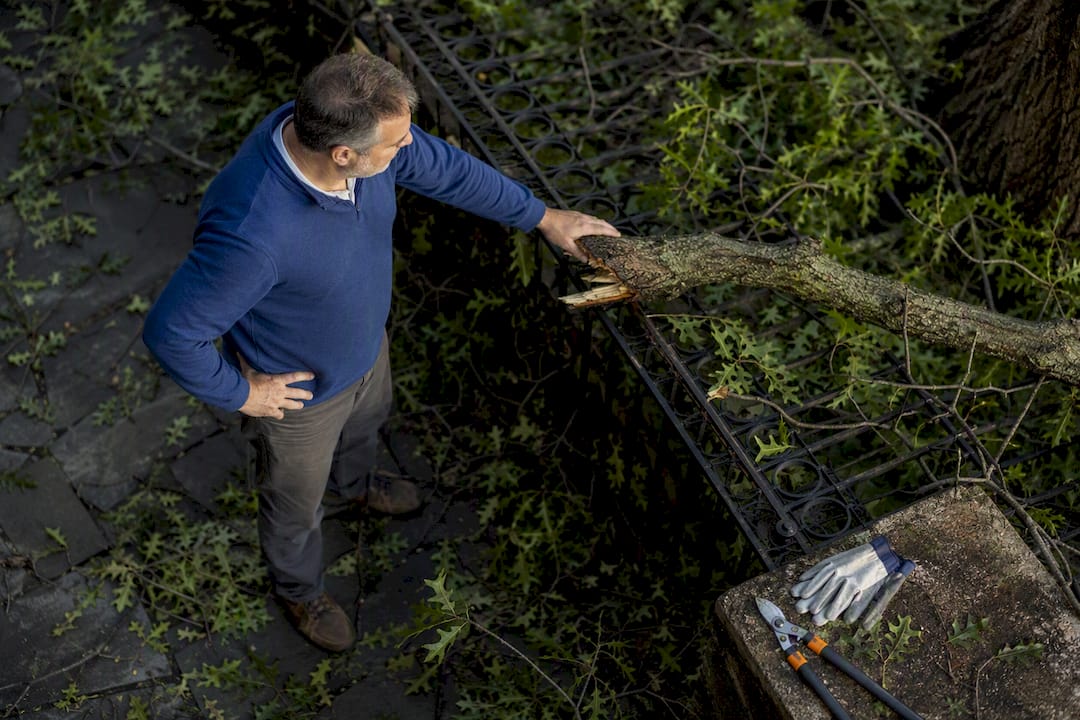
Send written notice as soon as you spot damage that involves someone else's property, even if you think you're not at fault. A simple, dated email or text describing what happened protects you two ways. It shows good faith if you're the one facing a claim, and it starts the clock on the other party's knowledge if they're the responsible one.
Written notice matters even more when a hazard existed before the storm. If you'd previously flagged a leaning tree or a loose section of a neighbor's fence and they ignored it, that message becomes central evidence if the hazard causes damage later. TreeLaws points to exactly this pattern: a documented warning, ignored, is what converts a weather event into a negligence claim.
Keep it factual. Describe what happened, when, and what you're asking (a walkthrough, a shared contractor estimate, insurance information). Avoid accusations in writing, since an angry text can undercut your credibility later even when your underlying claim is sound. Save copies of everything you send and receive, and if the other party doesn't respond within a reasonable window, note that too. A pattern of unanswered good-faith attempts to resolve things directly often matters if the dispute eventually goes to insurers or small claims court.
Statute of Limitations and Preserving Your Evidence
Every state sets a deadline for filing a property damage lawsuit, and most fall somewhere between two and six years depending on whether the claim is framed as property damage or personal injury. Insurance policies often impose their own, much shorter internal deadlines for filing a proof of loss, sometimes just 60 to 90 days after the loss occurs. Miss the policy deadline and you can lose the claim entirely, regardless of what the state's broader statute of limitations allows.
The practical risk isn't usually the legal deadline itself. It's evidence decay. Photos get deleted, receipts get lost, and memories of who said what get fuzzy within weeks, not years. Courts and insurers weigh contemporaneous evidence far more heavily than reconstructed timelines built months later.
Build a simple preservation habit the day the storm hits:
- Store photos and videos in at least two places, a phone and a cloud backup, since a cracked screen shouldn't cost you your evidence.
- Keep every receipt for temporary repairs in one folder, physical or digital, labeled by date.
- Save arborist or inspection reports as soon as they're issued, along with the inspector's contact information.
- Note the exact date you notified your insurer and any neighbor involved.
If a dispute looks likely to escalate, check your policy's own filing deadline immediately rather than assuming you have years to sort it out.
Renters Face a Different Liability Picture Than Owners
Property owners carry the underlying liability for the structure itself, roof, foundation, gutters, exterior walls, regardless of who's living there. If a storm exposes a maintenance failure the owner knew about and ignored, the owner is the one exposed to a negligence claim, not the tenant.
Renters carry a narrower slice of responsibility, generally tied to their own actions and belongings. A tenant who leaves a window open during a storm and causes interior water damage might be on the hook for that specific negligence, but they're not liable for the roof failing due to age or poor maintenance. That distinction matters because renters insurance and a landlord's dwelling policy cover completely different things: renters insurance protects the tenant's personal property and personal liability, while the landlord's policy protects the structure.
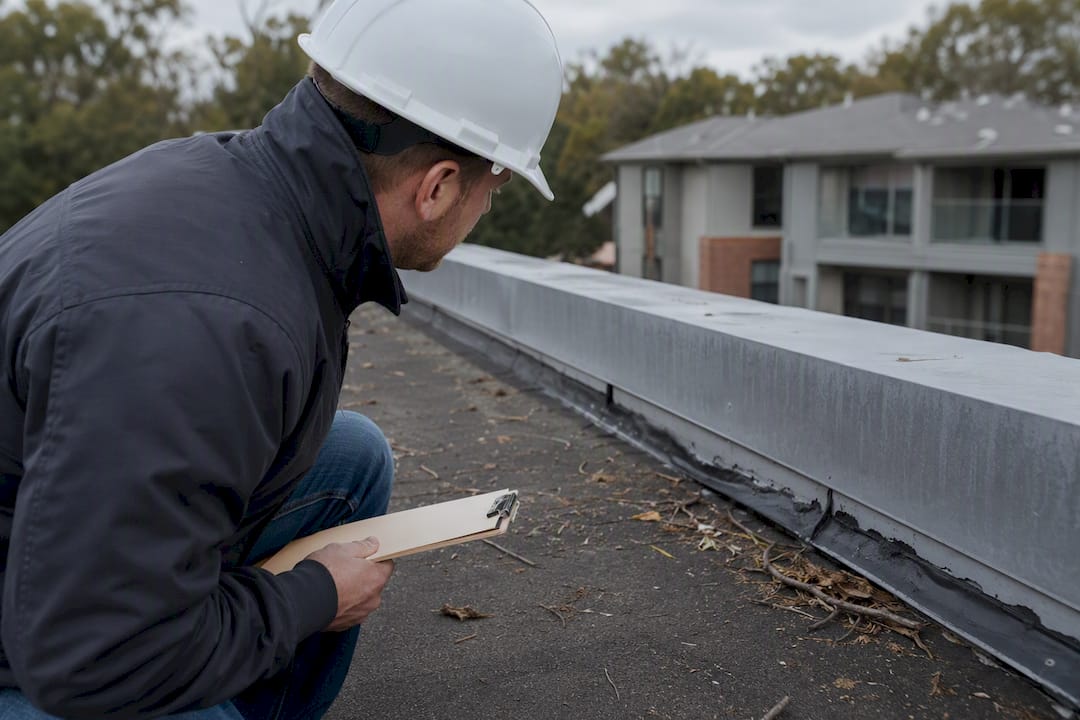
Property managers overseeing multiple units carry heavier documentation obligations than an individual homeowner. A consistent inspection log, dated maintenance records, and a clear system for tenant-reported issues before storm season all work in the property manager's favor if a claim ever gets disputed. Skipping that paperwork doesn't just weaken a claim with the manager's own insurer. It also hands a tenant's attorney an easy argument if someone gets hurt or loses property to a hazard the manager should have caught.
Tenants who suspect a landlord ignored a known hazard, a leaking roof reported months earlier, for example, should also put their complaints in writing and keep copies, the same principle that applies to neighbor disputes.
When You Should Call a Lawyer Before Doing Anything Else
Most storm damage never needs an attorney. A straightforward roof leak, a documented claim, and a cooperative insurer resolve on their own. But certain situations call for legal advice before you sign a contract, send a written notice, or accept a settlement offer.
Talk to an attorney before you act if a claim involves potential injury to another person, a dispute over who caused the damage (your tree versus a neighbor's, your roof work versus the storm itself), or a large commercial loss where subrogation is likely. An attorney can also help before you sign an assignment-of-benefits agreement, since those contracts sometimes sign away more control than homeowners realize.
Timing matters here too. A lawyer consulted before you send an accusatory email or agree to a contractor's terms can prevent mistakes that are hard to undo later. Waiting until after a dispute has escalated often means the attorney is managing damage instead of preventing it. If your insurer denies a significant claim or a subrogation demand lands on your desk naming you or your contractor, that's a clear signal to get legal advice immediately rather than negotiating alone.
How to Resolve Disputes With Neighbors Over Storm Damage
Most neighbor disputes over storm damage get resolved without a lawsuit, but the resolution goes smoother when you approach it methodically instead of emotionally.
Start with a direct, written conversation describing the damage and what you're proposing, a shared contractor estimate, a split repair cost, or simply an acknowledgment of what happened. Many disputes are really about uncertainty over whose insurance pays for what, not genuine disagreement over the facts.
If a direct conversation stalls, loop in both insurance companies. Insurers routinely negotiate directly with each other over responsibility for shared damage, like a fence line or a shared driveway, and that process moves faster once both companies have documentation from each side.
Mediation is worth considering before litigation for disputes involving moderate dollar amounts. It's faster and cheaper than court, and many states offer low-cost community mediation programs specifically for property disputes. Reserve small claims court or a formal lawsuit for cases where a neighbor refuses to respond, denies clear responsibility despite documented evidence, or where the dollar amount justifies the time and cost.
Throughout any dispute, keep your written notices, photos, and correspondence organized in one file. That same documentation habit that protects you against a liability claim is exactly what settles a neighbor dispute quickly instead of dragging it out for months.
What the Editorial Team Thinks You Should Actually Prioritize
Most storm-damage advice treats documentation and insurance timelines as separate problems from legal liability. That's backwards. The photo you take on day one and the written notice you send to a neighbor on day two are the same evidence a court would eventually ask for if things went sideways. Treat every step in the first 72 hours as evidence-gathering, not just claims paperwork, and you've already done most of the legal defense work before you'd ever need it.
The overrated piece of conventional advice is "just call your insurance company and let them handle it." Insurers move on their own timeline, and their interests aren't always aligned with yours, particularly on causation disputes. A HAAG-certified inspection report, obtained independently and early, does more to protect a property owner than a passive wait for an adjuster's opinion.
If you take one thing from this, prioritize the written record over the phone call. Verbal reassurances from a neighbor or a contractor evaporate. A dated email doesn't.
Get Emergency Storm Repair and Insurance Help From Exterior Genie
Exterior Genie is the fastest route to a defensible claim after storm damage in Lexington and Columbia. Instead of waiting days for a generalist contractor or guessing your way through an insurance dispute alone, you get 24/7 emergency tarping paired with HAAG-certified inspection reports that hold up when an insurer or a neighbor's attorney starts asking questions.

We build itemized estimates, document damage the way adjusters expect, and walk you through insurance claims assistance so the paperwork doesn't fall on you at the worst possible time. If your roof needs a permanent fix, we install Owens Corning shingles rated for the wind conditions South Carolina storms actually deliver, and financing is available if the repair outpaces what your policy covers. If a storm just hit your property, start with our storm damage restoration page and request an inspection before you touch anything permanent.
Sources
- Post-Disaster Claims Guide — NAIC
- Neighbor's tree damaged my property: what to do — TreeLaws
- How weather conditions affect premises liability cases — Wapner Newman
- How do storm damage insurance claims work? — LegalClarity
FAQ
How Long After a Storm Can You File an Insurance Claim?
Most policies expect notice within days, and many require a proof of loss within 60 to 90 days, though exact deadlines vary by policy and state, according to NAIC guidance. File as soon as safety allows rather than waiting for full documentation.
Will Filing a Storm Damage Claim Raise My Insurance Rates?
A single weather-related claim, especially one tied to a widespread regional event, typically has less impact on your rate than a claim tied to negligence or repeated losses, though outcomes vary by insurer and state.
How Does Insurance Handle Storm Damage Overall?
Dwelling and personal property coverage respond to damage on your own property, while liability coverage only applies if your property or negligence harmed someone else, and comprehensive auto coverage handles storm damage to vehicles separately.
What's an Example of Property Damage Liability After a Storm?
A homeowner who ignores written warnings about a rotting tree, and that tree then falls on a neighbor's roof, faces liability because the hazard was foreseeable and preventable, not a pure act of nature, per TreeLaws.
Can Exterior Genie Help With an Insurance Claim Dispute?
Yes. Exterior Genie's HAAG-certified inspectors provide documented assessments that support your insurance claims assistance process and give adjusters credible technical evidence to work from.