
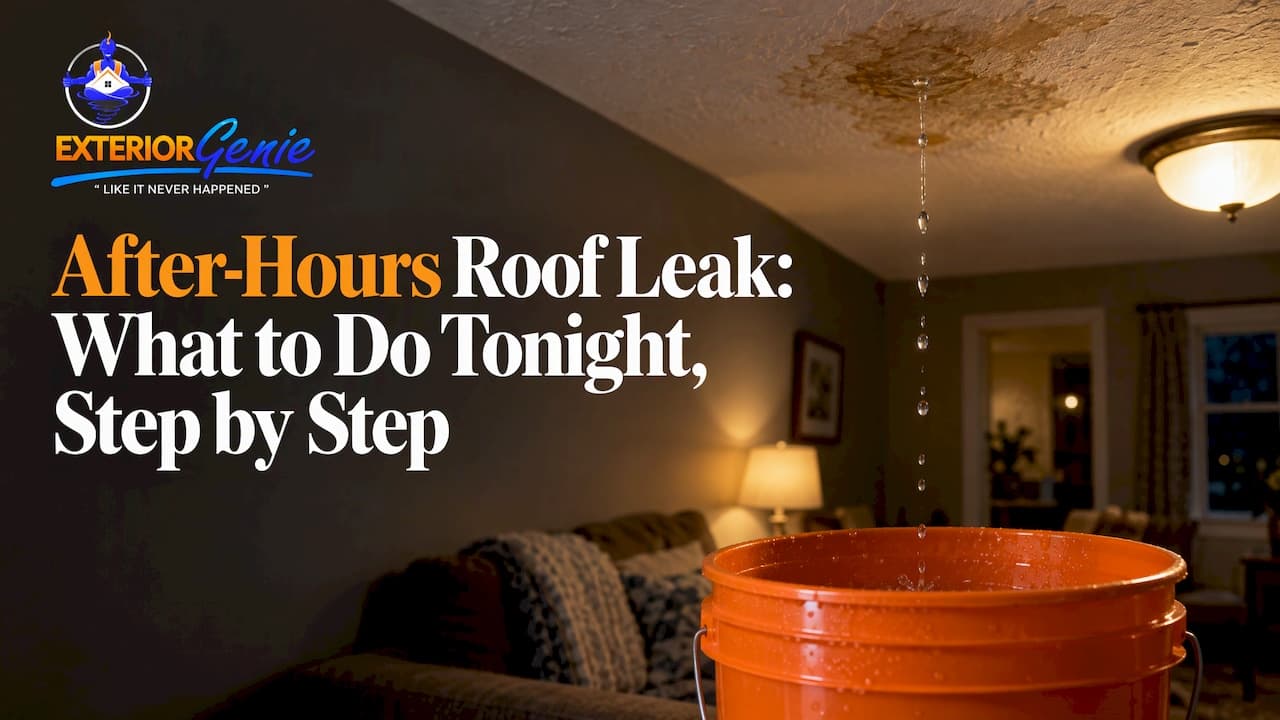
If your roof starts leaking at night, on a weekend or during a storm, do four things in this order: keep everyone safe, contain the water inside, photograph the damage, and call an emergency roofer. Do not climb onto a wet roof. Temporary protection tonight, with a proper repair in daylight, is the right plan almost every time. We offer 24/7 emergency roof repair across the Midlands of South Carolina, including Lexington and Columbia, and this guide covers what to do before we arrive.
TL;DR
- Stay off the roof. Contain the water indoors with buckets, plastic sheeting and moved furniture, then call a roofer to tarp it from outside.
- Take photos and video before you clean up or move anything you can leave in place, then call your insurer.
- Emergency work is temporary protection. Keep every receipt and hold off on permanent repairs until your insurer has been told.
- Dry wet materials within 24 to 48 hours to head off mold.
- Expect an after-hours fee on top of the repair. Typical national ranges are below.
Table of Contents
- The first 30 minutes: keep people safe and contain the water
- Why you should not go up on the roof tonight
- What temporary measures actually hold until the repair
- Document everything before you clean up
- Will insurance cover an after-hours roof leak?
- What an after-hours roof repair costs
- Dry the house within 24 to 48 hours
- Our perspective: why night leaks need a roofer, not a guess
- Get help tonight in Lexington and Columbia
- What happens after the emergency tarp
- FAQ
- Sources
The first 30 minutes: keep people safe and contain the water
Start inside, where you can act safely. State Farm's guidance lists the same basics most roofers would give you: move valuables and furniture away from the water, collect drips in buckets or bowls, and document the damage with notes and pictures.
Here is the order that works in practice:
- Check for electrical danger. If water is dripping near a light fixture, ceiling fan, outlet or panel, turn off power to that area at the breaker, but only if you can reach the breaker without standing in water. If a ceiling is sagging near wiring, stay out of the room and call an electrician or emergency services.
- Move belongings. Pull furniture, electronics, rugs and anything absorbent out from under the leak.
- Catch the water. Put a bucket or a large pot under each drip. Lay a towel in the bottom to cut splashing. Empty it before it overflows.
- Protect the floor. Put plastic sheeting or old shower curtains under the buckets and over nearby furniture you cannot move.
- Relieve a bulging ceiling only if you must. Water pooled in drywall can bring the ceiling down. Some San Francisco-area contractors advise puncturing the lowest point of a bulge to drain it into a bucket. Only do this if no one is under it and there is no electrical hazard, and wear eye protection.
- Open the attic hatch if it is safe. Looking from the attic floor, not the roof, shows where water is entering. Photograph it, and put a bucket or plastic over wet insulation.
The water you see inside is rarely directly under the hole. It can run along rafters or decking before it drips. Use your phone's flashlight to look for the highest wet spot, but do not stay in a room whose ceiling is sagging.
Why you should not go up on the roof tonight
It is tempting to throw a tarp over the problem yourself. Roofing groups advise against it. The National Roofing Contractors Association tells homeowners to inspect only from the ground and never climb up to repair a roof themselves, and to call a local roofing professional. InterNACHI, a home inspectors' association, says a 6/12 slope is too dangerous for an amateur, and a wet roof in the dark is worse.
What you can do safely from the ground: walk around the house with a flashlight and look for shingles missing, a fallen limb on the roof, a damaged vent or a gutter hanging loose. Photograph anything you see from the yard and tell the roofer.

Can a handyman fix a roof leak?
A handyman may be able to patch a small, accessible spot in dry weather. For an active, after-hours leak, the job is different: finding the entry point, tarping a slope safely, and later repairing flashing, decking or shingles so the repair holds. That is roofing work, and it also matters for your insurer, who will want clear documentation of what was done and why.
What temporary measures actually hold until the repair
The temporary options are limited, and the best one is a professional tarp installed from the outside. Our own guides explain the temporary roof repair options in more detail. In short:
| Measure | Who does it | What it does | Notes |
|---|---|---|---|
| Buckets, plastic sheeting, moved furniture | You, indoors | Limits interior damage | First step, always safe |
| Plastic sheeting or plywood over damaged area | Roofer | Keeps rain out | Insurers recognize this as a reasonable temporary repair, see below |
| Professionally secured roof tarp | Roofer | Covers the damaged slope until permanent repair | Properly anchored so wind does not lift it |
| Sealant on a small gap | Roofer | Short-term seal | Not a substitute for repairing flashing or shingles |
Plastic sheeting and plywood are named in the California Department of Insurance claims guide as examples of temporary repairs after roof damage. South Carolina's own insurance regulator says the same thing in plain terms (more on that below).
A tarp is a stopgap. Wind, sun and foot traffic wear it down, so the permanent repair should follow soon. If you want the full playbook, see our guide on how to stop a roof leak emergency fast and safely.
Document everything before you clean up
Your insurance claim starts tonight, even if you do not call the insurer until morning. The AHA claim toolkit says the first 48 hours matter most: take photos, call the insurer and document everything.
The South Carolina Department of Insurance advises photographing or filming losses before removing debris or broken belongings, then making reasonable temporary repairs, such as covering a hole in the roof, or having a qualified professional do it. It says your insurer will typically reimburse those costs when the loss is from a covered cause, so keep receipts.
A good record includes:
- Wide shots of each affected room, then close-ups of stains, drips and damaged items
- A short video narrating what you see, with the date and time
- Photos of the roof from the ground, and of the attic if safe
- The weather that night (storm, wind, hail) written in a note
- A list of damaged belongings
- Receipts for the emergency call-out, tarp, hotel or storage
We go deeper in how to document roof damage for insurer claims and our roof insurance claim checklist.
Will insurance cover an after-hours roof leak?
It depends on what caused the leak, not on the leak itself. Farmers explains that a leak is treated as water intrusion after roof damage, so coverage turns on cause, timing, roof condition and what was damaged. Wind-removed shingles and hail damage are typically covered, while age-related flashing failure and slow leaks that cause rot are not.
GEICO says the same: sudden, accidental events like storms and falling trees are generally covered, while leaks from age, poor maintenance or gradual deterioration usually are not. The Insurance Information Institute adds that standard policies do not cover mold or lack of maintenance damage, and that floods are excluded.
A few things follow from that:
- Tell the insurer early. Report the leak and the storm that caused it.
- Do not tear out drywall or replace systems before an adjuster sees it. The AHA toolkit warns this can jeopardize coverage. Stick to temporary repairs unless approved. The NAIC guide likewise says to keep emergency repair receipts and to avoid permanent repairs before talking with your insurer.
- Know your deductible. GAF notes that it is often a fixed amount, usually $500 to $2,000 or more, or a percentage of insured value. Check your policy declarations page, especially for wind and hail deductibles.
- Replacement cost policies pay in stages. The Texas Department of Insurance explains that the first check is typically actual cash value, with the rest released once repairs are started and proven. Your policy terms control, so ask your SC insurer how yours works.
Our roof damage insurance claim steps walk through the process from first call to final payment, and our guide to roof inspections and claims explains why a professional inspection helps.
What an after-hours roof repair costs
Expect to pay more for a night or weekend call. The Spruce reports that average roof leak repairs run about $400 to $2,500, with most people paying about $750 for a minor to moderate leak. It adds that emergency response fees of about $200 to $300 may apply for immediate or after-hours service, and an emergency tarp can add $175 to $700.

Those are national averages. We do not publish prices, because the cost depends on the roof's pitch, material, the size of the damaged area and what is found underneath. We give you a clear scope before permanent work begins.
What moves the cost:
- Size of the opening. A few missing shingles is a different job from a limb through the deck.
- Roof type and pitch. Steep or multi-story roofs take more time and equipment.
- Hidden damage. Wet decking or insulation found after the tarp comes off.
- Timing. After-hours work carries a premium nationally.
- Insurance. A covered storm loss changes who pays, subject to your deductible.
Dry the house within 24 to 48 hours
Stopping the water is half the job. Wet materials need to dry fast. The CDC says to clean and dry or remove wet items within 24 to 48 hours to prevent mold. Mass.gov notes that the EPA and ACGIH recommend drying porous materials with fans and heating within that window, or mold may grow.
In a humid South Carolina climate, do not wait. Run fans, open windows if it is not raining, and run a dehumidifier. Photograph wet insulation and ceiling material before you remove it, and tell your insurer if you need to remove soaked drywall to prevent mold.
Our perspective: why night leaks need a roofer, not a guess
We are a veteran-owned contractor, and the way we handle a midnight call is how we run every job: calm, organized and clear about what happens next.
Our view is simple. The first goal is to stop water from entering, safely. The second is to keep your insurance claim intact. Those two goals work together when the emergency repair is documented and limited to what the situation requires. That is why we tarp first, photograph the damage and explain what we found before talking about permanent work.
We also believe in honest repair-versus-replacement guidance. A leak around a vent boot may need a repair. A roof with widespread storm or age damage may need replacement. Our team includes HAAG-certified inspectors, and we are an Owens Corning Platinum Preferred Contractor, so we can inspect the roof, explain what we see and help you work through a claim.
Our emergency service runs 24/7 because storms do not keep office hours.
Ebben
Get help tonight in Lexington and Columbia
If your roof is leaking now, we offer 24/7 emergency roof repair across the Midlands of South Carolina. Our team can tarp the damaged area, document conditions and help you plan the permanent repair. See our emergency repair and roofing services or our roof repair page.

After a storm, we also help with the paperwork side. Our storm damage restoration team works with homeowners on roof insurance claims, and our roof inspections give you a professional record of the roof's condition. Not sure whom to phone? Our guide on getting a roofer the same day lays it out.
Business owners with a flat or membrane roof can also reach us about commercial roofing.
What happens after the emergency tarp
Once the roof is covered and the house is drying, the next days follow a pattern:
- Report the claim if the cause looks like storm, wind, hail or a fallen tree, and give your insurer your photos and receipts.
- Get a full roof inspection. The leak you saw may be one symptom of wider damage. A trained inspector checks shingles, flashing, vents and decking.
- Meet the adjuster with the inspection report and photos at hand.
- Choose repair or replacement based on the inspection, not on the fear of the last storm.
- Schedule the permanent work once the insurer has had its chance to inspect.
- Dry and repair the interior, including insulation, drywall and paint.
South Carolina's coast makes hurricane-season policies a special case, with separate deductibles in many policies. Our article on hurricane roof damage insurance explains what a policy pays.
FAQ
What should I do first if my roof leaks at night?
Make sure everyone is safe, then move belongings away from the water and catch drips with buckets. Take photos and video of the damage, then call an emergency roofer to cover the roof from outside. Do not go up on the roof yourself.
How can I temporarily stop a ceiling leak?
From inside, you can only contain it: buckets under drips, plastic sheeting over furniture and a bucket under the lowest point of a sagging ceiling, if it is safe to do so. Stopping water from entering takes a tarp or plywood and plastic over the damaged roof area, which a roofer should install.
Does homeowners insurance cover a roof leak?
Often, when the leak comes from sudden damage such as wind, hail or a fallen tree. Leaks from age, poor maintenance or slow deterioration are usually not covered. Report it quickly, keep receipts for emergency repairs and read your policy for your deductible.
Is it worth paying for emergency service instead of waiting until morning?
If rain is still falling or more is forecast, usually yes. Water in insulation and drywall spreads fast, and mold can start within 24 to 48 hours. An emergency tarp costs less than ceiling, insulation and flooring repairs, and the cost of reasonable temporary repairs is typically part of a covered claim.
Sources
- State Farm: Leaking Roof, Here's What to Do
- NRCA press release on roof safety
- InterNACHI: Minor Roof Repairs
- California Department of Insurance: Residential Property Claims Guide
- AHA Homeowners Insurance Claim Prep & Documentation Toolkit
- Farmers: Does Home Insurance Cover Roof Leaks?
- GEICO: Does Homeowners Insurance Cover Roof Leaks?
- Insurance Information Institute: Which disasters are covered
- NAIC Post-Disaster Claims Guide
- GAF: Guide to Roof Damage Insurance Claims
- Texas Department of Insurance: Homeowners insurance and disaster claims FAQ
- The Spruce: How Much Does Roof Leak Repair Cost?
- CDC: Dry Off Wet Items After a Storm
- Mass.gov: Water damage response in buildings